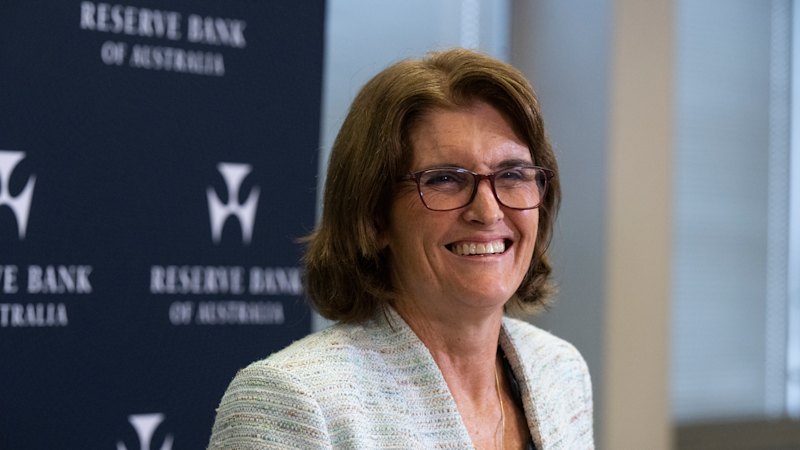
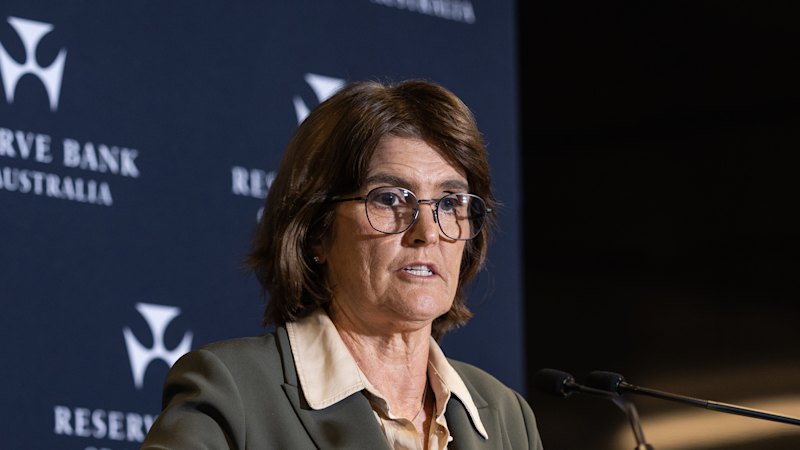
Photo via The Guardian

Australia at risk from major global financial shock, Reserve Bank warns

Read the original at The Guardian ↗
Cite

editor, P. C. E. (2026, October 1). Australia at risk from major global financial shock, Reserve Bank warns. The Guardian. https://www.theguardian.com/australia-news/2026/oct/01/australia-at-risk-from-major-global-financial-shock-reserve-bank-warns

Dated when The Aporia collected the article, usually within hours of publication. Check the original for its exact date and byline.

The Guardian · collected 2026-10-01 · by Patrick Commins Economics editor

Quick Summary

The Reserve Bank of Australia (RBA) released its latest financial stability review, highlighting that while Australian households are generally prepared for rising interest rates and declining property prices, they could face risks from a sudden downturn in global AI investment. The RBA estimates that currently fewer than 1% of borrowers owe more on their homes than the properties are worth, with recent buyers under the government’s home guarantee scheme being particularly vulnerable but not yet experiencing widespread payment difficulties. The report also warns about potential threats from geopolitical tensions and high valuations in corporate debt markets, which could lead to disorderly asset price corrections if there is a shift in sentiment towards AI investments.
Written by AI on 2026-10-01, from this article's own text only (the story summary below draws on all the coverage).
See how they differ ↓

AI analysis

Story summary

The Reserve Bank of Australia (RBA) released its latest Financial Stability Review, highlighting that despite a significant housing downturn in Australia, only less than 2% of variable-rate owner-occupier mortgage borrowers face financial stress as of June 2023. The RBA predicts this number might slightly increase to around 2% due to expected interest rate hikes, but it remains well below historical peaks seen during previous downturns. However, the review also notes that recent homebuyers, particularly those using the Australian government’s 5% deposit scheme, are more likely to be in negative equity, where they owe more on their mortgage than their property is worth. Since October, over 100,000 first-time buyers have utilized this scheme. The RBA emphasizes that although fewer than 1% of all home borrowers are currently in negative equity, the risk remains highest for lower-income households and recent buyers participating in government schemes due to higher debt-to-income ratios. Additionally, the report warns about potential threats from overseas, such as a global financial shock triggered by speculative investment in artificial intelligence (AI), which could affect Australia's economy despite its robust domestic conditions.

Written for “RBA Warnings On Housing And AI” on 2026-11-18, grounded in this article and the 2 other(s) covering the same event.

How they differ

3 outlets covered “RBA Warnings On Housing And AI”.

What each outlet says

One AI summary per outlet of its latest article on this story, written from that article alone and checked against it. Open the article for the outlet's own words.

The GuardianThis outlet1 Oct

The Reserve Bank of Australia (RBA) released its latest financial stability review, highlighting that while Australian households are generally prepared for rising interest rates and declining property prices, they could face risks from a sudden downturn in global AI investment. The RBA estimates that currently fewer than 1% of borrowers owe more on their homes than the properties are worth, with recent buyers under…

Australia at risk from major global financial shock, Reserve Bank warns (this article)
ABC News (AU)1 Oct

The Reserve Bank of Australia (RBA) released its latest Financial Stability Review, revealing that while the housing market downturn is concerning, it does not pose an immediate threat to financial stability. The RBA notes that despite high household debt levels, most borrowers can manage their mortgage repayments due to income growth and available buffers. However, the review highlights significant international…

RBA relaxed about housing downturn, deeply worried by AI and bonds →
Sydney Morning Herald1 Oct

The Reserve Bank of Australia (RBA) has reported that less than 1% of homebuyers are in negative equity, primarily affecting recent buyers including those using the government’s 5% deposit scheme since last October. The RBA warns of growing risks to household financial stability due to high inflation and rising interest rates, with a scenario analysis suggesting that if unemployment rises to 6.3%, inflation reaches…

Almost one out of 100 homebuyers in negative equity: RBA →

Where they agree and split

Framing

How the first headlines put it

Attributed to a source1
Stated as fact2
The headlines (3)

Almost one out of 100 homebuyers in negative equity: RBA Sydney Morning Herald · attributed to a source

RBA relaxed about housing downturn, deeply worried by AI and bonds ABC News (Australia) · stated as fact

Australia at risk from major global financial shock, Reserve Bank warns The Guardian · stated as fact

The full story: what happened, how it changed, and all 3 articles →

Compared with similar articles

This article reads unscored and hedges 25% of its claims. Each row says how that neighbour differs.
The Guardian
Hedges 2 of 21 claims Outlet record 64/100
“The articles discuss different aspects of the Reserve Bank's activities and warnings related to financial stability, rather than a single specific event like an interest rate hike on a particular date.”
The Sydney Morning Herald
Hedges 8 of 83 claims Outlet record 61/100
“The articles discuss different aspects of Michele Bullock's tenure as Reserve Bank governor, but describe separate events and timelines.”
ABC News (AU)
Leans left Hedges 5 of 48 claims Outlet record 67/100
“The articles discuss different aspects of financial conditions and warnings from the Reserve Bank but do not describe the same specific occurrence or outcome.”
Daily Mail
Hedges 1 of 53 claims Outlet record 70/100
“The articles discuss different aspects of economic conditions and warnings from the Reserve Bank, but do not describe the same specific incident or occurrence.”
Daily Mail
Hedges 0 of 37 claims Outlet record 70/100
“The articles discuss different aspects of financial and economic issues in Australia, with Article A focusing on criticism towards Jim Chalmers regarding interest rates and taxes, while Article B is about the Reserve Bank's warning on global financial stability risks.”
Al Jazeera
Hedges 1 of 15 claims Outlet record 60/100
“The articles discuss different aspects of Australia's economic situation and do not describe the same specific incident.”
Daily Mail
Hedges 1 of 17 claims Outlet record 70/100
“The articles discuss different aspects of economic conditions in Australia but do not describe the same specific incident or occurrence.”
Daily Mail
Hedges 6 of 42 claims Outlet record 70/100
“The articles discuss different aspects of Australia's financial situation without referencing the same specific incident.”
The Sydney Morning Herald
Leans left Hedges 3 of 22 claims Outlet record 61/100
“The articles discuss different aspects of financial stability and interest rates in Australia but do not describe the same specific incident.”
ABC News (AU)
Hedges 5 of 29 claims Outlet record 67/100

Story

RBA Warnings On Housing And AI
Economy/Business · 3 article(s) covering the same event. Compare every outlet's account →
How this article was measured signals, leaning charts, publisher record, byline, topics and claims

Signals How these are calculated →

Claims extracted
12
sentences that state something as happening or true
Uncertain
25%
3 of 12 hedged ("reportedly", "may", "according to")
Leaning
not political
takes no side on a contested political question
Publisher signals
64/100
The Guardian's corrections and hedging, across everything collected from it. Not a measure of accuracy.
Outlets on this story
3
Economy/Business
Same framing elsewhere
1
articles that frame the event the way this one does
Analyzed 2026-10-01 · how these are computed

How this is being covered How these are calculated →

Article leaning vs. publisher reliability
Source leaning vs. consistency

Publisher

The Guardian · 3642 article(s) · 8 correction(s) detected
Running correction rate · 8 correction(s)

Who wrote this

Patrick Commins Economics editor
12 article(s) here · 1 carrying a prediction
Jim Chalmers has promised next month’s mid-year budget update “will cut enough, but not too much”, as he flagged “substantial savings” to help in the fight against inflation.
The Albanese government in the May budget announced changes to the tax on capital gains for investors, and banned negative gearing for new landlords buying an existing home.
In its post-meeting statement following the decision, the board repeated that it “will continue to do what it considers necessary to bring inflation sustainably back to target”.
The RBA is widely expected to hit mortgage holders with a fifth rate hike on Tuesday, in a move that will push the cash rate to its highest since 2008 amid rising worries the economy could even be tipped into recession.
Taking the lion’s share of the blame for worsening cost of living pressures may not be completely fair, but it is the price of incumbency – as the latest Essential poll showed.
Jim Chalmers has revealed December’s mid-year budget update will project weaker growth and higher unemployment, as economists warn of a difficult six months ahead for the Australian economy.
The Reserve Bank says households are well placed to weather the twin storm of rising interest rates and plunging property prices, but warned that Australia would not be immune to a sudden collapse of the global AI investment boom.
Inflation has jumped to 4% in the year to August, from 3.5%, as Jim Chalmers was again forced to defend Labor’s economic management amid fears the Reserve Bank will need to hike interest rates again before Christmas.
Two or even three more Reserve Bank interest rate hikes would be “devastating” for the property market but still leave housing more unaffordable than ever as higher borrowing costs trump lower prices, experts say.
There will be more Australians dying than being born in 40 years’ time, according to the government’s latest intergenerational report, which lays bare the fundamental challenges of managing an ageing population at a time of rapid change and lower economic growth.
Also by Patrick Commins Economics editor
Nothing else under this byline is closely related to this article, so these are simply their most recent.
All 12 articles by Patrick Commins Economics editor →

Topics

Australia RBA Reserve Bank The Reserve Bank Ukraine

Subjects

RBA ORG · 6× Australia GPE · 3× Reserve Bank ORG · 1× The Reserve Bank ORG · 1× Ukraine GPE · 1×

Narrative

The RBA estimated that even a 20% property price crash would only push about 5% of mortgages into negative equity – a testament to the fact most homeowners have enjoyed significant value gains over the years. “Negative equity is insufficient to trigger default if borrowers remain able to service their loans, which remains the case for the vast majority of these households,” the report said.
framing: mixed · carried by 1 article(s) · first seen 2026-10-01
The Reserve Bank says households are well placed to weather the twin storm of rising interest rates and plunging property prices, but warned that Australia would not be immune to a sudden collapse of the global AI investment boom.

Claims (12 extracted, 3 hedged)

The Reserve Bank says households are well placed to weather the twin storm of rising interest rates and plunging property prices, but warned that Australia would not be immune to a sudden collapse of the global AI investment boom. asserted
Australia → say → boom
The central bank’s latest financial stability review – a biannual assessment of the financial system – said the “threats to global financial stability continue to mount”. asserted
threats → say → stability
The warning comes as Reserve Bank estimated that fewer than one in 100 borrowers owe more on their home than it’s worth, despite this year’s broadening price falls. asserted
it → come → falls
“While some households continue to experience hardship, the estimated share of mortgagors in severe financial stress or in arrears has, so far, remained low, supported by the strong labour market and mortgagors’ savings and equity buffers,” the report said. asserted
report → continue → market
The RBA’s estimate that fewer than 1% of borrowers were in “negative equity” came with the caveat: recent buyers who took out loans worth close to the value of the property were more likely to now be in the position where the mortgage was higher than their home’s market value. asserted
mortgage → come → value
This included those who took advantage of the government’s 5% home guarantee scheme, the RBA said, although evidence suggested that the share of these borrowers falling behind on their payments remained “contained”. uncertain
share → include → payments
The RBA estimated that even a 20% property price crash would only push about 5% of mortgages into negative equity – a testament to the fact most homeowners have enjoyed significant value gains over the years. “Negative equity is insufficient to trigger default if borrowers remain able to service their loans, which remains the case for the vast majority of these households,” the report said. asserted
report → estimate → households
The RBA said that a loss of faith in the artificial intelligence boom could trigger “disorderly asset price corrections” and that “Australia is unlikely to be immune” from the impact. uncertain
Australia → say → impact
Alongside the huge sums being invested in artificial intelligence, two ongoing conflicts – in the Middle East and Ukraine – alongside “intensifying strategic competition among major powers” underscored these threats, the RBA said. asserted
RBA → invest → threats
High valuations in global corporate debt and share markets meant they were vulnerable to a “disorderly” correction. asserted
they → mean → correction
“One possible trigger could be a shift in sentiment towards the AI investment boom, which is increasingly fuelled by expectations of sustained rapid earnings growth and a debt-financing cycle that is becoming more opaque and circular,” the report said. uncertain
report → fuel → growth
The RBA also warned of the rising risk of cyber-attacks, potentially facilitated by AI, and a sudden sell-off in global bond markets. asserted
RBA → warn → markets
Give feedback · no sign-in needed

No sign-in needed for now. Your note is sent without a name, so it cannot be answered.

History Support