The Reserve Bank of Australia (RBA) released its latest Financial Stability Review, revealing that while the housing market downturn is concerning, it does not pose an immediate threat to financial stability. The RBA notes that despite high household debt levels, most borrowers can manage their mortgage repayments due to income growth and available buffers. However, the review highlights significant international risks such as global conflicts, rapid technological changes including AI, and severe weather events linked to climate change, which could potentially lead to a broader financial crisis.
Written locally by qwen2.5:14b on 2026-10-01,
using this article's own text rather than the other coverage of the
same event (that is the story summary below).
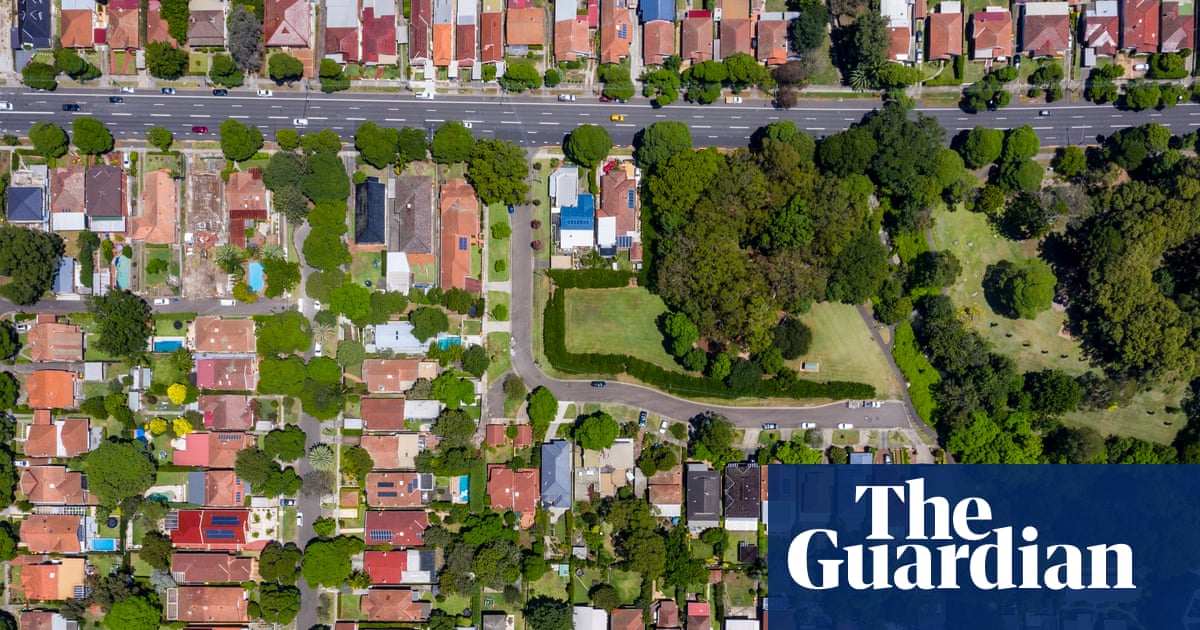
Despite Australia's rapid housing downturn, which threatens to be the worst in decades, the Reserve Bank believes the main threats to the nation's financial stability come from overseas.
asserted
threats → threaten → stability
That is the key takeaway from its latest half-yearly Financial Stability Review (FSR), released two days after the bank increased its cash rate to a 15-year high of 4.6 per cent on Tuesday.
asserted
bank → release → Tuesday
While Australian households remain among the world's most indebted, a rise in real household disposable income per capita since a recent low point in 2023 and 2024 means most borrowers are better placed to cope with their mortgage repayments, even though rates have passed the peak of 4.35 per cent in that period.
asserted
rates → remain → period
As at the end of June, the RBA estimated that less than 2 per cent of variable-rate owner-occupier mortgage borrowers had a "cash flow shortfall" — that is, where their income was insufficient to cover scheduled mortgage repayments and essential expenses.
asserted
income → estimate → repayments
The RBA forecast that this might rise to 2 per cent, or slightly above, in coming months as the cash rate has risen once since then to 4.6 per cent and is expected by financial markets to potentially rise further.
uncertain
rate → forecast → markets
However, this is well below peaks close to 5 per cent in 2023 and 2024 during the post-COVID inflation spike, when the cash rate rose rapidly to 4.35 per cent.
asserted
rate → rise → cent
The bank also noted that the median, or middle of the range, borrower has offset and/or redraw buffers that would cover more than a year of scheduled mortgage repayments at current interest rates.
asserted
that → note → rates
Even if borrowers find themselves unable to make their mortgage repayments, the bank said most would be able to sell their home in order to pay off their loan in full.
asserted
most → find → loan
It estimated that less than 1 per cent of borrowers were in negative equity and owing more on their loan than the market value of their home.
asserted
cent → estimate → home
The RBA noted that even a 20 per cent plunge in house prices would only see around 5 per cent of mortgages falling into negative equity, due to the substantial run-up in property values ahead of the latest downturn.
asserted
cent → note → downturn
The central bank's modelling of a "very adverse downturn" — where unemployment increases to 6.3 per cent (from 4.6 per cent currently), inflation nearly doubles to 7 per cent and the cash rate climbs a further percentage point to 5.6 per cent — would still see just 5 per cent of mortgage borrowers "at a higher risk of defaulting on their loans", similar to levels seen in 2023.
asserted
cent → increase → 2023
Global threats 'continue to mount', Australia 'unlikely to be immune'
asserted
Australia → continue → ?
While the Reserve Bank is relatively relaxed about the domestic situation, it warned ominously that "threats to international financial stability continue to mount".
asserted
threats → warn → stability
It cautioned that the interaction of intractable global conflicts disrupting key supply chains, the pace of technological development and the disruptions it causes, and the increase of severe weather events due to climate change, are key threats which "could be making a system-wide shock more likely and its potential consequences more severe".
uncertain
consequences → caution → change
Reflecting recent comments from the RBA governor and other senior officials, the bank warned that a bursting of the potential AI bubble could trigger broader financial fallout.
uncertain
bursting → reflect → fallout
"Low risk premia in major equity and credit markets have contributed to buoyant financial conditions for businesses, but these risk premia could move sharply higher in response to an adverse shock potentially in a disorderly manner," the review noted.
uncertain
review → contribute → manner
"One possible trigger could be a shift in sentiment towards the AI investment boom, which is increasingly fuelled by expectations of sustained rapid earnings growth and a debt-financing cycle that is becoming more opaque and circular.
uncertain
that → fuel → growth
"
While the RBA noted that hyperscalers and hardware producers were generally viewed as lower risk due to alternative revenue streams and generally solid financial positions, there are "pockets of higher risk firms in the AI value chain", including data centre construction, utility and neocloud providers.
asserted
hyperscalers → note → construction
It also noted the rising risks even for the large hyperscalers and hardware producers at the centre of the AI boom.
asserted
It → note → boom
"The AI industry has been increasingly using off-balance sheet arrangements to finance large projects, such as data centres," the FSR observed.
asserted
FSR → use → centres
These "opaque" arrangements sit outside of the hyperscalers' balance sheets for now, but the RBA warned "their financial obligations to these projects are becoming significant, with estimates ranging from $US1 trillion to $US1.5 trillion", or $1.4 trillion to $2 trillion.
asserted
obligations → sit → trillion
The RBA also highlighted concerns about "circular financing" within the AI sector, for example where chipmakers provided financial support to neocloud firms who then purchased their products.
asserted
who → highlight → products
While there are financial risks posed by a collapse of the AI boom, the RBA also noted increasing risks if that boom continued.
asserted
boom → be → risks
A key concern is increasing vulnerabilities to AI-driven cyber attacks, especially the reliance of financial institutions on a small number of critical technology service providers.
asserted
concern → increase → providers
In addition, it warned of financial market risks around "herd behaviour and market correlation" as AI agents played a greater role in investment decisions.
asserted
agents → warn → decisions
RBA concerned about risks of 'disruptive sell-off' in bond market
Another key global risk that is concerning the Reserve Bank is the recent jump in key advanced economy government bond yields, including the increased participation of investors, such as hedge funds, loading up on debt to play the market.
asserted
that → concern → market
The RBA noted that hedge fund "repo" debt was near record highs, at more than $US3 trillion for US hedge funds alone, which was equivalent to about 10 per cent of that nation's annual GDP.
asserted
which → note → GDP
"This raises the prospect of increased volatility — and potentially a disruptive sell-off — in core bond markets that are central to the operation of the global financial system," the bank warned in the FSR.
asserted
bank → raise → FSR
"Australia is unlikely to be immune should international funding conditions abruptly tighten."
asserted
conditions → tighten → ?
 The Aporia