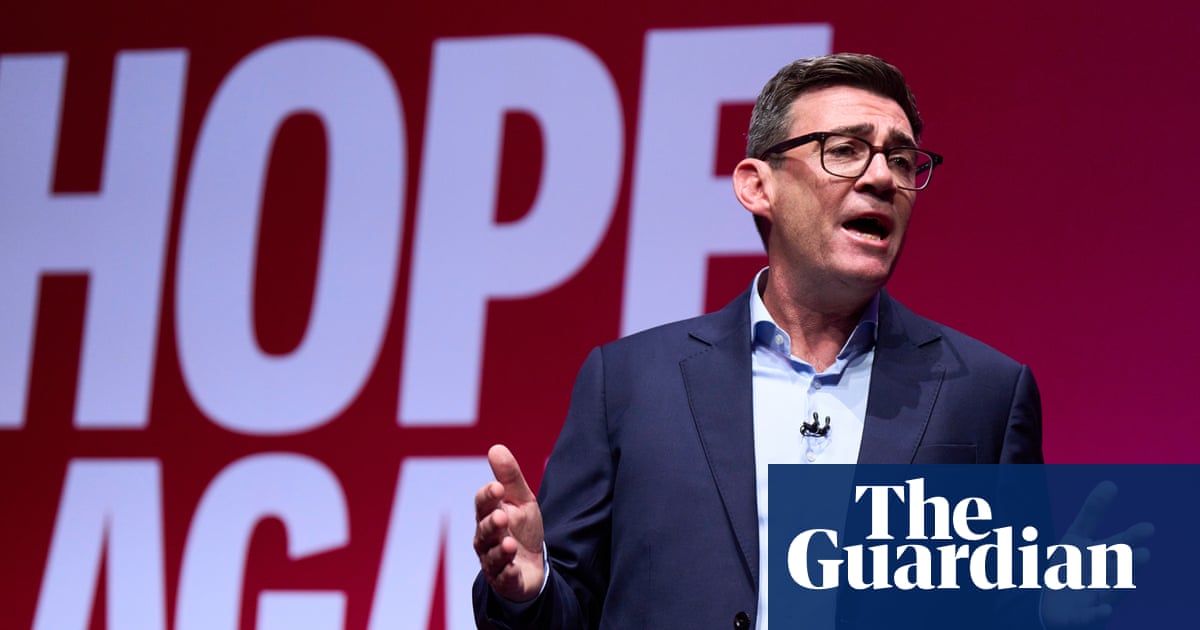
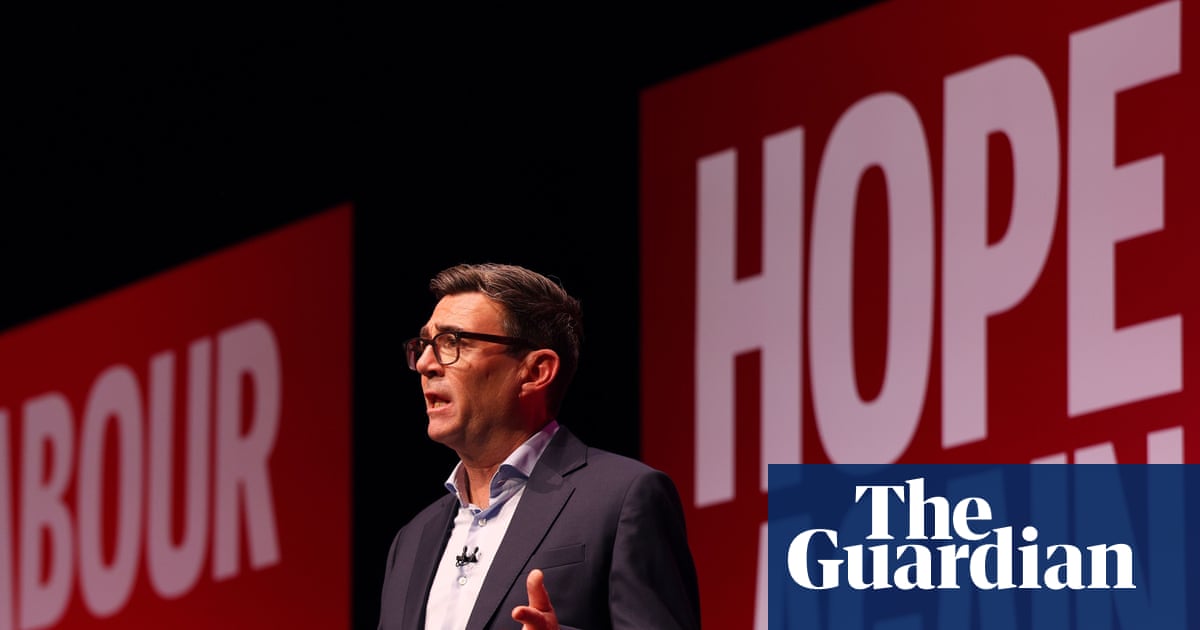
Andy Burnham's emotional speech at the Labour conference in Liverpool moved many attendees to tears, including several ministers like Ed Miliband, Louise Haigh, and Anneliese Midgley. The speech was spontaneous in parts, with Burnham openly expressing grief over his late father, a moment he had been practicing but never managed without crying. He followed up by rallying his team, promising them support as they face challenging policies ahead.
Written locally by qwen2.5:14b on 2026-09-30,
using this article's own text rather than the other coverage of the
same event (that is the story summary below).
Story summary
Andy Burnham, newly elected leader of the Labour Party, delivered his first speech as leader at the party's conference in Liverpool on Wednesday. The speech was emotional and covered bold policies such as reforming social care and electoral systems, drawing mixed reactions from attendees and media outlets.
Burnham choked up while discussing his father who recently passed away, a moment that resonated deeply with the audience. He admitted to wanting to move faster on cost-of-living measures but stressed fiscal honesty about what Britain can afford. The speech was seen by some as one of the most memorable in recent years, with former BBC political editor Andrew Marr comparing it favorably to Tony Blair's speeches.
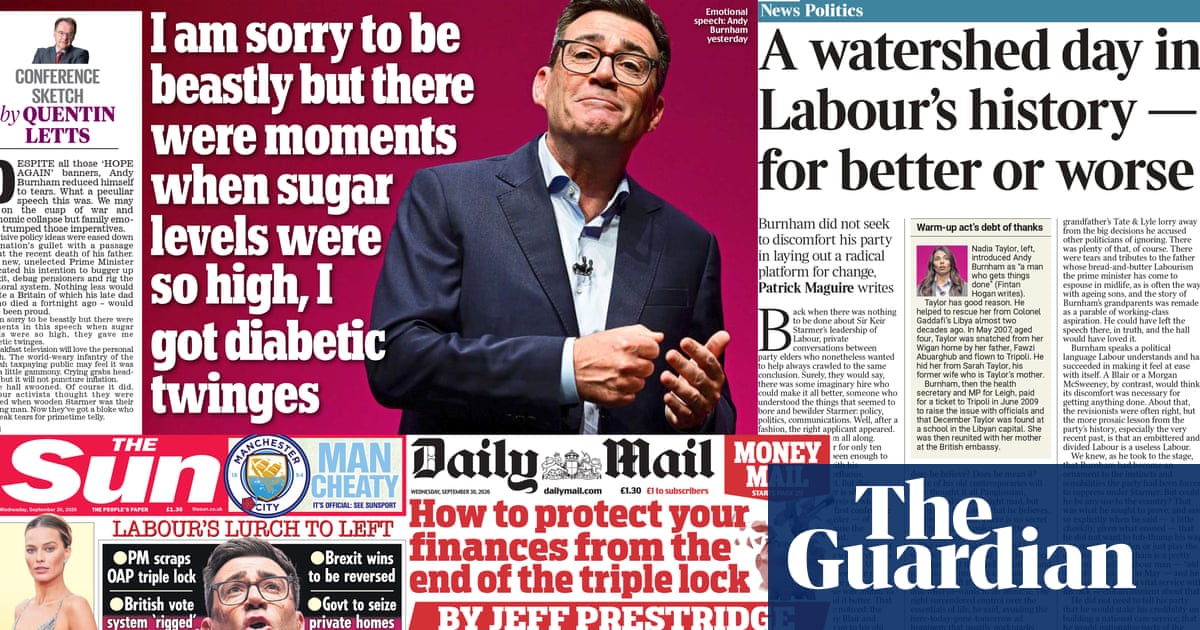
Critics like Mail Online’s Quentin Letts were less impressed, describing the emotional tone and policy promises as overly sentimental and sugar-coated. Meanwhile, supporters praised Burnham for his relatability and commitment to addressing working-class concerns, potentially appealing to voters who had drifted away from Labour under Keir Starmer.
The speech also touched on plans for electoral reform, aiming to introduce proportional representation in Westminster elections, a significant change since 1918. This move is seen as part of Burnham's strategy to transform the UK’s political system fundamentally, though some within the party are wary about such dramatic changes given current fiscal constraints and public opinion.
Written for “Andy Burnham Labour Speeches” on 2026-10-05,
grounded in this article and the 24 other(s) covering the same event.
The hottest ticket at Labour conference – after Andy Burnham’s speech – was an afterparty in Liverpool’s Baltic Triangle, headlined with a set by the noughties girlband Sugababes.
asserted
ticket → headline → girlband
As Labour activists and ministers belted out the lyrics under pink spotlights, it was hard not to draw some parallels with the party’s recent history.
asserted
it → belt → history
There have been painful lineup changes and a lot of internal division, but this week onstage in Liverpool, the originals are back together and they only played the hits.
asserted
they → play → hits
The fans can’t get enough.
asserted
fans → get → enough
Burnham’s own show on the main stage had the conference hall in raptures not because of Brexit or social care, but because of the display of raw emotion after the tightly choreographed repression of the last six years.
asserted
hall → have → years
He may as well have walked across the stage with his feet crunching over the debris of shattered Ming vases.
uncertain
feet → walk → vases
The speech combined plans that had been forming inside Burnham’s head for the last decade as well as seat-of-his-pants political instinct.
asserted
that → combine → instinct
On the morning of the conference, the prime minister took off early for a morning jog and then returned to make final amendments.
asserted
minister → take → amendments
Even moments before he went on stage, he was still rewriting, aides said.
asserted
aides → go → stage
About a quarter of the speech was entirely ad-libbed.
asserted
quarter → libbe → speech
When Burnham was rehearsing the speech, aides said he knew he was going to cry when he got to the paragraph about his late father – he had never managed to get through any of the practice runs without tears.
asserted
he → rehearse → tears
But the long pause as he composed himself was the most emotional he had been.
asserted
he → compose → ?
Several ministers said they themselves had been moved to tears, including Ed Miliband, who had recently lost his own mother, as well as Louise Haigh and Anneliese Midgley, who are Burnham’s closest friends in government and the architects of his ascendancy.
asserted
who → say → ascendancy
After his speech, Burnham gathered all his ministers for a private pep talk.
asserted
Burnham → gather → talk
He said he knew they would not agree with everything – but with the aura of a general sending his troops into battle, he told them to “get out there” and fight for it.
asserted
he → say → it
He said he would not send them out with “a pea-shooter” – they needed proper weapons for the fight ahead and he promised he would provide them.
asserted
he → say → them
In the hallway outside the conference hall, minister after minister spoke with voices quivering with emotion.
asserted
minister → speak → emotion
“This is all I have ever wanted,” one said.
asserted
one → want → ?
Burnham’s was the first time many MPs can recall a speech that was pure political argument.
asserted
that → recall → speech
And there was much in the speech that – in normal times – would have been a recipe for rebellion: Brexit, the triple lock, electoral reform and the lingering question marks over growth and defence.
asserted
that → be → growth
“I found parts of the speech challenging if I’m honest,” one cabinet minister admitted.
asserted
minister → find → speech
“It contained things I had always thought we should never touch or an argument about public control which I would previously have said was too backward-looking.
asserted
I → contain → control
“But in the room I agreed with every word because he persuaded us, he made an argument and made me question myself.
asserted
me → agree → myself
Even within the cabinet, there are those who grimace at the idea of electoral reform.
asserted
who → be → reform
“But you know, he believes in it, and I’m going to swallow it,” said one.
asserted
one → know → it
Burnham called his cabinet ministers in for a last-minute meeting just before the speech, where he laid out his private arguments and took their comments and feedback.
asserted
he → call → comments
“I feel almost embarrassed admitting this, but that has never happened before with any other leader,” one said.
asserted
one → feel → leader
On the sidelines of the conference, when cabinet ministers are at their most candid, they sometimes talk as if they have been through a kind of collective trauma – and the Burnham ascendancy has given them the release they need to confess how hard they have found the last two years.
asserted
found → talk → release
There are close new friendships and alliances forged in the coup, which defy previously unthinkable factional lines.
asserted
which → be → lines
“There’s the management-speak slogan – ‘culture eats strategy for breakfast’.
asserted
culture → ’ → breakfast
Well, this is proof-positive,” one cabinet minister said.
asserted
minister → say → ?
“The past two years were utterly miserable, almost every single thing we achieved was poisoned by petty fighting.
asserted
we → achieve → fighting
Every meeting was a choreographed exercise in pointlessness.
asserted
meeting → choreograph → pointlessness
“Now we are discussing ideas and politics among colleagues who respect and like each other.
asserted
who → discuss → other
I look back and I am so overwhelmed with relief that we did this.”
asserted
we → look → this
Another cabinet minister said: “I wasted so much of my own bandwidth fighting over the most puerile things, or defending my own staff who were being made miserable.
asserted
who → say → staff
Keir [Starmer] never dared to take it on.”
Even veterans of the Starmer years said they found themselves persuaded despite themselves.
asserted
themselves → dare → themselves
“Feels like there’s something quite psychologically profound about daring to take on the triple lock and finding that the planes don’t fall from the skies,” Starmer’s former strategy director Paul Ovenden posted.
asserted
director → feel → skies
Darren Jones, the ousted chief secretary who has made himself the face of the awkward squad, was also quick to lavish praise.
asserted
himself → oust → praise
“[The speech] told the story of his politics and the type of Britain he wants to build,” he said.
asserted
he → tell → Britain
…and 4 more, not listed.
 The Aporia