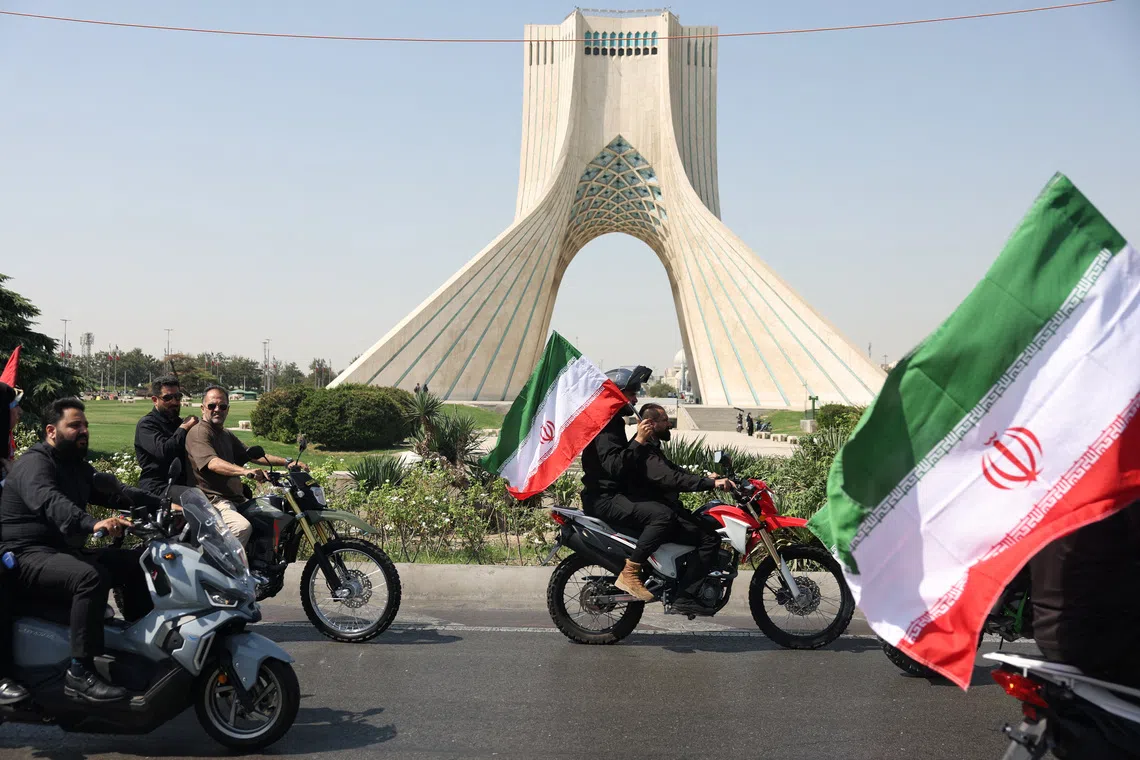
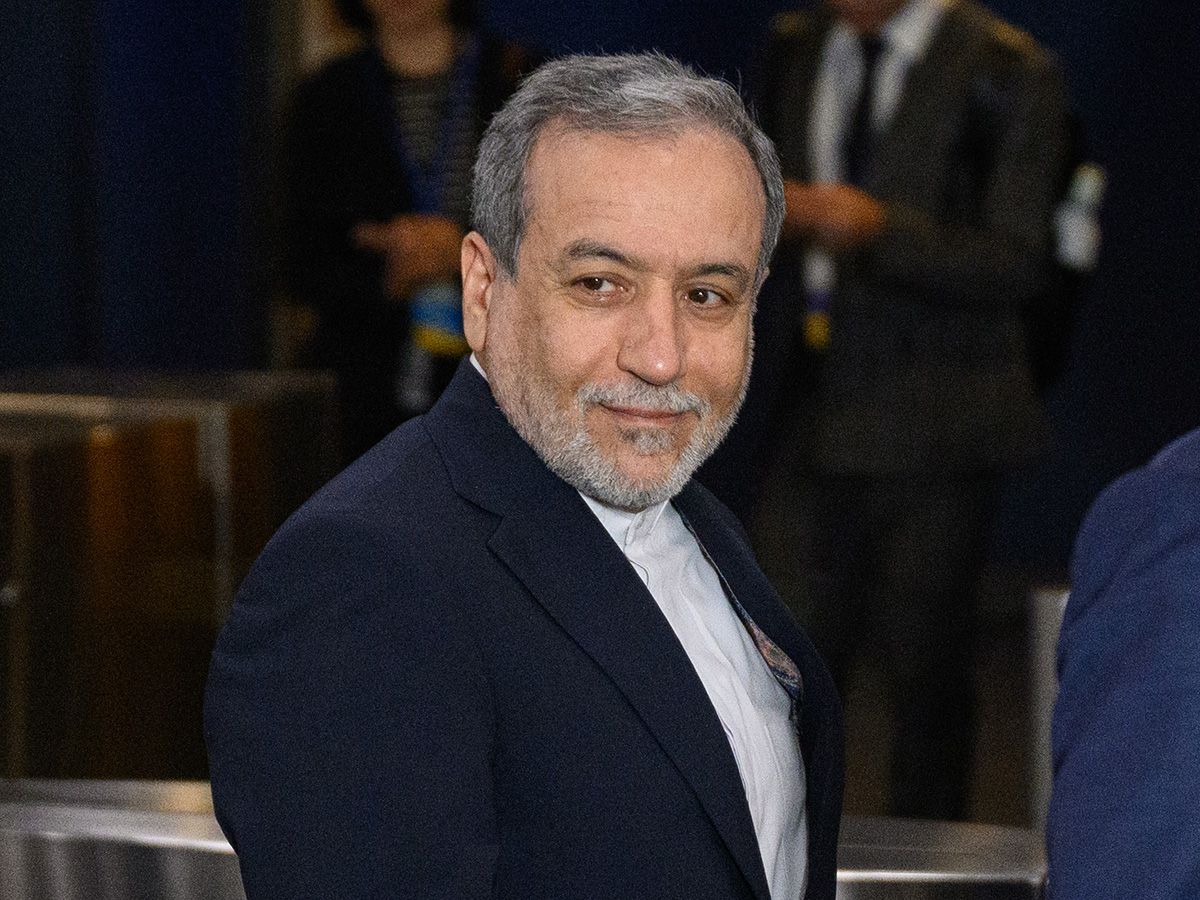
‘Economic war’: Is Iran losing its leverage over the Strait of Hormuz?

Read the original at Al Jazeera ↗
Al Jazeera · collected 2026-09-30 · by Usaid Siddiqui

Quick Summary

The article discusses how tanker traffic and oil flow through the Strait of Hormuz are recovering despite ongoing tensions between Iran and the United States. According to data from Kpler, crude exports reached 16.328 million barrels per day in September, their highest since the conflict began, though this is still about 3.2 million bpd below February's levels. Experts suggest that while increased traffic through the strait may weaken Iran’s economic leverage, it does not signify a complete normalization of relations or security in the region.
Written locally by qwen2.5:14b on 2026-09-30, using this article's own text rather than the other coverage of the same event (that is the story summary below).

AI analysis runs on qwen2.5:14b, locally

Story summary

Oil exports from the Middle East have rebounded to 80% of pre-war levels, according to data from oil tracker Kpler, despite ongoing tensions between Iran and the United States since February 28. This increase suggests that maritime traffic through the Strait of Hormuz is stabilizing, though experts caution that full security and stability remain uncertain until broader conflicts are resolved. The U.S. military's presence in the region has reportedly helped mitigate Iranian threats to oil shipments, contributing to this recovery. However, Iran continues to face severe economic hardships, with its rial depreciating sharply and inflation soaring, weakening its negotiating position. Despite these challenges, some experts argue that Iran retains significant leverage due to unresolved conflicts, making a quick resolution unlikely.

Written for “Iran Oil Strategy Impact” on 2026-10-05, grounded in this article and the 7 other(s) covering the same event.

Signals How these are calculated →

Claims extracted
64
claim-shaped sentences
Uncertain
16%
10 of 64 hedged
Leaning
Leans right
of the writing, not the subject · beta estimate
Correction & hedging signals
60.3
corrections and hedging in what we collected; not a measure of accuracy
Outlets on this story
8
Economy/Business
Narrative spread
1
articles carrying this framing
Analyzed 2026-09-30 · how these are computed

Story

📰 Iran Oil Strategy Impact
Economy/Business · 8 article(s) covering the same event. See how they differ ↓

How this is being covered How these are calculated →

Article leaning vs. publisher reliability
Source leaning vs. consistency

Compared with similar articles

This article reads leans right and hedges 16% of its claims. Each row says how that neighbour differs.
Al Jazeera · 0.88 cosine similarity
⚖️ leaning not scored 🔴 11% hedged 4 of 36 📰 publisher trust 60
“Article A describes explosions and attacks near Qeshm Island following US President Trump's rejection of Iran's diplomatic solution, while Article B discusses an increase in traffic through the Strait of Hormuz weeks later as negotiations continue.”
The Hindu · 0.86 cosine similarity
⚖️ Leans left further left than this 🔴 7% hedged 2 of 30 📰 publisher trust 60
“The articles discuss different aspects and timeframes related to the conflict over the Strait of Hormuz, with Article A focusing on Iran's firm stance after a U.S. rejection and Article B analyzing changes in traffic through the strait.”
Dawn · 0.86 cosine similarity
⚖️ Leans left further left than this 🔴 8% hedged 2 of 25 📰 publisher trust 77
“The articles discuss related situations regarding Iran's stance on the Strait of Hormuz, but they describe different time points and contexts: Article A covers Iran's firmness after US rejection, while Article B discusses economic shifts in traffic through the strait weeks later.”
The Straits Times · 0.86 cosine similarity
⚖️ Leans left further left than this 🔴 14% hedged 4 of 28 📰 publisher trust 59
“The articles discuss different aspects and times related to Iran's proposals and US responses, not a single identical incident.”
Daily Mail · 0.85 cosine similarity
⚖️ leaning not scored 🔴 14% hedged 5 of 36 📰 publisher trust 65
“Article A describes Trump's statements about Iran outsmarting itself and rejecting a ceasefire deal, while Article B discusses economic trends in the Strait of Hormuz related to ongoing negotiations. The articles cover different aspects of the broader conflict.”
Dawn
⚖️ leaning not scored 🔴 0% hedged 0 of 13 📰 publisher trust 77
“Article A reports on a speech made by PM Shehbaz Sharif at UNGA about the importance of Strait of Hormuz and Bab al-Mandab, while Article B discusses recent shifts in oil traffic through the Strait of Hormuz due to ongoing negotiations between Iran and the US. These are distinct events occurring around the same time but covering different topics.”
BBC News
⚖️ Leans left further left than this 🔴 4% hedged 1 of 25 📰 publisher trust 78
“The articles discuss different aspects and timeframes related to Iran's negotiations with the US over reopening the Strait of Hormuz, but they do not describe the same specific incident occurring at the same time.”
National Post
⚖️ leaning not scored 🔴 7% hedged 1 of 15 📰 publisher trust 60
“The articles discuss different aspects and stages of negotiations regarding the Strait of Hormuz, with Article A focusing on an initial proposal by Iran to reopen the strait within a week, while Article B discusses later developments and changing realities in traffic through the strait.”
Al Jazeera
⚖️ Leans left further left than this 🔴 9% hedged 3 of 33 📰 publisher trust 60
“The articles discuss different aspects of the economic situation and traffic through the Strait of Hormuz related to the ongoing conflict, but do not describe the same specific incident or time frame.”
Toronto Star
⚖️ leaning not scored 🔴 17% hedged 5 of 30 📰 publisher trust 63
“The articles discuss different stages and outcomes related to negotiations between Iran and the US regarding the Strait of Hormuz, with Article A focusing on an initial diplomatic pitch made by Iran at a U.N. gathering, while Article B addresses later developments and shifting realities in traffic through the strait.”

Publisher

Al Jazeera · 2109 article(s) · 2 correction(s) detected
Running correction rate · 2 correction(s)
2026-10-03
Tennessee prisons official resigns after Christa Pike’s failed US execution
2026-09-30
Indonesia suspends five officials over luxury apartments for inmates

Who wrote this

Usaid Siddiqui
5 article(s) here · 1 carrying a prediction
🔮 Sami Abu Shehadeh, the leader of the Balad party, withdrew his candidacy after the Supreme Court warned he could be disqualified from the race.
🔮 As Iran and the United States work with mediators to end seven months of hostilities, the reality in the Strait of Hormuz is shifting in ways that could prove to be a game-changer in ongoing negotiations.
🔮 The proposal, effectively an “AI hotline”, was discussed on Sunday during talks in New York between US Treasury Secretary Scott Bessent and Chinese Vice Premier He Lifeng, ahead of a summit between US President Donald Trump and Chinese President Xi Jinping in Washington this week. Recommended Stories list of 3 items- list 1 of 3Doomsday AI: panic, regulation and the China fear - list 2 of 3Australia seeks big tech support for internet safety, AI regulation - list 3 of 3Trump says he will create ‘AI Force’ with new ‘AI czar’ The two leaders are expected to consider establishing a broader US-China dialogue on AI, including the proposed notification system, around which details remain limited.
🔮 “Let’s see if a hike could open SOH or produce a single barrel,” he wrote, referring to interest rate hikes and the Strait of Hormuz, a crucial waterway Iran has effectively blocked for global shipping.
🔮 Saudi Arabia will always support diplomatic solutions, but the kingdom will never hesitate to defend itself and its interests.
Also by Usaid Siddiqui
Nothing else under this byline is closely related to this article, so these are simply their most recent.

Topics

3Iran Hormuz Iran Kpler the United States

Subjects

Iran GPE · 11× Hormuz GPE · 3× Kpler ORG · 2× Tehran GPE · 2× 3Iran GPE · 1× Araghchi PERSON · 1× Iranian NORP · 1× Susannah Streeter PERSON · 1× Trump PERSON · 1× the United States GPE · 1×

Narrative

“The fact that oil is getting through the Strait of Hormuz is encouraging, but flows are not yet regarded as completely secure or guaranteed, particularly while the wider conflict remains unresolved,” Susannah Streeter, chief investment strategist at Wealth Club, told Al Jazeera.
framing: assertive · carried by 1 article(s) · first seen 2026-09-30
🔮 As Iran and the United States work with mediators to end seven months of hostilities, the reality in the Strait of Hormuz is shifting in ways that could prove to be a game-changer in ongoing negotiations.

Claims (64 extracted, 10 hedged)

As Iran and the United States work with mediators to end seven months of hostilities, the reality in the Strait of Hormuz is shifting in ways that could prove to be a game-changer in ongoing negotiations. uncertain
that → work → negotiations
According to the latest data from tanker-tracker websites, traffic through the key waterway has been steadily increasing, with some estimates putting oil and petroleum flow through the Strait of Hormuz at nearly 80 percent of what it was before the US-Israeli war on Iran began on February 28. uncertain
war → accord → February
Recommended Stories list of 3 items- list 1 of 3Iran shifts trade north to Caspian Sea as war impairs Strait of Hormuz - list 2 of 3‘Iran ready for doomsday war’, FM Araghchi says - list 3 of 3Why asserted
Araghchi → shift → war
has Trump rejected Iran’s peace proposal? asserted
Trump → reject → proposal
This could dent Iran’s leverage in reaching a favourable deal for itself in its attempts to end the fighting, which has seriously hampered its already heavily sanctioned economy, amid the US blockade of Iranian ships and ports. uncertain
which → dent → ships
Despite that, experts believe it would be a mistake to think normality in the Strait of Hormuz is imminent, or that Iran will fold easily despite growing economic hardship. asserted
Iran → believe → hardship
“The fact that oil is getting through the Strait of Hormuz is encouraging, but flows are not yet regarded as completely secure or guaranteed, particularly while the wider conflict remains unresolved,” Susannah Streeter, chief investment strategist at Wealth Club, told Al Jazeera. asserted
Streeter → get → Jazeera
Moreover, oil prices remain high globally, including in the US, where President Donald Trump faces a crucial midterm election that could see his party swept away in both houses of Congress. uncertain
party → remain → Congress
Tanker insurance costs also remain elevated and energy flows through Hormuz are still far from secure, suggesting Iran’s leverage may be weakening rather than disappearing. Oil flows through Hormuz recovering The latest data from commodity analytics firm Kpler points to a significant recovery in oil exports from the Middle East. Crude exports reached an estimated 16.328 million barrels per day (bpd) in September – their highest level since the war began in late February, the firm reported this week. uncertain
firm → remain → February
Flows through the Strait of Hormuz itself were expected to reach about 9.719 million bpd during the month. asserted
Flows → expect → month
Saudi Arabia has driven much of the increase, with its exports rebounding from 2.446 million bpd in August to about 5.4 million bpd in September. asserted
exports → drive → September
Kpler said Middle East crude exports have recovered to just under 80 percent of their pre-war level. asserted
exports → say → level
But the figures remain about 3.2 million bpd below the 19.513 million bpd exported in February. asserted
figures → remain → February
The data also does not include ships crossing Hormuz with their tracking systems switched off, meaning actual traffic could be higher. uncertain
traffic → include → Hormuz
Prior to the war, an estimated 120-140 vessels crossed through the waterway daily, roughly half of them oil tankers moving approximately 20 million barrels per day. asserted
vessels → estimate → day
At the height of the fighting, traffic through the waterway collapsed to as few as two tankers a day after Iran in effect closed the strait in retaliation for US-Israeli attacks. asserted
Iran → collapse → attacks
Is Iran losing leverage? asserted
Iran → lose → leverage
The rebound in oil flow presents a challenge for Tehran. asserted
rebound → present → Tehran
Iran has sought to use its ability to disrupt the Strait of Hormuz – one of the world’s most important energy chokepoints – as leverage against Washington’s military and economic pressure. asserted
Iran → seek → pressure
But if large volumes of oil can continue moving through the strait while Iran itself remains under a US naval blockade, Tehran’s bargaining power could diminish. uncertain
power → continue → blockade
Iran, however, rejects any assessment that its control over the strait is slipping. asserted
control → reject → strait
Hossein Mohebbi, the Islamic Revolutionary Guard Corps spokesperson on Wednesday said there is an ongoing “military conflict” in the Hormuz Strait. asserted
Mohebbi → say → Strait
“We have been hitting small ships and preventing them from passing for a long time, but America does not respond,” Mohebbi said in an interview with the semi-official Fars news agency. asserted
Mohebbi → hit → agency
Separately on Wednesday, the United Kingdom Maritime Trade Operations (UKMTO) centre said unknown projectiles struck three ships in the waterway on Tuesday, including a crude oil tanker. asserted
projectiles → say → tanker
Oil prices are another indication that Iran has not lost all of its leverage. asserted
Iran → lose → leverage
Brent crude fell 2.6 percent to $102.59 a barrel on Tuesday as traders focused on recovering Middle East exports. asserted
traders → fall → exports
But it was still heading for a roughly 13 percent gain in September. asserted
it → head → September
Chris Beauchamp, an analyst at IG, said markets were beginning to incorporate evidence of recovering flows but remained wary about how durable that recovery would be. asserted
recovery → say → flows
“It takes time for evidence to filter through to markets,” Beauchamp said. asserted
Beauchamp → take → markets
“Oil prices came off yesterday as the narrative began to take hold, and should continue to fall.” asserted
narrative → come → hold
But he said concerns persisted over whether the US protection system could withstand a renewed barrage of Iranian missiles and drones. uncertain
system → say → missiles
Streeter of Wealth Club said the market still had a geopolitical risk premium built into crude prices, despite the improving flows. asserted
market → say → flows
“Insurance costs for tankers also remain elevated because of the perceived risks of operating in the region, adding to the cost of transporting crude even as more ships make it through the waterway,” she said. asserted
she → remain → waterway
Moreover, Streeter warned that crude figures tell only part of the story. asserted
figures → warn → story
Flows of refined fuels, particularly diesel and gasoline, remain constrained, while damage to infrastructure has placed additional pressure on energy supply chains, she added. asserted
she → remain → chains
There is another vulnerability, the investment strategist pointed out. asserted
strategist → be → ?
Countries including the US have relied heavily on strategic oil reserves to cushion the impact of the disruption and help contain prices. asserted
Countries → include → prices
“With those stockpiles now significantly depleted, there is a thinner buffer if there is another disruption, which is helping to keep a floor under crude prices,” Streeter added. asserted
Streeter → deplete → prices
‘Economic war’ on Iran There is little doubt that economic pressure on Iran is intensifying, potentially increasing Tehran’s incentive to reach an agreement. asserted
pressure → be → agreement
Official data from the Statistical Center of Iran earlier this month showed gross domestic product (GDP) contracting 10.1 percent year on year between March 21 and June 20, while the crucial oil and gas sector shrank 26.4 percent. asserted
sector → show → March
…and 24 more, not listed.

💬Give feedback
🕘History 🎫Support