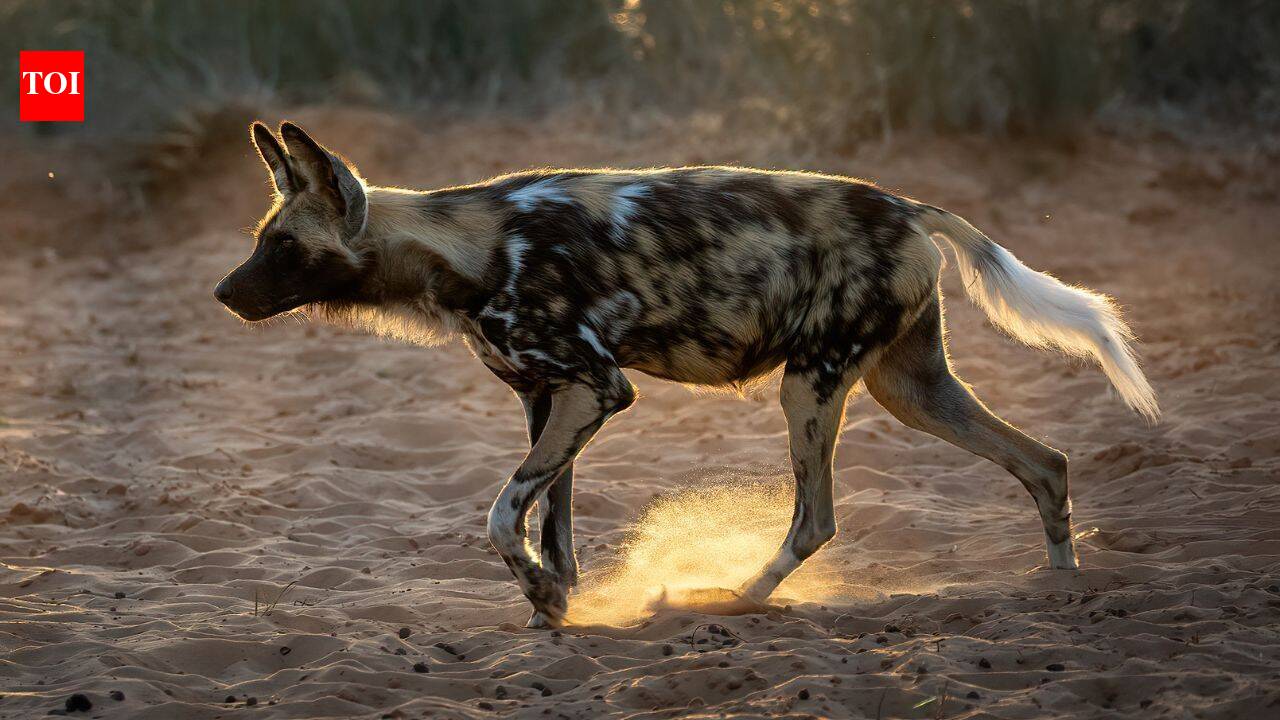
African wild dogs returned to Zimbabwe’s Matusadona National Park in February 2026 after disappearing from the area for decades.
asserted
dogs → return → decades
20 animals were moved into the park in two established packs, marking a major step in the restoration of a predator that had been locally extinct there.
asserted
that → move → predator
But the return did not begin with the release itself.
asserted
return → begin → release
African Parks and the Zimbabwe Parks and Wildlife Management Authority had spent years rebuilding protection, wildlife populations, monitoring systems and community links across Matusadona before the dogs arrived.
asserted
dogs → spend → Matusadona
How 20 African wild dogs returned to Matusadona after decades
asserted
dogs → return → decades
The 20 African wild dogs were translocated between 15 and 17 February 2026, according to African Parks.
uncertain
dogs → translocate → Parks
The animals came from Nuanetsi Ranch in southern Zimbabwe and were moved in 2 established packs, with 6 dogs in one and 14 in the other.
asserted
animals → come → other
The operation was led by African Parks and the Zimbabwe Parks and Wildlife Management Authority, or ZimParks.
asserted
operation → lead → Parks
NineDaysinEden reported that the process involved wildlife specialists, veterinarians, aircraft crews and conservation teams, with the animals undergoing health checks and careful monitoring before transport.
asserted
animals → report → transport
The dogs were not released straight into the wider park.
asserted
dogs → release → park
Instead, they were placed in specially built holding facilities near Tashinga for several weeks.
asserted
they → place → weeks
This soft-release approach gave the packs time to recover from the journey, become familiar with their surroundings, maintain their social bonds and begin establishing a connection with the new territory.
asserted
approach → give → territory
Matusadona was rebuilt before these predators arrived
The return of the dogs followed 5 years of conservation work in the park.
asserted
return → rebuild → park
African Parks said its partnership with ZimParks was formalised in 2020, after which efforts focused on strengthening anti-poaching systems, ranger training, biodiversity monitoring, infrastructure and community programmes.
asserted
efforts → say → systems
According to African Parks, zebra, buffalo, sable and eland had been moved into the park as part of efforts to rebuild its wildlife populations and restore the wider ecosystem.
uncertain
zebra → accord → ecosystem
This preparation mattered because wild dogs need more than a protected patch of land.
asserted
dogs → matter → land
SafariFind reported that the species generally requires large, connected landscapes with enough prey and relatively low levels of direct persecution.
asserted
species → report → persecution
Packs can travel beyond park boundaries, making cooperation with neighbouring communities and land managers important to their survival.
asserted
cooperation → travel → survival
Importance of wild dogs to the restored ecosystem
African wild dogs are among Africa’s most endangered large carnivores.
asserted
dogs → restore → carnivores
African Parks puts the number remaining in the wild at fewer than 7,000, while its detailed species information gives an approximate figure of 6,600.
asserted
information → put → 6,600
Their importance is not limited to being a rare wildlife sighting.
asserted
importance → limit → ?
They are highly social predators that hunt cooperatively and help regulate prey populations.
asserted
that → hunt → populations
The African Bush Camps Foundation said their return contributes to restoring the ecological balance of Matusadona.
asserted
return → say → Matusadona
The species faces several threats across Zimbabwe and elsewhere.
asserted
species → face → Zimbabwe
SafariFind identifies habitat fragmentation, snares, disease, conflict with people, road deaths and declining prey as continuing pressures.
asserted
SafariFind → identify → pressures
Wild dogs can also travel through communal areas and private land, meaning conservation efforts cannot stop at the boundaries of a national park.
asserted
efforts → travel → park
GPS tracking will help keep the packs safe
The newly introduced dogs are being closely watched as they settle into Matusadona.
asserted
they → help → Matusadona
African Parks reported that all adult wild dogs were fitted with GPS collars so their movements and social behaviour can be followed.
asserted
movements → report → collars
The park has also introduced a GPS-based geofence warning system around nearby settlements.
asserted
park → introduce → settlements
When collared wildlife approaches these areas, alerts can be triggered so conservation teams can respond before animals move into inhabited locations.
asserted
animals → collar → locations
African Parks reported that 12 rangers from Nyaminyami Rural District Council have been brought into the park’s operational structure, while 8 Human-Wildlife Conflict Ward Monitors are working in important areas of neighbouring chiefdoms.
asserted
Monitors → report → chiefdoms
The monitors provide an early-warning link between communities and park authorities and can report incidents quickly.
asserted
monitors → provide → incidents
The return forms part of a wider recovery
Matusadona covers 1,470 square kilometres along the southern shores of Lake Kariba, according to African Parks.
uncertain
Matusadona → form → Parks
Its habitats include floodplains, the drowned forest and the Zambezi Escarpment, supporting animals such as elephants, buffalo, lions and leopards as well as more than 240 bird species.
asserted
habitats → include → species
The wild dogs are therefore returning to a landscape where broader restoration work is already under way.
asserted
work → return → way
African Parks said their reintroduction also supports conservation across the wider Sebungwe region.
asserted
reintroduction → say → region
SafariFind estimates about 660 wild dogs in 86 packs across the country, although it notes that figures vary according to surveys and sources.
uncertain
figures → estimate → surveys
Important populations remain in the Greater Hwange Ecosystem, the Zambezi Valley and the south-east lowveld.
asserted
populations → remain → Ecosystem
The long-term outcome for the Matusadona packs will depend on what happens after their release.
asserted
what → depend → release
African Parks said the team will continue tracking their movements, social dynamics and adaptation, with the information helping in future management.
asserted
information → say → management
 The Aporia