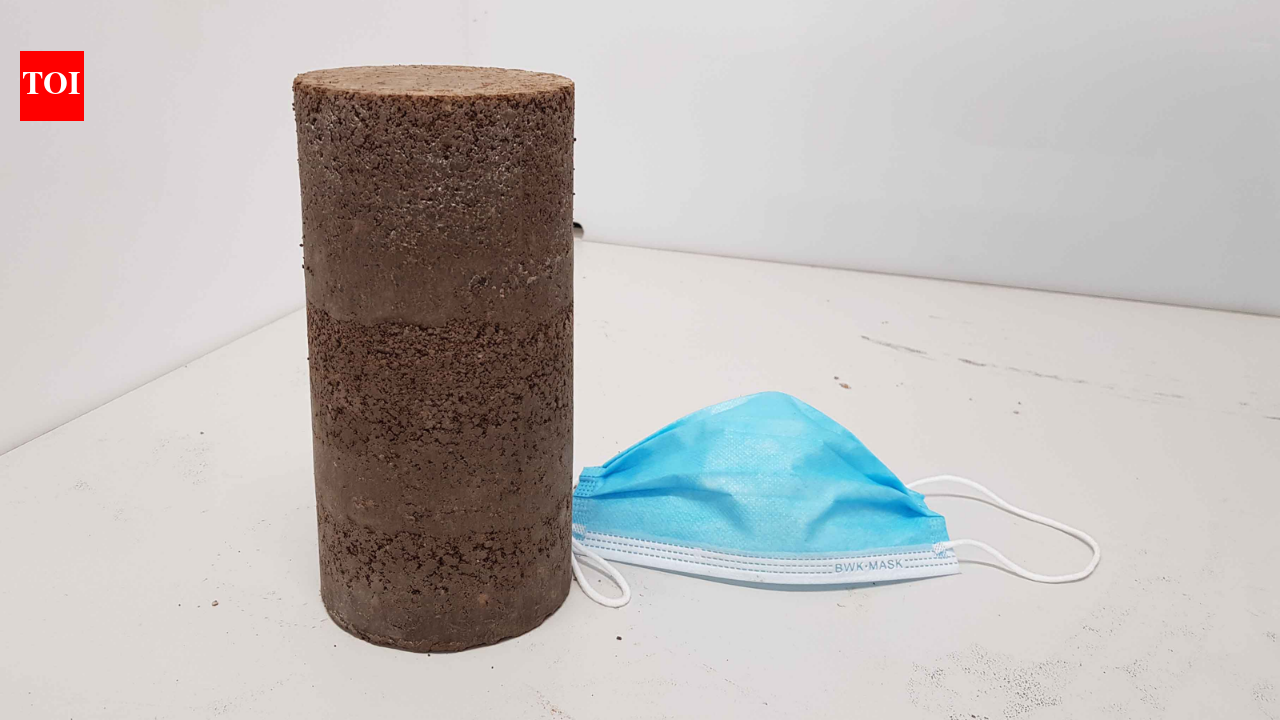
Engineers at RMIT University in Australia discovered that 3 million discarded face masks can be used to construct one kilometre of a two-lane road base when mixed with recycled concrete aggregate (RCA). The study, published in Science of the Total Environment, found this mixture met necessary engineering standards and could help reduce waste by removing about 93 tonnes from landfills. Conducted during the peak of mask usage due to the COVID-19 pandemic, the research aims to repurpose both face masks and construction debris for sustainable road building materials.
Written locally by qwen2.5:14b on 2026-10-04,
using this article's own text rather than the other coverage of the
same event (that is the story summary below).
About 3 million single-use face masks could be used to build the base of a one-kilometre, two-lane road, according to research by engineers at Australia's RMIT University that explored a way to turn discarded masks and construction waste into road-building material.
uncertain
that → use → material
The researchers shredded single-use face masks and combined them with processed building rubble, known as recycled concrete aggregate (RCA).
asserted
researchers → shred → aggregate
Tests showed that the resulting material met relevant civil engineering specifications for use in road base and sub-base layers.
asserted
material → show → layers
The study, titled “
Repurposing of COVID-19 single-use face masks for pavements base/subbase,” published in
Science of the Total Environment, found that using the material for one kilometre of a two-lane road could consume about 3 million masks while keeping 93 tonnes of waste out of landfill.
uncertain
using → title → landfill
The research was carried out in 2021, when the widespread use of disposable masks during the Covid-19 pandemic had created another stream of waste alongside the huge volumes of construction and demolition material generated worldwide.
asserted
use → carry → material
How the mask-and-rubble mixture works
A road typically consists of four layers: subgrade, sub-base, base and the asphalt surface.
asserted
road → work → layers
The lower layers need to withstand the pressure from heavy vehicles while retaining sufficient flexibility to minimise cracking.
asserted
layers → need → cracking
RCA, produced from processed building rubble, can potentially be used in these layers.
asserted
RCA → produce → layers
The RMIT researchers found that adding shredded face masks could improve the material's stiffness and strength while also providing a way to reuse two different waste streams.
uncertain
adding → find → streams
The researchers identified a mixture containing 1% shredded face masks and 99% RCA as the optimum combination in their study.
asserted
researchers → identify → study
The material was tested for properties including strength, deformation, stress, acid and water resistance and dynamic performance.
asserted
material → test → strength
It met the relevant civil engineering requirements in the tests, suggesting the mixture could have potential as a road-base material.
uncertain
mixture → meet → material
The study described its work as the first investigation into the potential use of disposable surgical face masks in civil construction.
asserted
study → describe → construction
A waste problem on two fronts
The research was driven partly by the enormous increase in personal protective equipment use during the pandemic.
asserted
research → drive → pandemic
The study estimated that about 6.8 billion disposable face masks were being used around the world every day.
asserted
masks → estimate → world
At the same time, construction, renovation and demolition activities account for about half of the waste generated each year globally.
asserted
activities → account → waste
In Australia, around 3.15 million tonnes of recycled concrete aggregate was being added to stockpiles annually rather than reused, according to the study.
The researchers therefore looked at whether one waste material could help improve another recycled material while keeping both out of landfill.
uncertain
material → recycle → landfill
Dr Mohammad Saberian, the study's first author, said the findings showed that recycling single-use masks into roads was technically feasible and could provide engineering benefits.
“This initial study looked at the feasibility of recycling single-use face masks into roads, and we were thrilled to find it not only works, but also delivers real engineering benefits,” Saberian said.
uncertain
Saberian → say → benefits
He said further work was needed to address health and safety issues involved in handling used PPE on a larger scale and to determine whether other forms of protective equipment could also be recycled in construction.
uncertain
forms → say → construction
The RMIT experiment used a small quantity of unused surgical masks.
asserted
experiment → use → masks
That distinction is important because the researchers were testing the engineering properties of the material rather than demonstrating a large-scale system for collecting and processing contaminated PPE.
asserted
researchers → test → PPE
The study noted that other research had examined methods for disinfecting and sterilising used masks, including techniques capable of killing viruses.
asserted
research → note → viruses
However, the RMIT work said further research would be needed to address the health and safety risks of recycling used PPE at scale.
asserted
research → say → scale
The researchers had also explored another possible application for shredded disposable masks, using them as an aggregate in concrete.
asserted
researchers → explore → concrete
Those preliminary findings were described as promising.
asserted
findings → describe → ?
Professor Jie Li, who leads the RMIT School of Engineering research team, said the idea emerged after researchers saw discarded masks littering local streets.
asserted
masks → lead → streets
The approach reflects a broader circular-economy concept: rather than treating discarded masks and construction rubble solely as waste, both materials could potentially become inputs for new construction products.
For now, however, the road study remains an experimental demonstration of feasibility rather than evidence that mask-based road materials are ready for widespread use.
uncertain
materials → reflect → use
 The Aporia