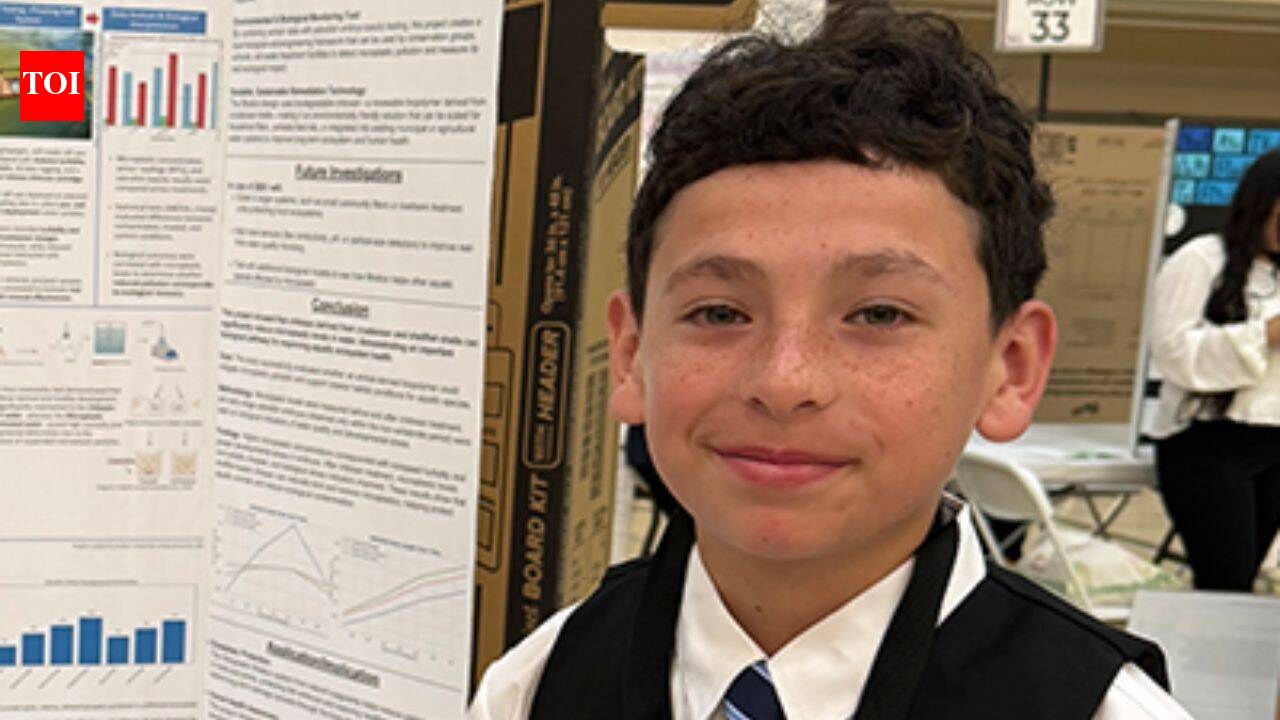
Nathan Gael Montelongo, a seventh-grader from La Joya, Texas, developed a project using discarded shellfish shells to remove pollutants from water after being warned about microplastic contamination in local fish during a fishing trip on the Rio Grande. He turned chitosan powder from the shells into an effective tool for cleaning polluted water, achieving a removal rate of between 55% and 75% of small particles like glitter. Nathan’s project also involved experiments with actual Rio Grande samples and zebrafish embryos, earning him finalist status in the 2026 Thermo Fisher Scientific Junior Innovators Challenge.
Written locally by qwen2.5:14b on 2026-10-04,
using this article's own text rather than the other coverage of the
same event (that is the story summary below).
A fishing trip along the Rio Grande led a La Joya, Texas, seventh-grader to investigate whether discarded shellfish shells could help remove pollution from water.
uncertain
shells → lead → water
Nathan Gael Montelongo became interested in the problem after a local fisherman warned him that recent fish catches had been found to contain excessive microplastics.
asserted
catches → become → microplastics
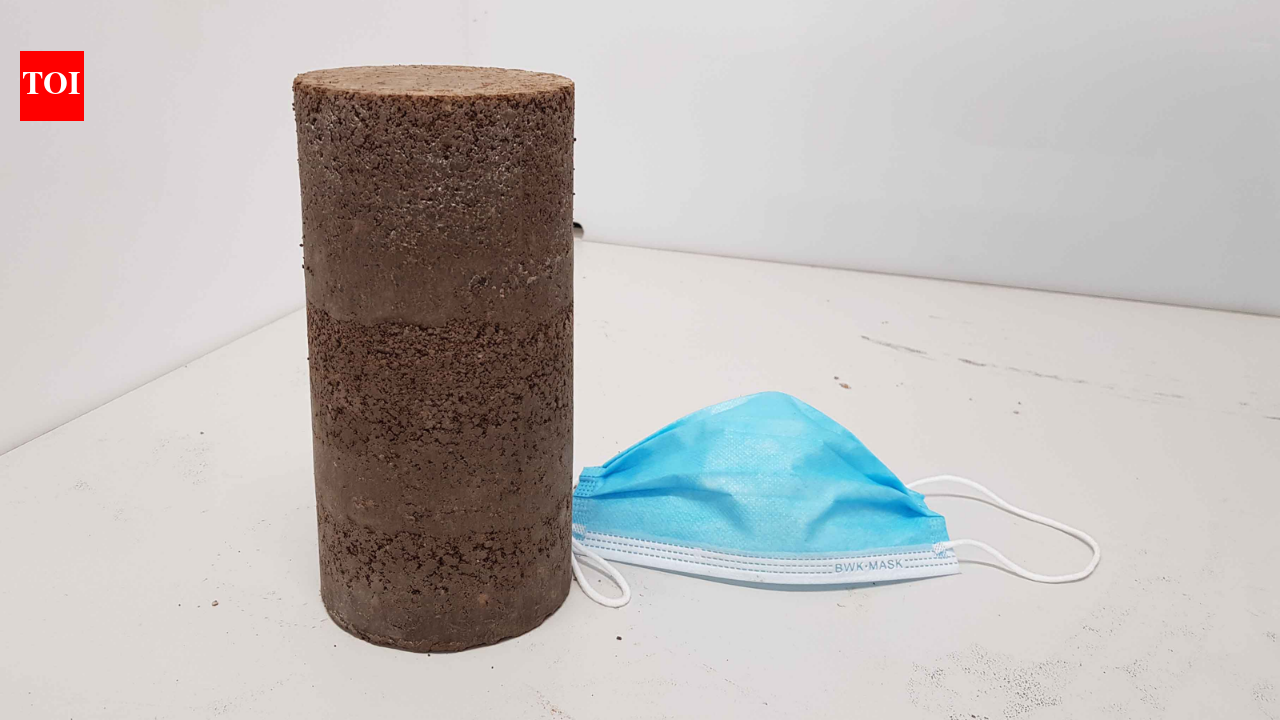
According to Nathan’s profile on the Society for Science, he eventually developed chitosan powder from shellfish shells collected from local restaurants and tested its ability to remove pollutants from water.
uncertain
he → accord → water
His project went further, with experiments involving Rio Grande samples, zebrafish embryos and a prototype raft that could monitor water quality and release chitosan when needed.
uncertain
that → go → chitosan
The project earned Nathan a place among the 30 finalists of the 2026 Thermo Fisher Scientific Junior Innovators Challenge.
asserted
project → earn → Challenge
A fishing trip sparked the idea
Nathan's project began with an experience that connected a local environmental concern with a material that is often discarded.
asserted
that → spark → material
While fishing in the Rio Grande with his older brother, Nathan was preparing to clean their catch when a local fisherman warned them about microplastic contamination in recently caught fish.
asserted
fisherman → fish → fish
The warning prompted him to look for a way to remove plastic pollution from water.
asserted
warning → prompt → water
He turned his attention to shellfish.
asserted
He → turn → shellfish
Their shells contain chitin, a natural material that can be processed into chitosan.
asserted
that → contain → chitosan
Chitosan is biodegradable and can bind with pollutants, making it useful for investigating whether shellfish waste could be repurposed as part of a water-cleaning system.
uncertain
waste → bind → system
Rather than buying shells specifically for the experiment, Nathan collected discarded shellfish shells from local restaurants.
asserted
Nathan → buy → restaurants
This also gave the project a waste-reduction element by repurposing discarded shellfish shells.
asserted
This → give → shells
Restaurant shells became chitosan powder
Nathan first dried and ground the restaurant shellfish shells.
asserted
Nathan → become → shells
He then used the material to produce chitosan powder for his experiments.
asserted
He → use → experiments
His initial test used glitter as a visible stand-in for small particles.
asserted
test → use → particles
When Nathan added the chitosan, it picked up between 55% and 75% of the glitter, according to the Society for Science.
uncertain
it → add → Science
The result encouraged him to move on to actual water samples from the Rio Grande.
asserted
result → encourage → Grande
He collected samples containing visible plastic and introduced the chitosan to see how the material would affect the polluted water.
asserted
material → collect → water
As the chitosan coagulated, Nathan observed the water becoming clearer.
asserted
water → coagulate → ?
This provided a visible indication that particles were being pulled together by the material rather than remaining dispersed throughout the water.
asserted
particles → provide → water
Testing the material on Rio Grande water
Nathan did not stop with a visual comparison.
asserted
Nathan → test → comparison
He also used Arduino sensors to measure changes in water quality after treatment.
asserted
He → use → treatment
The sensor-based testing indicated that water quality was improving after the chitosan treatment.
asserted
quality → base → treatment
This gave him another way to examine the performance of the material beyond simply looking at whether the water appeared clearer.
asserted
water → give → material
The project was specifically focused on chitosan's ability to remove microplastics and other pollutants.
asserted
project → focus → microplastics
The results described by the Society for Science come from Nathan's experimental work and do not establish that the process can remove all pollutants from natural waterways or make contaminated water safe to drink.
asserted
water → describe → waterways
Instead, the experiments showed how a material made from discarded shellfish shells could be investigated as a possible tool for removing contaminants from water.
uncertain
material → show → water
Zebrafish provided another test
Nathan also examined whether treating polluted water with chitosan could affect biological conditions.
uncertain
treating → provide → conditions
He exposed zebrafish embryos (Danio rerio) to different water conditions and observed their development for four days.
asserted
He → expose → days
The embryos placed in chitosan-treated water survived more often and showed better development than those exposed to untreated Rio Grande water.
asserted
embryos → place → water
This part of the project allowed Nathan to look beyond the physical appearance and sensor readings of the water.
asserted
Nathan → allow → water
By observing living organisms, he could investigate whether the treated water produced different biological outcomes in his experimental setup.
uncertain
water → observe → setup
The zebrafish experiment was conducted on embryos under laboratory conditions, so the findings do not by themselves demonstrate that chitosan treatment would produce the same effects for aquatic organisms throughout the Rio Grande.
asserted
treatment → conduct → Grande
A raft that could respond to water quality
Nathan then took his idea from a material-based experiment towards a potential automated cleanup system.
uncertain
Nathan → respond → system
He designed a raft capable of measuring water quality and releasing chitosan in response to the measurements.
asserted
He → design → measurements
The concept was to create a system that could detect changes in water conditions and administer the treatment rather than requiring someone to manually add the material.
uncertain
that → create → material
This makes the raft an extension of his original experiment.
asserted
raft → make → experiment
The project began with shellfish waste and the question of whether its chitosan could capture pollutants.
uncertain
chitosan → begin → pollutants
It then developed into an automated concept combining water-quality monitoring, pollutant treatment and a floating platform.
asserted
It → develop → monitoring
…and 8 more, not listed.
 The Aporia