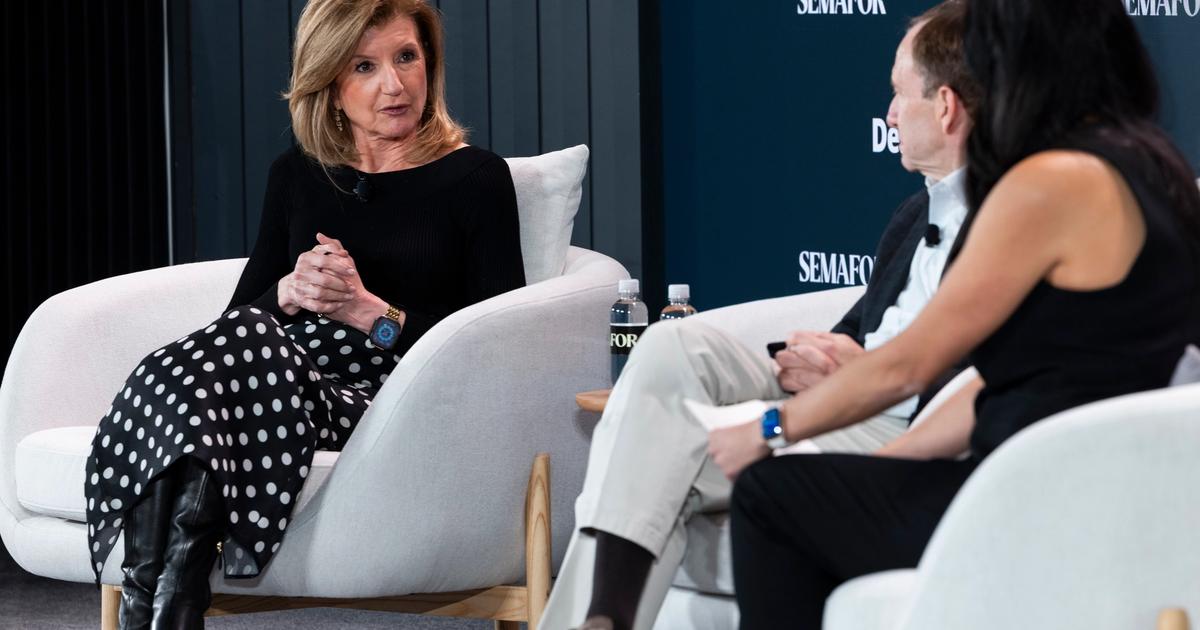
Photo via Semafor

AI costs are rising for organizations, reports warn

Read the original at Semafor ↗
Cite

Capelouto, J. (2026, October 2). AI costs are rising for organizations, reports warn. Semafor. https://www.semafor.com/article/10/02/2026/ai-costs-are-rising-for-organizations-reports-warn

Dated when The Aporia collected the article, usually within hours of publication. Check the original for its exact date and byline.

Semafor · collected 2026-10-02 · by J.D. Capelouto

Quick Summary

Consulting firms Bain & Company and McKinsey have released reports highlighting the increasing costs associated with AI adoption for businesses and governments. Bain predicts that the industry's compute demand will require $6 trillion annually by 2031, including $4.2 trillion from new markets and products not yet developed. Meanwhile, McKinsey warns that despite falling per-token prices, total AI expenses are rising due to higher computational requirements for advanced applications. The reports indicate growing concerns about the economic sustainability of widespread AI implementation as usage escalates among government entities.
Written by AI on 2026-10-02, from this article's own text only (the story summary below draws on all the coverage).

AI analysis

Story summary

Two recent reports from consulting firms highlight the growing financial burden of artificial intelligence adoption for businesses and governments. A Bain & Company report predicts that AI's compute demand will require $6 trillion in annual revenue by 2031, with nearly half ($4.2 trillion) coming from new markets and products not yet existing. Meanwhile, a McKinsey study focusing on American government entities reveals that despite the per-token price of AI dropping, total costs are rising due to increased computational requirements for advanced applications. Tim Ward, a McKinsey Senior Partner, noted that many governments previously incurred minimal usage costs but will soon face substantial expenses as AI adoption increases. These findings underscore concerns about the sustainability of AI investment and its long-term economic impact.


Written for “AI Costs Rising For Organizations” on 2026-11-18, grounded in this article and the 0 other(s) covering the same event.

Compared with similar articles

This article reads leans left and hedges 11% of its claims. Each row says how that neighbour differs.
TIME
Leans strongly left further left than this Hedges 24 of 100 claims Outlet record 60/100
“The articles discuss different aspects of AI concerns; one focuses on financial costs and sustainability, while the other discusses existential risks and safety.”
The Sydney Morning Herald
Hedges 7 of 44 claims Outlet record 61/100
“The articles discuss different aspects of AI's impact on finance and economics over different time periods.”
The Guardian
Leans strongly left further left than this Hedges 7 of 52 claims Outlet record 64/100
“The articles discuss different aspects of AI, with Article A focusing on societal resistance and ethical concerns, while Article B focuses on economic impacts and sustainability issues.”
The Sydney Morning Herald
Hedges 10 of 40 claims Outlet record 61/100
“The articles discuss different aspects of AI costs and economics, with no clear overlap in specific events or time frames.”
BBC News
Hedges 2 of 20 claims Outlet record 65/100
“The articles discuss different aspects of AI's impact on economics and finance but describe distinct events.”
CBS News
Hedges 1 of 2 claims Outlet record 67/100
“The articles discuss different aspects of AI's impact—one focuses on rising costs and sustainability issues, while the other addresses AI's implications for entry-level workers.”
Washington Examiner
Hedges 11 of 89 claims Outlet record 67/100
“The articles discuss different aspects of AI: one focuses on the economic costs and sustainability, while the other addresses concerns about rogue AI and regulation.”
CBS News
Hedges 9 of 123 claims Outlet record 67/100
“The articles discuss different aspects of AI's impact on organizations and work but do not describe the same specific incident.”
Washington Examiner
Leans left Hedges 12 of 58 claims Outlet record 67/100
“The articles discuss different aspects of AI concerns — one focuses on the financial costs and sustainability of AI adoption, while the other addresses ethical safety concerns pushed by tech companies.”
Washington Examiner
Leans left Hedges 12 of 41 claims Outlet record 67/100
“The articles discuss different aspects of AI costs and infrastructure needs, not the same specific incident.”

Story

AI Costs Rising For Organizations
Technology · 1 article(s) covering the same event.
How this article was measured signals, leaning charts, publisher record, byline, topics and claims

Signals How these are calculated →

Claims extracted
9
sentences that state something as happening or true
Uncertain
11%
1 of 9 hedged ("reportedly", "may", "according to")
Leaning
Leans left
of the writing, not the subject · beta estimate
Publisher signals
65/100
Semafor's corrections and hedging, across everything collected from it. Not a measure of accuracy.
Outlets on this story
1
Technology
Same framing elsewhere
1
articles that frame the event the way this one does
Analyzed 2026-10-02 · how these are computed

How this is being covered How these are calculated →

Article leaning vs. publisher reliability
Source leaning vs. consistency

Publisher

Semafor · 1856 article(s) · 6 correction(s) detected
Running correction rate · 6 correction(s)

Who wrote this

J.D. Capelouto
39 article(s) here · 1 carrying a prediction
Amazon CEO Andy Jassy said Tuesday it would be a “historic mistake” for the US to pull back on its AI infrastructure buildout following the data center backlash during the midterm elections.
Asked whether “winter is coming” — a nod to fears that the AI boom could face a correction — Al Mubarak said it was, but that “winter doesn’t mean minus 30 degrees.
Speaking alongside Huffington on the panel, Willett Advisors CEO Steven Rattner said the idea of bringing Huang back as CEO is “ridiculous.”
Billionaire hedge fund manager Bill Ackman said Monday it was “unlikely” that he would get directly involved in an effort to reinstate former Nvidia CEO Jensen Huang.
Indians see AI as less of a threat than people in the US because fewer workers hold the “cognitive and office-oriented jobs” that the technology could replace, one of the country’s top tech officials said.
Those ties went beyond business: Hou referenced a New York Times article in which Huang’s longtime hairstylist admitted he was too upset to sleep, drank a bottle of red wine, and prayed for the former chip CEO after his resignation.
They see the model as particularly useful in sales and executive hiring, where a search firm could prompt it to evaluate an interview transcript to gauge how a candidate will behave under pressure.
2026-11-12 · assertive framing · A new AI model wants to read between the lines
“If we leave a market altogether, there’s no question somebody else would step in,” he told Michael Milken in May 2025.
2026-11-11 · assertive framing · Tracking how Jensen Huang changed his stance on China
The votes were hyperlocal and often emotional in nature, but they could carry financial consequences, because some of the projects at stake were already in motion.
Anthropic advertises a salary floor of $265,000 for charmers willing to spend half their time on the road in increasingly hostile territory.
2026-10-30 · assertive framing · The AI boom spawns job market for data-center liaisons
Also by J.D. Capelouto
Nothing else under this byline is closely related to this article, so these are simply their most recent.
All 39 articles by J.D. Capelouto →

Topics

American Anthropic Bain & Company McKinsey OpenAI

Subjects

McKinsey PERSON · 2× American NORP · 1× Anthropic ORG · 1× Bain & Company ORG · 1× Egan-Jones ORG · 1× OpenAI ORG · 1× Tim Ward PERSON · 1×

Narrative

Those stakes were made clear in a Bain & Company report this week that found that the industry’s compute demand will require $6 trillion in annual revenue by 2031 — including about $4.2 trillion from new markets and products that don’t exist yet.
framing: assertive · carried by 1 article(s) · first seen 2026-10-02
The AI bill is coming for governments and businesses, and no one knows whether the money will be there to pay it.
2026-10-02 · Semafor
AI costs are rising for organizations, reports warn · assertive framing

Claims (9 extracted, 1 hedged)

The AI bill is coming for governments and businesses, and no one knows whether the money will be there to pay it. asserted
money → come → it
Two new reports from consulting giants show how the AI adoption conversation has shifted from whether it works to whether the spending on it is sustainable, as pilot programs pile up and agentic applications take off. asserted
applications → show → it
The debate over AI safety in recent weeks has somewhat dwarfed the still very urgent discourse over AI’s macroeconomic impacts. asserted
debate → dwarf → impacts
Those stakes were made clear in a Bain & Company report this week that found that the industry’s compute demand will require $6 trillion in annual revenue by 2031 — including about $4.2 trillion from new markets and products that don’t exist yet. asserted
that → make → markets
At the same time, buyers of AI are coming under pressure. asserted
buyers → come → pressure
A McKinsey report focusing on American government entities — a large and fast-growing customer for enterprise AI — warned that the per-token price of AI is collapsing, but the total bill is rising, as agents require much more compute. asserted
agents → focus → compute
For many governments, until now, “usage might have been essentially near-zero cost,” McKinsey Senior Partner and Global Public Sector Leader Tim Ward told me. uncertain
Ward → tell → me
The coming IPOs from Anthropic and OpenAI will surely bring more debate over whether their revenue can catch up to the labs’ lofty valuations. asserted
revenue → come → valuations
But “the complete disruption of the economy is all but certain,” credit rating agency Egan-Jones wrote Wednesday, in a note titled It’s Over. asserted
It → write → note
Give feedback · no sign-in needed

No sign-in needed for now. Your note is sent without a name, so it cannot be answered.

History Support