Story summary
Prime Minister Andy Burnham announced plans to reform the state pension "triple lock," changing it to a "double lock" system by 2030, as part of a broader initiative to fund a national social care service similar to the NHS. The current triple lock ensures that pensions rise annually by at least inflation or average earnings, whichever is highest, but Burnham's plan will remove the earnings component starting in 2030. This change aims to save an estimated £15 billion per year by the end of the next decade and up to £50 billion per year by 2050.
However, critics argue that this reform might not be sufficient to cover the costs of a new social care system, potentially leading to higher taxes. Scottish Labour leader Anas Sarwar has called for more transparency about how these savings will fund social care services, while some economists suggest that cutting pensions could disproportionately affect lower-income retirees who rely heavily on state benefits.
Labour's opponents, including Scottish National Party (SNP) and other political entities, have criticized the proposed changes, with SNP leader Ruth Davidson arguing it is a gamble. Meanwhile, Labour’s own leaders like Scottish Labour leader Anas Sarwar are pushing for more clarity regarding how the savings will be used to fund social care.
Scottish Labour's leader, Anas Sarwar, emphasized that while the proposal aims to address critical issues such as dementia and end-of-life care, it needs clear funding mechanisms and transparency. He stated, “We need to know what is being done about costs,” highlighting concerns over the long-term financial sustainability of the plan.
The change in pension policy has also sparked a debate within Labour's ranks, with some members arguing that the party should be more cautious about altering long-standing benefits. Despite internal opposition and external criticism, Burnham’s announcement reflects his determination to tackle social care issues head-on, even at the cost of modifying long-established policies like the triple lock on state pensions.
Written for “Pension Triple Lock Reform Debate” on 2026-10-05,
grounded in this article and the 20 other(s) covering the same event.
The day after Donald Trump won his first US presidential election in 2016, Ed Miliband (at that point just an ex Labour leader) went on the World at One and gave an astute assessment of the lessons to be learnt from Trump by progressives.
asserted
Miliband → win → progressives
Trump was offering “big solutions”, he said – a theory he later fleshed out in a book called “Go Big”.
asserted
he → offer → book
Jeremy Corbyn was Labour leader at the time, and he certainly offered voters a “Go Big” vision – but for various reasons he could not persuade the electorate.
uncertain
he → offer → electorate
But today a more mainstream Labour leader is also going to embrace “Go Big”.
asserted
leader → go → ?
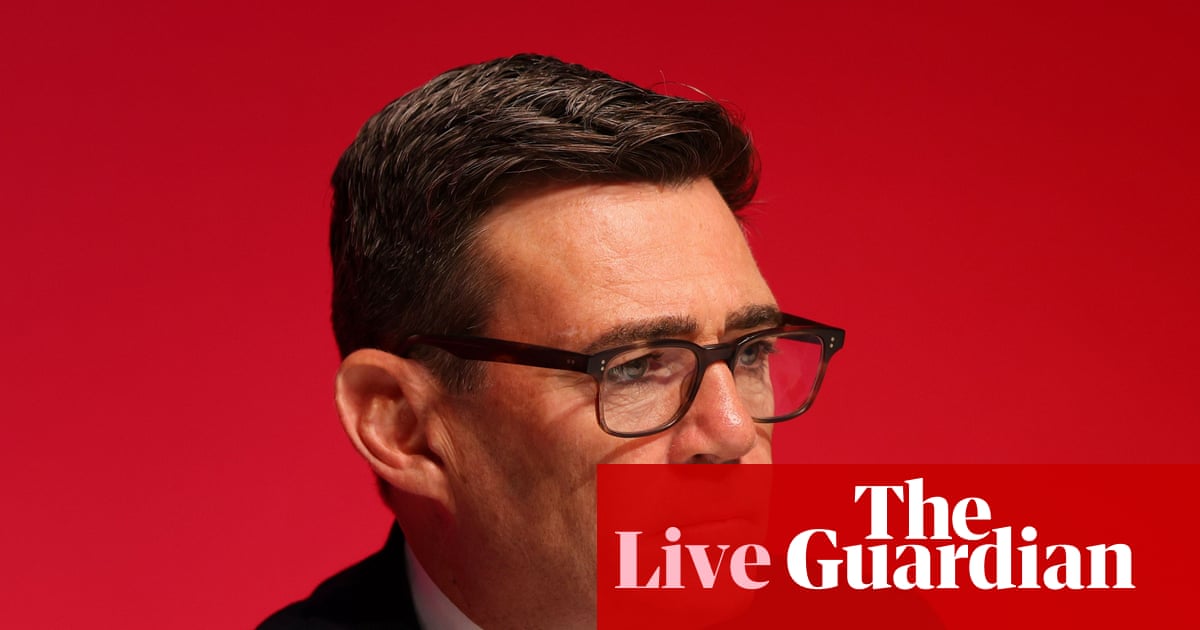
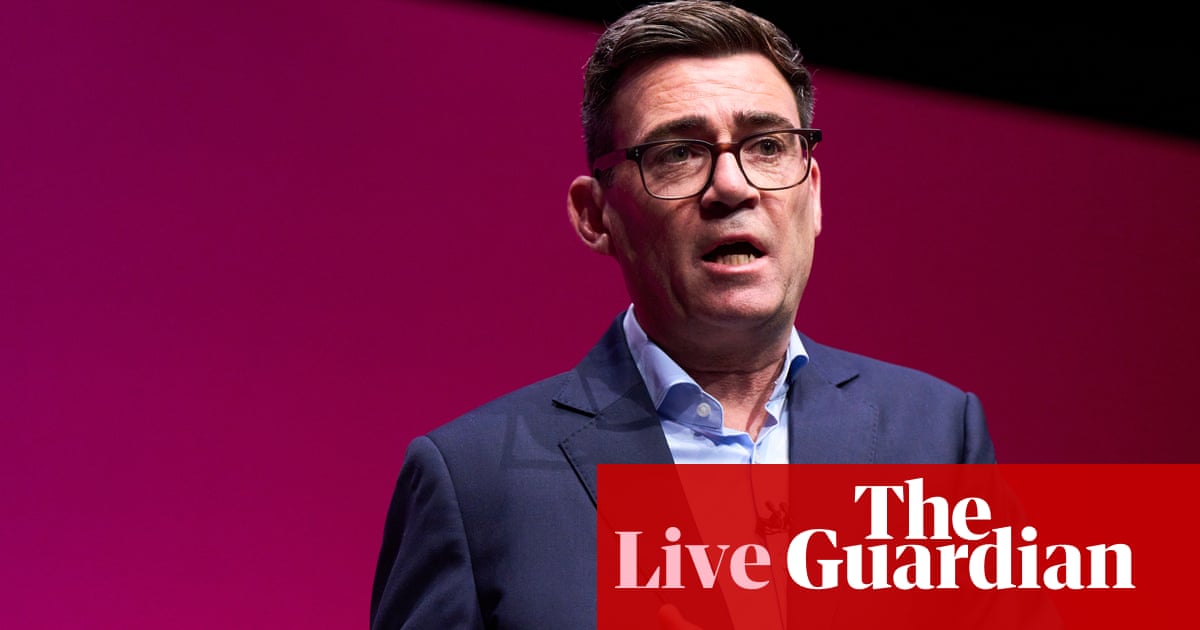
According to the Labour party’s overnight briefing, Andy Burnham is going to use his first conference speech as leader to set out what he will describe as “a more serious prospectus for Britain than people have been offered in a generation”.
uncertain
people → accord → generation
Burnham will say:
We can’t carry on as we are.
asserted
we → say → ?
Politics-as-usual has taken Britain backwards.
asserted
Politics → take → Britain
More of the same isn’t good enough and isn’t going to get us where we need to be.
asserted
we → go → us
According to the Labour briefing, Burnham will say this will require “honest conversation” with the public and taking on the difficult issues that have been ignored for too long by Westminster, including social care, youth unemployment, and the need for greater public control of energy, water and housing.
uncertain
that → accord → energy
He will say:
Hope comes from honesty and from saying the things politicians usually avoid.
asserted
politicians → say → things
As Kiran Stacey, Jessica Elgot and Pippa Crerar report in the Guardian splash, Burnham will take his first major step towards putting Britain’s utility companies into public control when he announces a new government-backed body to invest in the electricity grid.
asserted
he → take → grid
But, for most of the media, it looks as if the story of the day will be another “Go Big” gamble by Burnham.
asserted
story → look → Burnham
On Sunday he revealed for the first time that he wants to fight the election on a colossal promise – a pledge to set up an NHS-style care service, with care free at the point of delivery.
asserted
he → reveal → delivery
He did not say how this would be funded, but over the past 24 hours Downing Street has done nothing to quash speculation that part of the proposal will involve getting rid of the pension triple lock.
asserted
part → say → lock
This is one of the sacred cows of British politics, conventionally viewed as untouchable (even though in private many politicians from all parties agree with the view of almost all reputable economists, which is that in the long run its costs are unsustainable.)
asserted
costs → view → run
Burnham does not seem likely to say he will definitely fight the next election on a proposal to get rid of the triple lock.
asserted
he → seem → lock
(Labour promised in its manifesto to keep it for this parliament, and Burnham is sticking to that.)
asserted
Burnham → promise → that
“Government sources have suggested Burnham would signal his willingness to review the policy, but stop short of a pledge to scrap it altogether,” we report today in our splash.
uncertain
we → suggest → splash
So it looks as if Burnham will launch a pre-election debate, in the hope that he can persuade the public that axing an expensive and badly-targeted perk for pensioners is a price worth paying for transformative reform to adult social care.
asserted
axing → look → care
In his LBC phone-in yesterday, Burnham accepted there was a chance voters might just say no.
uncertain
voters → accept → in
One of the voters saying no is Sharon Graham, general secretary of Unite, one of the most powerful unions in the Labour party.
asserted
One → say → party
Asked about getting rid of the triple lock, she told the Times:
I think it would be almost electoral suicide.
asserted
it → ask → Times
Morally, I just don’t think it’s the right thing.
asserted
it → think → ?
We’re the lowest in the G7 in terms of how much we spend on pensions.
asserted
we → ’re → pensions
I think that’s an embarrassment, quite frankly, because we’re one of the six richest economies in the world.
asserted
we → think → world
I think it would be an absolute disaster, it would send completely the wrong message.
asserted
it → think → message
I cannot understand why we keep going back to pensioners.
asserted
we → understand → pensioners
The conference opens.
asserted
conference → open → ?
Claire Ward, the mayor of the East Midlands, is also speaking.
asserted
Ward → speak → Midlands
Lucy Powell, the deputy leader, speaks at a “what can Labour learn from its members” fringe event.
asserted
Labour → speak → event
Other ministers speaking at fringe events this morning include Miatta Fahnbulleh, the energy secretary, and Kanishka Narayan, the AI minister.
asserted
ministers → speak → Fahnbulleh
Around 11.40am: Angela Rayner, the housing secretary, addresses the conference.
asserted
Rayner → address → conference
Andy Burnham gives his speech to the conference.
asserted
Burnham → give → conference
Bridget Phillipson, the Labour chair, and Alan Milburn, the former cabinet minister who has chaired a review on Neets, speak at a Tony Blair Institute fringe event.
asserted
who → chair → event
Given that it will be a big day in British politics, we will have comments open later for a few hours.
asserted
comments → give → hours
I do look at comments when they are open, but I can’t read them all and if you want to contact me, please email politics.live@theguardian.com.
asserted
you → look → politics.live@theguardian.com
You can use this email to flag up corrections, comments for publication, questions or complaints.
asserted
You → use → publication
 The Aporia