The Guardian
· collected 2026-09-27 · by Pippa Crerar, Alexandra Topping and Kiran Stacey
Andy Burnham, Labour’s leader, announced at his party conference in Liverpool that he will propose transforming social care into an NHS-style system free at the point of use for all in England. He acknowledged this would likely require significant taxpayer funding and potentially higher taxes but emphasized that it is necessary to address the broken social care system. Burnham plans to include these proposals in Labour’s next election manifesto, aiming to gain public support while mitigating political backlash over increased taxation.
Written locally by qwen2.5:14b on 2026-09-28,
using this article's own text rather than the other coverage of the
same event (that is the story summary below).
Story summary
Andy Burnham, the UK Prime Minister, pledged during the Labour Party conference in Liverpool to offer a universal free social care system at the next general election expected by 2029. Burnham aims to address England's "threadbare" social care services and avoid financial ruin for individuals, likening it to American healthcare where vulnerable people can lose everything due to costs. He emphasized that the current system is unsustainable and could break the NHS if left unaddressed.
Burnham acknowledged potential political risks, including being labeled as seeking a “death tax” on estates, but he remains committed to implementing reforms despite possible unpopularity. The proposal's funding details are yet undisclosed; however, experts suggest it might cost around £18 billion annually. Burnham denied this figure, suggesting the final cost would be lower.
Burnham indicated his readiness to spend political capital for these reforms and ruled out immediate implementation before the 2029 election due to potential backlash from opponents who view tax rises as a red line issue. Shadow home secretary Chris Philp warned that any plan requiring more tax hikes could face significant Conservative opposition, with some sources hinting at potentially scrapping the pensions triple lock to fund such reforms.
Written for “Social Care Reform Plan England” on 2026-10-05,
grounded in this article and the 10 other(s) covering the same event.
Andy Burnham will fight the next election with a pledge to finally fix the broken social care system, acknowledging that he is willing to expend political capital by asking taxpayers to cover the cost.
asserted
he → fight → cost
As Labour’s party conference began in Liverpool, he pledged to “rip the plaster off” to radically transform care, setting out a vision for a universal service that would be free at the point of use for everybody in England.
asserted
that → begin → England
The prime minister said the new NHS-style service would be funded by “everybody” but did not give further details of how his long-term plan would be paid for, indicating that a tax rise may be on the cards.
uncertain
rise → say → cards
He said Labour would put the proposals into its next general election manifesto so that voters could give their endorsement, in the hope of reducing the risk that political attacks over “death taxes” would sink the policy.
uncertain
attacks → say → policy
Burnham acknowledged there were risks in a nationwide reform, likely to be costly and complicated to implement, although he rejected suggestions it could cost £18bn a year.
uncertain
it → acknowledge → 18bn
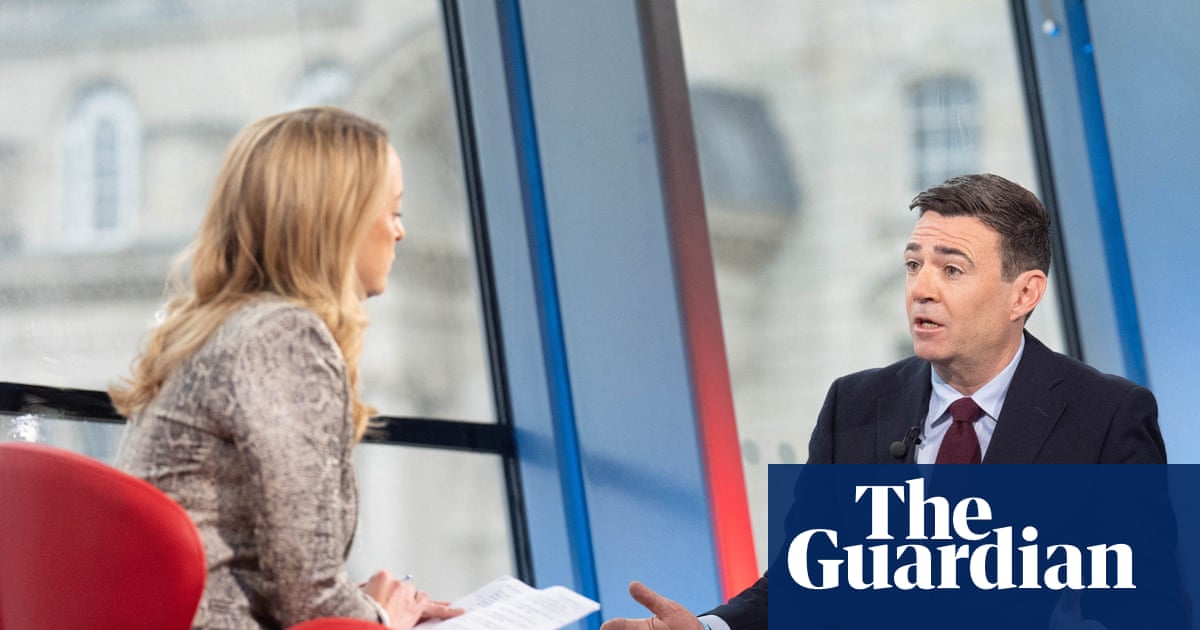
“It’s not that high,” he told the BBC.
asserted
he → ’ → BBC
“Somebody needs to grasp the nettle.
asserted
Somebody → need → nettle
I will be the one to do that,” he said.
asserted
he → do → that
“I realise it might require me to spend some political capital, that it might make me unpopular with some, but that isn’t going to stop [me].”
uncertain
that → realise → me
But he said he would take his time to work out how it could be fairly funded.
uncertain
it → say → time
So it has to be done carefully, without putting extra strain on the public purse.
asserted
it → have → purse
But I will bring forward proposals.”
asserted
I → bring → proposals
Labour’s annual gathering is intended to be an upbeat affair, with the prime minister wanting to restore hope that some of the country’s most intractable political problems can be solved despite severe economic headwinds.
asserted
some → intend → headwinds
With political courage a theme of the conference, he said in an interview with the Guardian at the weekend: “There’s always things you can do, it’s just whether you’re prepared to do them.”
asserted
you → say → them
Burnham acknowledged the public finances were “challenging” ahead of next month’s budget but he said delivering fiscal stability would be “crucial”, because only then would the government be able to focus on fixing bigger problems.
asserted
government → acknowledge → problems
A series of global economic shocks, including the Iran conflict, has put the UK economy under intense inflationary pressure and pushed up borrowing costs, leaving the government with limited room for manoeuvre.
asserted
series → include → manoeuvre
On Sunday, Burnham said he did not want to focus on a “narrative of doom” about the UK’s economy but that he would show in his leader’s speech that he was prepared to take tough decisions.
asserted
he → say → decisions
He acknowledged there was “real concern” in the financial markets about the state of the British economy, pointing to the “febrile” state of the global backdrop.
asserted
He → acknowledge → backdrop
He said he was willing to cut government spending to balance the books, and he believed money could be saved by taking a more “productive” long-term approach to issues such as rough sleeping and youth unemployment.
uncertain
money → say → sleeping
Amid concerns that the government could be hemmed in at the budget by the parlous state of the public finances, he said the chancellor, John Healey, would be “highly prudent” in running the economy.
uncertain
chancellor → hem → economy
“I won’t do what the previous Tory government did and take risks with the economy that are actually still hurting us right now,” he said.
asserted
he → do → us
Burnham suggested to the Guardian that a significant fiscal buffer would be necessary, with speculation that the Treasury could now consider £15bn acceptable.
uncertain
15bn → suggest → speculation
“I do think it is crucial to have stability and to show that there’s a willingness to face up to the reality of some of these difficult things,” he said.
asserted
he → think → things
“But actually from that stability, the permission can come to make bigger change that, in the end, could put the country in a stronger position in relation to the public finances.”
uncertain
that → come → finances
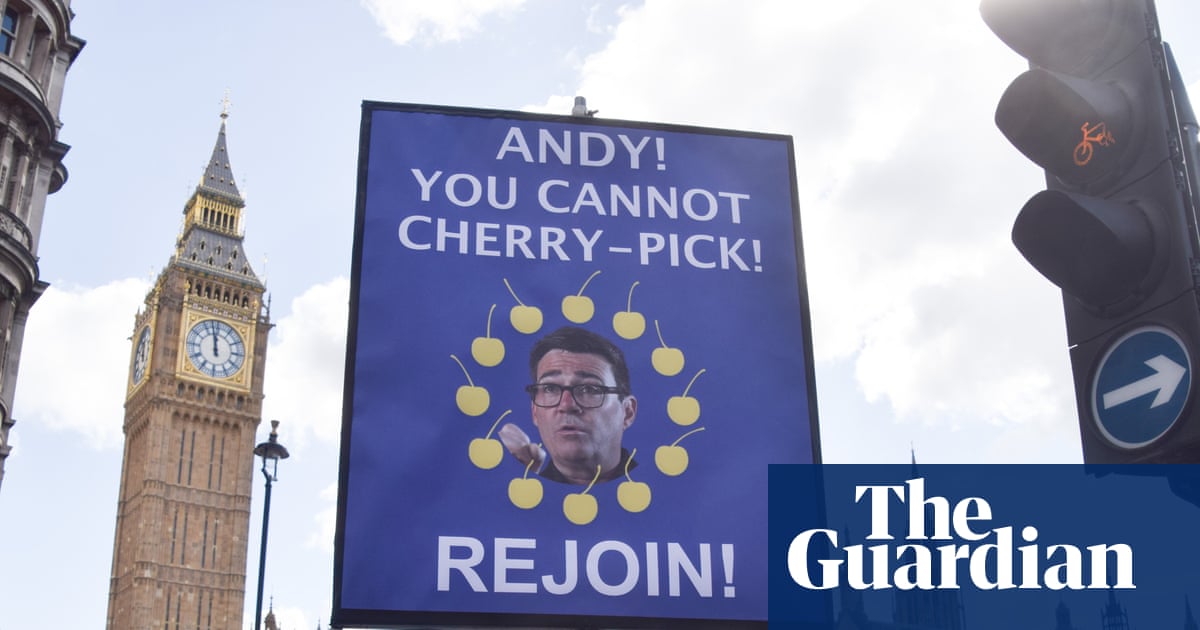
Sadiq Khan, the mayor of London, said the “heavy lifting” on making the case for rejoining the EU needed to be done by the government now, after Burnham signalled that the move could be in the next manifesto.
uncertain
move → say → manifesto
“The pitch rolling must be done now, explaining to the country the dis-benefits of being outside the European Union and the benefits of being part of this family,” Khan said.
asserted
Khan → do → family
However, the business secretary, Jonathan Reynolds, appeared to criticise Khan – and Burnham – telling Politico that the speculation “frankly cause[s] a lot of uncertainty for business”.
asserted
speculation → appear → business
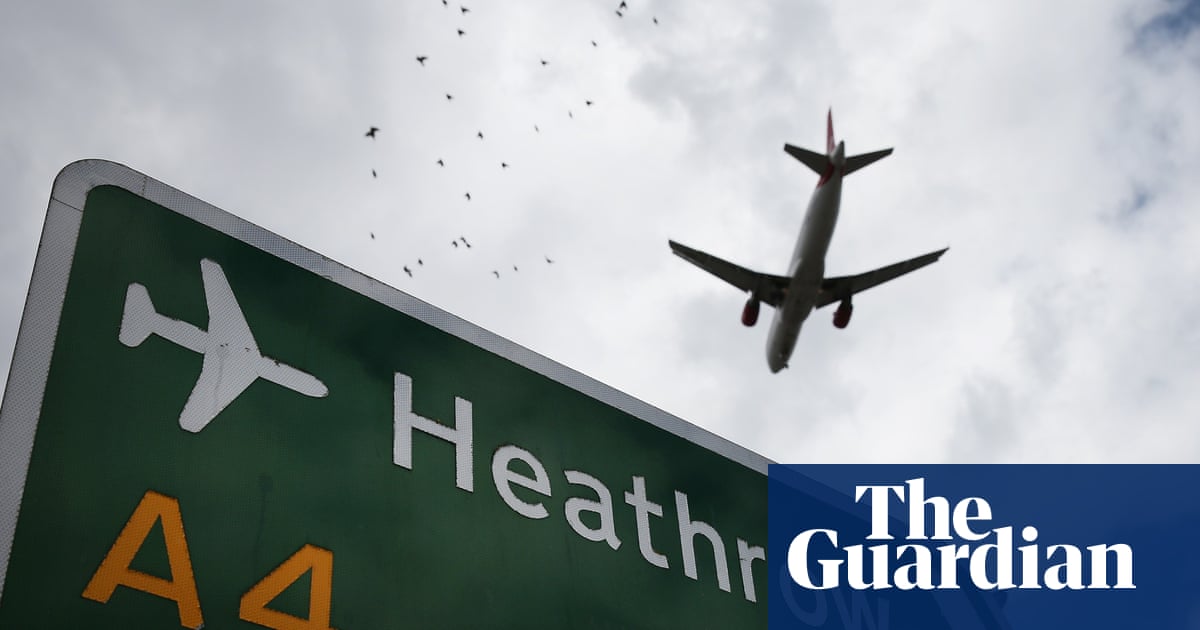
Meanwhile, plans for a third runway at Heathrow are once again up in the air after Burnham refused to say whether he backed the “contested” project, which is delayed by up to four years, saying it was “principally” a matter for London.
asserted
it → refuse → London
 The Aporia