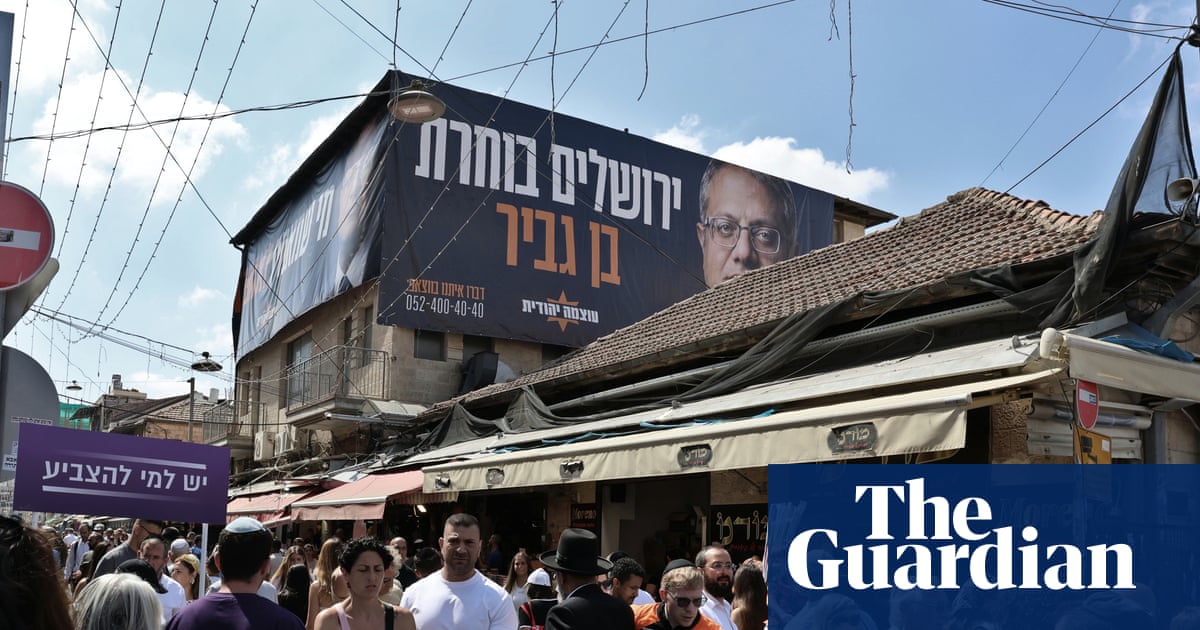
Why Israel banned Arab parties ahead of polls

Read the original at The Hindu ↗
The Hindu · collected 2026-09-28 · by Sambavi Parthasarathy

Quick Summary

On September 23, 2026, Israel's Central Elections Committee voted to ban several Arab parties from contesting upcoming parliamentary elections due to alleged support for armed struggle and incitement against Israel’s existence. The committee specifically targeted the Ra’am party and Joint List coalition, which could potentially win up to 12 seats according to recent polls, thereby influencing the formation of a ruling majority in the Knesset. This move follows previous attempts over decades that have been repeatedly overturned by the Supreme Court.
Written locally by qwen2.5:14b on 2026-09-28, using this article's own text rather than the other coverage of the same event (that is the story summary below).

AI analysis runs on qwen2.5:14b, locally

Story summary

On September 23, 2026, Israel's Central Elections Committee voted to ban two main Arab-majority parties from running in the upcoming parliamentary election on October 27. The committee also disqualified individual candidates Ofer Cassif and Sami Abu Shehadeh. This decision was made following petitions filed by Likud, Jewish Power, and Choose Life Forum, alleging that these parties support terrorism, incite racism, and reject Israel’s existence. Recent polls suggest that Arab parties could secure up to 12 seats in the 120-member Knesset, which is significant as neither Prime Minister Benjamin Netanyahu's coalition nor the Zionist opposition bloc are expected to secure a majority on their own. The Supreme Court will review these decisions next week, potentially overturning them based on previous rulings where similar attempts to exclude Arab parties were rejected.

Written for “Israeli Election Ban On Arab Parties” on 2026-10-05, grounded in this article and the 1 other(s) covering the same event.

Signals How these are calculated →

Claims extracted
33
claim-shaped sentences
Uncertain
15%
5 of 33 hedged
Leaning
Leans left
of the writing, not the subject · beta estimate
Correction & hedging signals
59.9
corrections and hedging in what we collected; not a measure of accuracy
Outlets on this story
2
Politics
Narrative spread
1
articles carrying this framing
Analyzed 2026-09-28 · how these are computed

Story

📰 Israeli Election Ban On Arab Parties
Politics · 2 article(s) covering the same event. See how they differ ↓

How this is being covered How these are calculated →

Article leaning vs. publisher reliability
Source leaning vs. consistency

Compared with similar articles

This article reads leans left and hedges 15% of its claims. Each row says how that neighbour differs.
Al Jazeera · 0.88 cosine similarity
⚖️ Leans left 🔴 8% hedged 5 of 65 📰 publisher trust 60
“Both articles discuss the specific action by Israel's Central Elections Committee on September 23, 2026, to ban Arab-majority parties from the upcoming parliamentary election.”
Al Jazeera
⚖️ Leans strongly left further left than this 🔴 17% hedged 9 of 52 📰 publisher trust 60
“The articles discuss different aspects of Israel's political situation without reporting on the same specific incident.”
Al Jazeera
⚖️ Leans left 🔴 21% hedged 7 of 34 📰 publisher trust 60
“The articles cover different topics: Article A discusses the banning of Arab parties from upcoming elections, while Article B focuses on Netanyahu's alleged warnings regarding the Hamas-led attacks.”
The Guardian
⚖️ leaning not scored 🔴 10% hedged 7 of 70 📰 publisher trust 68
“Article A focuses on the specific vote to ban Arab parties from upcoming elections, while Article B discusses public sentiment and political uncertainty leading up to those same elections but does not describe the same specific incident.”
Al Jazeera
⚖️ Leans strongly left further left than this 🔴 6% hedged 3 of 52 📰 publisher trust 60
“Article A reports on the specific decision by Israel's Central Elections Committee to ban Arab parties from the upcoming elections, while Article B discusses a broader issue of alleged double standards in political treatment and mentions different individuals being affected.”
Al Jazeera
⚖️ Leans left 🔴 0% hedged 0 of 2 📰 publisher trust 60
“The articles describe related events but different legal actions against Arab and Palestinian political participation in Israeli elections.”
Al Jazeera
⚖️ leaning not scored 🔴 0% hedged 0 of 19 📰 publisher trust 60
“While both articles discuss attempts to ban Arab parties from Israeli elections, they describe different specific incidents: Article A covers the decision by Israel’s Central Elections Committee to bar Arab parties, while Article B focuses on an individual party leader's withdrawal after a Supreme Court warning.”
Al Jazeera
⚖️ Leans left 🔴 0% hedged 0 of 3 📰 publisher trust 60
“Article A describes the Central Elections Committee's decision to ban Arab parties, while Article B mentions a ruling by the supreme court regarding fair participation in elections.”
Dawn
⚖️ Leans left 🔴 0% hedged 0 of 22 📰 publisher trust 77
“Article A reports on a committee vote banning Arab parties, while Article B discusses an individual politician withdrawing due to potential disqualification.”
Al Jazeera
⚖️ leaning not scored 🔴 33% hedged 1 of 3 📰 publisher trust 60
“While both articles discuss the disqualification of Arab parties from the Knesset elections, Article A focuses on the CEC's vote to ban the parties, while Article B reports on a subsequent action where an Arab party leader withdraws his election bid in response to warnings about potential disqualification.”

Publisher

The Hindu · 800 article(s) · 1 correction(s) detected
Running correction rate · 1 correction(s)
2026-10-04
Tennessee’s prisons chief is resigning after failed execution of Christa Pike

Who wrote this

Sambavi Parthasarathy
3 article(s) here · 1 carrying a prediction
🔮 Recent polls by media outlets have suggested that neither Prime Minister Benjamin Netanyahu’s coalition nor the Zionist opposition bloc will be able to secure the 61 seats required for a parliamentary majority in the 120-member Knesset, and projected that the Arab parties could win up to 12 seats.
2026-09-28 · assertive framing · Why Israel banned Arab parties ahead of polls
🔮 This construction on Palestinian land is illegal under international law and would isolate Palestinian communities between the northern and southern West Bank.
🔮 According to the poll published by Maariv, Yashar was projected to win 25 seats while Likud trailed with 19.
Also by Sambavi Parthasarathy
Nothing else under this byline is closely related to this article, so these are simply their most recent.

Topics

Arab Balad CEC Israel the Supreme Court

Subjects

CEC ORG · 10× Arab NORP · 6× Knesset ORG · 6× Balad ORG · 5× Israel GPE · 4× Adalah ORG · 3× the Supreme Court ORG · 3× Central Elections Committee ORG · 2× Ra’am ORG · 2× the Joint List ORG · 2×

Narrative

Reason for the ban The CEC, responding to petitions filed by Likud and Jewish Power parties as well as the Choose Life Forum, a non-government organisation, voted 18-5 with one abstention to disqualify the Ra’am party led by M.K. Mansour Abbas on grounds of supporting the armed struggle of a terrorist organisation/enemy state, inciting racism and rejecting Israel’s existence.
framing: assertive · carried by 1 article(s) · first seen 2026-09-28
🔮 Recent polls by media outlets have suggested that neither Prime Minister Benjamin Netanyahu’s coalition nor the Zionist opposition bloc will be able to secure the 61 seats required for a parliamentary majority in the 120-member Knesset, and projected that the Arab parties could win up to 12 seats.
2026-09-28 · The Hindu
Why Israel banned Arab parties ahead of polls · assertive framing

Claims (33 extracted, 5 hedged)

Israel’s Central Elections Committee (CEC), on Wednesday (September 23, 2026), voted to bar the country’s main Arab parties from contesting next month’s elections to Israel’s parliament, the Knesset. asserted
Committee → vote → parliament
There have been a series of attempts for decades to disqualify Arab parties from contesting elections, and the latest move comes at a time when these parties have a chance to play a crucial role in the upcoming government. asserted
parties → disqualify → government
Recent polls by media outlets have suggested that neither Prime Minister Benjamin Netanyahu’s coalition nor the Zionist opposition bloc will be able to secure the 61 seats required for a parliamentary majority in the 120-member Knesset, and projected that the Arab parties could win up to 12 seats. uncertain
parties → suggest → seats
The CEC’s move to disqualify the Ra’am party and the Joint List (an alliance of Arab parties Balad, Hadash and Ta’al) comes at this juncture. asserted
move → disqualify → juncture
The panel has also voted to disqualify Joint List individual candidate Ofer Cassif and Balad leader Sami Abu Shehadeh. asserted
panel → vote → Cassif
It requires the approval of the Supreme Court of Justice for disqualifying individual candidates, and the disqualified political party has the right to appeal to the Supreme Court. asserted
party → require → Court
Reason for the ban The CEC, responding to petitions filed by Likud and Jewish Power parties as well as the Choose Life Forum, a non-government organisation, voted 18-5 with one abstention to disqualify the Ra’am party led by M.K. Mansour Abbas on grounds of supporting the armed struggle of a terrorist organisation/enemy state, inciting racism and rejecting Israel’s existence. asserted
CEC → respond → existence
However, as per Adalah, the legal centre for Arab rights in Israel, no supporting evidence was presented. asserted
evidence → support → Israel
The move to bar the Joint List relied on bills and actions from previous Knessets, some of which have already been examined and dismissed by the Supreme Court. asserted
some → bar → Court
Mr. Cassif’s dismissal rested on his criticism of the army and the government for committing war crimes against Palestinians. asserted
dismissal → rest → Palestinians
Mr. Shehadeh’s disqualification rested on the claim that he expressed support for armed struggle. uncertain
he → rest → struggle
Adalah, which represented the now-banned political parties Previous attempts The attempt is, however, not new. asserted
attempt → represent → parties
As per information published by Adalah on its site, the CEC has filed disqualification motions against Arab political parties and candidates in every election cycle for the past 20+ years. asserted
CEC → publish → years
But the Supreme Court has cancelled the CEC’s decision and reinstated candidacy in each of these instances. asserted
Court → cancel → instances
For instance, the CEC voted to disqualify the Balad party and its key founder Azmi Bishara from contesting the 2003 elections. asserted
CEC → vote → elections
Less than two years later, the CEC approved the disqualification of Mr. Zoabi. asserted
CEC → approve → Zoabi
In the 2020 election, motions were filed to disqualify Joint List’s Heba Yazbak and in 2022, it voted to disqualify the Balad party. asserted
it → file → party
These processes are valid under the existing Knesset Elections Law as per which any political party or any citizen aged 18 years and over or the attorney general can file a disqualification motion to the Knesset’s Central Elections Committee (CEC) requesting the barring of a political party or an individual from contesting elections. asserted
party → exist → elections
The motion is approved if it receives a majority approval of 51% from CEC members. asserted
it → approve → members
Under Article 7A of the Basic Law, the Knesset has the right to disqualify any party or individual if their goals or actions (including speech) either deny the existence of the State of Israel as a Jewish and democratic state or incite racism or offer support to armed struggle to an enemy state or to a terrorist organisation against the State of Israel. asserted
goals → have → Israel
But, this law has several shortcomings. asserted
law → have → shortcomings
Firstly, the CEC which is established to carry out election processes, is itself a politicised body comprising roughly 30-35 representatives of outgoing members of the Knesset and is chaired by a Supreme Court Justice. asserted
which → establish → Justice
In a Knesset where Arab parties have only been able to secure a smaller share of seats, and where blocs are not inclined to join hands with Arab parties, the chances of arbitrary disqualification from outgoing Knesset members remains a looming crisis. asserted
chances → secure → members
There is no definition for what constitutes a “terror organisation” or what “offering support” means. asserted
offering → be → support
Further, even a political position like a “State for all its citizens” could be implied as denial of the nature of Jewish state. uncertain
position → imply → state
Arab representation The disqualification that effectively bars all Arab parties is a blow to the country’s already underrepresented Arab population. asserted
that → bar → population
According to Israel’s Central Bureau of Statistics, around 2.157 million Arabs live in the country and account for 21% of the country’s population. uncertain
Arabs → accord → population
The parties representing the Arab population have never held more than 15 seats in the 120-member Knesset. asserted
parties → represent → Knesset
For instance, the Joint List, which included Ra’am, till 2021 secured 13, 13, and 15 seats in the 2015, 2019 and 2020 Knesset elections respectively and was part of the opposition. asserted
which → include → opposition
It was in 2021 that Ra’am, which broke away from the Joint List, became the first Arab party in more than 50 years to be part of the coalition government. asserted
which → break → government
It returned to being part of the opposition the next year with Mr. Netanyahu’s return to power. asserted
It → return → power
This time the disqualifications, if upheld, could have electoral implications beyond Arab representation. uncertain
disqualifications → uphold → representation
With neither of the present ruling and the opposition blocs showing any inclination to include Arab parties in the future government and polls predicting no clear winner, the move constrains the chances of the Arab parties to be part of the ruling coalition. asserted
parties → rule → coalition

💬Give feedback
🕘History 🎫Support