ABC News (AU)
· collected 2026-09-27 · by Michael Janda and Alison Branley
The Reserve Bank of Australia (RBA) is meeting today and tomorrow for its sixth gathering this year, with financial markets and economists expecting a 25-basis-point interest rate increase, raising the cash rate from 4.35% to 4.6%. This move would match historical highs last seen in November 2011. The RBA's Monetary Policy Board will deliberate based on staff-provided briefing papers but won't receive an updated economic forecast until November. Economists surveyed by Bloomberg unanimously predict a rate hike, though most believe it could be the final increase for now.
Written locally by qwen2.5:14b on 2026-09-27,
using this article's own text rather than the other coverage of the
same event (that is the story summary below).
Story summary
The Reserve Bank of Australia (RBA) has raised interest rates to their highest level in 15 years, increasing the cash rate target from 4.35% to 4.60%. This is the fourth increase this year and reflects the RBA's ongoing efforts to combat high inflation.
On a $700,000 loan with a 25-year term at an interest rate of 6.50%, monthly mortgage repayments will increase by approximately $93 following the latest rise. Over four increases this year, borrowers would see their monthly payments increase by about $364 on a $600,000 loan and roughly $7,300 annually.
The impact extends beyond mortgages: higher interest rates attract foreign investment to Australia due to better returns, potentially strengthening the Australian dollar. However, increased borrowing costs will likely slow down spending in other sectors such as dining out and retail shopping, which could affect businesses reliant on consumer spending.
Despite the hikes, housing remains unaffordable for many, with further rate increases forecasted by some analysts up to 5.1% by mid-2027, posing significant challenges for household finances already strained by rising costs like petrol prices nearing $2.40 per liter. The Bureau of Statistics is set to release September's inflation data soon, which will provide more insight into the effectiveness of these measures and future policy directions.
Written for “RBA Interest Rate Hikes” on 2026-10-05,
grounded in this article and the 17 other(s) covering the same event.
The Reserve Bank is meeting tomorrow for the sixth time this year, and both financial markets and economists think it is almost certain that it will raise interest rates for the fourth time.
asserted
it → meet → time
Another standard 25-basis-point rate hike tomorrow would take the RBA's cash rate target from 4.35 per cent to 4.6 per cent, the highest level since the start of November 2011.
asserted
hike → take → November
So, how does the bank make its decision, what does it mean for your mortgage and how much higher do experts think interest rates might go?
uncertain
rates → make → mortgage
RBA Monetary Policy Board starts two-day meeting
This afternoon, the RBA's Monetary Policy Board will start a two-day meeting to decide the next move in interest rates.
asserted
Board → start → rates
Ahead of the meeting, the nine board members will have received briefing papers from Reserve Bank staff to help them understand current economic conditions and RBA staff views about the outlook.
asserted
them → receive → outlook
However, at this meeting the board members will not receive a full updated economic forecast from the RBA's economics team, as this is only done on a quarterly basis in the Statement on Monetary Policy.
asserted
this → receive → Policy
The next updated forecast will come in November, which is why many analysts previously thought the bank might wait until then for a rate rise.
uncertain
bank → update → rise
Staff briefings generally take place on the Monday, allowing the board members to think about their decision overnight before they reconvene on Tuesday morning to discuss further and then cast their votes on what to do with interest rates.
Following that decision, which is made by majority (the RBA governor has a casting vote if needed), the bank's staff will prepare a short statement to be released with the decision at 2:30pm (AEST), which includes the vote tally but not how particular individuals voted.
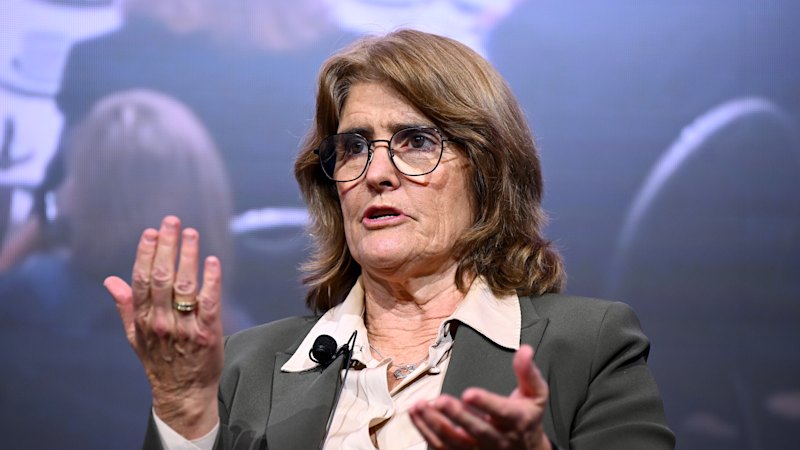
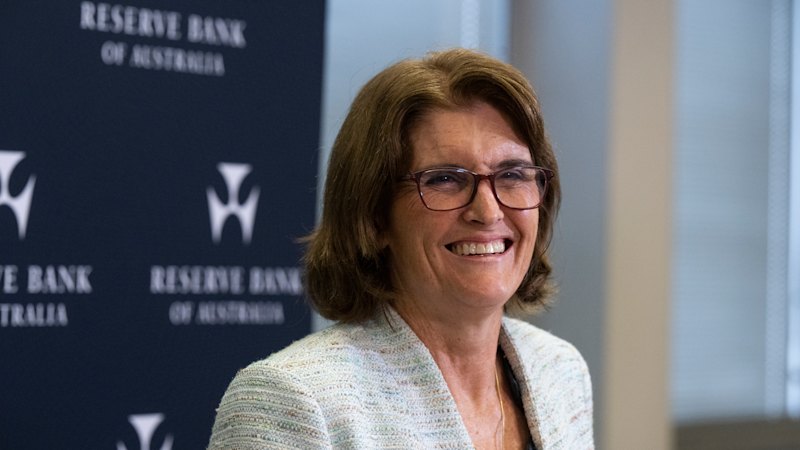
The governor then does a press conference at 3:30pm to explain the decision in more detail and offer her thoughts about the economy.
Currently, the nine members of the Monetary Policy Board are:
- Michele Bullock, RBA governor and chair of the MPB
- Andrew Hauser, RBA deputy governor and deputy chair of the MPB
- Jenny Wilkinson, Commonwealth Treasury secretary (a position always represented on the MPB)
- Marnie Baker, former CEO of Bendigo Bank and a director of numerous organisations
- Melinda Cilento, CEO of the Committee for Economic Development Australia (CEDA)
- Renee Fry-McKibbin, economics professor and co-author of RBA review
- Carolyn Hewson, corporate board director
- Bruce Preston, economics professor
- Iain Ross, former president of the Fair Work Commission
Markets are odds on for a rate rise tomorrow
Markets are pricing the probability of a rate hike at about 90 per cent.
That is not surprising, given that all 29 economists surveyed by Bloomberg predict a rate rise to 4.6 per cent tomorrow, including all four of Australia's major banks.
However, if there is a silver lining for mortgage borrowers, it is that the majority of those analysts expect the RBA to be done with hikes after tomorrow.
AMP's chief economist Shane Oliver summed up the majority view, saying
asserted
economist → take → view
vote may not be unanimous, although the RBA is likely to warn after the meeting that it may need to raise rates further still.
uncertain
it → warn → rates
"But by the time it gets to the November meeting there is likely to be more evidence of a cooling economy, falling home prices, a softer jobs market and rising recession risks, so we don't think a second hike let alone a third will be necessary," he wrote on Friday.
asserted
he → get → Friday
ANZ is the only major so far officially tipping a November rise as well, with Bloomberg listing just HSBC and UBS as the other two banks tipping back-to-back hikes.
asserted
Bloomberg → tip → hikes
Major bank interest rate predictions:
- CBA: September rise
- Westpac: September rise
- NAB: September rise
- ANZ: September and November rise.
Money markets are much more aggressive, though, pricing in at least two more hikes and a better than 50 per cent chance of a third, which would take the cash rate above 5 per cent by the middle of next year.
asserted
which → price → year
Banks lift fixed mortgage rates
asserted
Banks → lift → rates
The banks are already following that market pricing and their own forecasts by lifting fixed mortgage rates.
asserted
banks → follow → rates
On Thursday last week, Macquarie Bank lifted fixed rates for the second time in three weeks, raising its rates by up to 0.2 of a percentage point.
asserted
Bank → lift → point
CBA did something similar on Tuesday, joining Westpac, NAB and ANZ the week before, which had all hiked, in some cases by up to half a percentage point.
asserted
which → do → point
Canstar rate tracking shows 18 lenders have now increased at least one fixed term rate in September.
asserted
lenders → show → September
Canstar data insights director Sally Tindall said the fact that Macquarie has lifted its rate for a second time in the space of three weeks was a "troubling sign" borrowers could ultimately be in for not just one cash rate hike, but two before Christmas.
uncertain
borrowers → say → Christmas
"Fixed rates are, in part, a bet on the future," she said last week.
asserted
she → fix → future
"And what the data tells us is that banks big and small are preparing for the increasing possibility rates will rise and stay higher for longer."
So how much will it cost you?
A 0.25 percentage point rate hike in September, if passed on in full by banks, would add $91 to the monthly repayments on $600,000 loan.
And another 0.25 hike in November would add $92 on top of that.
asserted
hike → tell → that
Across what would be five rate hikes in 2026, a fairly typical borrower could find themselves paying an extra $456 per month on their mortgage.
uncertain
themselves → find → mortgage
Here's how much a September rate hike will cost borrowers as well as the total monthly increase if rates go up for a fifth time in either November or December:
asserted
rates → cost → November
Source: Canstar
For someone on a $600,000 mortgage that means a rate hike tomorrow will see them paying nearly $4,400 a year in extra interest repayments on their loan.
asserted
them → mean → loan
It is not just existing mortgage borrowers hit by the rate rises though.
asserted
It → exist → rises
For prospective buyers, Canstar estimates that the borrowing capacity of someone on an average full-time wage of $108,650 would be reduced by more than $47,000, while a couple both on average wages would see a reduction of nearly $95,000.
asserted
couple → estimate → 95,000
That is a 9 per cent reduction in borrowing capacity since the start of the year and is one reason why property prices have fallen sharply since rates started rising.
asserted
rates → fall → year
 The Aporia