That is 0 articles you have read today.
The Aporia is free and carries no advertising, so readers are the only
thing paying for it. If you are getting this much out of it, a small
donation is what keeps it independent.
Daily limit reached
You have read 0 articles today.
That is more than the 15 a day The Aporia gives away,
and well past what it can carry on nothing. Your allowance resets at
midnight.
There is no advertising here and nothing about you is sold, so readers
are the only thing paying for it. If the site is worth this much of
your day, it is worth a few dollars.
Everything else stays open: the
maps, the
directory and
search do
not count against this, and neither does re-opening something you have
already read today.
A deputy governor at the Bank of England, Ms Lombardelli, stated that an interest rate increase is becoming more likely if energy prices stay high. She was part of the majority vote to maintain rates at 3.75% in recent meetings but emphasized the risk of indirect effects and inflation expectations rising due to sustained high energy costs. With UK inflation at a five-month high of 3.1%, Lombardelli highlighted the potential for further increases, predicting it could reach around 4.2% by early 2027 if current trends continue.
Written locally by qwen2.5:14b on 2026-09-24,
using this article's own text rather than the other coverage of the
same event (that is the story summary below).
Story summary
A deputy governor at the Bank of England, Ms Lombardelli, stated that an interest rate rise is becoming “increasingly likely” if energy prices stay high. She was part of a six-to-three majority vote on March 2024 to keep UK interest rates at 3.75%. Lombardelli noted that persistent higher energy costs could indirectly affect inflation expectations and wage negotiations, potentially necessitating a rate hike unless there is clear evidence of disinflation or weaker economic activity. The most recent inflation figure rose to a five-month high of 3.1%, further diverging from the Bank’s target of 2%. Lombardelli emphasized that the key issue lies in how the economy interacts with elevated energy prices and their transmission effects, ultimately determining whether interest rates need adjustment.
Written for “Central Bank Rate Hike Speculation” on 2026-10-05,
grounded in this article and the 0 other(s) covering the same event.
Bank deputy says rate rise ‘increasingly likely’ if energy prices stay high
A rise in interest rates by the Bank of England is looking “increasingly likely” if energy prices remain high, a deputy governor at the central bank has said.
asserted
governor → say → bank
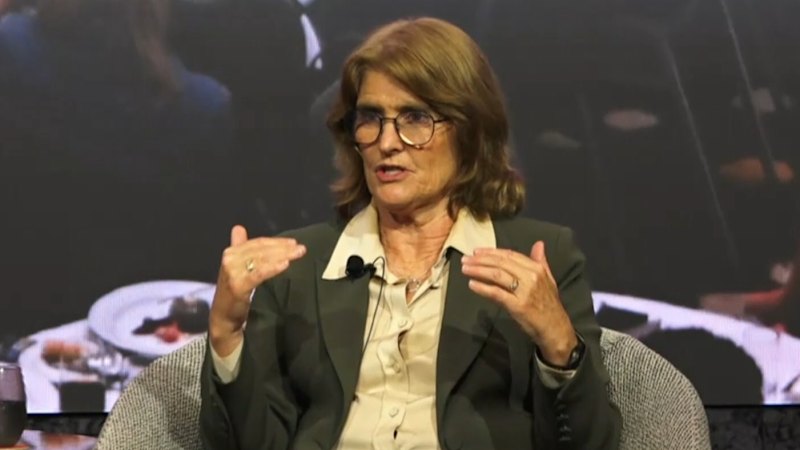
Ms Lombardelli, who has been a deputy governor at the Bank since 2024, was one of the six-to-three majority who voted to maintain UK interest rates at 3.75% earlier this month.
asserted
who → vote → %
On Thursday, she said: “The longer higher energy prices persist, the greater the risk that indirect effects build and that inflation expectations, wage bargaining and price-setting behaviour begin to adjust in response.
asserted
expectations → say → response
“On that basis, policy is increasingly likely to need to tighten if elevated energy prices persist, absent clear evidence of disinflation or weaker activity.”
asserted
prices → need → disinflation
She added: “The key issue is not the spot price of energy itself but the interaction of the underlying economy, higher energy prices, and the nature of their transmission.
asserted
issue → add → transmission
“That, ultimately, is what will determine whether the Bank rate needs to rise.”
asserted
rate → determine → ?
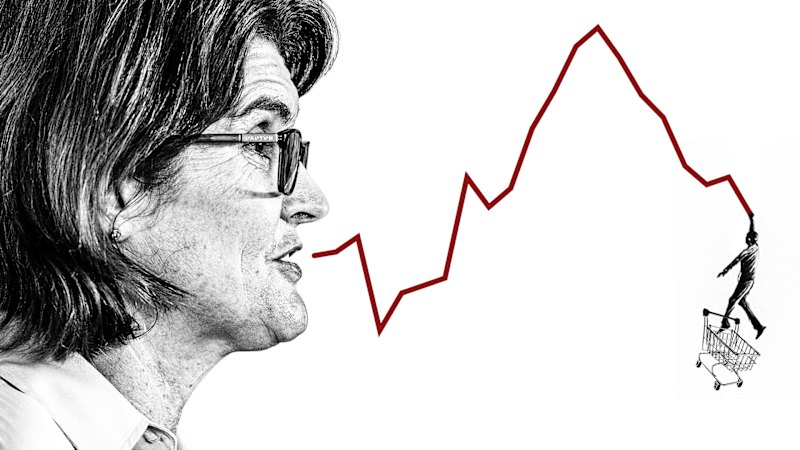
It comes after inflation lifted to a five-month high of 3.1% last month, moving further away from the Bank’s 2% target rate.
asserted
inflation → come → rate
Inflation is widely to predicted to keep rising over the coming months as higher energy costs continue to filter through, with households set to witness a roughly 4% rise in the energy price cap from next week.
asserted
households → predict → week
The Bank has predicted that inflation will increase to around 3.7% in the fourth quarter of this year and 4.2% in the first quarter of 2027.
asserted
inflation → predict → 2027
Ms Lombardelli said: “There remains material uncertainty about the size and duration of the shock and how it will pass through the economy.
asserted
it → say → economy
“But the larger the energy shock becomes and the longer it persists, the more likely it is that we will eventually see significant pass-through of higher energy costs to other prices.”
asserted
we → become → prices
She also pointed towards a predicted rise in food price inflation as manufacturers pass higher energy costs on to consumers.
asserted
manufacturers → point → consumers
Read More
Food inflation recently hit a two-year-low of 1.3% but is predicted to move towards 4% in the first quarter of next year, according to the Bank.
uncertain
inflation → read → Bank
 The Aporia