France’s Prime Minister Sebastien Lecornu is grappling with student protests over education issues while preparing an austerity budget. Student unrest, marked by clashes with police and political exploitation by the left-wing La France Insoumise party, has pressured the government to address class cancellations, school infrastructure, and university admissions transparency. Meanwhile, the proposed 2027 budget aims to reduce the deficit from 5.4% this year to 5%, cutting spending by €54 billion, including significant reductions in pensions and healthcare. Despite these cuts, education funding will increase by about €1.2 billion, but the government faces challenges securing parliamentary approval due to upcoming presidential elections.
Written locally by qwen2.5:14b on 2026-10-06,
using this article's own text rather than the other coverage of the
same event (that is the story summary below).
Story summary
French high school students have been protesting across the country since late September, demanding better conditions at their schools. The protests, which involve tens of thousands of demonstrators, are expected to peak on October 6 with major demonstrations in Paris and other cities like Lille, Marseille, Strasbourg, and Nantes. Students complain about missing teachers, overloaded timetables, dilapidated classrooms, and buildings unable to cope with rising temperatures.
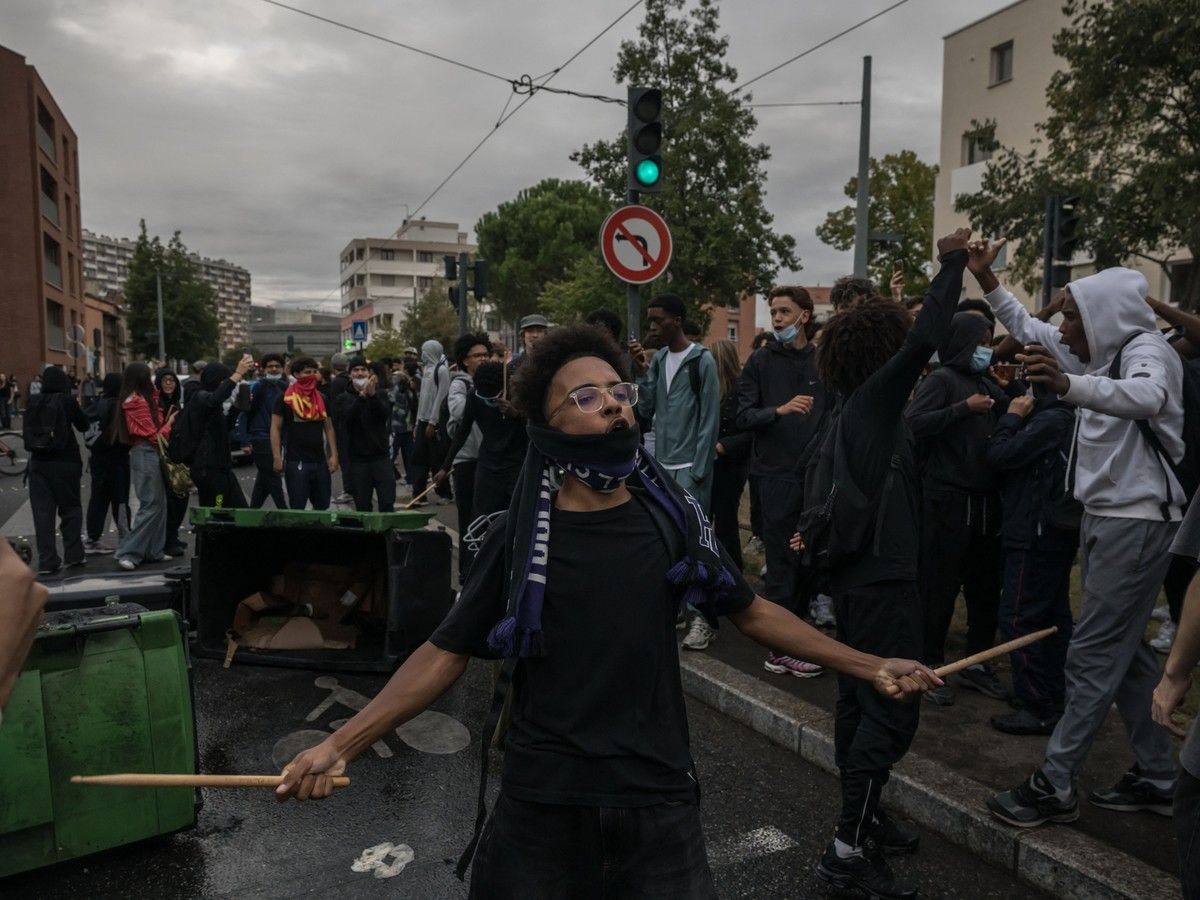
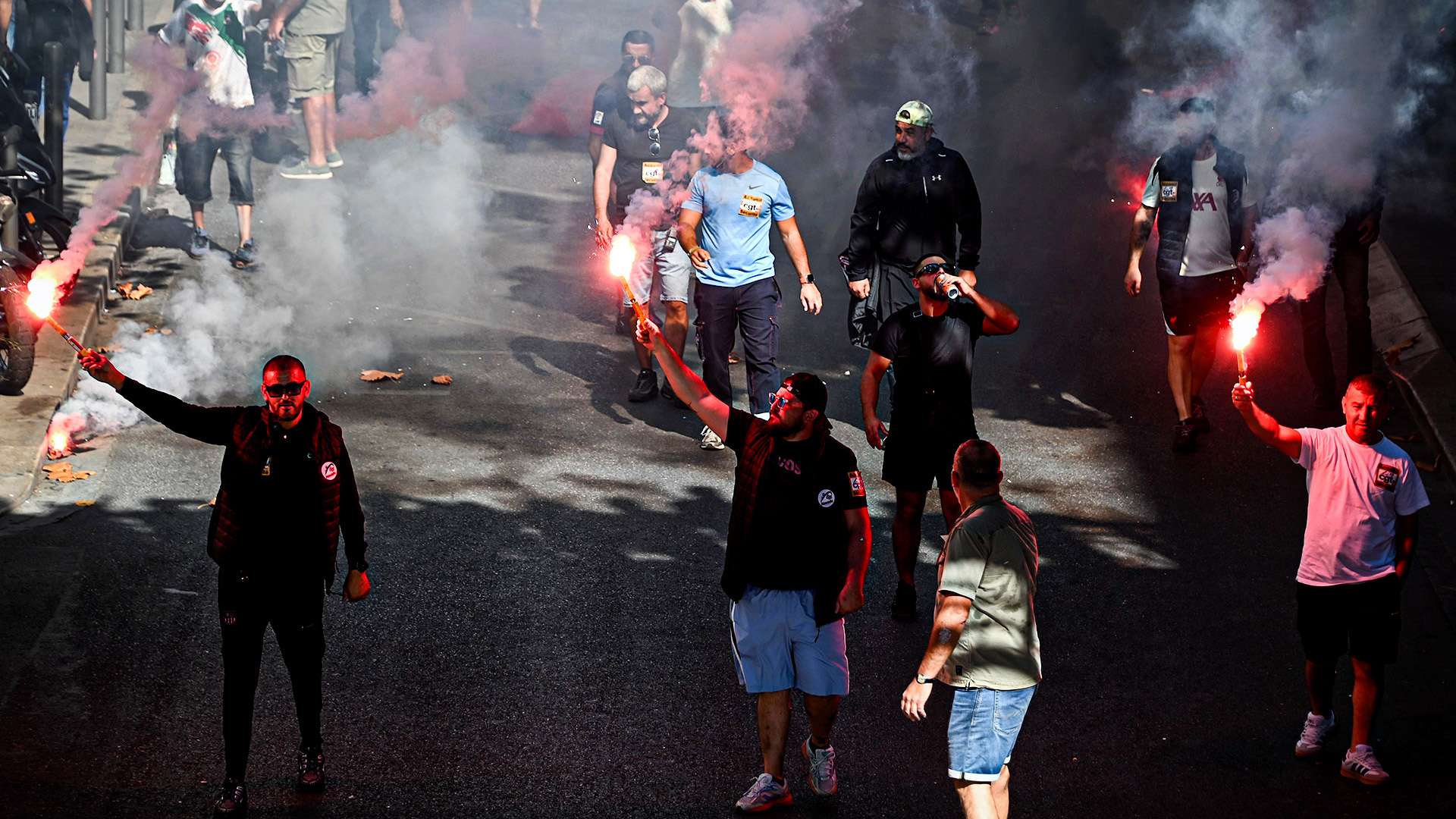
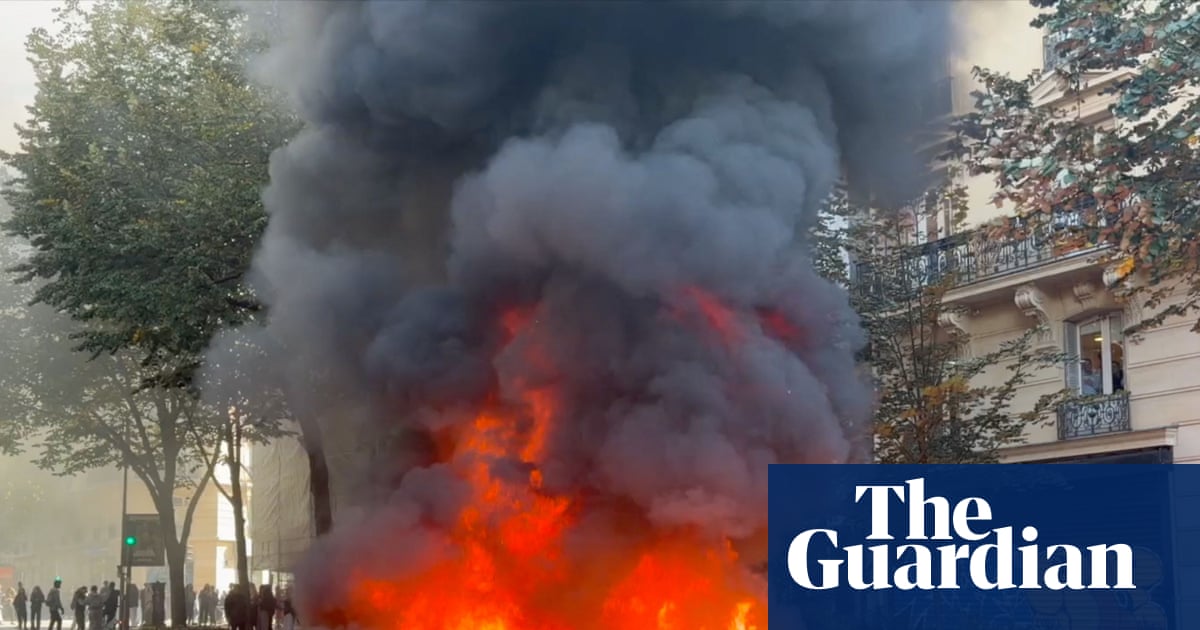
The protests have turned violent, with some students lighting dustbin fires, destroying bus shelters, and clashing with riot police who use batons, tear gas, and stun grenades in response. Over 215 students and 715 police officers have been injured since the start of the movement, including a 15-year-old student who lost his hand after picking up a stun grenade fired by police.
The unrest has raised concerns about the use of excessive force by authorities, with Amnesty International calling for an end to disproportionate policing. The French government and trade unions are divided on how to respond: while Prime Minister Sebastien Lecornu calls for peaceful protests, the powerful CGT labor union plans to protect students during demonstrations.
The protests come amid political instability ahead of the 2027 presidential election in France, where far-left and far-right parties lead opinion polls. Similar unrest is also brewing in Germany and Spain due to internal political challenges and economic pressures.
Written for “France Student Protests” on 2026-10-06,
grounded in this article and the 21 other(s) covering the same event.
France’s Prime Minister Sebastien Lecornu is unlikely to have had a quiet weekend.
asserted
Minister → have → weekend
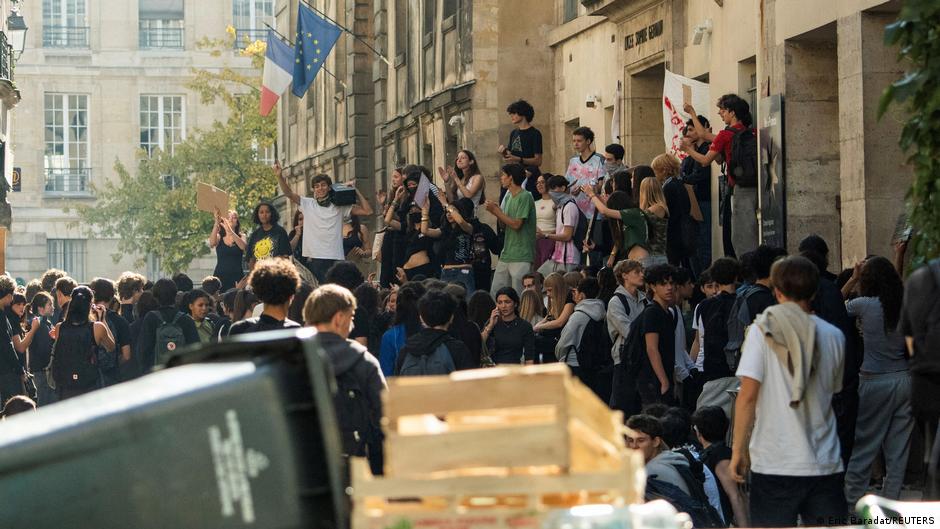
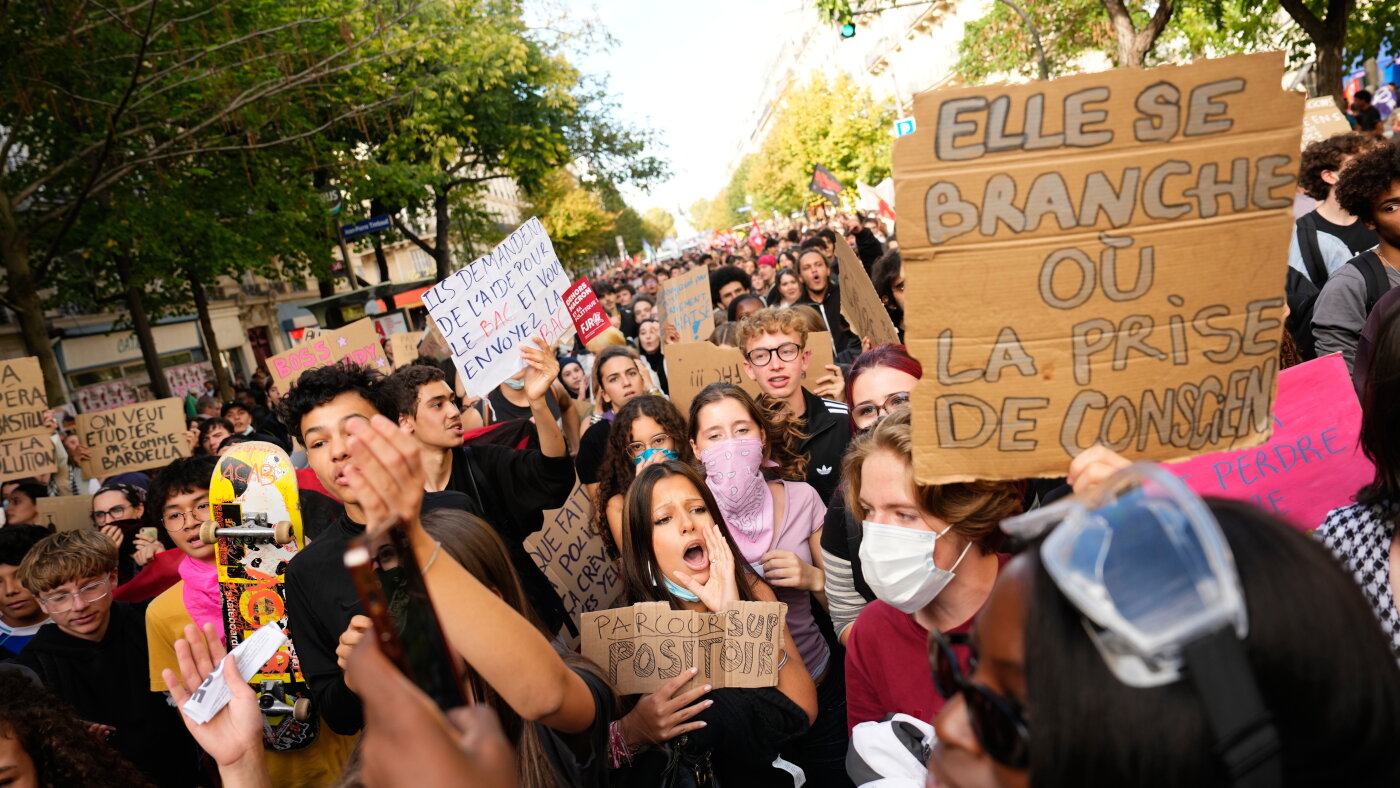
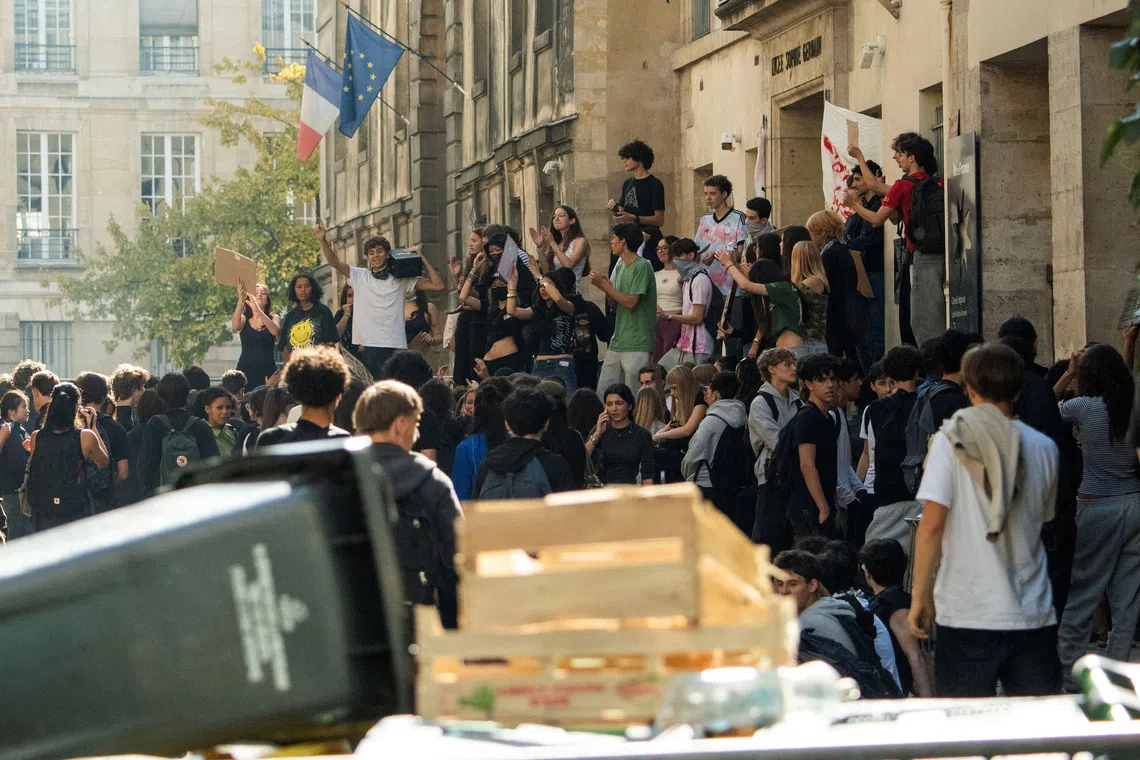
For almost two weeks, students across France have been protesting, angered by class cancellations, overcrowded classrooms and run-down school buildings.
asserted
students → protest → cancellations
The protests have increasingly been overshadowed by serious clashes with police.
asserted
protests → overshadow → police
At the same time, the government accuses the left-wing party La France Insoumise (LFI) of exploiting the protests for political purposes and fueling the blockades.
asserted
government → accuse → blockades
On Friday, Education Minister Edouard Geffray tried to ease tensions by meeting with student representatives.
asserted
Geffray → try → representatives
Instead, a nationwide day of protest took place on Tuesday.
asserted
day → take → Tuesday
On Sunday evening, the prime minister took charge of the crisis.
asserted
minister → take → crisis
In a letter to several ministers, Lecornu called for concrete proposals: Class cancellations should be addressed more quickly, school buildings should be upgraded to cope with hotter summers, and the controversial university admissions system "Parcoursup" should become more transparent.
asserted
system → call → summers
Initial decisions, along with funding and a timetable, are expected to be announced this month.
asserted
decisions → expect → funding
But Macron's ally Lecornu faces one key problem: He has to promise young people more government support while his government is imposing an austerity budget on the entire country.
asserted
government → face → country
A signal to the markets
Last Thursday, the government submitted its 2027 budget proposal to parliament.
asserted
government → submit → parliament
The budget deficit is expected to fall from a projected 5.4 % of economic output this year to 5% in 2027.
asserted
deficit → expect → 2027
To make up the shortfall, the government plans to make spending cuts worth billions of euros.
asserted
cuts → make → euros
France is already subject to an EU excessive deficit procedure and is expected to bring its budget gap back toward the 3% limit set by the European Union.
asserted
France → expect → Union
"It is an austerity budget," says Eileen Keller of the Franco-German Institute (dfi) in Ludwigsburg.
asserted
Keller → say → Ludwigsburg
The government wants to show "that it is taking responsibility" and lay out a path toward reducing the deficit.
asserted
it → want → deficit
The government plans to cut spending by the state itself, local and regional authorities, as well as in the social sector.
asserted
government → plan → sector
Overall, Paris aims to reduce the budget by around €54 billion ($60.8 billion) compared with previously projected spending plans.
asserted
Paris → aim → plans
Pensions alone are expected to make savings to the tune of around €5.5 billion, and more cuts are also planned in healthcare.
asserted
cuts → expect → healthcare
Whether the budget will actually be passed in its current form is still wide open.
asserted
passed → pass → form
Lecornu's government does not have a parliamentary majority and relies on opposition votes.
asserted
government → have → votes
But with presidential elections coming next spring, an austerity budget is even less attractive to the opposition than it would otherwise be.
asserted
it → come → opposition
The issue of education in particular shows that France's problem cannot be reduced to the formula "The state is cutting too much."
asserted
state → show → much
The education budget is set to increase by around €1.2 billion in 2027.
asserted
budget → set → 2027
At the same time, the government expects around 1.7 million fewer schoolchildren by 2035.
asserted
government → expect → 2035
For Keller, this contradiction shows that money is only part of the problem.
asserted
money → show → problem
Public dissatisfaction is linked to what she calls "priorities" and the fundamental direction of the education system, including the transition from school to higher education.
asserted
she → link → education
Financing education is getting more costly
The difficult outlook for France is compounded by another factor: the financial markets.
asserted
outlook → finance → factor
For many years, France was used to financing its high levels of debt at relatively low interest rates.
asserted
France → use → rates
The yield on 10-year French government bonds has risen sharply in recent weeks.
asserted
yield → rise → weeks
At times, the spread over German government bonds widened to around 1.5 percentage points, the highest level since the euro debt crisis in the 2010s.
asserted
spread → widen → 2010s
The business daily Les Echos ran the headline on Monday that the country was in the "eye of the cyclone."
asserted
country → run → cyclone
Market skepticism is hitting France at a particularly difficult time.
asserted
skepticism → hit → time
With debt at around 119% of economic output, France is almost twice as heavily indebted as Germany, whose debt ratio stands at around 64%.
asserted
ratio → stand → %
Step by step, old government bonds that were issued at very low interest rates are increasingly having to be replaced with new and more expensive debt.
asserted
that → issue → debt
Estimated around €74 billion, the government will have to spend more on its interest payments than it can afford to spend on schools or defense.
asserted
it → estimate → schools
According to Finance Minister Roland Lescure, interest payments already consume more than half of the overall budget deficit.
uncertain
payments → accord → deficit
Keller stresses that it is therefore crucial that France continues to be seen by investors as a "credible debtor."
asserted
France → stress → debtor
These days, however, that credibility depends on more than just economic data.
asserted
credibility → depend → data
Markets keeping a close eye on election campaigns
In spring 2027, the French will elect a new president.
asserted
French → keep → president
…and 12 more, not listed.
 The Aporia