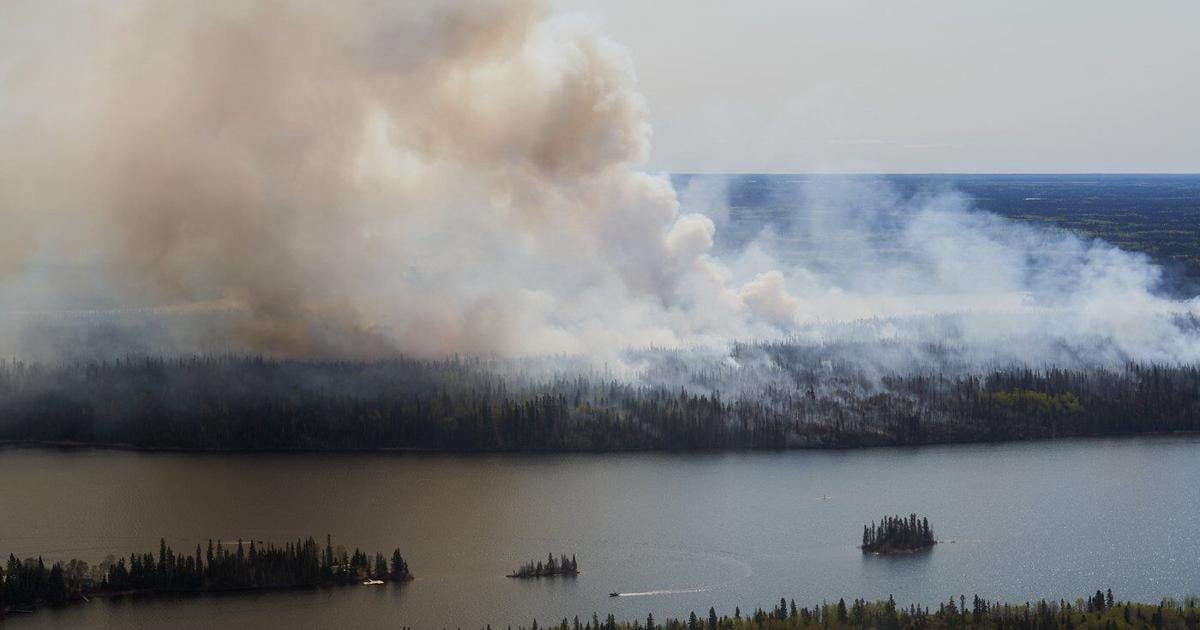
Canadians are feeling the effects of climate change to a greater degree and facing more serious consequences than federal scientists projected less than a decade ago.
asserted
scientists → feel → consequences
That’s the message in a comprehensive federal report released on Thursday.
asserted
That → ’ → Thursday
It details how climate change is physically transforming the country and how those trends are likely to become more pronounced in the future, from floods, wildfires and heat waves to vanishing glaciers and permafrost.
asserted
trends → detail → glaciers
A striking feature of the report is the high degree of certainty that ties so many diverse effects to fossil-fuel emissions as the primary driver of climate change.
asserted
that → tie → change
“Warming temperatures have driven wide-ranging, interconnected, and sustained changes across Canada,” the report notes unequivocally in one of its headline statements.
asserted
report → warm → statements
Running nearly 1,500 pages, Canada’s Changing Climate Report 2026 is the country’s definitive statement on the physical state of the climate.
asserted
Report → run → climate
Only the second such document ever issued by the federal government, it is the product of more than 100 experts working over a three-year period.
asserted
it → issue → period
But unlike its predecessor, whose release in 2019 was widely publicized and accompanied by minister-led press conferences and technical briefings to help the public grasp its implications, the second edition was quietly posted online ahead of a late-summer holiday weekend.
asserted
edition → publicize → weekend
The report arrives at a sharply different political moment.
asserted
report → arrive → moment
In late June, Prime Minister Mark Carney conceded Canada will not meet its 2030 greenhouse-gas emissions targets.
asserted
Canada → concede → targets
A statement from Environment Minister Julie Dabrusin’s office did not address the report’s findings.
asserted
statement → address → findings
It said the government is committed to reaching net zero by 2050 through “a pragmatic and durable approach,” citing clean-energy investments, $2.1-billion committed to the National Adaptation Strategy and a new goal of $13-billion in international climate finance over five years.
asserted
government → say → years
Even so, the report requires little interpretation: Much of what was anticipated in 2019 has now come to pass, plus more that was not yet on climate scientists’ radar then.
asserted
that → require → radar
Canada has warmed about two degrees since 1948 and Northern Canada about 2.6 degrees.
asserted
Canada → warm → 1948
Since 1970, the country has warmed nearly twice as fast as the global average, and the Canadian Arctic three times as fast.
asserted
country → warm → average
Human influence, the report finds, is the only explanation for the collective changes observed.
asserted
report → find → changes
“We have fundamentally altered our climate system, and even if we do succeed at limiting warming to a certain threshold, there are parts of our environment that will continue to change,” said Chris Derksen, director of the Climate Modelling Research Division at Environment and Climate Change Canada.
asserted
Derksen → alter → Canada
A hotter and wetter North
Average annual temperature and precipitation increased measurably in Canada from the late 1940s to 2023, with the trend growing more pronounced after 1970.
asserted
trend → increase → 1970
The Arctic has experienced the most rapid change and is now 2.6°C warmer on average than it was less than a century ago, especially in the northwest during winter months.
asserted
it → experience → months
The averages do not capture weather extremes, which have also increased in severity during the same time period.
asserted
which → capture → period
Change in annual temperature (1948–2023)
Degrees celsius
0.0
0.75
1.50
2.25
3.00
3.75
Dotted areas indicate statistically insignificant changes
Change in annual precipitation (1949–2023)
Per cent
59.2
-37.0
-14.8
-7.5
0
7.4
14.8
37.0
THE GLOBE AND MAIL, SOURCE:
ENVIRONMENT AND CLIMATE CHANGE CANADA
A hotter and wetter North
Average annual temperature and precipitation increased measurably in Canada from the late 1940s to 2023, with the trend growing more pronounced after 1970.
asserted
trend → dot → 1970
The Arctic has experienced the most rapid change and is now 2.6°C warmer on average than it was less than a century ago, especially in the northwest during winter months.
asserted
it → experience → months
The averages do not capture weather extremes, which have also increased in severity during the same time period.
asserted
which → capture → period
Change in annual temperature (1948–2023)
Degrees celsius
0.0
0.75
1.50
2.25
3.00
3.75
Dotted areas indicate statistically insignificant changes
Change in annual precipitation (1949–2023)
Per cent
-37.0
-14.8
-7.5
0
7.4
14.8
37.0
59.2
THE GLOBE AND MAIL, SOURCE:
ENVIRONMENT AND CLIMATE CHANGE CANADA
A hotter and wetter North
Average annual temperature and precipitation increased measurably in Canada from the late 1940s to 2023, with the trend growing more pronounced after 1970.
asserted
trend → indicate → 1970
The Arctic has experienced the most rapid change and is now 2.6°C warmer on average than it was less than a century ago, especially in the northwest during winter months.
asserted
it → experience → months
The averages do not capture weather extremes, which have also increased in severity during the same time period.
asserted
which → capture → period
Change in annual temperature (1948–2023)
Degrees celsius
-0.38
0.0
0.38
0.75
1.13
1.50
1.88
2.25
2.63
3.00
3.38
3.75
Dotted areas indicate statistically insignificant changes
Yukon
NWT
Nunavut
B.C.
N.L.
Alta.
Sask.
Man.
PEI
Que.
Ont.
N.B.
N.S.
Change in annual precipitation (1949–2023)
Per cent
-37.0
-25.0
-14.8
-11.1
-7.5
0
7.4
11.1
14.8
25.9
37.0
48.1
59.2
Yukon
NWT
Nunavut
B.C.
N.L.
Alta.
Sask.
Man.
PEI
Que.
Ont.
N.B.
N.S.
THE GLOBE AND MAIL, SOURCE:
ENVIRONMENT AND CLIMATE CHANGE CANADA
Some of the changes are fixed: Sea level rise, glacier melt and permafrost thaw will continue even if temperatures stabilize.
asserted
temperatures → indicate → changes
Western Canada’s glaciers will largely disappear by the end of this century.
asserted
glaciers → disappear → century
Under current global policies, Canada warms five degrees above preindustrial levels by century’s end.
asserted
Canada → warm → end
Under a scenario with no climate policies, warming reaches 6.9 degrees and the area burned by wildfire climbs 287 per cent.
asserted
area → reach → wildfire
Under net zero, warming stabilizes after 2050 and reaches 3.5 degrees.
asserted
warming → stabilize → degrees
Extremes are where warming is already being felt, and the rarer the event, the more it changes: A once-in-50-years heat extreme occurs nearly four times as often at two degrees of global warming.
asserted
it → feel → warming
Droughts and flash floods will become more frequent and severe.
asserted
Droughts → become → ?
“Every increment of warming will cost us more in damages,” Dr. Derksen said.
asserted
Derksen → cost → damages
“It will cost us more to adapt to those changes.
asserted
It → cost → changes
And on comparable scenarios, the warming now projected for Canada is greater than the last assessment estimated.
asserted
assessment → project → Canada
This week, a United Nations Environment Programme report concluded the world will cross 1.5 degrees of warming within the next few years – the tougher of the two limits nearly 200 countries, including Canada, set in Paris a decade ago.
asserted
countries → conclude → Paris
If the 2019 edition made the predictions, then the 2026 report provides the receipts.
asserted
report → make → receipts
The inaugural report warned of more intense heat, heavier rain, deeper drought and worsening fire risk.
asserted
report → warn → heat
Canada then experienced the 2021 B.C. heat dome, the floods that levelled the province’s highways that November, years of drought on the Prairies and the record 2023 fire season.
asserted
that → experience → Prairies
…and 17 more, not listed.
 The Aporia