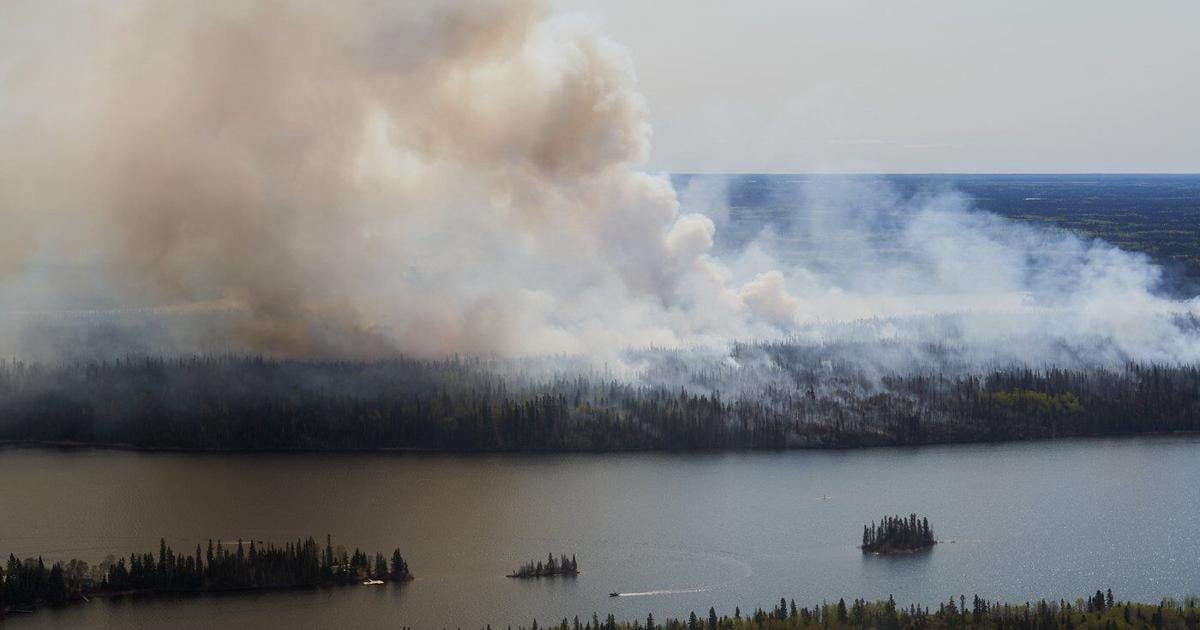
Canadians are being warned to prepare for a 5 C hotter future

CBC | Top Stories News · collected 2026-09-04 · by David Thurton
Read the original at CBC | Top Stories News ↗

Summary

A new report warns Canadians that they should prepare for a future where the country is on average 5 C hotter by 2081-2100 due to global warming caused by human activities such as burning fossil fuels. The report, released by the federal government, projects that glaciers in western Canada will lose over 75% of their ice and that the central Arctic Ocean has a more than 60% likelihood of being ice-free most Septembers. In Nunavut, winter warming could exceed 10 C, while southern Canada can expect longer and more intense summer droughts, as well as increased flash flooding and atmospheric rivers. If countries abandon climate policies, average temperatures are projected to increase by 6.9 C this century.
Written by the local model on 2026-09-05, using this article's own text rather than the other coverage of the same event (that is the story summary below).

Signals How these are calculated →

Claims extracted
29
claim-shaped sentences
Uncertain
17%
5 of 29 hedged
Leaning
withheld
no quote in the article backed the model's score
Publisher trust
95.4
red-flag proxy, not a credibility rating
Outlets on this story
3
Environment
Narrative spread
1
articles carrying this framing
Analyzed 2026-09-05 · how these are computed

AI analysis (generated at analysis time, not now)

Story summary

Here is a summary of the news story in 6-9 sentences:

Canada's federal government has released a comprehensive report on climate change, which confirms that Canadians are already feeling the effects of climate change more severely than previously predicted. The report, titled Canada's Changing Climate Report 2026, is a synthesis of over 100 experts' work and details the country's physical transformation due to climate change. According to the report, average temperatures in Canada are expected to rise by at least 3.5 C by the end of the century. The changes described in the report include floods, wildfires, heat waves, vanishing glaciers, and permafrost thaw, with some effects now considered irreversible. Canadians in the North, such as in Nunavut, are expected to experience particularly severe warming, with temperatures potentially rising by up to 10 C in winter. The report's findings emphasize that human activities, specifically fossil-fuel emissions, are the primary driver of climate change. While there is still some agency for reducing emissions and mitigating temperature increases, the report serves as a warning for Canadians to prepare for a significantly warmer future.

Written for “Canada's Climate Transformation” on 2026-09-05, grounded in this article and the 2 other(s) covering the same event.
Why this leaning score
The model judged this article politically coded and scored it -0.35, but none of the 1 quote(s) it offered could be found in the article text, so the score is not published.
Written under an earlier scoring contract, which gave a paragraph rather than checkable quotes. Re-analysing this article replaces it.
Leaning score withheld for article 4381: no verified evidence · logged 2026-09-05

Story

📰 Canada's Climate Transformation
Environment · 3 article(s) covering the same event. This is the one the site leads with.

How this is being covered How these are calculated →

Article leaning vs. publisher reliability
Source leaning vs. consistency

Compared with similar articles

This article reads unscored and hedges 17% of its claims. Each row says how that neighbour differs.
Mother Jones
⚖️ Leans strongly left 🔴 17% hedged 6 of 36 📰 publisher trust 95
“Article A reports on a UN Environment Programme report warning about global heating, while Article B reports on Canada's Changing Climate Report and its findings about a hotter future for Canadians.”
The Globe and Mail
⚖️ leaning not scored 🔴 0% hedged 0 of 57 📰 publisher trust 37
“Both articles report on the release of Canada's Changing Climate Report by the federal government on September 4, 2026”
www.thestar.com - RSS Results of type article
⚖️ Leans left 🔴 0% hedged 0 of 2 📰 publisher trust 62
“Both articles mention the release of the second edition of Canada's Changing Climate Report on September 4, 2026, and both provide details about its findings.”

Publisher

CBC | Top Stories News · 239 article(s) · 0 correction(s) detected
SignalValueWeight
Correction rate 0.000 0.4
Uncertainty density 0.092 0.25
Assertive mismatch rate 0.000 0.35
No corrections detected for this publisher. That may mean careful reporting, or simply that nothing has been checked.

Who wrote this

David Thurton
1 article(s) here · 1 carrying a prediction
🔮 Canadians should prepare for a 5 C hotter future, report warns In Nunavut, warming in winter could exceed 10 C
The only article under this byline in the corpus.

Topics

Canada Canadian Canadians Environment and Climate Change Canada Nunavut

Subjects

Canada GPE · 16× Canadians NORP · 5× Canadian NORP · 2× Nunavut GPE · 2× Carney PERSON · 1× Environment and Climate Change Canada ORG · 1× N.W.T. GPE · 1× Nathan Gillett PERSON · 1× Ontario GPE · 1× the Canadian Climate Institute ORG · 1×

Narrative

"Our communities cannot afford the frequent human and economic blows that oil and gas use are causing." Responding to the report, a statement from Canada's environment minister said Canada remains committed to reducing its emissions and achieving net-zero by 2050. "Our government is moving with urgency to fight climate change, while working together to build the energy security, industrial capacity, and strategic autonomy that will define this century for Canada," said Chris Zhou, the director of communications for the environment and climate change minister.
framing: assertive · carried by 1 article(s) · first seen 2026-09-05
🔮 Canadians should prepare for a 5 C hotter future, report warns In Nunavut, warming in winter could exceed 10 C
2026-09-05 · CBC | Top Stories News
Canadians are being warned to prepare for a 5 C hotter future · assertive framing

Claims (29 extracted, 5 hedged)

Canadians should prepare for a 5 C hotter future, report warns In Nunavut, warming in winter could exceed 10 C uncertain
warming → prepare → C
Canadians will have to prepare for a future that's 5 C hotter, according to a new report summarizing the latest science on climate change. uncertain
that → have → change
The second edition of Canada's Changing Climate Report, a synthesis of the science on the impact of a warming planet on Canadians, confirms with greater confidence that burning fossil fuels, or what the report calls "human activities," are responsible for climate change. asserted
report → change → change
On Thursday, the federal government released a summary of the report's findings. asserted
government → release → findings
The report is forward-looking, assessing what Canada would look like under different scenarios depending on whether countries fulfil their climate commitments. asserted
countries → look → commitments
"We do still have some agency," said Nathan Gillett, one of the report's authors and a research scientist with Environment and Climate Change Canada. asserted
Gillett → have → Canada
"Where emissions go from here will affect how temperatures evolve through the century and whether we can stabilize temperature or whether it just keeps increasing." asserted
it → go → temperature
Carney government asks court to strike down climate litigation These may be the UN climate panel's last words before we hit 1.5 C limit The report finds that if global governments keep pursuing their current climate policies, Canada will still see intensified warming, which "corresponds to a future climate for Canada that is far from benign," the report states. uncertain
report → ask → Canada
Glaciers could 'largely disappear' uncertain
Glaciers → disappear → ?
Under such a scenario, Canada is projected to warm through this century with an estimated temperature increase of 5 C by 2081 to 2100. asserted
Canada → project → 2081
In Nunavut, warming in winter could exceed 10 C. uncertain
warming → exceed → C.
Glaciers in western Canada are projected to lose more than 75 per cent of their ice, it finds, and there's a more than 60 per cent likelihood that the central Arctic Ocean will be ice-free most Septembers. asserted
Ocean → project → ice
"Iconic landscapes are changing across Canada as snow and ice disappear," the report states. asserted
report → change → Canada
"Glaciers in western Canada will largely disappear by the end of this century." asserted
Glaciers → disappear → century
Beyond considerable warming in the North, the report paints a difficult future in southern Canada, where most of the country lives. asserted
most → paint → country
Summer droughts are projected to become longer, more intense, and more frequent in central and southern Canada, the report states. asserted
report → project → Canada
Canadians should also brace for an increase in the frequency and intensity of flash flooding and atmospheric rivers. asserted
Canadians → brace → flooding
Climate change made Canadian wildfires in N.W.T. and Ontario roughly twice as likely, analysis finds - What on Earth Is Canada flunking climate? asserted
Canada → make → climate
Multiple lines of evidence support the finding that the length of the fire season has increased in most parts of Canada and is projected to continue to lengthen as global temperature rises," the report states. asserted
report → support → Canada
Things would look even worse for Canada if countries abandoned their climate policies, with average temperatures projected to increase 6.9 C this century. asserted
temperatures → look → policies
If the world, however, dramatically reduces greenhouse gases and achieves net-zero around 2075, Canada's climate is projected to stabilize and average warming would increase by 3.5 C. asserted
warming → reduce → C.
Despite the grim picture the report paints, 5 C of warming is not locked in, and there's still time for Canada to avoid a hotter future, independent policy research organization the Canadian Climate Institute says. asserted
organization → paint → future
"This report describes physics, not fate," the group said in a statement. asserted
group → describe → statement
Cutting emissions in Canada and around the globe, the institute says, will determine "whether Canadians have to live with the consequences of more than 5 C of warming or 3.5 C." asserted
Canadians → cut → warming
The institute says each degree of warming that's avoided will save lives and prevent homes, communities and livelihoods from being destroyed. asserted
that → say → homes
It will also save the Canadian economy billions of dollars, the statement says. asserted
statement → save → dollars
In a statement responding to the federal report, a climate advocacy group called for greater action to reduce emissions, linking Toronto's flash flooding on Wednesday to climate change. asserted
group → respond → change
"As the climate breakdown accelerates, more than 65,000 Torontonians lost power in yesterday's severe storm, often for many hours," said Toronto city Coun. Dianne Saxe, writing for Climate Caucus, a network of municipal leaders from across the country. asserted
Saxe → accelerate → country
"Our communities cannot afford the frequent human and economic blows that oil and gas use are causing." Responding to the report, a statement from Canada's environment minister said Canada remains committed to reducing its emissions and achieving net-zero by 2050. "Our government is moving with urgency to fight climate change, while working together to build the energy security, industrial capacity, and strategic autonomy that will define this century for Canada," said Chris Zhou, the director of communications for the environment and climate change minister. asserted
Zhou → afford → minister

💬 Give feedback
🕘 History 🎫 Support