Toronto Star
· collected 2026-09-26 · by Ted Anthony The Associated Press
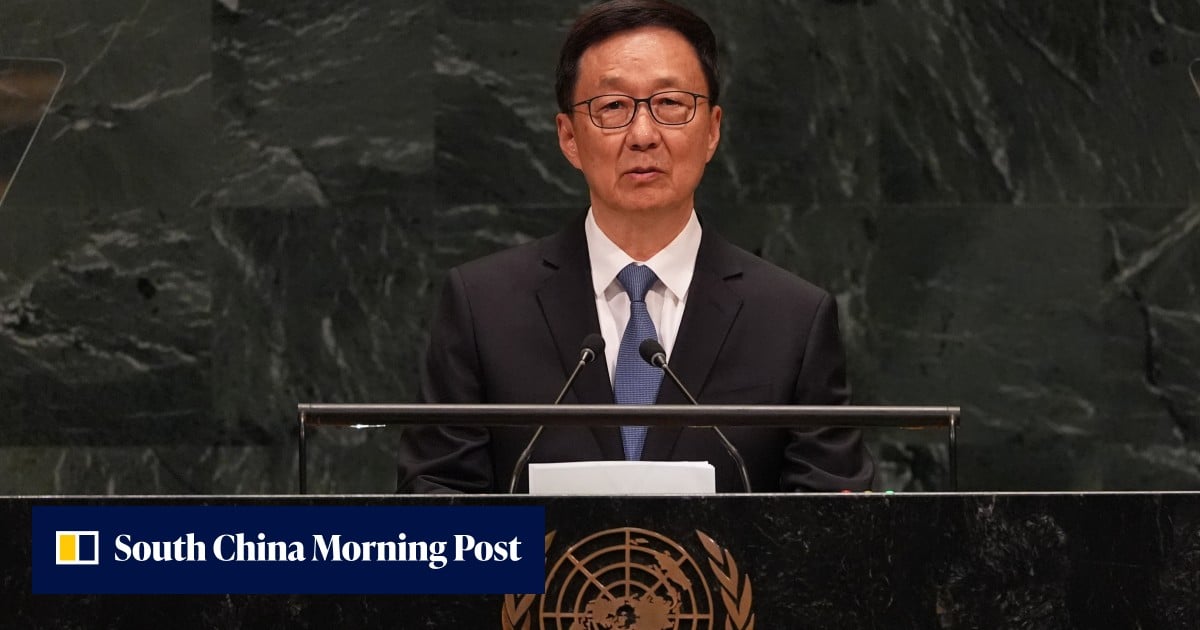
NEW YORK (AP) — A day after his boss met with President Donald Trump in Washington, China’s vice president unfurled the nation’s familiar list of global talking points, emphasizing development, issuing mild statements about the U.S. war with Iran, artificial intelligence and protectionism, and making no direct mention of Taiwan.
asserted
president → meet → Taiwan
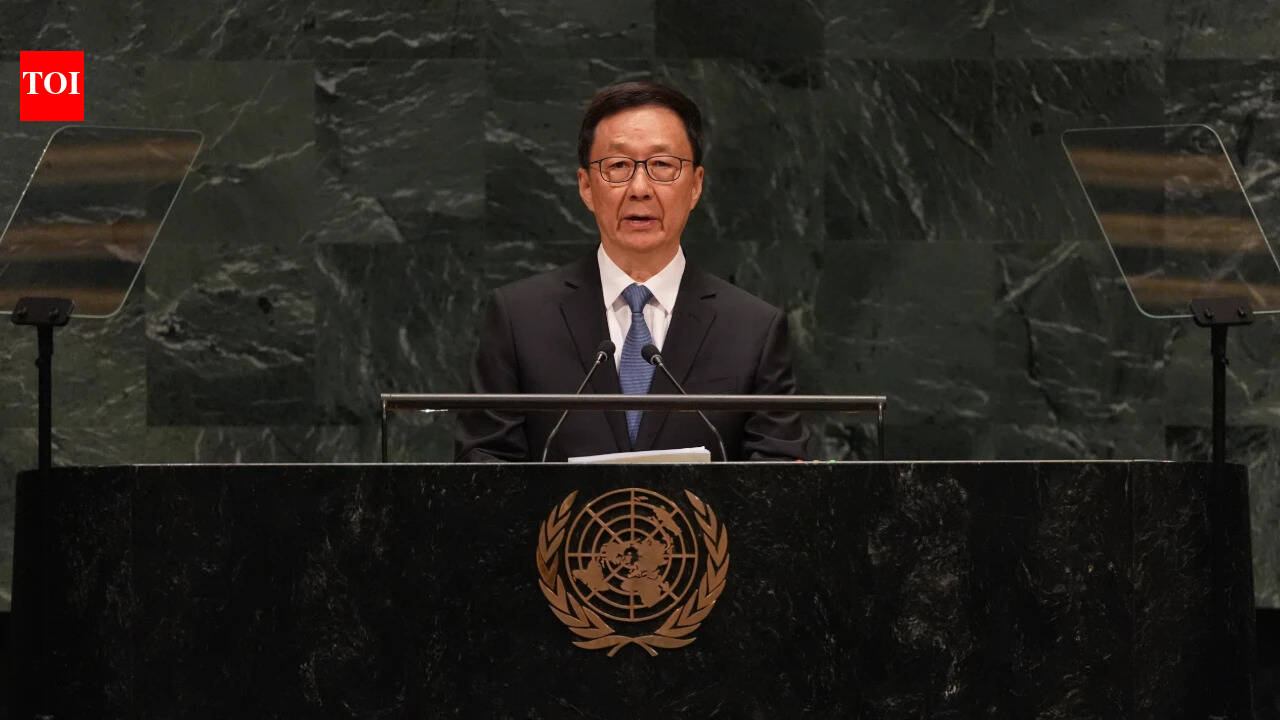
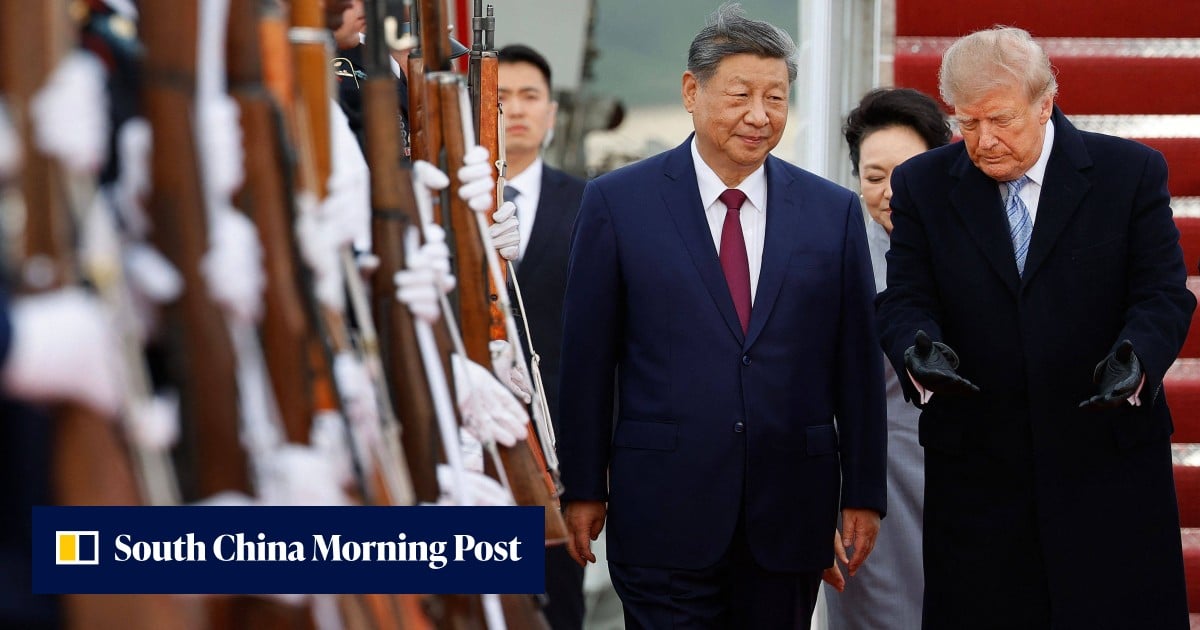
Han Zheng’s speech to the U.N. General Assembly on Saturday landed somewhat anticlimactically after Chinese President Xi Jinping met Trump for a state dinner and a visit to the National Archives.
asserted
Jinping → land → Archives
Most noteworthy about the address was the presence of Han himself: China has often used high-profile public events to position its rising leaders on the global stage.
asserted
China → use → stage
“China has created two miracles at home, namely fast economic roles and long-term social stability,” Han said.
asserted
Han → create → home
The closest he came to a pointed statement was when he mentioned protectionism.
asserted
he → come → protectionism
China and the United States have been engaged in a tariff spat for more than a year, though that has ebbed as the Trump administration delayed implementations, court battles played out and Trump seemed to soften his approach to Xi.
asserted
Trump → engage → Xi
“Both history and reality prove that countries can hardly achieve development without an open and cooperative international environment,” Han said.
asserted
Han → prove → environment
“Protectionism produces no winners.”
asserted
Protectionism → produce → winners
The lack of direct mention of Taiwan, something that often comes up in China’s U.N. speeches, was noteworthy, particularly given tensions between Washington and Beijing about the self-governing island’s fate and defense.
asserted
that → come → fate
Beijing considers Taiwan a part of China.
asserted
Taiwan → consider → China
Development positioned as the most important principle
Typically for China, Han put development at the top of the global agenda, saying much of the world order should be built around it to raise living standards everywhere.
asserted
much → position → standards
He also repeated a familiar refrain of the Chinese government: that development helps create peace.
asserted
development → repeat → peace
China’s signature initiative of the past decade, known as “Belt and Road,” is an effort to foster development in nations across the world — and, in the process, increase China’s influence and soft power.
asserted
initiative → know → influence
Han said China has worked with three-quarters of the nations through Belt and Road projects.
asserted
China → say → projects
China has long touted multilateralism as a cornerstone of a stable world, though it hasn’t always followed that path in its own relations.
asserted
it → tout → relations
The nation’s constant refrain — stay out of our internal affairs — reflects its history of trying to secure the edges of the country that are distant from Beijing.
asserted
that → stay → Beijing
That’s a longstanding philosophy that dates to the construction of the Great Wall hundreds of years ago and continues today in the pressure points of Xinjiang and Tibet in its far west and Taiwan and Hong Kong off its east coast.
asserted
that → ’ → coast
That refrain was reflected in Han’s speech Saturday.
asserted
refrain → reflect → speech
“Multilateralism is a choice made by humanity after going through scourges,” he said.
asserted
he → make → scourges
“We should settle the differences and disputes through dialogue and consultation, and oppose unilateral military actions that violate the U.N. charter and circumvent Security Council authorization.”
asserted
that → settle → authorization
In terms of Iran, where the U.S. and Israel have been waging war since early this year, Han had this to say: “China holds that the sovereignty and security of countries in the Middle East, including the Gulf, should be respected.”
asserted
sovereignty → wag → Gulf
“We should safeguard the postwar international order,” he said, but — in a statement that could be considered contradictory — he said the world should “reject the Cold War mindset and block confrontation.”
uncertain
world → safeguard → confrontation
Han also spoke about empowering the Global South, a term used for emerging and economically struggling nations — many of which sit below the equator.
asserted
many → speak → equator
Some larger nations have positioned themselves in recent years as leaders of the Global South, including China and India.
asserted
nations → position → China
Han’s presence has meaning, but perhaps not a lot of it
Given Xi’s presence in the United States this week, many on-air pundits spent time ruminating about why he wasn’t speaking at the U.N.
asserted
he → have → U.N.
It’s not that unusual, though — particularly since Xi, in the grand scheme of things, had bigger fish to fry in Washington.
asserted
Xi → ’ → Washington
Wang Zichen, deputy secretary-general of the Beijing-based think tank Center for China and Globalization, said there has never been “a convention” requiring the Chinese president to attend the U.N. General Assembly.
asserted
Zichen → base → Assembly
Xi’s predecessors, including Jiang Zemin and Hu Jintao, attended major U.N. meetings only selectively, and Xi himself last addressed the body virtually during the pandemic in 2021.
asserted
Xi → include → 2021
Last year, Premier Li Qiang represented China.
asserted
Qiang → represent → China
Senior diplomat Wang Yi has also spoken several time in recent years in various capacities; he was accompanying Xi this year on the Washington trip.
asserted
he → speak → trip
And Han spoke in 2023.
asserted
Han → speak → 2023
“Both the premier and the vice president are sufficiently senior representatives that I would be cautious about interpreting the choice between them as a diplomatic signal in itself,” Wang Zichen said.
asserted
Zichen → interpret → itself
He added that China portrays the U.N. as an important global institution, so “it would be difficult to argue from the level of representation alone that China is becoming less interested in the U.N.”
asserted
China → add → U.N.
Unlike Li’s 2025 speech, which ventured into some personal observations about arriving in New York, Han played it straight.
asserted
Han → venture → it
The closest he came to being flowery was in the context of multilateralism, and he quickly pivoted back to diplomatic language.
asserted
he → come → language
“Diversity has created splendor in the world,” he said.
asserted
he → create → world
“Condescension and the self-centered mindset have no place in the interactions among different cultures.
asserted
Condescension → have → cultures
Promoting mutual trust, mutual respect, solidarity and harmonious coexistence is the right approach to take.”
asserted
Promoting → promote → trust
_
Associated Press writer E. Eduardo Castillo in Beijing contributed to this report.
asserted
Castillo → contribute → report
 The Aporia