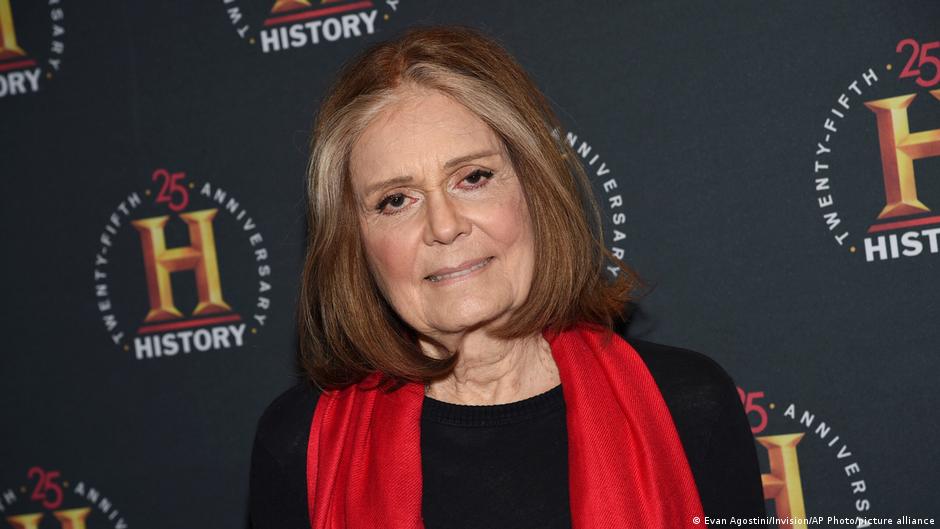
Over the course of her long and influential life, Gloria Steinem went from being described in the pages of TIME as “one of the best dates to take to a New York party these days” and “smashing looking Gucci liberal” to being lauded as a “feminist icon.”
asserted
Steinem → go → icon
If nothing else, the shift in the tone of her coverage in the magazine provides a window into the change in attitudes toward women that she helped engineer over the course of her 92-year life, which ended on Sept. 2.
asserted
which → provide → Sept.
Let’s add one more description to the list: durable dynamo.
asserted
’s → let → list
Steinem never outlived her ability to be relevant, inspiring several generations of women to organize and strive to be given the same opportunities as men.
asserted
Steinem → outlive → men
She never stopped blazing a trail for those who faced a particularly dense thicket and she never thought small.
asserted
she → stop → thicket
“I believe that things are a circle, not a hierarchy,” she said to TIME in 2011.
asserted
she → believe → 2011
“The kind of society we are striving toward is one in which things are linked not ranked.
asserted
things → strive → which
And one in which we understand that the women’s movement and the anti racist movement and the gay movement and the environmentalist movement, they’re all linked.”
asserted
they → understand → which
Steinem was born on March 25, 1934, to a homemaker mother and a father with, she later said, only two points of pride: "He never wore a hat, and he never had a job.
asserted
he → bear → job
He was always going to make a movie, or cut a record, or start a new hotel, or come up with a new orange drink."
asserted
He → go → drink
She didn't spend a full year in school until she was 12, when her parents split and she ended up living with her mother, whose mental health was in a dire state, in East Toledo, Ohio.
asserted
health → spend → Toledo
At 16, she was sent to live with an aunt in Washington.
asserted
she → send → Washington
Before that, she says, "I'd never lived any place to invite anybody home to.
asserted
I → say → anybody
I thought that people always ate out of refrigerators."
After graduating from Smith College in 1956, she spent two years in India on a fellowship (and also to get out of an engagement), then came home to work in Cambridge, Mass., for a group encouraging American students to attend Communist youth festivals abroad.
asserted
she → think → festivals
It was later revealed to be CIA-funded, but Steinem was unfussed, saying she “was happy to use the Establishment's money against the Establishment."
asserted
she → reveal → Establishment
In 1963, she famously published a first-person account of her glamour-free month undercover as a Playboy Bunny in Show magazine.
asserted
she → publish → magazine
It was her big break, and it also threatened to be her curse, since at first she almost exclusively got offered assignments along the same lines.
asserted
she → threaten → lines
This was the period when TIME thought it important to note an appearance in which she wore “a Luis Estevez creation that consisted of five widely spaced bands of chinchilla held together by transparent black net.
asserted
that → think → net
She later got hired at the fledgling New York magazine, where in 1968 her first story was about Vietnamese leader Ho Chi Minh’s stint as a New York City waiter and laundryman.
asserted
story → hire → waiter
As she steadily found her journalistic feet, she began to find her calling: to use her charm, wit and platform to promote equality.
asserted
she → find → equality
Steinem understood the fear that these ideas stirred up in people.
asserted
ideas → understand → people
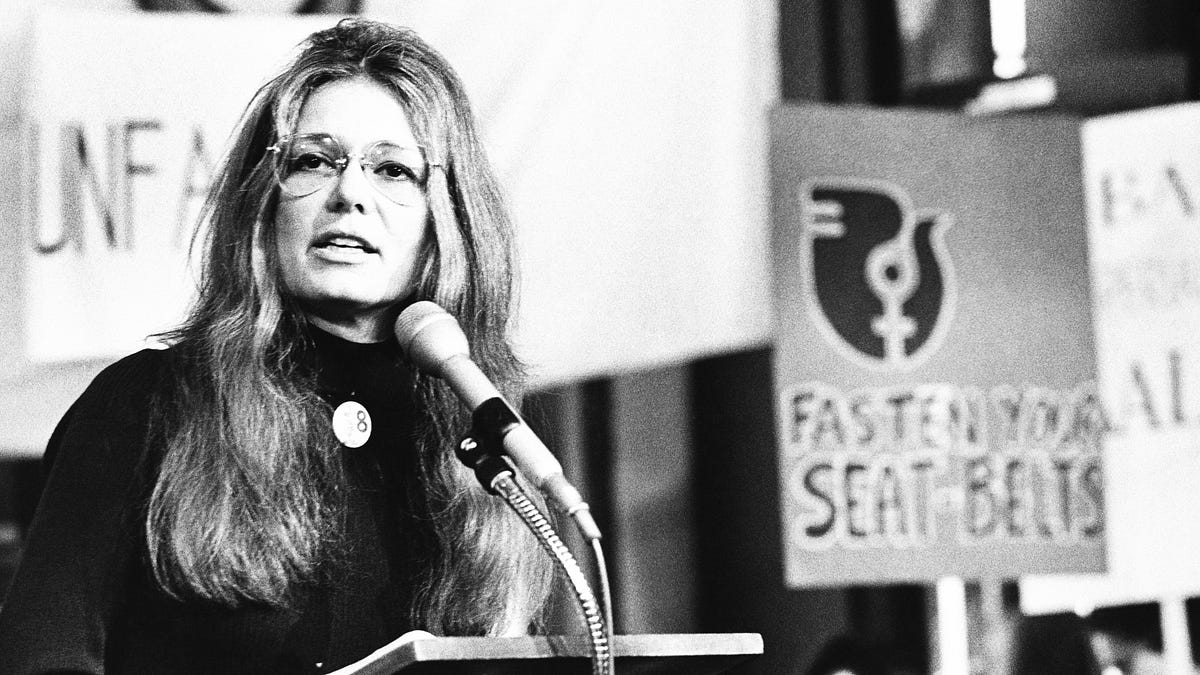
“Women don't want to exchange places with men,” she wrote in an essay for TIME in 1970, shortly after the magazine identified her as “a trim, undeniably female, blonde-streaked brunette who has been described as 'the thinking man's Jean Shrimpton.' "
asserted
who → want → Shrimpton
She went on to add: “But we do want to change the economic system to one more based on merit.
asserted
we → go → merit
In Women's Lib Utopia, there will be free access to good jobs—and decent pay for the bad ones women have been performing all along, including housework.”
asserted
women → perform → housework
Inevitably, her activism moved beyond writing to organizing.
asserted
activism → move → organizing
In 1971, along with Shirley Chisholm, Bella Abzug, Betty Friedan and several others, she convened the National Women's Political Caucus to try to get more women into government offices.
asserted
she → convene → offices
Shortly after that she co-founded Ms. magazine, which she described as “a how-to magazine; not how to make jelly but how to seize control of your life."
asserted
she → co → life
TIME’s writers, by this time calling her “feminism’s superstar,” finally began to acknowledge her impact.
asserted
writers → call → impact
A story about the 1972 Democratic convention—titled, alas, "Eve's Operatives"—opened with: “Gazing around the convention through her blue-tinted glasses, Gloria Steinem pronounced with satisfaction: ‘We've changed the population here.
asserted
We → title → population
It almost looks like the country.
asserted
It → look → country
What she meant was that women are 52% of the nation's population, and last week close to 40% of the convention delegates were women—a dramatic jump over their 13% representation at the 1968 Democratic Convention.
asserted
% → mean → Convention
“Decorative as the women were in their bell-bottom trousers, miniskirts, jeans and hot pants,” the magazine went on to say, “they were not there to be on display but to seek power.
asserted
they → go → power
Except for a couple of setbacks, they got enough to satisfy and even surprise them.”
asserted
they → get → them
After the crushing loss of Democratic Presidential Candidate George McGovern to Richard Nixon, Steinem’s political campaigning took a backseat to her advocacy work.
asserted
campaigning → take → work
The 1977 women’s conference, which she has called "the most important event that nobody knows about," remained one of her proudest achievements, even as it sparked a conservative backlash and perhaps the founding of the religious right.
asserted
it → call → right
As the decades passed, Steinem’s activism grew to encompass more than women’s equality.
asserted
activism → pass → equality
She campaigned on behalf of native people, was arrested while protesting apartheid, publicly opposed the first Gulf War, advocated for disarmament in Korea, spoke against child abuse, female genital mutilation and pornography, and was an early supporter of LGB rights.
asserted
She → campaign → rights
(It took her a little longer to endorse the transgender movement.)
asserted
It → take → movement
Her advocacy was always couched in pragmatism and compassion.
asserted
advocacy → couch → pragmatism
She pointed out that the pedestal women were put on was "as much a prison as any small, confined space" and called her 2019 memoir The Truth Will Set You Free, But First It Will Piss You Off!
asserted
It → point → You
…and 22 more, not listed.
 The Aporia