Qatar’s Emir Sheikh Tamim bin Hamad Al Thani addressed the United Nations General Assembly on Tuesday, urging regional leaders to engage in talks with Iran and calling for a collective security system in the Gulf to prevent further conflicts. He emphasized the need for diplomatic solutions and criticized Israel's actions in Gaza, Syria, and Lebanon, describing conditions there as genocidal and urging international intervention. Turkish President Recep Tayyip Erdoğan also spoke, advocating for freedom of navigation through the Strait of Hormuz and increased pressure on Israel regarding its military operations in Gaza.
Written locally by qwen2.5:14b on 2026-09-23,
using this article's own text rather than the other coverage of the
same event (that is the story summary below).
Story summary
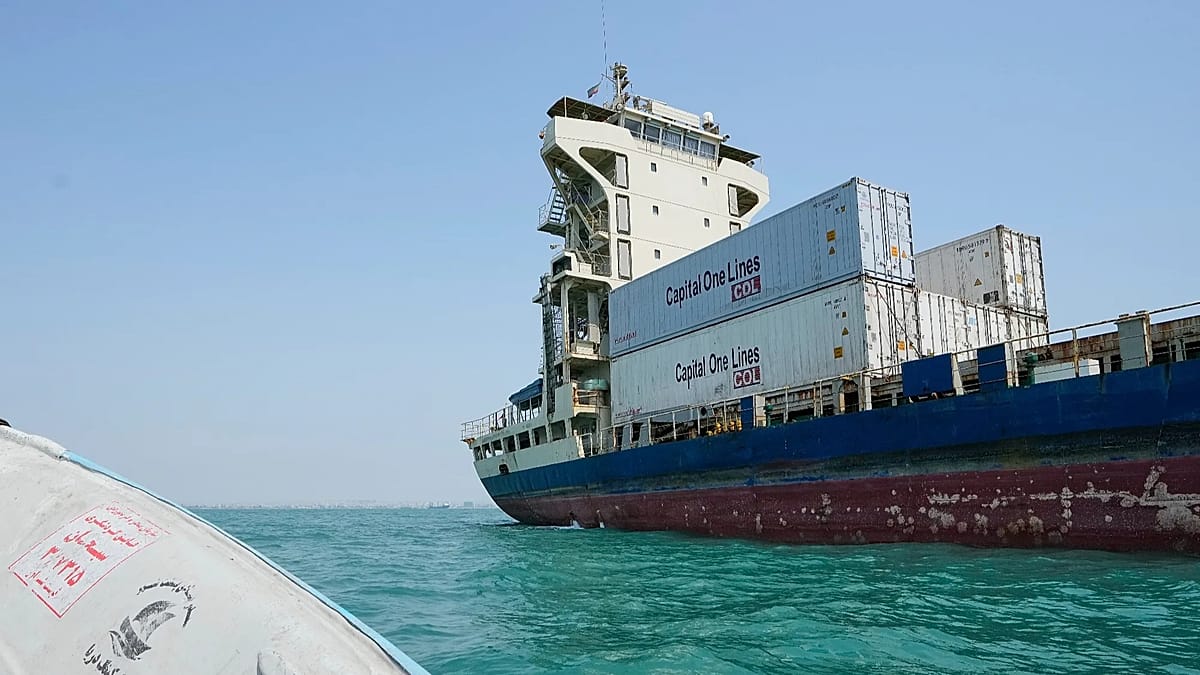
An Iranian commercial vessel was struck near Qeshm Island in the Strait of Hormuz on Sunday morning, killing one person and injuring four others. Iranian state media blamed what they called a "terrorist enemy" without specifying the origin or nature of the attack. The incident occurred as Iran plans to brief neighboring countries about managing shipping in the strategic strait.
Separately, Houthi rebels, backed by Iran, expanded their control over Yemen's Red Sea coast, moving closer to the critical Bab el-Mandeb Strait, which is an important alternative route for Saudi oil exports if the Strait of Hormuz becomes unusable. Houthis entered Mokha port recently and seized Perim Island earlier in the week.
The United States denied Iran’s Revolutionary Guard Corps (IRGC) claims that a Panama-flagged tanker, El Gaia, struck naval mines in the strait and exploded, instead asserting that it was attacked by Iranian missiles last month and again by drones over the weekend. Oman's Maritime Security Centre reported on Tuesday that two sailors were missing after an attack on El Gaia, with 23 others rescued.
These incidents highlight ongoing tensions between Iran and Western powers over control of critical shipping routes in the region, threatening global oil supply stability and driving up energy prices globally.
Written for “Iran US Tensions Strait Of Hormuz” on 2026-10-06,
grounded in this article and the 368 other(s) covering the same event.
The leaders of Qatar, Turkey and Jordan called for talks with Tehran and greater international pressure on Israel.
asserted
leaders → call → Israel
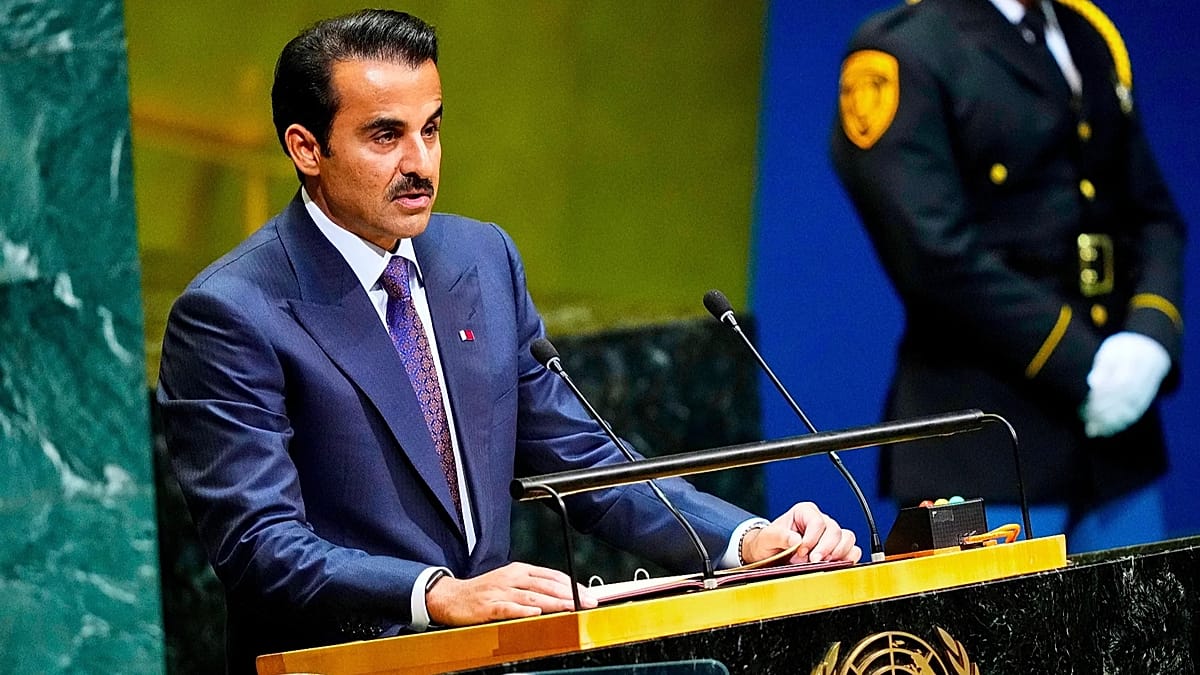
Qatar’s Emir Sheikh Tamim bin Hamad Al Thani told the United Nations General Assembly that the Gulf was going through "one of the most dangerous phases" in its recent history and that the Iran war was the result of cumulative years of postponing diplomatic solutions.
asserted
war → tell → solutions
In his speech at the UN headquarters in New York on Tuesday, Sheikh Tamim called for a “regional system of collective security” based on national sovereignty, non-interference and the peaceful resolution of disputes.
asserted
Tamim → call → disputes
Such a system could have prevented the current Iran war and without it, he warned, vital facilities could be attacked and important waterways closed.
Any lasting agreement with Tehran should protect the whole region, including Iran, Sheikh Tamim said.
uncertain
Tamim → prevent → Iran
“The opportunity for a peaceful diplomatic solution, which we believe is both possible and realistic, must not be missed," he added.
asserted
he → believe → solution
Underlining that Qatar is "a trusted mediator," Sheikh Tamim called for the Strait of Hormuz to be reopened and warned that Gulf countries were being drawn into a war that was not theirs.
“We remain convinced that the crisis in the Gulf can be resolved through diplomatic means, through reopening the Strait of Hormuz to maritime navigation, in order to avert war,” the Qatari emir said.
asserted
emir → underline → war
Qatar was doing “everything in our power to address the conflict in the region through diplomatic means," he added.
asserted
he → do → means
On Gaza, Sheikh Tamim stated that what had happened there was “genocide in every sense of the word."
asserted
happened → state → word
“There can be no talk of a just international order as long as Palestine remains in its plight," he said, adding that the scale of the destruction had not been matched by the international response.
asserted
scale → remain → response
He called on Israel to fully implement the ceasefire by ending military operations, withdrawing from Gaza, lifting the blockade and allowing humanitarian aid to enter without conditions.
asserted
aid → call → conditions
The emir also criticised Israeli actions in Syria and Lebanon, adding that the international response would show whether international law was being applied equally.
asserted
law → criticise → Syria
Turkey warns against wider war
asserted
Turkey → warn → war
In his speech at the General Assembly, Turkish President Recep Tayyip Erdoğan called for freedom of navigation through the Strait of Hormuz to be maintained and said Turkey was working with other countries to end the fighting in the Gulf.
asserted
Turkey → call → Gulf
He added that letting the war spread to neighbouring countries would help no one.
asserted
war → add → one
On Gaza, Erdoğan described the territory as the “most inhumane and shameful concentration camp of our time” and urged UN members to increase pressure on Israel.
asserted
Erdoğan → describe → Israel
He also called on countries that have not recognised Palestine to reconsider their position.
asserted
that → call → position
During his fiery speech, the Israeli delegation left the hall.
asserted
delegation → leave → hall
The Turkish president also criticised Palestinian President Mahmoud Abbas's absence from the General Assembly.
asserted
president → criticise → Assembly
Abbas could not attend after the US denied him a visa for the second consecutive year.
uncertain
US → attend → year
Erdoğan renewed his demand for UN Security Council reform, arguing that decisions affecting more than 190 countries should not depend on its five permanent members.
asserted
decisions → renew → members
He repeated his long-standing slogan that the “world is bigger than five” and said international law should not be applied differently to strong and weak countries.
asserted
law → repeat → countries
Jordan says international inaction is a choice
Jordan's King Abdullah contrasted the international response to Israel with the sanctions, asset freezes, embargoes and diplomatic isolation used in other conflicts.
When it came to Israel, he said, resolutions had repeatedly remained on paper.
asserted
resolutions → say → paper
He called the failure to act a political “choice” and said the problem was not a lack of available tools.
The Hashemite kingdom's monarch accused Israel of seizing land, expanding settlements and allowing settler violence against Palestinians in the occupied West Bank, and said that forced displacement constitutes a war crime.
asserted
displacement → call → crime
He described Gaza and the occupied West Bank as two parts of an effort to make a viable Palestinian state impossible.
asserted
state → describe → effort
King Abdullah said decades of managing the Israeli-Palestinian conflict instead of tackling its causes had allowed temporary measures to become permanent policy.
asserted
measures → say → causes
He also warned that Israeli actions in southern Syria, including territorial expansion around water resources, posed a direct threat to Jordan’s northern border and water security.
asserted
actions → warn → border
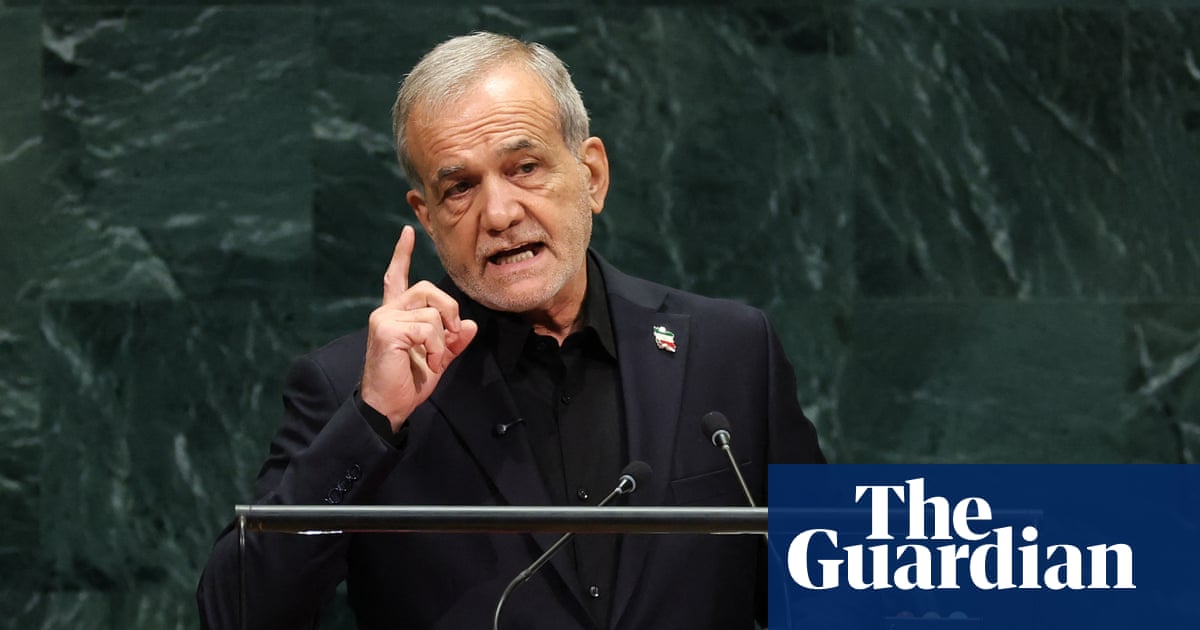
On Iran, King Abdullah said the war was hurting trade and investment and raising energy and food bills worldwide.
asserted
war → say → bills
 The Aporia