NASA set to launch next-generation telescope to unlock universe’s deepest mysteries

New York Post · collected 2026-08-28 · by FOX Weather
Read the original at New York Post ↗

Summary

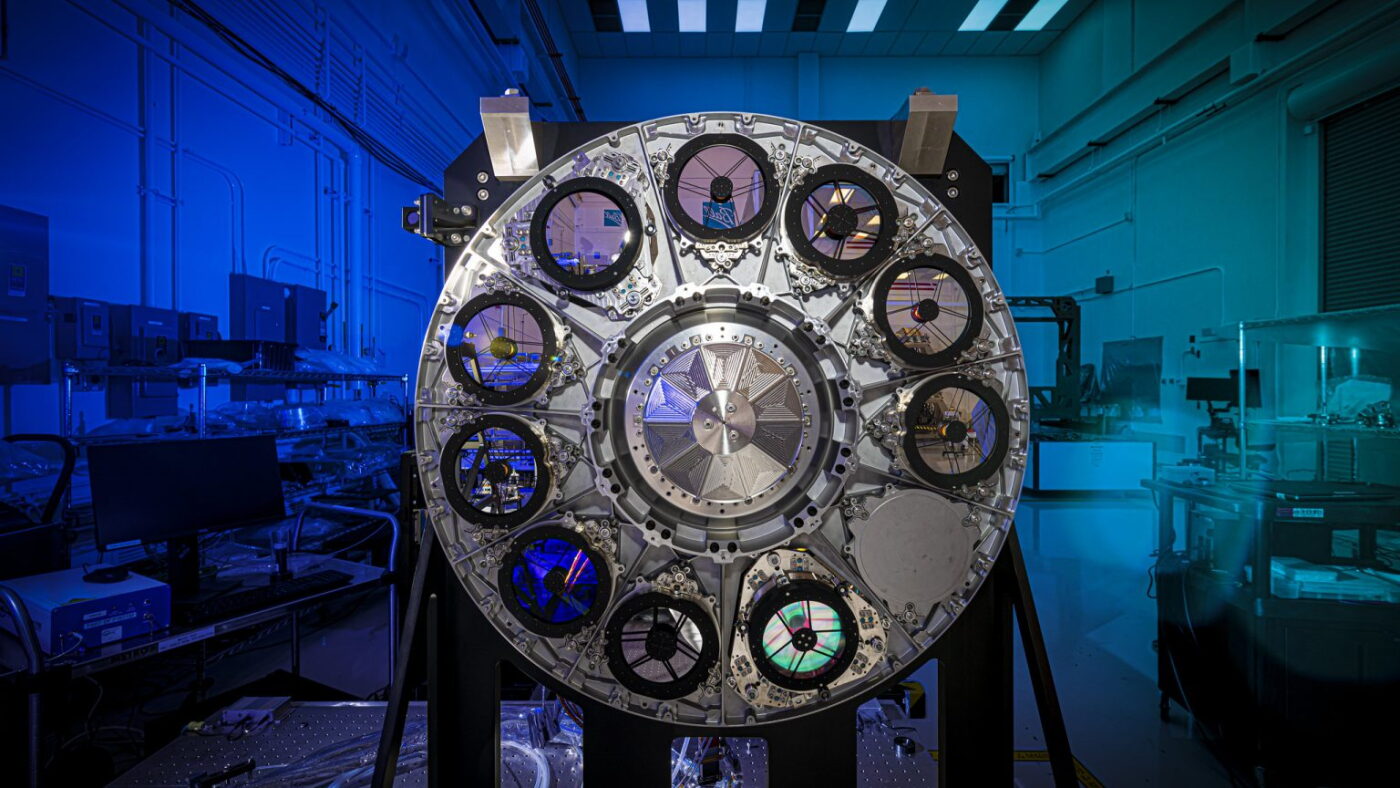
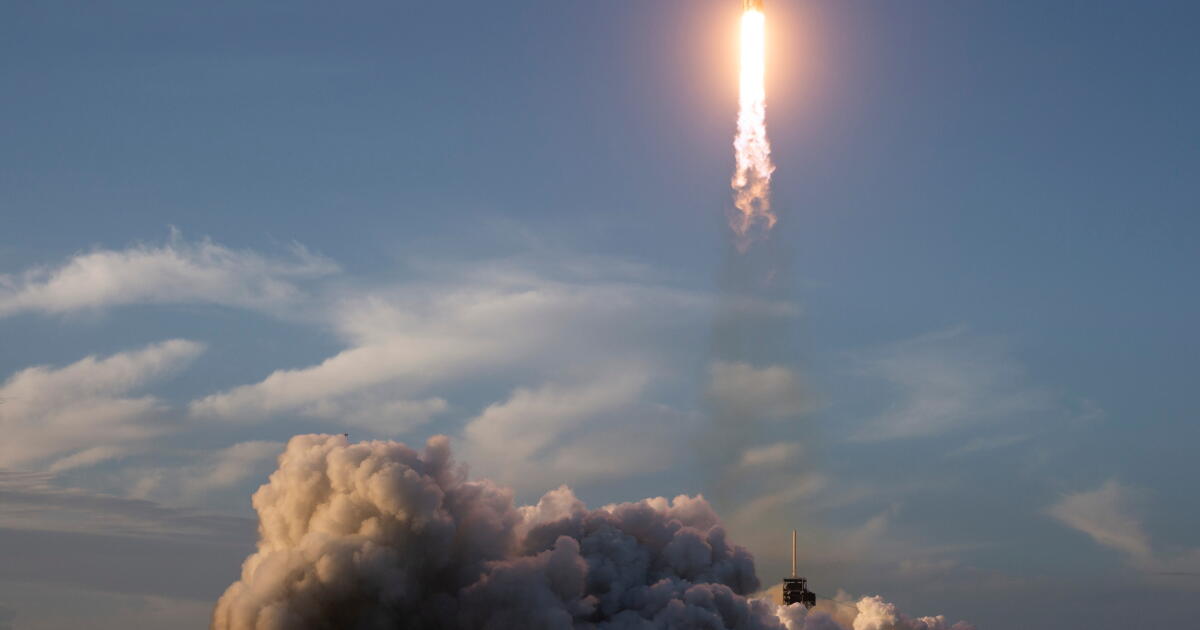
NASA plans to launch the Nancy Grace Roman Space Telescope on Sunday aboard a SpaceX Falcon Heavy rocket from Florida's Kennedy Space Center at 7:26 a.m. EDT. The mission aims to study dark matter and dark energy, map billions of galaxies, and examine black holes. The telescope will have a field of view at least 100 times larger than that of the Hubble Space Telescope and is designed to travel about one million miles from Earth over its five-year lifetime. Named after NASA's first chief astronomer, Nancy Grace Roman, the telescope is set to work alongside the James Webb Space Telescope to give scientists a broader view of the universe.
Written by the local model on 2026-08-28, using this article's own text rather than the other coverage of the same event (that is the story summary below).

Signals How these are calculated →

Claims extracted
15
claim-shaped sentences
Uncertain
0%
0 of 15 hedged
Leaning
not political
takes no side on a contested political question
Publisher trust
95.1
red-flag proxy, not a credibility rating
Outlets on this story
4
Technology
Narrative spread
1
articles carrying this framing
Analyzed 2026-08-28 · how these are computed

AI analysis (generated at analysis time, not now)

Story summary

NASA's Roman Space Telescope, a $4.3 billion observatory, launched on August 30th aboard a SpaceX Falcon Heavy rocket from Kennedy Space Center in Florida. The telescope is expected to revolutionize our understanding of the universe by studying dark matter and dark energy, which are responsible for the expansion and evolution of the cosmos. It will also help scientists identify new planets orbiting distant stars, increasing the current count of about 6,300 known exoplanets to over 100,000. The Roman Space Telescope was named after Nancy Grace Roman, NASA's first chief astronomer, who played a key role in the development of the Hubble Space Telescope. It is designed to study the universe with unparalleled precision and sensitivity, using its two instruments: a coronagraph built by NASA's Jet Propulsion Laboratory to detect exoplanets, and a wide field instrument to survey billions of galaxies.

Written for “NASA's New Space Telescope Launch” on 2026-08-31, grounded in this article and the 3 other(s) covering the same event.
Why this leaning score
This article does not take a side on a contested political question, so it has no leaning score. That is an answer rather than a gap: a match report or a rescue can be warmly or critically written without being left or right, and scoring it anyway is how approval of a subject gets recorded as a political position.
No political leaning scored for article 2973 · logged 2026-08-28

Story

📰 NASA's New Space Telescope Launch
Technology · 4 article(s) covering the same event.

How this is being covered How these are calculated →

Article leaning vs. publisher reliability
Source leaning vs. consistency

Compared with similar articles

This article reads unscored and hedges 0% of its claims. Each row says how that neighbour differs.
NPR Topics: News
⚖️ leaning not scored 🔴 12% hedged 4 of 32 📰 publisher trust 93
“Both articles describe the upcoming launch of the Nancy Grace Roman Space Telescope on August 30, 2026.”
World & Nation
⚖️ leaning not scored 🔴 12% hedged 6 of 51 📰 publisher trust 95
“Both articles describe the launch of the Nancy Grace Roman Space Telescope, using the same telescope name and mentioning its launch date as Sunday, aboard a SpaceX Falcon Heavy rocket from Launch Complex 39A at NASA’s Kennedy Space Center in Florida.”
World & Nation
⚖️ leaning not scored 🔴 2% hedged 1 of 43 📰 publisher trust 95
“Both articles describe the launch of the Nancy Grace Roman Space Telescope on a SpaceX Falcon Heavy rocket from Kennedy Space Center in Florida on August 31, 2026.”

Publisher

New York Post · 35 article(s) · 0 correction(s) detected
SignalValueWeight
Correction rate 0.000 0.4
Uncertainty density 0.098 0.25
Assertive mismatch rate 0.000 0.35
No corrections detected for this publisher. That may mean careful reporting, or simply that nothing has been checked.

Who wrote this

FOX Weather
1 article(s) here · 1 carrying a prediction
🔮 NASA is set to launch its own next-generation telescope into space on Sunday, to explore some of the universe’s biggest mysteries.
The only article under this byline in the corpus.

Topics

Falcon Heavy Florida NASA SWNS SpaceX

Subjects

NASA ORG · 10× SpaceX ORG · 3× Roman ORG · 2× Florida GPE · 1× Nancy Grace Roman PERSON · 1× Reuters Connect ORG · 1× SWNS ORG · 1× Sydney Rohde PERSON · 1× USA TODAY Network ORG · 1×

Narrative

The agency, in collaboration with SpaceX, plans to launch the Nancy Grace Roman Space Telescope no earlier than 7:26 a.m. EDT aboard a SpaceX Falcon Heavy rocket from Launch Complex 39A at NASA’s Kennedy Space Center in Florida.
framing: assertive · carried by 1 article(s) · first seen 2026-08-28
🔮 NASA is set to launch its own next-generation telescope into space on Sunday, to explore some of the universe’s biggest mysteries.

Claims (15 extracted, 0 hedged)

NASA is set to launch its own next-generation telescope into space on Sunday, to explore some of the universe’s biggest mysteries. asserted
NASA → set → mysteries
The agency, in collaboration with SpaceX, plans to launch the Nancy Grace Roman Space Telescope no earlier than 7:26 a.m. EDT aboard a SpaceX Falcon Heavy rocket from Launch Complex 39A at NASA’s Kennedy Space Center in Florida. asserted
agency → plan → Florida
The mission aims to uncover more information about some of the universe’s greatest mysteries, including dark energy. asserted
mission → aim → energy
Roman was known as the “mother of Hubble” for her decades of work at NASA helping pave the way for the Hubble Space Telescope. asserted
Roman → know → Telescope
She played a fundamental role in NASA’s early era of space exploration after joining the agency in 1959 and becoming its chief astronomer in 1960. asserted
She → play → 1960
Roman worked at NASA for decades before retiring in 1997. asserted
Roman → work → 1997
NASA said the Nancy Grace Roman Space Telescope was built to pair sharp infrared vision with a field of view at least 100 times larger than that of the Hubble Space Telescope. asserted
Telescope → say → Telescope
Its new surveys will help scientists study dark matter and dark energy, map billions of galaxies, examine black holes and explore objects ranging from our own solar system to the edge of the observable universe. asserted
scientists → help → universe
Once in space, the telescope will travel about one million miles from Earth. asserted
telescope → travel → Earth
The mission has a five-year lifetime, with a goal of operating for 10 years. asserted
mission → have → years
Roman’s science data will also be made publicly available after it is processed. asserted
it → make → ?
Roman will work alongside the James Webb Space Telescope, which is already operating in space, to give scientists an even broader view of the universe. asserted
which → work → universe
NASA and SpaceX are launching the Nancy Grace Roman Space Telescope to probe the universe’s biggest mysteries. asserted
NASA → launch → mysteries
The new telescope boasts infrared vision 100 times wider than Hubble, aiming to map galaxies and study dark energy. asserted
telescope → boast → energy
Named after NASA’s first chief astronomer, Nancy Grace Roman, the telescope will travel one million miles from Earth. asserted
telescope → name → Earth
💬 Give feedback
🕘 History 🎫 Support