NASA is about to launch a space telescope that could change how we see the universe
The universe is a strange place — filled with exploding stars, ancient galaxies, and unseen worlds.
uncertain
universe → launch → stars
Now, astronomers are about to get a brand new tool to explore it.
asserted
astronomers → get → it
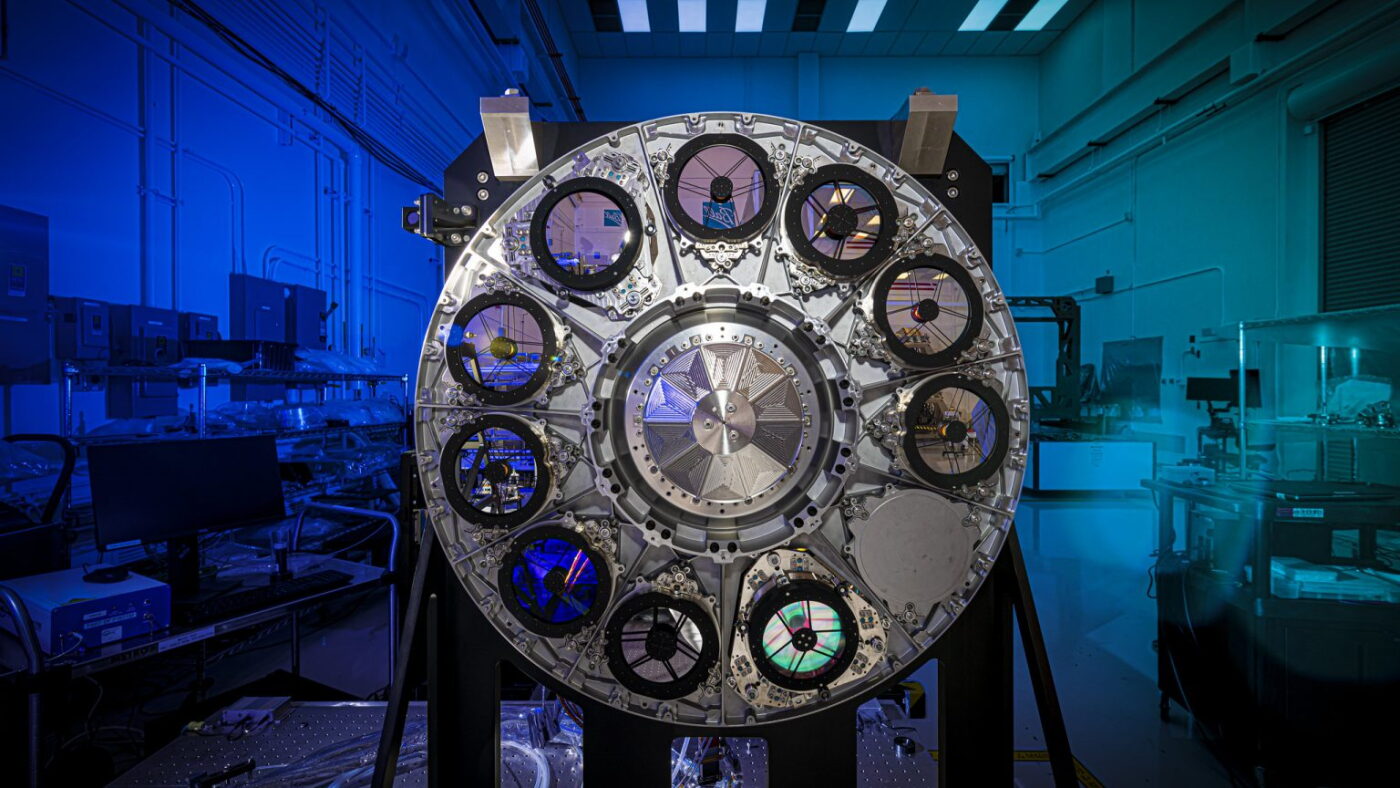
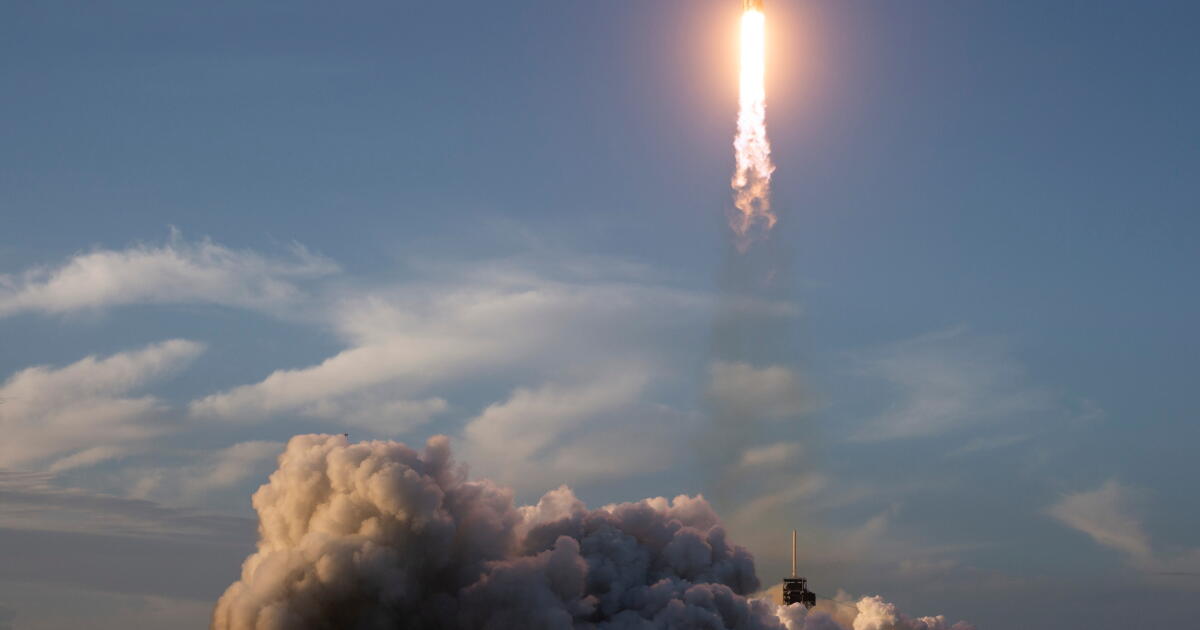
The $4.3-billion Nancy Grace Roman Space Telescope is scheduled for launch Aug. 30.
asserted
Telescope → schedule → launch
Named for NASA's first chief astronomer, the observatory is expected to reveal new information about the expansion of the universe and discover multitudes of planets orbiting distant stars.
asserted
observatory → name → stars
Roman, as it is known to its friends, has an unusual history.
asserted
it → know → history
About 15 years ago NASA was making plans to build a space telescope that could, among other things, search for exploding stars known as Type 1A supernovas.
uncertain
that → make → supernovas
These supernovas were used as a kind of cosmological measuring stick to uncover a mysterious force called dark energy that was causing the universe to expand — a discovery that earned the Nobel Prize in 2011.
asserted
that → use → 2011
Cosmologist Daniel Scolnic at Duke University says finding more of them would be key to better understanding that expansion.
asserted
finding → say → expansion
As NASA was developing plans for this new telescope, a call came in from the government office in charge of surveillance satellites.
asserted
call → develop → satellites
"The National Reconnaissance Office reached out to NASA," Scolnic says, "saying, 'We have this amazing satellite sitting in a hangar that we're not using.
asserted
we → reach → that
And what what do you guys think about instead of pointing downwards, we point upwards, and you guys use it?'"
asserted
guys → think → it
NASA said yes.
asserted
NASA → say → ?
It took some substantial modifications, but now that old satellite is set to become NASA's next major space observatory.
asserted
satellite → take → modifications
Scolnic says that the new observatory could fundamentally change the scientific model that astronomers use to understand our universe.
uncertain
astronomers → say → universe
"In the last few years, there have been measurements saying that model might be wrong — and that's something that Roman will absolutely nail, whether the model's right or wrong," he says.
uncertain
he → say → that
Another goal of the telescope is to spend a month surveying all the stars in the Milky Way galaxy.
asserted
goal → spend → galaxy
She says even though Roman has broadly the same sensitivity and sharpness of vision as the currently orbiting Hubble Space Telescope, its design lets it do things much faster.
asserted
it → say → things
"That one month of observations to survey our Milky Way galaxy would take about a century with Hubble," says McEnery.
asserted
McEnery → survey → Hubble
Instead of focusing on a single object, Roman is designed to make catalogs of large swaths of the sky, and McEnery says these catalogs will be available to everyone, not just academics.
asserted
catalogs → focus → academics
"You can be a teacher in a high school in Kentucky and your students have the opportunity to see Roman data at the same time as a professor in Princeton," she says.
asserted
she → have → Princeton
One professor eager to get his hands on Roman data is Scott Gauti at The Ohio State University.
asserted
professor → get → University
Along with colleagues, Gauti developed a technique for detecting planets around distant stars.
asserted
Gauti → develop → stars
It's called gravitational microlensing, and it measures the way those planets bend the starlight that passes them by.
asserted
that → call → them
Albert Einstein described the idea in 1936 but thought it would be impractical.
asserted
it → describe → 1936
New technology has proven him wrong — and Gauti expects Roman will find tons of planets that way.
asserted
Roman → prove → planets
"We're looking for planets that are just completely undetectable by any other method," Gauti says.
asserted
Gauti → look → method
That includes planets at the center of our galaxy, "that are very analogous to our own solar system planets like Jupiter, Saturn, Uranus, and Neptune.
asserted
that → include → Jupiter
In addition to new planets, Roman should also reveal new galaxies, helping astronomers to get a better idea of the large-scale structure of the universe.
asserted
Roman → reveal → universe
But predicting what will be Roman's greatest accomplishments over the course of its five-year-mission is a tricky business.
"
asserted
what → predict → mission
The history of astronomy really has shown that when you get a new capability, and especially a survey capability, you learn something new, something unexpected," says Wendy Freedman, an astronomer at the University of Chicago.
asserted
Freedman → show → Chicago
"Often that turns out to be the most exciting part of a new facility.
asserted
that → turn → facility
So I am completely open to what this telescope will find."
asserted
telescope → find → what
 The Aporia