-
Click here to listen to this article -
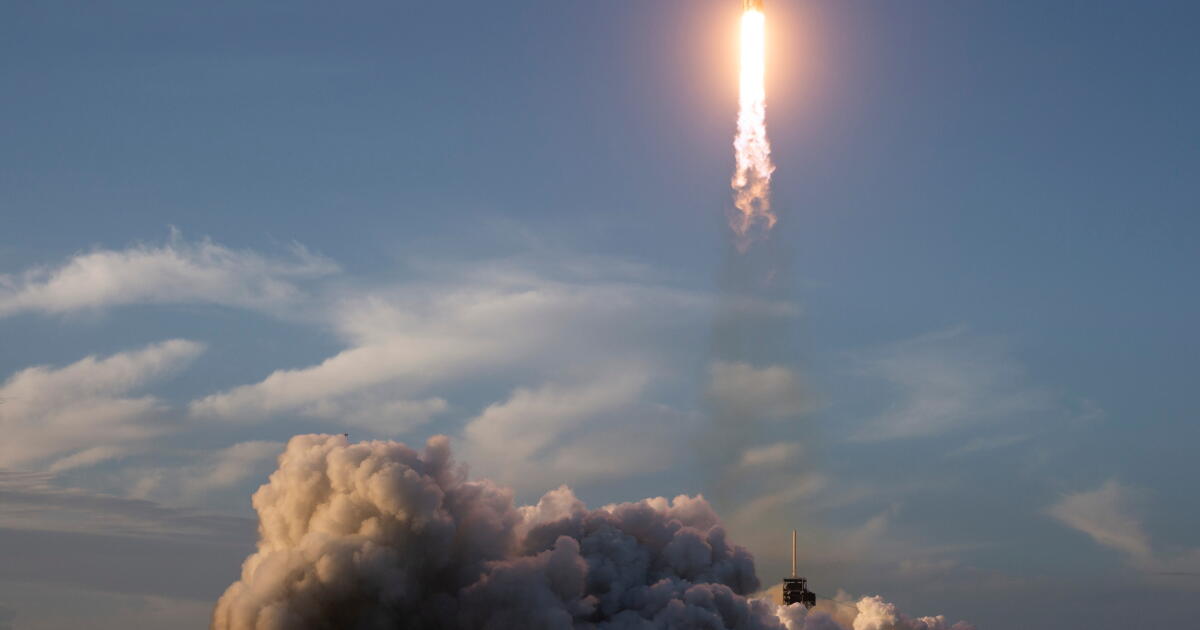
NASA is set to launch its latest multibillion-dollar telescope Sunday morning, as scientists gather at Florida’s Space Coast and await liftoff with bated breath.
asserted
scientists → click → breath
After riding atop a SpaceX Falcon Heavy rocket, the Nancy Grace Roman Space Telescope promises to vastly expand our knowledge of planets beyond our solar system and advance the search for elusive “Earth twins.”
asserted
Telescope → rid → twins
The observatory will also help scientists better understand the cosmic tug-of-war between invisible “dark matter” and “dark energy” — a contest whose outcome could either expand or collapse the universe.
uncertain
outcome → help → universe
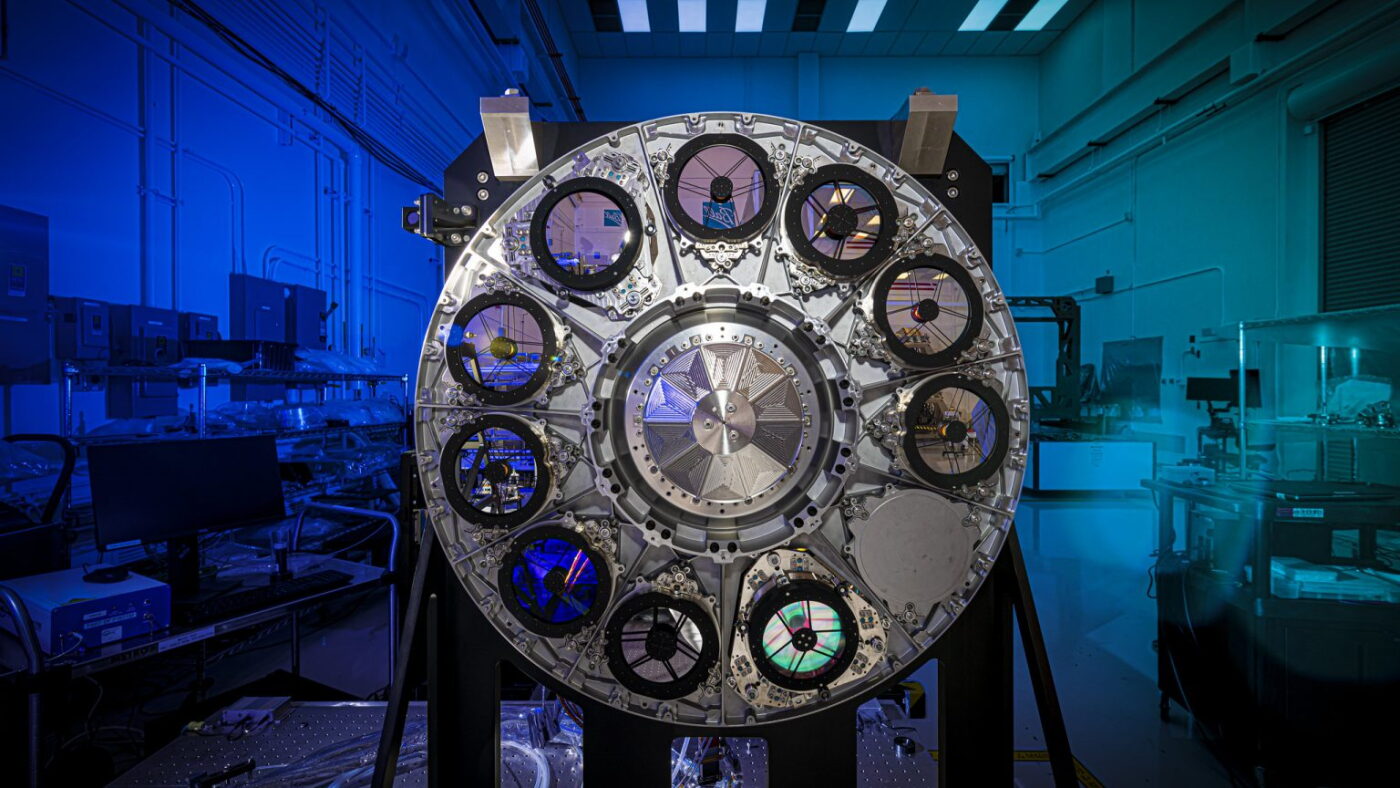
Massive teams of engineers and scientists — including personnel from Caltech and NASA’s Jet Propulsion Laboratory — have worked for over a decade to develop the $4.3-billion telescope.
asserted
teams → include → telescope
As a member of NASA’s class of “flagship” astrophysics missions, its acclaimed colleagues include the Hubble and the James Webb space telescopes.
asserted
colleagues → include → Hubble
As the agency pivots to putting astronauts on the moon, this $3-billion space-copter is the agency’s last large-scale mission to explore the solar system.
asserted
copter → pivot → system
Roman, named after the woman at NASA who championed the Hubble telescope, will run explorational laps around the 36-year-old observatory.
asserted
who → name → observatory
It will view the heavens in the same crisp detail as Hubble, but can survey an area of sky in one year that would take Hubble 1,000 years.
asserted
that → view → years
“This truly takes a village,” said Vanessa Bailey, JPL instrument scientist for the coronagraph sensor that will aid in the search for other worlds.
asserted
that → take → worlds
“I grew up in rural South Dakota, and the closest town to me had about 2,000 people.
asserted
town → grow → people
There have been more than 2,000 people who have contributed in some way just to the coronograph instrument on Roman — not even Roman as a whole.
asserted
who → contribute → whole
In a field where scientists need reams of information to answer their most burning questions, “Roman gives us this amazing, unprecedented, cutting-edge data — and a huge amount of it,” said Dida Markovic, a JPL research scientist.
asserted
Markovic → need → it
Markovic is a deputy principal investigator for one of the teams tasked with analyzing the barrage of data (enough to fill up the storage on about 40,000 laptops over Roman’s five-year mission).
asserted
Markovic → task → mission
The search for Earth twins
Since the 1990s, scientists have cataloged more than 6,300 worlds orbiting stars other than our sun.
asserted
scientists → catalog → sun
Roman aims to find 100,000 more of these exoplanets.
asserted
Roman → aim → exoplanets
The vast majority of discovered exoplanets were found not by taking a picture of the planet, but by sensing it indirectly — how its orbit causes its star to wobble, how it dims the star when it passes in front or how its gravity warps the light of a different star in the background.
asserted
gravity → discover → background
These methods are quite good at finding gigantic planets and planets that orbit incredibly close to their host stars — in other words, planets nothing like Earth.
asserted
that → find → Earth
Roman will not only use these methods, but also try to observe some planets directly, measuring light that traveled all the way from the planet’s atmosphere.
asserted
that → use → atmosphere
That’s harder than trying to spot a firefly right next to someone flashing their high-beams at you.
asserted
That → ’ → you
The James Webb Space Telescope can see planets about 100,000 times dimmer than their star.
asserted
Telescope → see → star
It does this by covering the host star from its view with masks, called coronagraphs, to better see the planet (like covering up the blinding headlights with your hand).
asserted
It → do → hand
With such a large gap between what’s needed to find an “Earth twin” and what current telescopes can achieve, “no matter how bright your engineering team is, you’re not going to do that in one generation of telescopes,” said Bailey, the Roman coronagraph instrument scientist.
asserted
Bailey → need → telescopes
Roman can focus starlight into an easy-to-cover pinprick with tremendous precision.
asserted
Roman → focus → precision
More than 3,200 pistons distort two flexible mirrors with near atomic-scale precision to account for blemishes.
asserted
pistons → distort → blemishes
Once in focus, Roman will patiently wait.
asserted
Roman → wait → focus
With planets this dim, the telescope may receive only a single particle of light once every minute.
uncertain
telescope → receive → light
(Even when you look at the faintest stars in the night sky, your eyeballs are receiving a couple hundred photon particles from the star every second.)
asserted
eyeballs → look → star
If Roman succeeds, it will put scientists one step closer to a future Habitable Worlds Observatory that searches for Earth twins — and perhaps one step closer to finding our cosmic neighbors.
asserted
that → succeed → neighbors
The universe’s dark tug-of-war
For decades, scientists have struggled to understand the invisible game of tug-of-war that dominates our universe.
asserted
that → struggle → universe
Even though light can pass through it, making it invisible, it exerts a massive gravitational force that works to collapse the universe in on itself.
asserted
that → pass → itself
Meanwhile, “dark energy” seems to permeate every square inch of space, pushing outward and accelerating the universe’s expansion.
asserted
energy → seem → expansion
In this cosmic battle, dark energy appears to be winning — expanding our universe over trillions of years until everything thins and smooths out into almost nothingness.
asserted
everything → appear → nothingness
To measure the strength of dark energy, scientists look at how fast the universe is expanding and work backward.
asserted
universe → measure → energy
To locate dark matter, scientists measure how its gravity bends the light from galaxies.
asserted
gravity → locate → galaxies
Astrophysicists have several theories for what dark matter could be.
uncertain
matter → have → theories
Some say its unknown heavy and slow-moving particles.
asserted
Some → say → particles
Others think the unknown particles are lighter and faster.
asserted
particles → think → ?
Others say its ancient black holes lurking throughout space.
asserted
Others → say → space
While all these theories successfully describe the large-scale clumping scientists can measure, they disagree over how dark matter should clump on smaller scales.
asserted
matter → describe → scales
Roman will help scientists measure that small clumping for the first time.
asserted
scientists → help → time
…and 11 more, not listed.
 The Aporia