Photo via Al Jazeera

Why are the Houthis fighting for Yemen’s Kahboub Mountains?

Read the original at Al Jazeera ↗
Cite

Magee, C. (2026, September 22). Why are the Houthis fighting for Yemen’s Kahboub Mountains? Al Jazeera. https://www.aljazeera.com/news/2026/9/22/why-are-the-houthis-fighting-for-yemens-kahboub-mountains?traffic_source=rss

Dated when The Aporia collected the article, usually within hours of publication. Check the original for its exact date and byline.

Al Jazeera · collected 2026-09-22 · by Caolán Magee

Quick Summary

The Houthis are advancing into Yemen’s Kahboub Mountains to bolster their control over recently seized Red Sea coastal areas. This move is seen as critical for defending strategic positions near Bab al-Mandeb Strait, one of the world's key shipping routes. The mountains’ proximity offers a tactical advantage in surveillance and defense against potential counterattacks by Saudi-backed forces, though the Houthis claim they do not intend to target U.S. ships.
Written by AI on 2026-09-22, from this article's own text only (the story summary below draws on all the coverage).
See how they differ ↓

AI analysis

Story summary

The Houthis, backed by Iran, are rapidly advancing in Yemen and threatening critical waterways like the Bab al-Mandeb strait. President Trump spoke with Yemen's president Rashad al-Alimi about the situation but did not pledge military support to his Saudi-backed government. The U.S. had prepared airstrikes against the Houthis at Riyadh’s request but ultimately canceled them, even as bombs were loaded onto planes. This decision reflects a reluctance by the U.S. to engage militarily in the region and highlights the complex geopolitical dynamics between the U.S., Iran, and Saudi Arabia. Yemen's government is seeking direct military aid from the U.S., fearing that without such support, the Houthis will continue to expand their control over strategic areas. The cancellation of airstrikes also underscores Trump’s strategy to reduce America’s entanglement in Middle Eastern conflicts. Despite this, tensions remain high as the Houthis push for more territory and threaten global shipping routes. Trump's decision to not intervene militarily is seen by some analysts as a necessary step to break a cycle of codependency between the U.S. and its Gulf allies. However, it also raises questions about how effectively these nations can defend themselves without American support.

Written for “Houthis Fighting in Yemen” on 2026-11-18, grounded in this article and the 17 other(s) covering the same event.

How they differ

12 outlets covered “Houthis Fighting in Yemen”.

What each outlet says

One AI summary per outlet of its latest article on this story, written from that article alone and checked against it. Open the article for the outlet's own words.

Al JazeeraThis outlet22 Sep

The Houthis are advancing into Yemen’s Kahboub Mountains to bolster their control over recently seized Red Sea coastal areas. This move is seen as critical for defending strategic positions near Bab al-Mandeb Strait, one of the world's key shipping routes. The mountains’ proximity offers a tactical advantage in surveillance and defense against potential counterattacks by Saudi-backed forces, though the Houthis claim…

Why are the Houthis fighting for Yemen’s Kahboub Mountains? (this article)2 articles from Al Jazeera on this story
Washington Examiner23 Sep

President Donald Trump canceled planned U.S. airstrikes against Yemen's Houthi rebels despite warplanes being ready and target lists approved, according to The New York Times. This decision came after intense pressure from Saudi Arabia’s Crown Prince Mohammed bin Salman. Critics argue that wealthy Gulf states rely too heavily on American military intervention instead of using their own substantial defense…

Bombs were loaded, warplanes were ready — but Trump was right to say ‘no’ →3 articles from Washington Examiner on this story
The Hindu21 Sep

On Sunday, September 20, 2026, U.S. President Donald Trump spoke by phone with Yemeni President Rashad al-Alimi about the advancing Iran-backed Houthis near the Bab al-Mandeb strait, a strategic waterway. Alimi sought military support from the United States for his government’s fight against the Houthis, but sources close to the matter indicate that Trump did not make any direct pledge of military assistance during…

Trump, in call with Yemen President, did not pledge military support against Houthis, say sources →2 articles from The Hindu on this story
The Straits Times21 Sep

On September 21, President Donald Trump spoke by phone with Yemeni President Rashad al-Alimi without pledging direct military assistance to fight Iran-backed Houthi rebels, according to four sources familiar with the conversation. Al-Alimi had requested US support for his government as the Houthis recently captured strategic areas near the Bab al-Mandeb strait, a crucial waterway. Two of the sources specifically…

Trump, in call with Yemen president, did not pledge military support against Houthis, say sources →2 articles from The Straits Times on this story
The Independent22 Sep

The article reports that Iran-backed Houthis are advancing in Yemen's highlands, aiming to cut off the Red Sea coast from Saudi-backed forces. US President Donald Trump had prepared airstrikes against the Houthis but called them off at the last minute after receiving pleas for military intervention from Saudi Arabia. Meanwhile, G7 foreign ministers have condemned Iran’s support of the Houthis and urged them to cease…

Iran-US war latest: Tehran-backed Houthis move to seize Yemen highlands as Trump ‘calls off strikes’ →2 articles from The Independent on this story
The Guardian16 Sep

US officials met with Yemen's Houthi leaders in Oman over the weekend, leading to a decision by President Donald Trump not to intervene militarily on Saudi Arabia’s side against the Houthis. The meeting revealed that the Houthis assured the US they would not attack American shipping but only target Saudi-linked vessels due to the blockade of Yemen. This stance put pressure on Saudi Arabia to seek diplomatic…

US officials decide against backing Saudi Arabia in Yemen after meeting Houthi leaders →
Show 6 more outlets
South China Morning Post18 Sep

Saudi Arabia is facing a diplomatic challenge after the United States declined to intervene militarily against Houthi forces controlling Yemen’s Red Sea coast, a crucial trade route for Saudi exports to Asia. This decision has "deeply disturbed" Saudi leadership, according to Michael Ratney, former US ambassador to Saudi Arabia, who spoke at a webinar hosted by the Arab Gulf States Institute on September 12. The…

Saudi scrambles to solve ‘humiliating dilemma’ after US rejects Red Sea intervention →
Daily Mail21 Sep

President Donald Trump reportedly rejected a personal plea from Saudi Crown Prince Mohammed bin Salman to attack Houthi rebels in Yemen. According to the New York Times, after weeks of indecision and despite preparing for airstrikes on Thursday following his conversation with the crown prince, Trump decided against US intervention by Sunday. The article details tensions between Saudi Arabia and Iran through the…

Trump rejected Saudi plea for help in attacking Houthi rebels despite personal call from Saudi Crown Prince Mohammed bin Salman, report claims →
New York Post21 Sep

President Trump has left Saudi Arabia to handle threats from the Houthi group in Yemen, despite warnings about potential impacts on global oil supplies. While other nations such as Turkey and Pakistan have declined to intervene, analysts suggest this reluctance stems from fear of retaliation and the belief that the conflict is part of an internal Yemeni war rather than a proxy battle with Iran. Mona Yacoubian…

Why Trump is leaving Saudi Arabia alone to fight the Houthis — even as they threaten global oil supplies →
Dawn22 Sep

Houthi fighters in Yemen are advancing to seize strategic heights in Taiz and Lahij provinces to cut off the Red Sea coast from government-held areas. This move follows a report that President Donald Trump reversed his decision on launching air strikes against the Houthis after speaking with Saudi Crown Prince Mohammed bin Salman and Yemen's President Rashad al-Alimi. The conflict has intensified, with the Houthis…

Houthis push for control of Yemen’s highlands →
NBC News24 Sep

Yemen’s vice president of the Leadership Council, Abdullah Al-Alimi Bawazir, announced at the U.N. General Assembly that Yemen’s President Rashad al-Alimi requested military support from President Trump during their recent call to combat the Houthi rebels. The Houthis have been expanding control over Yemen’s Red Sea coast and threatening the Bab el-Mandeb Strait, a vital waterway for global energy supplies. Bawazir…

Yemen says it asked Trump for U.S. military support in fight against Houthis →

Where they agree and split

Framing

How the first headlines put it

  • The Guardian frames the event as a decision by US officials to not back Saudi Arabia, while The Hindu emphasizes Trump's claims about Houthis agreeing not to fight the U.S.12
  • NBC News highlights Yemen’s request for military support from the U.S., whereas Washington Examiner focuses on Trump's decision against military intervention.78
Words to watch (1)

Saudi scrambles to solve ‘humiliating dilemma’ after US rejects Red Sea intervention South China Morning Post

The full story: what happened, how it changed, and all 18 articles →

Compared with similar articles

This article reads unscored and hedges 23% of its claims. Each row says how that neighbour differs.
ABC News (AU)
Leans right Hedges 5 of 48 claims Outlet record 67/100
“Article A discusses Houthi attacks on Saudi oil facilities and tankers along the Red Sea coast, while Article B focuses on Houthis pushing into the Kahboub Mountains after their coastal advance, indicating different specific locations and events.”
NPR
Leans right Hedges 5 of 46 claims Outlet record 60/100
“The articles describe different stages and locations of Houthi advances: Article A focuses on attacks threatening Saudi oil along the Red Sea coast, while Article B discusses attempts to push into the Kahboub Mountains after securing much of Yemen’s Red Sea coast.”
Washington Examiner
Hedges 7 of 26 claims Outlet record 67/100
ABC News (AU)
Hedges 9 of 53 claims Outlet record 67/100
“The articles describe different phases or geographical areas of conflict involving the Houthis, not a single identical incident.”
The Independent
Hedges 5 of 39 claims Outlet record 59/100
Al Jazeera
Leans left Hedges 6 of 32 claims Outlet record 60/100
Al Jazeera
Hedges 1 of 22 claims Outlet record 60/100
“The articles describe different battles for control of mountains in Yemen, with Article A focusing on a general offensive into the Kahboub Mountains and Article B specifically reporting government forces taking Mount Qarfan.”
Dawn
Leans right Hedges 1 of 18 claims Outlet record 67/100
“The articles discuss ongoing Houthi advances in Yemen but describe different phases or aspects of their campaign over time, not a single identical incident.”
The Guardian
Hedges 2 of 28 claims Outlet record 64/100
“While both articles discuss military movements and conflicts involving Houthis in Yemen around September 2026, they describe different stages or aspects of ongoing events rather than a single specific incident.”
Al Jazeera
Hedges 3 of 30 claims Outlet record 60/100
“The articles describe related military actions but different specific events occurring at different times.”

Story

Houthis Fighting in Yemen
Politics · 18 article(s) covering the same event. Compare every outlet's account →
How this article was measured signals, leaning charts, publisher record, byline, topics and claims

Signals How these are calculated →

Claims extracted
43
sentences that state something as happening or true
Uncertain
23%
10 of 43 hedged ("reportedly", "may", "according to")
Leaning
not political
takes no side on a contested political question
Publisher signals
60/100
Al Jazeera's corrections and hedging, across everything collected from it. Not a measure of accuracy.
Outlets on this story
18
Politics
Same framing elsewhere
1
articles that frame the event the way this one does
Analyzed 2026-09-22 · how these are computed

How this is being covered How these are calculated →

Article leaning vs. publisher reliability
Source leaning vs. consistency

Publisher

Al Jazeera · 6027 article(s) · 4 correction(s) detected
Running correction rate · 4 correction(s)

Who wrote this

Caolán Magee
29 article(s) here · 1 carrying a prediction
Israel’s caretaker Prime Minister Benjamin Netanyahu has renewed his appeal for a unity government with opposition leader Gadi Eisenkot, casting a coalition that would keep him in power as integral to Israel’s national security.
It warned that any US attack would draw a more severe response.
Iran continues to assert control over which vessels may pass through the Strait of Hormuz, where attacks on tankers taking “unauthorised” routes have disrupted shipping.
The British base had served a similar role during the Gulf War in 1991, and would do so again during the 2003 Iraq war and in the early stages of the US-Israeli war on Iran that began on February 28, 2026.
On September 8, Miliband told the House of Commons the government would now “take action against specific companies and individuals who provide services such as construction, infrastructure, financing or real estate for settlement expansion”.
Recommended Stories list of 4 items- list 1 of 4Security officer killed in stabbing attack in Jordan’s capital - list 2 of 4Workers strike across France, hundreds of thousands expected to protest - list 3 of 4New Yorkers rally against gun violence after Ghanaian teen’s killing - list 4 of 4Cristiano Ronaldo announces international retirement
The UN Population Fund said nearly 6,100 pregnant women were among those recently displaced, including 600 expected to give birth within two weeks of its briefing on Friday.
“The former PiS government wanted a court system and tribunal that would allow it to pass laws that supported their ideological perspective.
Ethiopia has received 12 Russian Su-35 fighter jets and will acquire four S-400 air defence batteries, in a deal experts say strengthens Moscow’s foothold in the Horn of Africa while bolstering Addis Ababa’s military amid conflict at home and tensions with neighbouring Eritrea.
With Washington reportedly preparing options for renewed attacks, what would further escalation mean for Europe and could the war further strain already frayed relations with the United States?
Also by Caolán Magee
Nothing else under this byline is closely related to this article, so these are simply their most recent.
All 29 articles by Caolán Magee →

Topics

Houthi Houthis Lahj Saudi Arabia Yemen

Subjects

Houthis NORP · 11× Houthi NORP · 3× Yemen GPE · 3× Al Jazeera ORG · 2× Lahj GPE · 2× Saudi Arabia GPE · 2× New York GPE · 1× Saudi NORP · 1× Tebas PERSON · 1× the United Nations ORG · 1×

Narrative

Officially, the Houthis have said their current restrictions in Bab al-Mandeb would apply only to Saudi-linked shipping. But during its previous Red Sea campaign, the group struck or endangered ships with no clear connection to Israel – their purported target during Israel’s genocidal war on Gaza – raising questions about how narrowly any new restrictions would be applied.
framing: mixed · carried by 1 article(s) · first seen 2026-09-22
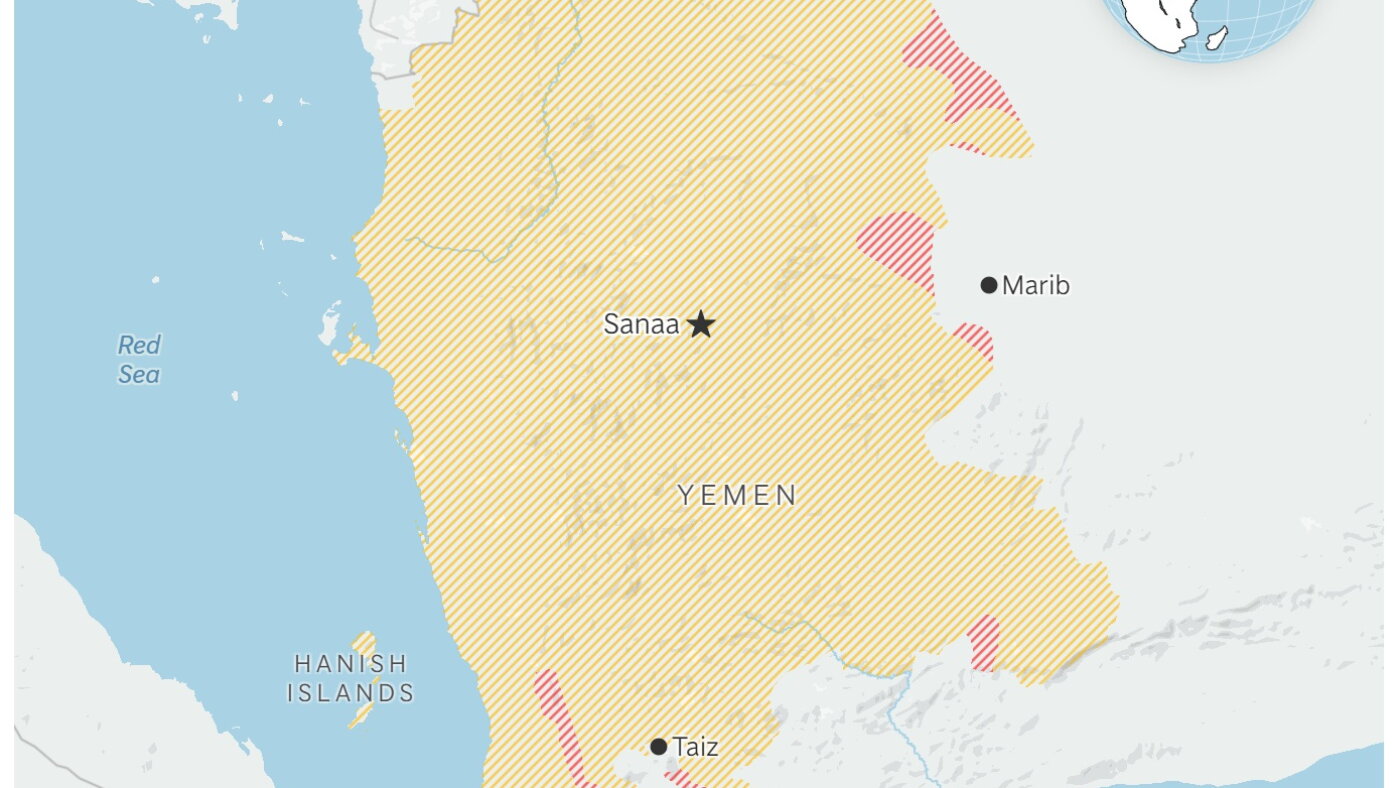
The Houthis are attempting to push into the Kahboub Mountains after seizing much of Yemen’s Red Sea coast in a lightning offensive this month – an advance that experts say could dramatically shift the balance of power in the country’s war if successful.
2026-09-22 · Al Jazeera
Why are the Houthis fighting for Yemen’s Kahboub Mountains? · mixed framing

Claims (43 extracted, 10 hedged)

The Houthis are attempting to push into the Kahboub Mountains after seizing much of Yemen’s Red Sea coast in a lightning offensive this month – an advance that experts say could dramatically shift the balance of power in the country’s war if successful. uncertain
experts → attempt → war
The renewed fighting in recent months with forces aligned with Yemen’s Saudi-backed, internationally recognised government has brought an end to the relative calm that had largely held since 2022. asserted
that → renew → 2022
In recent days, the conflict has moved into the rugged highlands overlooking the approaches to Bab al-Mandeb, one of the world’s most important shipping routes. asserted
conflict → move → routes
Recommended Stories list of 3 items- list 1 of 3Trump-GCC Summit in New York: What does each side want? asserted
side → want → What
- list 2 of 3Who actually has power at the United Nations? - list 3 of 3La Liga President Tebas slams Real Madrid refereeing ‘conspiracy’ claims The strait connects the Indian Ocean to the Red Sea and the Suez Canal, and its importance is only growing as shipping through the Strait of Hormuz remains disrupted by the Houthis’ main ally: Iran. uncertain
shipping → slam → ally
Experts said taking the high ground would help the Houthis defend the newly captured coastline and make it far harder for government forces to push them back. asserted
forces → say → them
While the mountains may not necessarily be used as a launchpad for attacks on ships, controlling them would provide defensive depth and cover for Houthi positions closer to the coast, making missile and drone operations in the Red Sea easier to sustain and harder to disrupt. uncertain
operations → use → Sea
The Houthis have said they do not intend to target United States shipping and attacks would be limited to vessels linked to Saudi Arabia. asserted
attacks → say → Arabia
But the group has repeatedly attacked ships in the Red Sea in previous years, including vessels with no clear connection to its stated targets. asserted
group → attack → targets
The Houthi advance has taken on added urgency after The New York Times reported that US President Donald Trump came close to ordering air attacks against the Houthis on Sunday, only to call them off at the last minute. asserted
Trump → take → minute
Britain, meanwhile, said it will support Saudi Arabia with defensive refuelling. asserted
it → say → refuelling
Kahboub, a mountainous region spanning parts of the Lahj and Taiz governorates in southern Yemen, derives much of its strategic importance from its proximity to Bab al-Mandeb. asserted
Kahboub → span → Mandeb
Some of its heights lie about 40km (25 miles) from the waterway, providing commanding views across a stretch of the Red Sea, through which a significant share of global maritime trade and millions of barrels of oil pass each day. asserted
share → lie → oil
While that vantage point has considerable military value, experts said the mountains are unlikely to serve directly as a launchpad for attacks in the Red Sea. asserted
mountains → have → Sea
Their more immediate importance for the Houthis lies in securing the territory the group has already captured. asserted
group → lie → territory
“The mountains are the natural wall that protects the Houthis’ rear on the coast. asserted
that → protect → coast
Controlling them would cut the coast off from the government-held south and place direct pressure on Lahj and, in the longer term, Aden,” Faozi Al-Goidi, a visiting fellow at the Middle East Council on Global Affairs, told Al Jazeera. asserted
Goidi → control → Jazeera
Securing their rear would help the Houthis prevent government forces from attacking their coastal positions from behind or severing the routes connecting their newly captured territory. asserted
Houthis → secure → territory
Until the high ground is secured, Houthi forces stationed along the Red Sea remain vulnerable to attacks from government-held areas to the south and east. asserted
forces → secure → south
Capturing the elevated positions, therefore, would make Kahboub less important as a potential launchpad for maritime attacks than as a defensive shield for the Houthis’ military gains along the coast. asserted
Kahboub → capture → coast
Ewa K Strzelecka, a visiting senior fellow at the London School of Economics, told Al Jazeera that controlling the coastline, Mayyun Island and the neighbouring highlands would give the Houthis “strategic resilience”. asserted
controlling → visit → resilience
“Holding the coastline, Mayyun and the adjacent highlands together would give the Houthis a much deeper and more defensible position around one of the world’s principal maritime chokepoints,” she said. asserted
she → hold → chokepoints
Those positions would allow the Houthis to move fighters, weapons and supplies along the coast with less risk of their routes being severed from behind. “From the high ground, the Houthis could monitor movements along the coast, around Mayyun Island and towards the chokepoint while protecting missile, drone and potentially unmanned-boat infrastructure positioned farther inland,” Andreas Krieg, a senior lecturer at the School of Security Studies at King’s College London, told Al Jazeera. uncertain
Krieg → allow → Jazeera
The battle is already proving slower than the Houthis’ rapid advance across the coastal plains. asserted
battle → prove → plains
Footage circulated on X by the Taiz Military Axis Command’s media centre appears to show intense fighting between forces aligned with the Yemeni government, local fighters and the Houthis on mountain fronts. asserted
Footage → circulate → fronts
The footage could not be independently verified by Al Jazeera. uncertain
footage → verify → Jazeera
“This is not an easy battle,” said Mohammed al-Basha, an analyst and a former spokesperson for Yemen’s embassy in Washington. asserted
Basha → say → Washington
“The fighting is taking place across some of Yemen’s most unforgiving terrain where control of a single hilltop or mountain peak can come at a heavy cost.” asserted
control → take → cost
Could the Houthis isolate Taiz by controlling Kahboub? uncertain
Houthis → isolate → Kahboub
Control of Kahboub could also place greater pressure on Taiz, a symbolically and strategically important city, as the Taiz governorate forms a bridge between the Houthi-held north and the government-held south and the Red Sea coast. uncertain
governorate → place → north
Whoever controls it gains the upper hand in the movement of weapons and supplies between the interior and the southern port city of Aden. asserted
controls → control → Aden
Losing it, therefore, could deal a serious blow to the government. uncertain
Losing → lose → government
Murad Al-Arefi, an editor at the Sana’a Center, told Al Jazeera that taking Kahboub would “increase pressure on the southern and western approaches to Taiz” although he cautioned that it should not yet be seen as evidence of a broader attempt to encircle the city. asserted
it → tell → city
The immediate threat to the Taiz-Aden connection is less direct because Kahboub does not itself sit across the route. asserted
Kahboub → sit → route
“What matters is whether the Houthis can subsequently push farther east through Al-Wazi’iyah and towards the Al-Turbah-Lahj axis, which would place much greater pressure on the southern approaches to Taiz and potentially weaken its connection with Aden,” Strzelecka said. asserted
Strzelecka → matter → Aden
A further advance, therefore, could leave government forces defending several mountain fronts simultaneously while relying on fewer secure routes to move troops, weapons and supplies, leaving Taiz increasingly exposed. uncertain
advance → leave → Taiz
One of Yemen’s largest population centres, Taiz became an important centre of resistance to the Houthis after they seized Sanaa in 2014, and was besieged by the rebel group for years. asserted
they → become → years
A major Houthi breakthrough there, therefore, would carry symbolic significance far beyond the territory captured. asserted
breakthrough → carry → territory
What could it mean for Red Sea shipping? uncertain
it → mean → shipping
Officially, the Houthis have said their current restrictions in Bab al-Mandeb would apply only to Saudi-linked shipping. But during its previous Red Sea campaign, the group struck or endangered ships with no clear connection to Israel – their purported target during Israel’s genocidal war on Gaza – raising questions about how narrowly any new restrictions would be applied. asserted
restrictions → say → questions
…and 3 more, not listed.
Give feedback · no sign-in needed

No sign-in needed for now. Your note is sent without a name, so it cannot be answered.

History Support