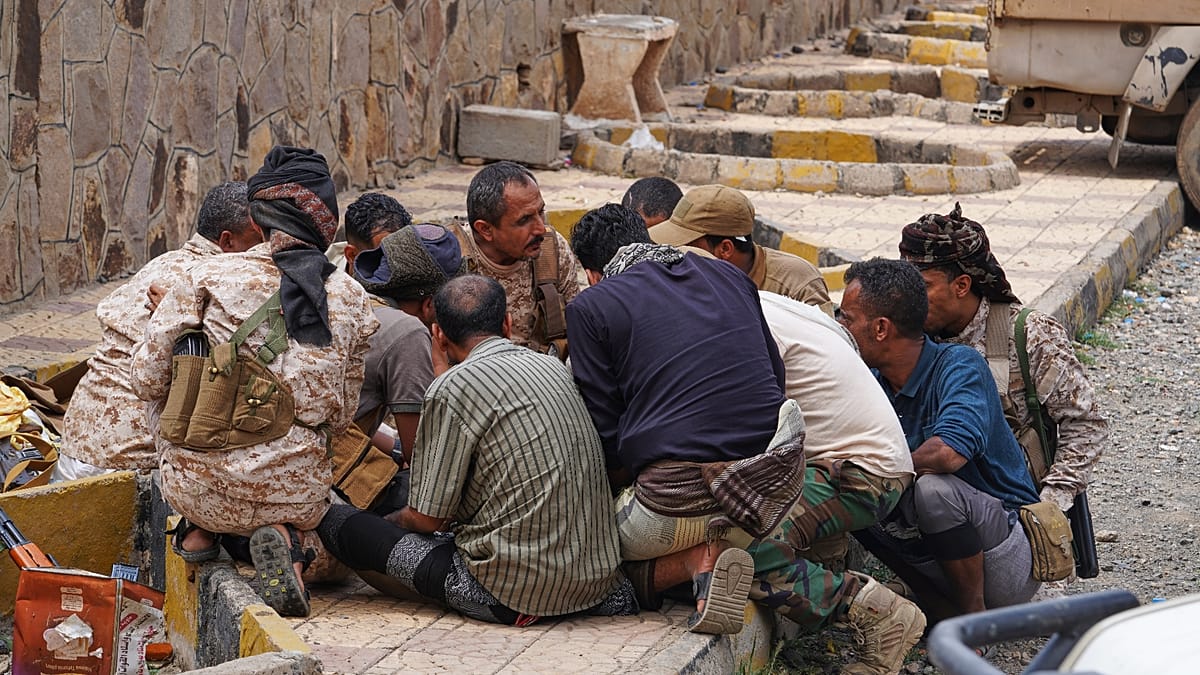
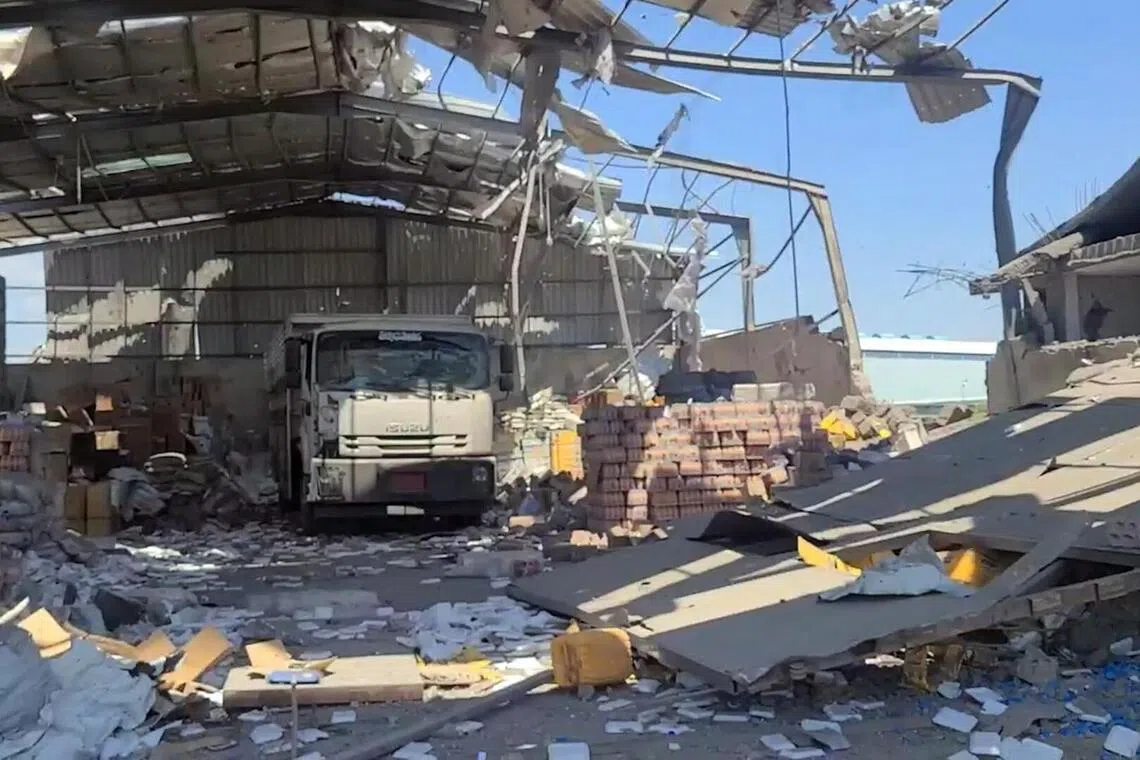
Photo via Al Jazeera

Yemeni government in military and diplomatic push to reverse Houthi gains

Read the original at Al Jazeera ↗
Cite

Mansour, M. (2026, September 23). Yemeni government in military and diplomatic push to reverse Houthi gains. Al Jazeera. https://www.aljazeera.com/news/2026/9/23/yemeni-government-in-military-and-diplomatic-push-to-reverse-houthi-gains?traffic_source=rss

Dated when The Aporia collected the article, usually within hours of publication. Check the original for its exact date and byline.

Al Jazeera · collected 2026-09-23 · by Mohammad Mansour

Quick Summary

The Yemeni government is attempting to regain control after losing territory to Houthi rebels earlier this month. Government forces have recently claimed victories in key mountain regions such as Mount Qarafan and Mount Zalat near the strategic Bab al-Mandeb strait. Meanwhile, at the United Nations General Assembly, Yemen's officials are seeking international support for their efforts against the Houthis, emphasizing disarmament of non-state armed groups like the rebels. The ongoing conflict has displaced approximately 132,000 people recently, including 75,000 in Taiz alone.
Written by AI on 2026-09-23, from this article's own text only (the story summary below draws on all the coverage).

AI analysis

Story summary

On Tuesday, Yemen’s government forces backed by local fighters claimed to have taken full control of Mount Qarfan in Taiz governorate, a strategic move against Iran-aligned Houthi fighters. The capture resulted in five Houthi deaths and twenty injuries, according to Major General Abdulaziz al-Majidi, the chief of staff for the Taiz military axis. This victory would provide government forces with significant surveillance and fire control over nearby valleys between ash-Shamaytaun and al-Waziiya districts. The operation is part of a broader effort by the Saudi-backed Yemeni government to counter Houthi advances and stabilize the region following recent territorial losses, including the Red Sea coast.

Written for “Yemen Conflict Advances” on 2026-11-18, grounded in this article and the 1 other(s) covering the same event.

Compared with similar articles

This article reads unscored and hedges 10% of its claims. Each row says how that neighbour differs.
Al Jazeera
Hedges 1 of 22 claims Outlet record 60/100
New York Post
Hedges 1 of 17 claims Outlet record 66/100
“The articles describe different events occurring at different times, with one describing a missile attack on Saudi Arabia's capital and another detailing military actions against Houthi rebels in Yemen.”
Dawn
Leans right Hedges 1 of 18 claims Outlet record 67/100
“The articles describe different stages of a conflict, not a single incident: one discusses Trump's decision on air strikes and talks with Yemen's president, while the other reports on military actions taken by Saudi-backed forces.”
Toronto Star
Leans left Hedges 3 of 61 claims Outlet record 64/100
“The articles describe different aspects of the ongoing conflict in Yemen and do not focus on the same specific incident.”
The Hindu
Hedges 0 of 3 claims Outlet record 60/100
“The articles describe different events occurring on separate days in Taiz province—one a military operation by government forces to seize Mount Qarafan, and another a strike on a market resulting in civilian casualties.”
Euronews
Hedges 3 of 7 claims Outlet record 60/100
“The articles describe different events: one about a military operation by Saudi-backed Yemeni forces to seize Mount Qarafan, and another about a Saudi airstrike on a Yemen market resulting in civilian casualties.”
The Straits Times
Leans left Hedges 1 of 25 claims Outlet record 64/100
“The articles describe different aspects of the conflict, with Article A focusing on government forces' military gains at Mount Qarafan and Article B reporting on Saudi airstrikes in Taiz causing casualties.”
Al Jazeera
Leans left Hedges 6 of 32 claims Outlet record 60/100
“The articles describe different phases of ongoing conflict in Yemen, with distinct military operations occurring on separate days.”
Toronto Star
Leans right Hedges 3 of 58 claims Outlet record 64/100
“The articles describe different stages of the conflict: A reports on the initial advance by Houthis with Iranian support, while B describes subsequent efforts by the Yemeni government to reverse Houthi gains.”
BBC News
Hedges 0 of 4 claims Outlet record 65/100
“The articles describe related military activities by government forces against Houthi rebels, but they refer to different stages or times of operations and do not specify the exact same incident.”

Story

Yemen Conflict Advances
Politics · 2 article(s) covering the same event. See how they differ ↑
How this article was measured signals, leaning charts, publisher record, byline, topics and claims

Signals How these are calculated →

Claims extracted
30
sentences that state something as happening or true
Uncertain
10%
3 of 30 hedged ("reportedly", "may", "according to")
Leaning
not political
takes no side on a contested political question
Publisher signals
60/100
Al Jazeera's corrections and hedging, across everything collected from it. Not a measure of accuracy.
Outlets on this story
2
Politics
Same framing elsewhere
1
articles that frame the event the way this one does
Analyzed 2026-09-23 · how these are computed

How this is being covered How these are calculated →

Article leaning vs. publisher reliability
Source leaning vs. consistency

Publisher

Al Jazeera · 6027 article(s) · 4 correction(s) detected
Running correction rate · 4 correction(s)

Who wrote this

Mohammad Mansour
19 article(s) here · 1 carrying a prediction
Al-Bidh said that for the STC to stop the Houthi advance, it would require autonomy on the battlefield for its units.
Recommended Stories list of 3 items- list 1 of 3Yemen’s Houthis unilaterally release 600 war detainees - list 2 of 3Houthis advance in Yemen as government forces move to defend Aden - list 3 of 3The Red Sea cannot be secured without restoring the Yemeni state Retired Lebanese Brigadier-General Hassan Jouni, a military and strategic expert, said fighting is now focused on control over a mountainous triangle of territory in southern Yemen, which could decide the outcome of the war.
During the second Intifada in September 2000, his right hand was broken while confronting Ariel Sharon, who would become prime minister the following year, during his provocative storming of the Al-Aqsa Mosque compound.
“If full control is taken, which is unlikely, the government would be able to finally tell Iraqis that a militia had been removed from its base and the legal residents of the area allowed to return,” he said.
In Gaza during that period, 399 health workers were detained, including Dr Husam Abu Safia, the director of Kamal Adwan Hospital, who has spent more than 500 days in Israeli custody. “The Israeli occupation did not and will not stop targeting the health system,” al-Waheidi said.
As Eisenkot huddles with members of his alliance and negotiates with potential outside partners who could support his coalition, including Arab parties, Netanyahu remains ensconced as a caretaker prime minister.
The claims could not be independently verified.
The electoral gains made by the parties representing Palestinian citizens of Israel – the Joint List and the United Arab List (Ra’am) – could give the Zionist opposition to Israeli Prime Minister Benjamin Netanyahu the upper hand in forming the next government, if they choose to work with the Arab parties. Recommended Stories list of 3 items- list 1 of 3Israel’s election commission rejects Likud’s fraud claims, confirms results - list 2 of 3How big is the Republican midterms loss, and is there a silver lining? - list 3 of 3Iran’s Khamenei warns Trump loss at polls won’t end US hostility Meanwhile, Netanyahu and his allies have portrayed the increased vote share for the Palestinian-led parties as the result of illegality, a+nd say they represent Jewish Israelis. Political analyst Mamoun Abu Amer told Al Jazeera that the political backlash was preplanned. “From the beginning, it was clearly a systematic campaign when Arab citizens mobilised heavily, especially in the villages, the Naqab and the Bedouin areas,” Abu Amer said.
But Badr Hassan Al-Shafei, a professor of African studies and conflict resolution expert, said fears of an escalation that could harm Sudan and Ethiopia are preventing an all-out confrontation between the two countries.
UN Secretary-General Antonio Guterres also expressed his dismay and demanded the immediate release of all detained personnel.
Also by Mohammad Mansour
Nothing else under this byline is closely related to this article, so these are simply their most recent.
All 19 articles by Mohammad Mansour →

Topics

Houthi Houthis Taiz Yemen Yemeni

Subjects

Houthis NORP · 7× Yemen GPE · 6× Houthi NORP · 5× Taiz GPE · 5× Yemeni NORP · 4× Saudi Arabia GPE · 3× Iran GPE · 2× Kahboub GPE · 2× New York GPE · 2× the General Assembly ORG · 2×

Narrative

Ibrahim Jalal, a Yemen-focused analyst, told Al Jazeera that the government’s recent attacks are an attempt to shift the momentum. “Partially and tactically, the Yemeni Armed Forces stopped part of the Houthi rush seeking to secure and stabilise expansion on the coast, and moved to limited counter-attacks in the Taiz-Lahj [region] … while regaining dominant heights and positions,” Jalal told Al Jazeera.
framing: assertive · carried by 1 article(s) · first seen 2026-09-23
Saudi-backed government forces claimed on Tuesday to have seized the strategic Mount Qarafan in southern Taiz’s al-Shamayatayn district.

Claims (30 extracted, 3 hedged)

The Yemeni government suffered a significant blow earlier this month when it lost the country’s Red Sea coast to the Houthi rebels. asserted
it → suffer → rebels
It is now working on a two-pronged strategy, militarily and diplomatically, to restore the initiative and prevent the Houthis from consolidating their gains and pushing further into government-held territory. asserted
It → work → territory
Saudi-backed government forces claimed on Tuesday to have seized the strategic Mount Qarafan in southern Taiz’s al-Shamayatayn district. asserted
forces → back → district
The military reported killing five Iranian-allied Houthi fighters and injuring 20 others during the operation. asserted
military → report → operation
Recommended Stories list of 3 items- list 1 of 3How much is UK supporting Saudi Arabia in its war with Iran-backed Houthis? - list 2 of 3Despite flurry of New York diplomacy, US-Iran deal remains elusive - list 3 of asserted
deal → support → diplomacy
3Yemen government forces claim control of Mount Qarfan in Taiz Pro-government Homeland Shield Forces, also known as the Quwat Dira’ al-Watan in Arabic, also thwarted a Houthi infiltration attempt on the Kahboub front, which overlooks the strategic Bab al-Mandeb strait. uncertain
which → claim → strait
Government forces also reported the capture of Mount Zalat, near Kahboub, on Tuesday. asserted
forces → report → Tuesday
The battles in the mountainous regions of southwestern Yemen are critical because of the commanding positions the peaks being fought over provide. asserted
peaks → fight → positions
Qarafan overlooks valleys linking southern Taiz with western coastal areas, as the Houthis attempt to encircle government-held areas in the governorate. asserted
Houthis → overlook → governorate
Kahboub, meanwhile, is significant because Houthi forces have been attempting to secure the high ground overlooking Bab al-Mandab to prevent a government counterattack and expand the territory under their control. asserted
forces → attempt → control
The Houthis, meanwhile, have claimed Saudi Arabia has conducted air strikes in Taiz, al-Jawf, and Marib. asserted
Arabia → claim → Taiz
Riyadh has not confirmed the strikes. asserted
Riyadh → confirm → strikes
The humanitarian toll is mounting, with recent hostilities displacing approximately 132,000 people, including 75,000 in Taiz alone, according to the International Organization for Migration. UNGA diplomatic push Meanwhile, at the United Nations General Assembly in New York, Yemeni government officials are attempting to rally support for their push against the Houthis. uncertain
officials → mount → Houthis
Presidential Leadership Council member Abdullah al-Alimi is leading Yemen’s delegation and will address the General Assembly later this week, but has already met US politicians. asserted
Alimi → lead → politicians
Foreign Minister Afrah al-Zouba is also attending the world gathering, and called for the disarmament of non-state armed groups at a meeting on the General Assembly’s sidelines. asserted
Zouba → attend → sidelines
Other world leaders have included references to events in Yemen in their own addresses to the General Assembly. asserted
leaders → include → Assembly
Qatar’s Emir Sheikh Tamim bin Hamad Al Thani addressed the assembly, reaffirming support for UN efforts to reach a comprehensive political resolution. asserted
Emir → address → resolution
He emphasised that any settlement must be based on the outcomes of Yemen’s 2013-14 UN-facilitated national dialogue, in a manner that preserves Yemen’s unity, sovereignty, security, and stability. asserted
that → emphasise → unity
Ireland also highlighted the crisis, expressing deep concern about the humanitarian situation and stressing that freedom of navigation must be protected in the Bab al-Mandab strait. asserted
freedom → highlight → strait
The Yemeni government is focusing its diplomatic efforts on impressing on other countries the dangers of Houthi control of the Bab al-Mandab strait, and the threat of more attacks against shipping in the region. asserted
government → focus → region
While the government has the support of Saudi Arabia, many other world powers are avoiding any involvement in the conflict, including the US. asserted
powers → have → US
The Yemeni government’s current military counterattacks against the Houthis therefore remain localised, rather than a larger campaign, analysts say. asserted
analysts → remain → campaign
Ibrahim Jalal, a Yemen-focused analyst, told Al Jazeera that the government’s recent attacks are an attempt to shift the momentum. “Partially and tactically, the Yemeni Armed Forces stopped part of the Houthi rush seeking to secure and stabilise expansion on the coast, and moved to limited counter-attacks in the Taiz-Lahj [region] … while regaining dominant heights and positions,” Jalal told Al Jazeera. asserted
Jalal → focus → Jazeera
“The government is gradually regaining the initiative, but it has not yet launched a broad military campaign to reclaim the coast and other areas.” asserted
it → regain → coast
Jalal noted the significance of the geography being fought over. asserted
Jalal → note → geography
“Taiz is considered a key to protecting Bab al-Mandab from the east and communication routes with Lahj and Aden; therefore, regaining its dominant southern and western heights prevents the Houthis from stabilising and securing coastal gains and expanding south,” Jalal added. asserted
Jalal → consider → gains
Farea Al-Muslimi, a research fellow at Chatham House’s Middle East and North Africa Programme, told Al Jazeera that reasserting control remains a severe challenge for government forces. asserted
reasserting → tell → forces
“It is impossible for the government to regain momentum unless it manages to reclaim Bab al-Mandab,” Al-Muslimi said, adding that he believes it is unlikely, despite the flat and open nature of the geography of the region, which would make it easier for air power to target the Houthis. asserted
power → regain → Houthis
Al-Muslimi said that, for the Houthis, the battles in Taiz may not be about seeking full control of the governorate, but instead be a way of keeping the main battle away from their newly gained territories. uncertain
battles → say → territories
“In Taiz, in my opinion, the Houthis do not need to control it as long as they besiege it, and in reality, they will not try to control it because it is a burden more than an opportunity,” Al-Muslimi noted. asserted
Muslimi → need → opportunity

Give feedback · no sign-in needed

No sign-in needed for now. Your note is sent without a name, so it cannot be answered.

History Support