That is 0 articles you have read today.
The Aporia is free and carries no advertising, so readers are the only
thing paying for it. If you are getting this much out of it, a small
donation is what keeps it independent.
Daily limit reached
You have read 0 articles today.
That is more than the 15 a day The Aporia gives away,
and well past what it can carry on nothing. Your allowance resets at
midnight.
There is no advertising here and nothing about you is sold, so readers
are the only thing paying for it. If the site is worth this much of
your day, it is worth a few dollars.
Everything else stays open: the
maps, the
directory and
search do
not count against this, and neither does re-opening something you have
already read today.
The Guardian
· collected 2026-09-22 · by Pippa Crerar Political editor
Andy Burnham, the UK prime minister, did not definitively rule out reversing Brexit in Labour’s next manifesto during a press conference en route to the UN general assembly in New York. While he emphasized his current priority is on rebuilding bridges with European allies and securing closer trading ties, he left open the possibility of rejoining the EU at some future point. Burnham also discussed concerns over EU legislation that could negatively impact British industry and supply chains, indicating a need for constructive dialogue with the European Commission president Ursula von der Leyen.
Written locally by qwen2.5:14b on 2026-09-22,
using this article's own text rather than the other coverage of the
same event (that is the story summary below).
Story summary
Andy Burnham, the newly elected Prime Minister of the United Kingdom, has opened the door to reversing Brexit by potentially including a bid to rejoin the European Union (EU) in Labour’s next manifesto. Speaking ahead of his first meeting with Ursula von der Leyen, President of the European Commission, on Tuesday during the UN General Assembly in New York City, Burnham stated that while he is not ruling out such an option, it is a matter for “another day.” He emphasized his immediate priority as rebuilding bridges and securing closer trading ties with EU nations. Some Labour MPs are pushing Burnham to change course due to potential economic benefits from rejoining the EU, despite Makerfield voting to leave in 2016. However, Burnham remains committed to Keir Starmer’s Brexit red lines for now.
Written for “Labour Brexit Reversal Policy” on 2026-10-05,
grounded in this article and the 3 other(s) covering the same event.
Andy Burnham has opened the door to fighting the next election on the UK rejoining the EU, but said his immediate priority was continuing to rebuild bridges with European allies.
asserted
priority → open → allies
The prime minister, who will hold his first meeting with the European Commission president, Ursula von der Leyen, on Tuesday, did not rule out including reversing Brexit in Labour’s next manifesto – but suggested the country should focus on securing closer trading ties first.
uncertain
country → hold → ties
Ministers have expressed fears privately that the EU reset has lost significant momentum since Burnham became prime minister, and a summit on the issue is likely to be delayed again unless the bloc agrees to discuss legislation that could lock British business out of parts of EU industry.
Burnham has said he will stick to Keir Starmer’s red lines this side of an election, but he is under pressure from Labour MPs who opposed Brexit to change tack, in part because of the potential boost to growth, even though his own seat of Makerfield voted to leave.
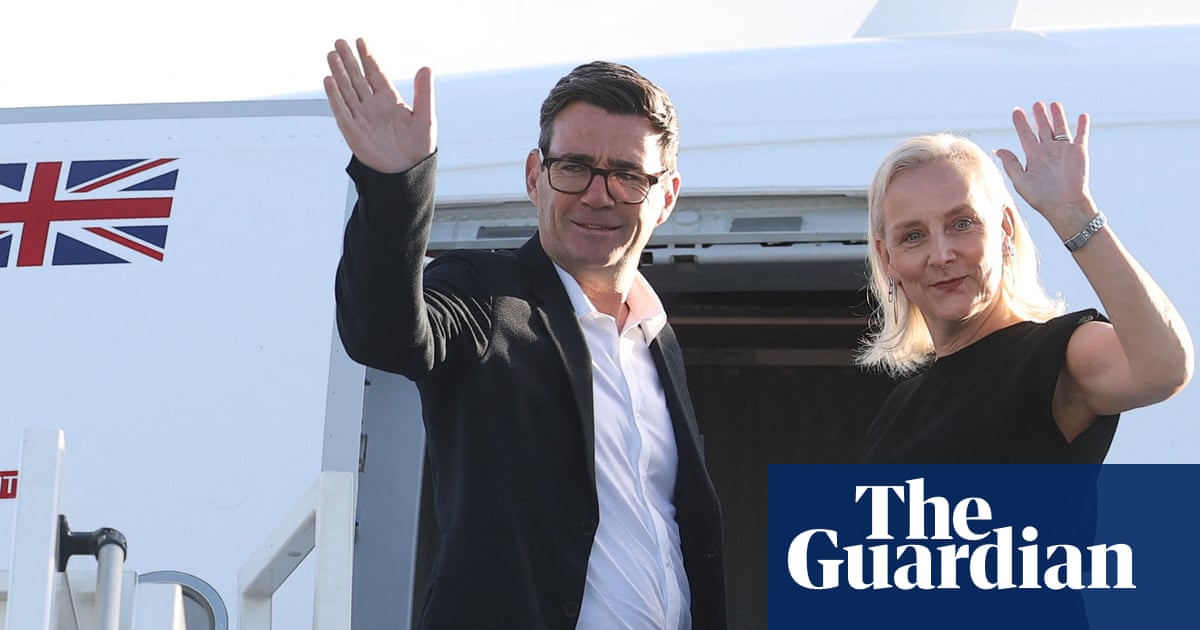
Asked by reporters on his flight to New York on Monday for the UN general assembly whether he could rule out a reversal of Brexit being in the next Labour manifesto
uncertain
reversal → express → manifesto
, he said: “Our focus at the moment is on a UK/EU summit which we hope will take place later this year.
asserted
we → say → place
“My immediate priority is to build on the good work that Keir did in rebuilding bridges.
asserted
Keir → build → bridges
Because those bridges were broken in the early part of this decade.
asserted
bridges → break → decade
And Keir did a good job in re-establishing that relationship.
asserted
Keir → do → relationship
“What we have got to do now is go to the next level in terms of reaching practical agreement that will further boost the British economy.
asserted
that → get → economy
The prime minister admitted he had concerns about the bloc’s “made in Europe” legislation, which is designed to curb China’s increasing presence but could also affect British industry and supply chains.
uncertain
which → admit → industry
He said he would share those concerns “in a constructive spirit” with von der Leyen.
asserted
he → say → Leyen
“The other issues you discuss, they are for another day,” he said of rejoining the bloc.
asserted
he → discuss → bloc
Burnham said the UK had considerable support among EU member states for its position on the “made in Europe” legislation, which threatens to scupper ongoing negotiations about the reset.
asserted
which → say → reset
We both suffer the same effects as other countries, particularly steel,” he said.
asserted
he → suffer → countries
“We are making the argument we are not your enemies here ... we are not the problem.
asserted
we → make → argument
‘Made in Europe’ is dealing with a different problem.”
asserted
Made → make → problem
He also said delicate UK/Ireland supply chains could end up being “collateral damage” of any disagreement with the EU.
uncertain
chains → say → EU
“Let’s work towards a trusted partner approach that doesn’t cause a problem where there wasn’t a problem and where we have common cause,” he said.
asserted
he → work → cause
In his speech to the UN on Tuesday night, Burnham will reflect on the 10 years since Brexit and say the UK needs to be more clear-eyed about the risks to its democratic system.
asserted
UK → reflect → system
“I’m reflecting on that last decade,” he told reporters on his plane.
asserted
he → reflect → plane
“What we’ve experienced is when that turbulence comes, when outside actors seek to manipulate, to distort facts, influence the British democratic process.
asserted
actors → experience → process
“Going into the next decade we need to be clear-eyed about that and become stronger and more on the front foot about challenging that.
asserted
we → go → that
“Perhaps Britain can say we have experienced some of the turbulence before others in terms of the politics of recent times.
asserted
we → say → times
We need to be clearer where outside forces, our enemies, are trying to manipulate that opinion and feeling to serve their interests, not ours.”
asserted
forces → need → interests
 The Aporia