Prime Minister Andy Burnham has hinted at the possibility of including a pledge to rejoin the European Union in Labour's next election manifesto. During an interview on his way to meet with European Commission chief Ursula von der Leyen, Burnham stated that while his current priority is to rebuild bridges between the UK and EU, he did not rule out revisiting the idea of rejoining later. He also criticized the 2016 Brexit referendum, attributing its outcome partly to 'outside forces' manipulating public opinion.
Written locally by qwen2.5:14b on 2026-09-22,
using this article's own text rather than the other coverage of the
same event (that is the story summary below).
Story summary
Andy Burnham, the newly elected Prime Minister of the United Kingdom, has opened the door to reversing Brexit by potentially including a bid to rejoin the European Union (EU) in Labour’s next manifesto. Speaking ahead of his first meeting with Ursula von der Leyen, President of the European Commission, on Tuesday during the UN General Assembly in New York City, Burnham stated that while he is not ruling out such an option, it is a matter for “another day.” He emphasized his immediate priority as rebuilding bridges and securing closer trading ties with EU nations. Some Labour MPs are pushing Burnham to change course due to potential economic benefits from rejoining the EU, despite Makerfield voting to leave in 2016. However, Burnham remains committed to Keir Starmer’s Brexit red lines for now.
Written for “Labour Brexit Reversal Policy” on 2026-10-05,
grounded in this article and the 3 other(s) covering the same event.
- See more Daily Mail on Google - save us as a Preferred Source
Andy Burnham has opened the door to fighting the next election on a pledge to rejoin the European Union – as he claimed Brexit was driven by 'outside forces'.
asserted
Brexit → see → forces
Speaking ahead of talks on Tuesday with European Commission chief Ursula von der Leyen, the PM said his 'immediate priority' was to revive a planned 'reset' which has stalled because of the EU's protectionist plans.
asserted
which → speak → plans
But he refused to rule out putting a bid to rejoin the EU at the heart of Labour's next manifesto, saying only that it was a question for 'another day'.
asserted
it → refuse → day
He suggested he considers the 2016 referendum result to be illegitimate, saying it was driven by 'outside forces' trying to 'manipulate opinion'.
uncertain
it → suggest → opinion
The Prime Minister is a fierce critic of Brexit and has expressed hope that the UK will rejoin the EU within his lifetime.
asserted
UK → express → lifetime
He is expected to use a speech to the UN General Assembly on Tuesday to launch a fresh attack on the decision to leave the EU, blaming it for ushering in a decade of decline.
asserted
He → expect → decline
Mr Burnham has pledged to stick to Labour's so-called Brexit 'red lines', which include not rejoining the single market or reviving free movement.
But some Labour MPs are urging him to fight the next election on a promise to rejoin.
asserted
MPs → pledge → promise
Asked if he was considering the idea, the PM told reporters travelling with him to New York: 'Our focus at the moment is on a UK-EU summit which we hope will take place later this year.
asserted
we → ask → place
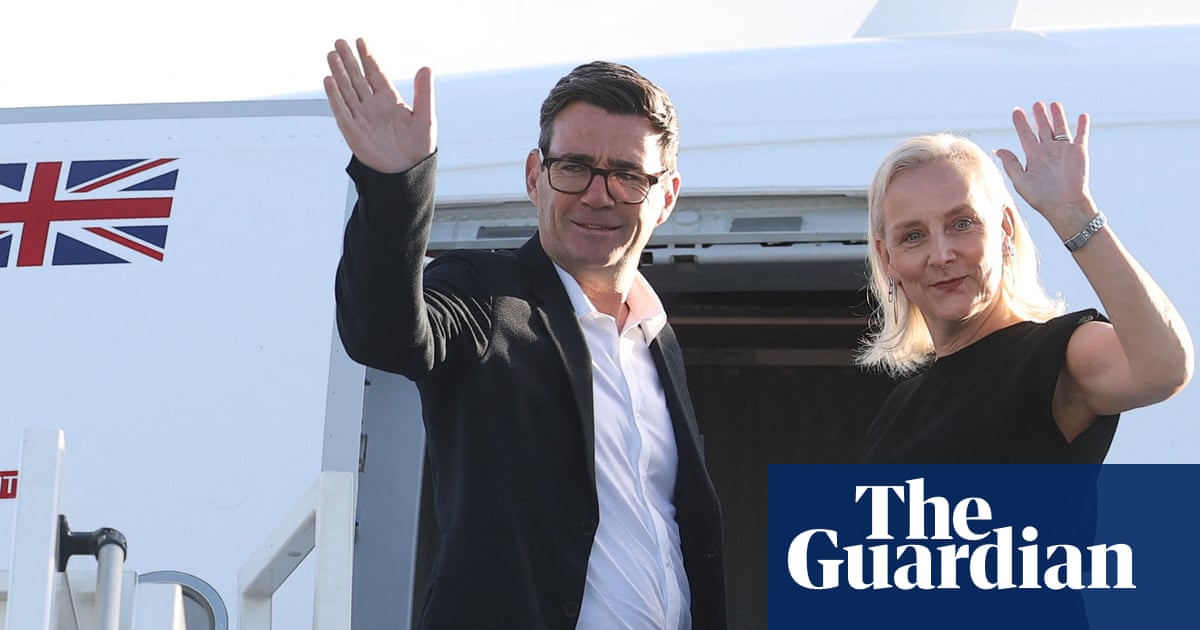
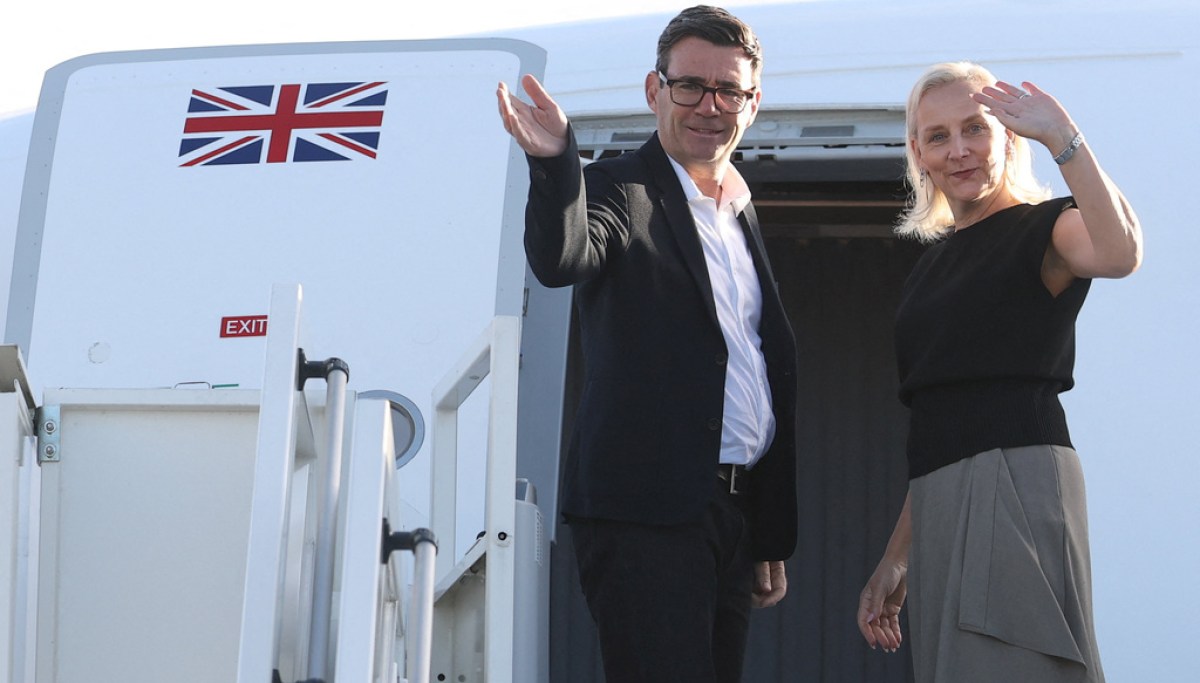
Prime Minister Andy Burnham and his wife Marie-France van Heel board a plane for the United States
'
asserted
wife → board → States
And as I said my immediate priority is to build on the good work that Keir did in rebuilding bridges.
asserted
Keir → say → bridges
Because those bridges were broken in the early part of this decade.
asserted
bridges → break → decade
And Keir did a good job in re-establishing that relationship.
asserted
Keir → do → relationship
And what we have got to do is now go to the to the next level in terms of reaching practical agreement that will further boost the British economy.
asserted
that → get → economy
Pressed on the possibility of rejoining, he added: 'The other issues… they are for another day.'
asserted
they → press → day
Mr Burnham brushed aside the idea that the UK could become an associate member, saying the EU had 'made it clear that that wasn't open to us'.
uncertain
that → brush → us
But he suggested that Brexit had been driven in part by 'outside actors' who had 'manipulated facts'.
uncertain
who → suggest → facts
He added: 'I'm reflecting on that last decade. What we've experienced is when that turbulence comes when outside actors seek to manipulate, to distort facts, influence the British democratic process.
asserted
actors → add → process
'Going into the next decade we need to be clear-eyed about that and become stronger and more on the front foot about challenging that.
asserted
we → go → that
Perhaps Britain can say we have experienced some of the turbulence before others in terms of the politics of recent times.
asserted
we → say → times
We need to be clearer where outside forces, our enemies, are trying to manipulate that opinion and feeling to serve their interests, not ours.'
asserted
forces → need → interests
Speaking ahead of talks on Tuesday with European Commission chief Ursula von der Leyen, the PM said his 'immediate priority' was to revive a planned 'reset' which has stalled because of the EU's protectionist plans
The PM will hold talks with Ms von der Leyen on Tuesday amid a growing row over the EU's controversial 'Made in Europe' scheme.
asserted
PM → speak → scheme
Brussels is pushing the protectionist measure to prevent European firms being swamped by cheap Chinese competition.
asserted
firms → push → competition
But ministers fear British industry, including state-owned British Steel, could be hit hard in the cross-fire.
uncertain
industry → fear → fire
The PM is pushing for an exemption from the scheme ahead of a planned UK-EU summit this autumn.
asserted
PM → push → summit
Mr Burnham said he had 'considerable support' from other EU leaders, but has yet to persuade Brussels to back down.
asserted
he → say → Brussels
'Europe's argument is not with us,' he said.
asserted
he → say → us
'We both suffer the same effects as other countries particularly steel and the issue it raises for the steel industry in Europe and in Britain
'
asserted
it → suffer → Britain
We are making the argument we are not your enemies here...we are not the problem.
asserted
we → make → argument
Made in Europe is dealing with a different problem
'
asserted
Made → make → problem
We are making the argument that let's avoid collateral damage.
asserted
's → make → damage
'Lets work towards a trusted partner approach that doesn't cause a problem where there wasn't a problem and where we have common cause.'
asserted
we → work → cause
 The Aporia