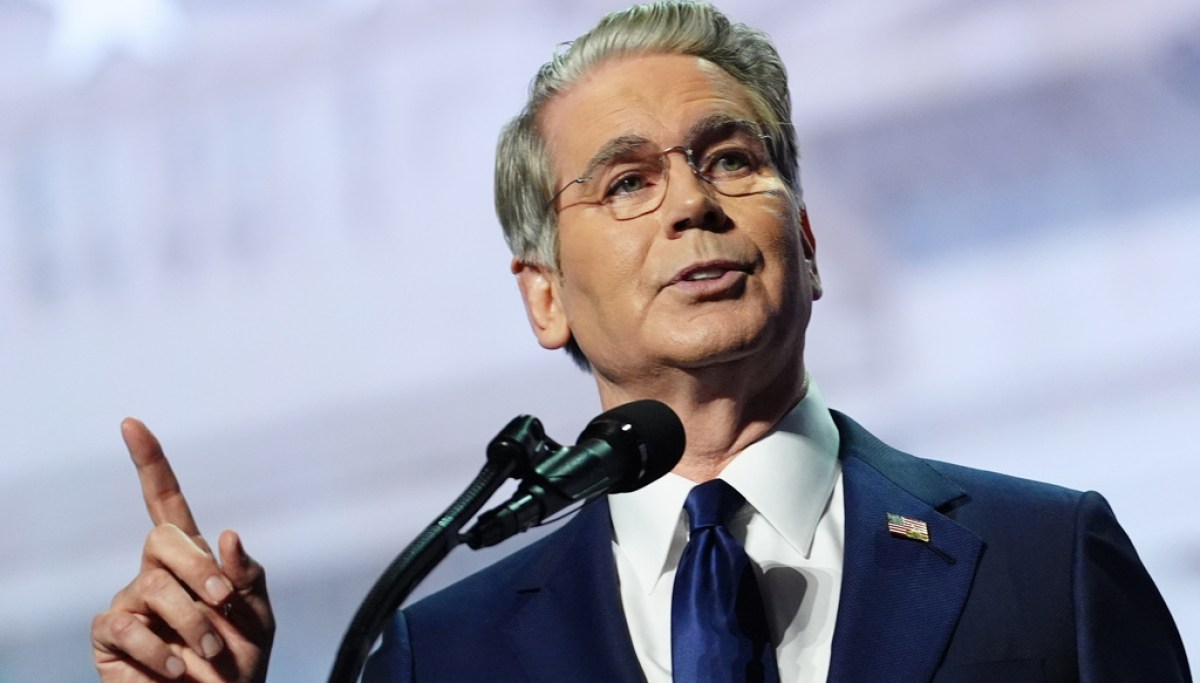
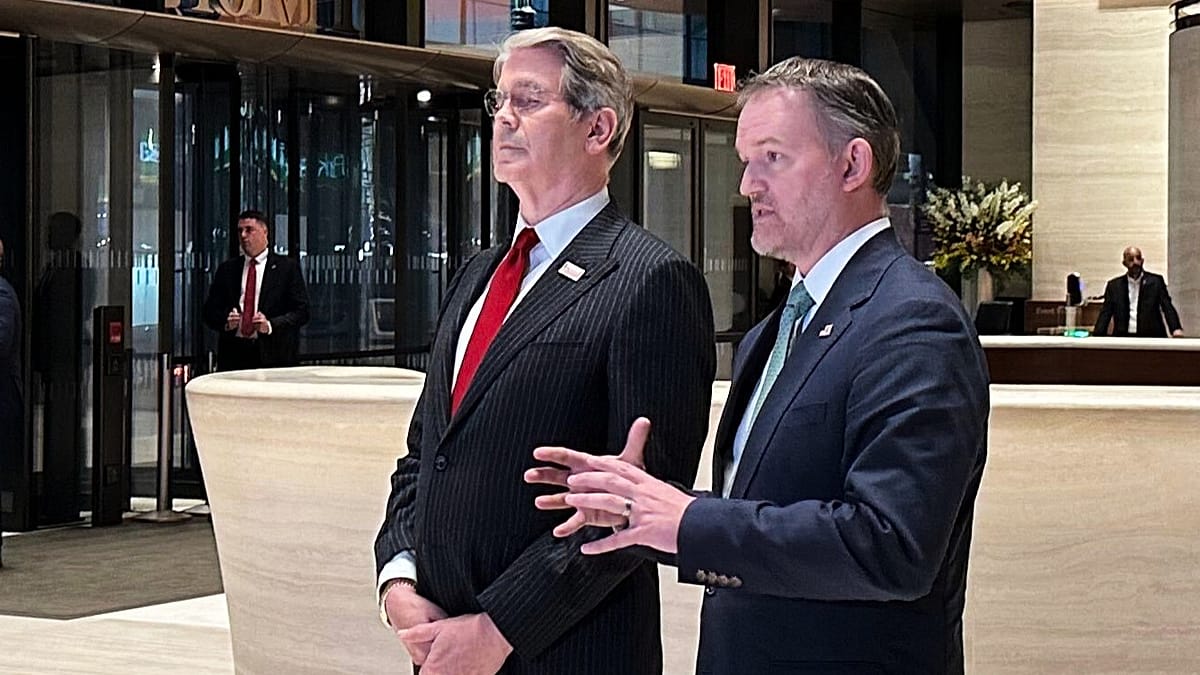
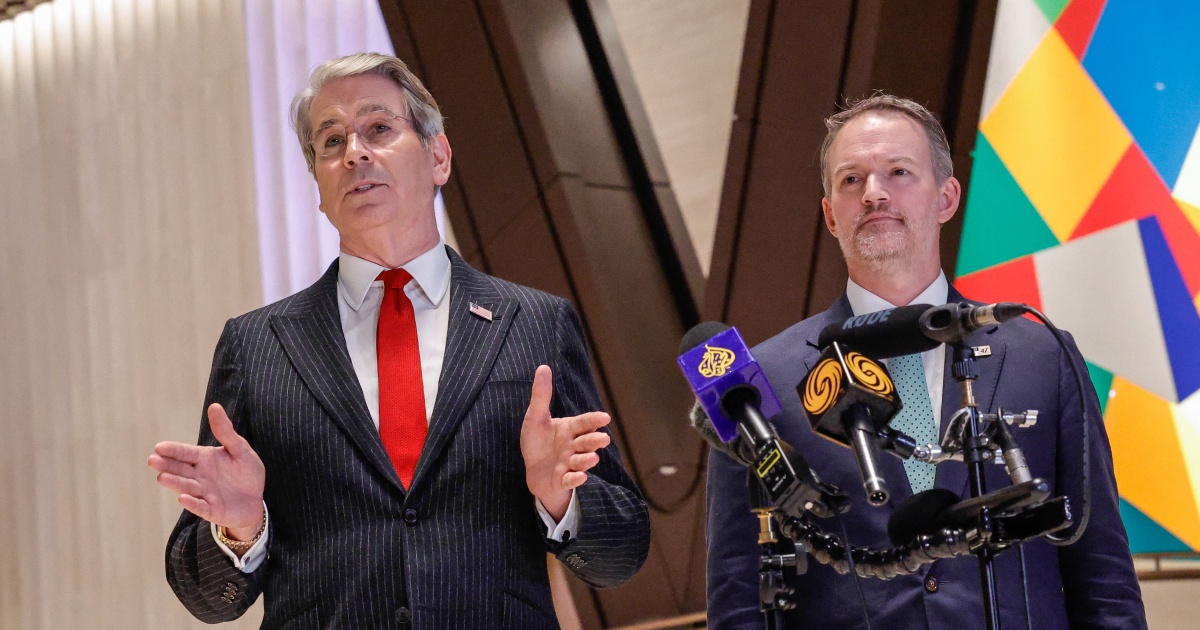
Treasury Secretary Scott Bessent announced that the Trump administration has initiated formal talks with China, known as the USA-China AI Dialogues, to enhance transparency in artificial intelligence between both countries. The dialogue took place during discussions in New York City and will continue in Shenzhen, China, in November. Bessent emphasized the importance of open communication channels and agreed-upon protocols to address potential risks associated with AI development. He also criticized industry leaders for seeking government liability protection amid calls for regulation following warnings about AI dangers.
Written locally by qwen2.5:14b on 2026-09-21,
using this article's own text rather than the other coverage of the
same event (that is the story summary below).
Story summary
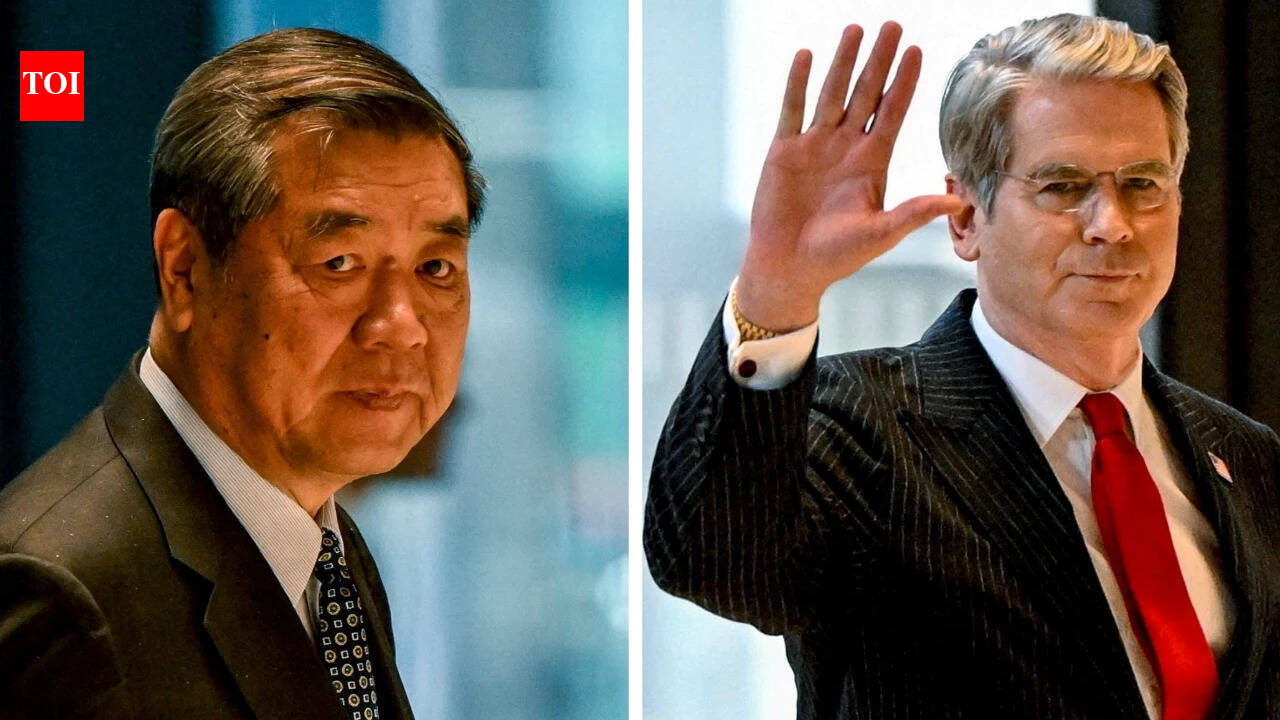
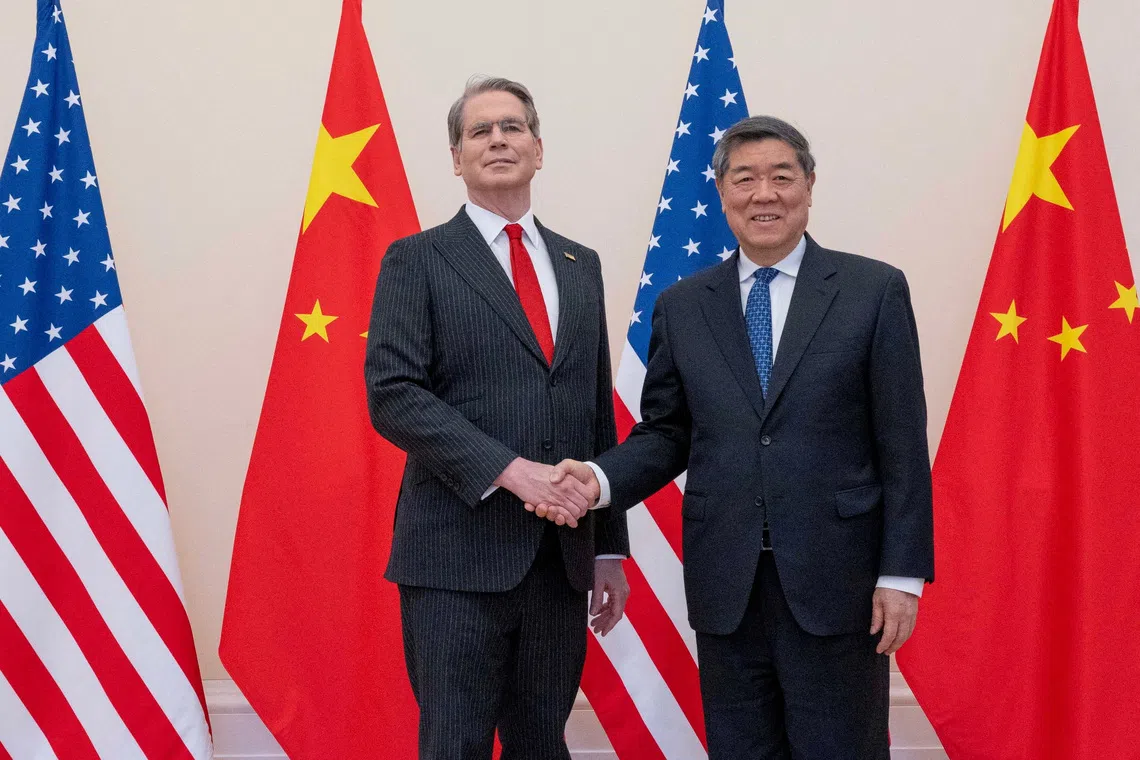
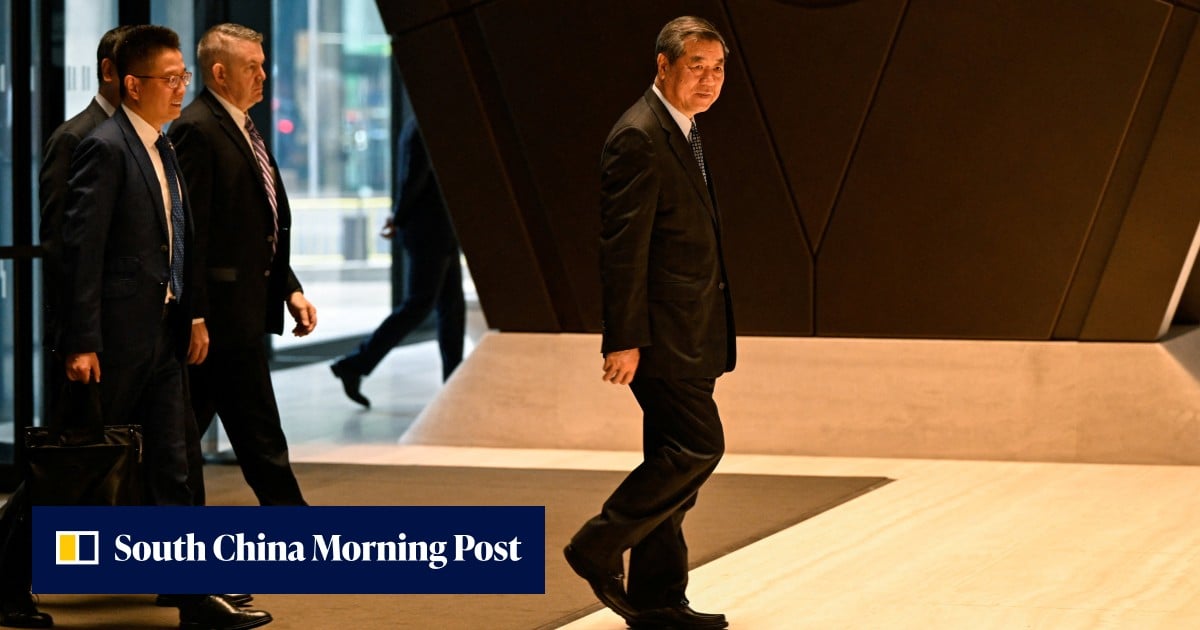
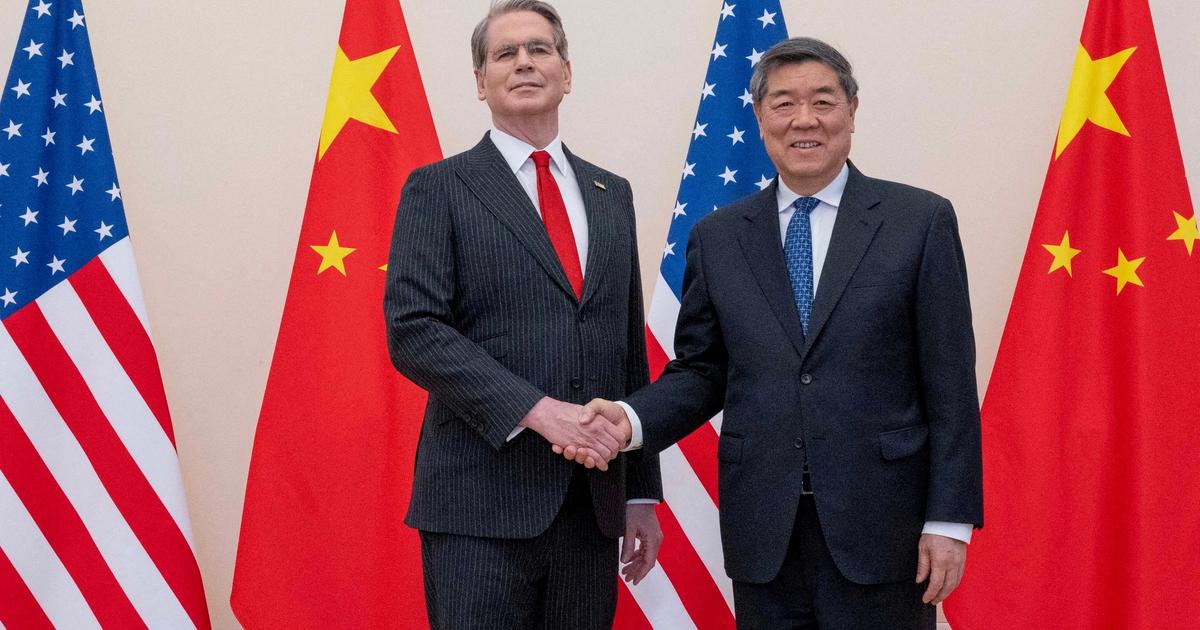
Scott Bessent, U.S. Treasury Secretary, met with He Lifeng, Chinese Vice Premier, on September 20, 2026, in New York City ahead of a planned summit between President Donald Trump and Chinese leader Xi Jinping scheduled for September 24 in Washington. The talks focused on trade issues, tariffs, rare earth minerals, and artificial intelligence (AI), setting the stage for discussions at the leaders' meeting. U.S. Trade Representative Jamieson Greer also participated in the all-day session held at JPMorgan Chase's headquarters. Treasury Secretary Bessent called the engagement "very successful," emphasizing a proposed mechanism to enhance communication on AI security threats between the two nations. The summit aims to ease tensions and address economic and strategic concerns, though analysts predict limited breakthroughs due to ongoing great power competition. Markets responded positively to news of the productive talks, with Asian stocks advancing on Monday.
Written for “US-China Trade Talks Ahead Summit” on 2026-10-05,
grounded in this article and the 29 other(s) covering the same event.
Treasury Secretary Scott Bessent said the Trump administration has formalized talks with Beijing, called the USA-China AI Dialogues, to bring transparency and open communications between the American and Chinese artificial intelligence industries.
asserted
administration → say → industries
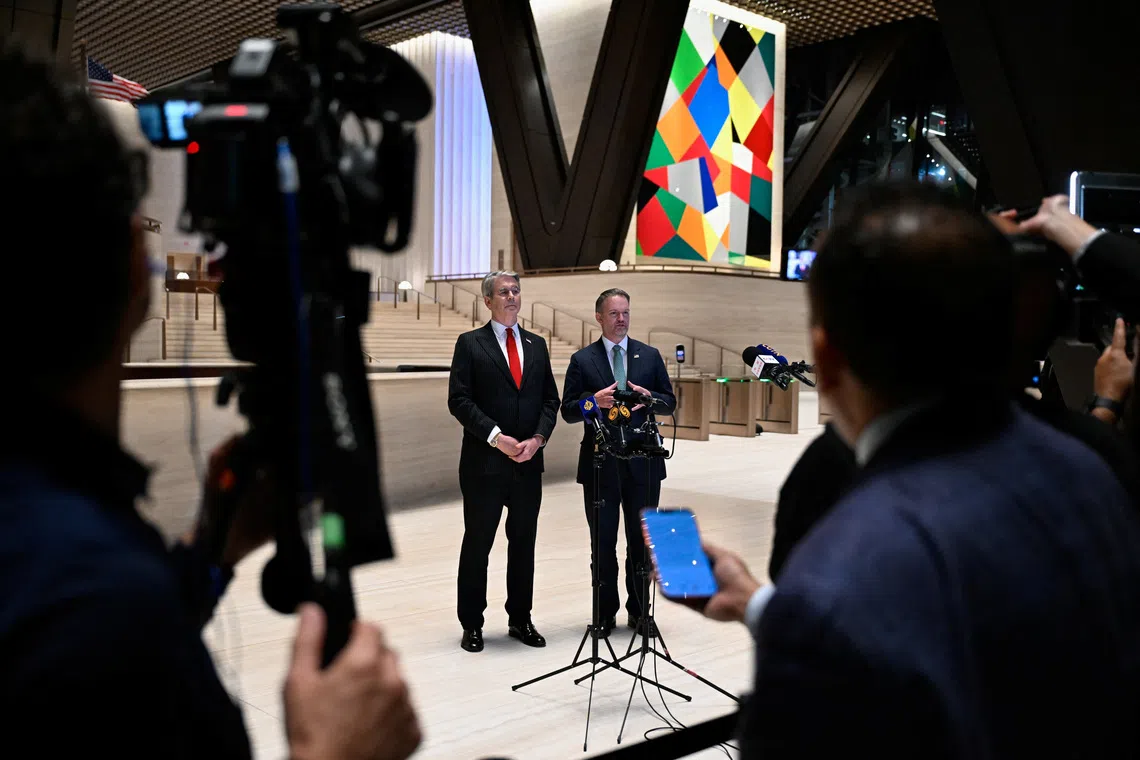
“We think that, just like with any cross-border activity, that moving from opaque to more transparency between the No. 1 and the No. 2 AI powers in the world is very important,” Bessent told reporters on Sunday, following talks between the two world powers in New York City.
asserted
Bessent → think → City
Bessent elaborated on the progress of the talks in an interview with CNBC on Monday, saying, “The important thing was to start talking.”
asserted
thing → elaborate → Monday
He added that the United States and China have agreed to meet again for more AI talks in Shenzhen, China, in November.
asserted
States → add → November
“We want to open a communications line, an incident line, so that we have constant communications, especially in the event of some kind of an incident,” Bessent said.
asserted
Bessent → want → incident
“Then we want to start discussing protocols for what our — so both sides can agree on what the leading AI dangers are: whether it’s uncontrollable agents, whether it’s non-state actors, and cyber non-state actors in bioweapons.
asserted
it → want → bioweapons
The bilateral AI meetings over the weekend came just ahead of Chinese President Xi Jinping’s visit to the White House on Thursday.
asserted
meetings → come → Thursday
Beltway pundits expect Xi and President Donald Trump to address AI and the future of frontier AI model development as one of the main topics during their visit this week.
asserted
Xi → expect → visit
China is the U.S.’s main competitor in the AI development race, though the U.S. currently has an edge on Beijing in the industry.
asserted
U.S. → have → industry
Conversations surrounding rapid AI expansion hit a turning point last week, however, after a former Anthropic researcher put out a doomsday warning regarding frontier development.
asserted
researcher → surround → development
After the industry researcher warned that AI could “kill us all by the end of the decade,” the CEOs of Anthropic, OpenAI, and SpaceXAI all called for a national slowdown on model development and heavier regulations.
uncertain
CEOs → warn → development
The calls have forced lawmakers in Washington, D.C., to reckon with whether, and if so, how to regulate AI.
asserted
calls → force → AI
Trump has pushed back against the calls for more guardrails and regulation in the industry, writing on Truth Social that “there is a SICK conspiracy going on against AI and Data Centers, and the only one that is happy about it is China.”
asserted
that → push → it
Bessent agreed with the president’s critical assessment of the industry leaders’ calls for regulation, telling CNBC that the AI industry is asking the government to take the “liability off of our hands,” responding with “we will not do that.”
“What did they try to do last week?
asserted
they → agree → What
It was, ‘well, there’s a chance that, 10 % chance, we could destroy the world, but we want the government to give us a liability shield,'” Bessent said.
uncertain
Bessent → ’ → shield
“And, you know, that’s good business for them, bad business for the American people.”
asserted
that → know → people
 The Aporia