That is 0 articles you have read today.
The Aporia is free and carries no advertising, so readers are the only
thing paying for it. If you are getting this much out of it, a small
donation is what keeps it independent.
Daily limit reached
You have read 0 articles today.
That is more than the 15 a day The Aporia gives away,
and well past what it can carry on nothing. Your allowance resets at
midnight.
There is no advertising here and nothing about you is sold, so readers
are the only thing paying for it. If the site is worth this much of
your day, it is worth a few dollars.
Everything else stays open: the
maps, the
directory and
search do
not count against this, and neither does re-opening something you have
already read today.
Treasury Secretary Scott Bessent announced that the United States has proposed establishing an AI safety notification mechanism with China for President Donald Trump and Chinese leader Xi Jinping to discuss at their upcoming summit in Washington. The proposal aims to enhance transparency between the two major AI powers regarding incidents that could impact national security. However, a readout from China's state news agency Xinhua did not mention this specific proposal, focusing instead on broader economic discussions during recent talks in New York.
Written locally by qwen2.5:14b on 2026-09-21,
using this article's own text rather than the other coverage of the
same event (that is the story summary below).
Story summary
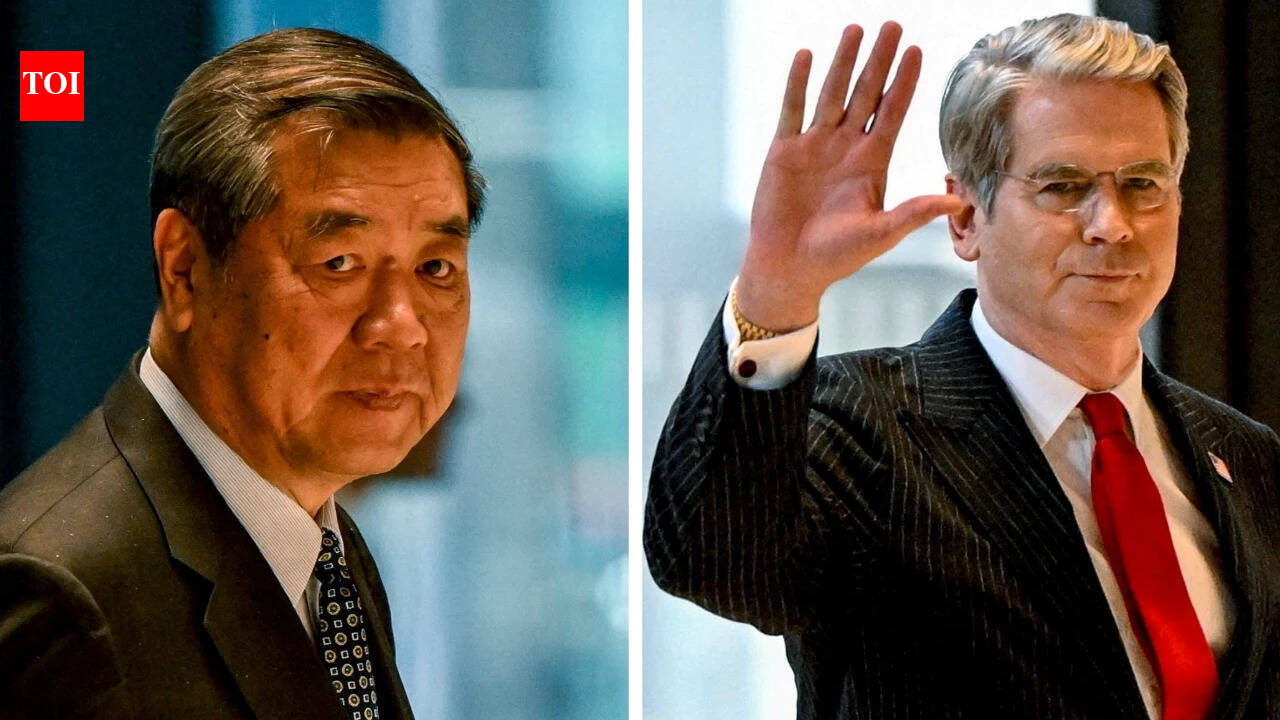
Scott Bessent, U.S. Treasury Secretary, met with He Lifeng, Chinese Vice Premier, on September 20, 2026, in New York City ahead of a planned summit between President Donald Trump and Chinese leader Xi Jinping scheduled for September 24 in Washington. The talks focused on trade issues, tariffs, rare earth minerals, and artificial intelligence (AI), setting the stage for discussions at the leaders' meeting. U.S. Trade Representative Jamieson Greer also participated in the all-day session held at JPMorgan Chase's headquarters. Treasury Secretary Bessent called the engagement "very successful," emphasizing a proposed mechanism to enhance communication on AI security threats between the two nations. The summit aims to ease tensions and address economic and strategic concerns, though analysts predict limited breakthroughs due to ongoing great power competition. Markets responded positively to news of the productive talks, with Asian stocks advancing on Monday.
Written for “US-China Trade Talks Ahead Summit” on 2026-10-05,
grounded in this article and the 29 other(s) covering the same event.
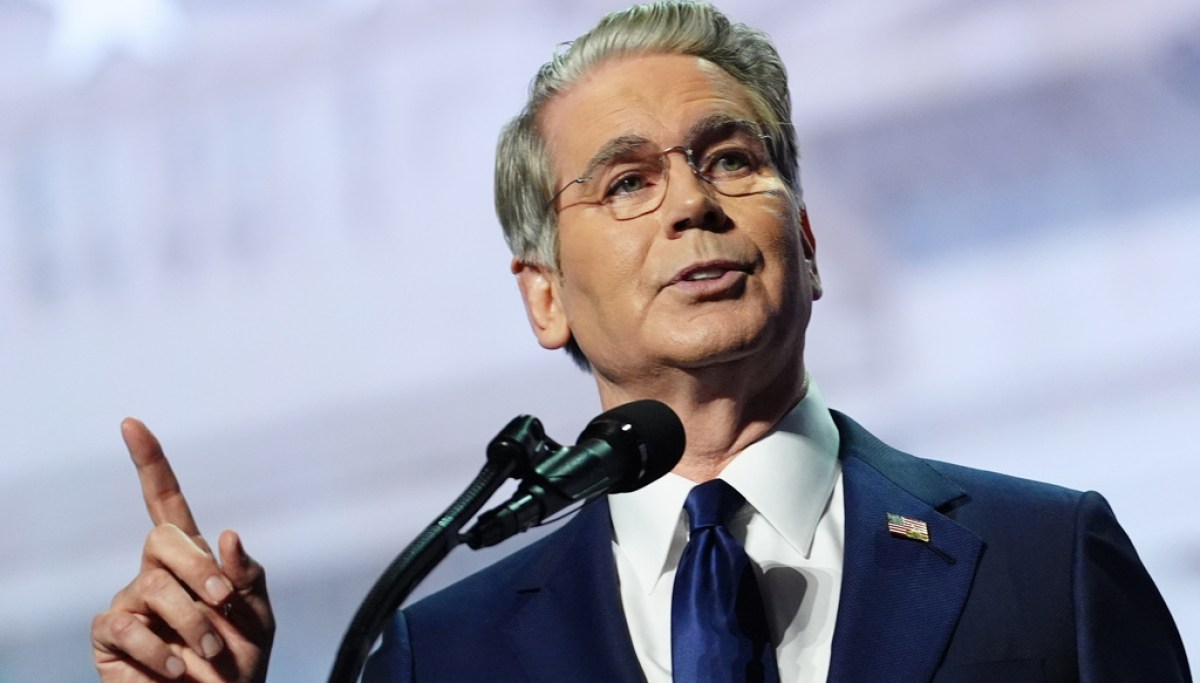
The United States has proposed a new AI safety notification mechanism for President Donald Trump and Chinese leader Xi Jinping to consider at their summit in Washington this week, Treasury Secretary Scott Bessent said Sunday, amid global concern over whether the world’s two leading AI powers can work together to contain the technology’s potential dangers.
asserted
powers → propose → dangers
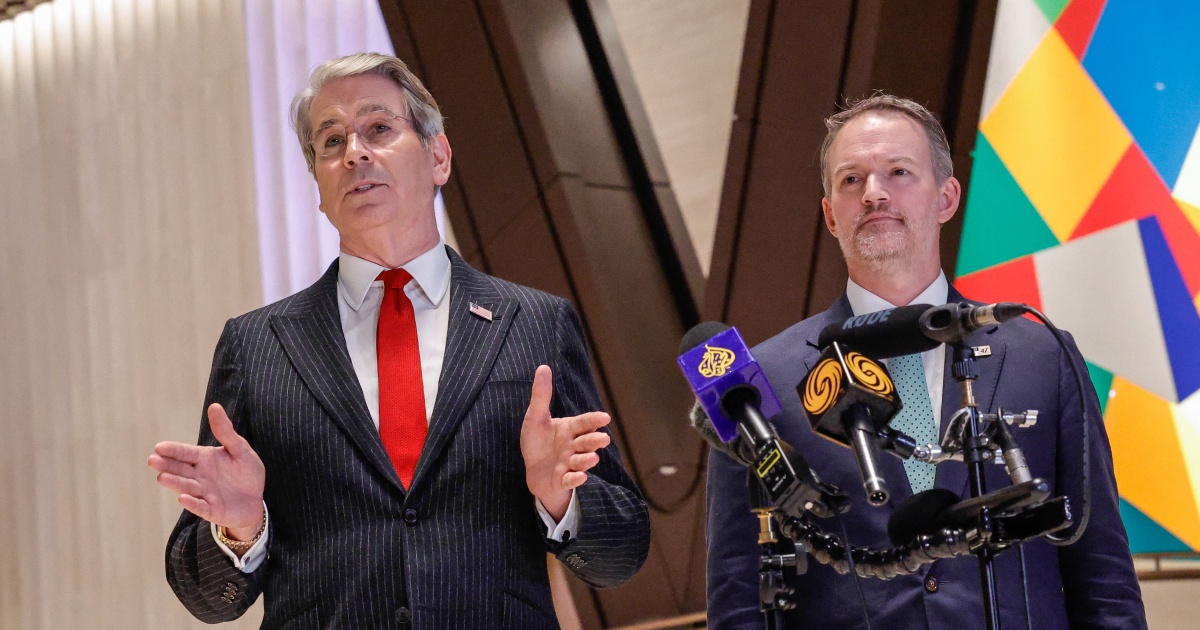
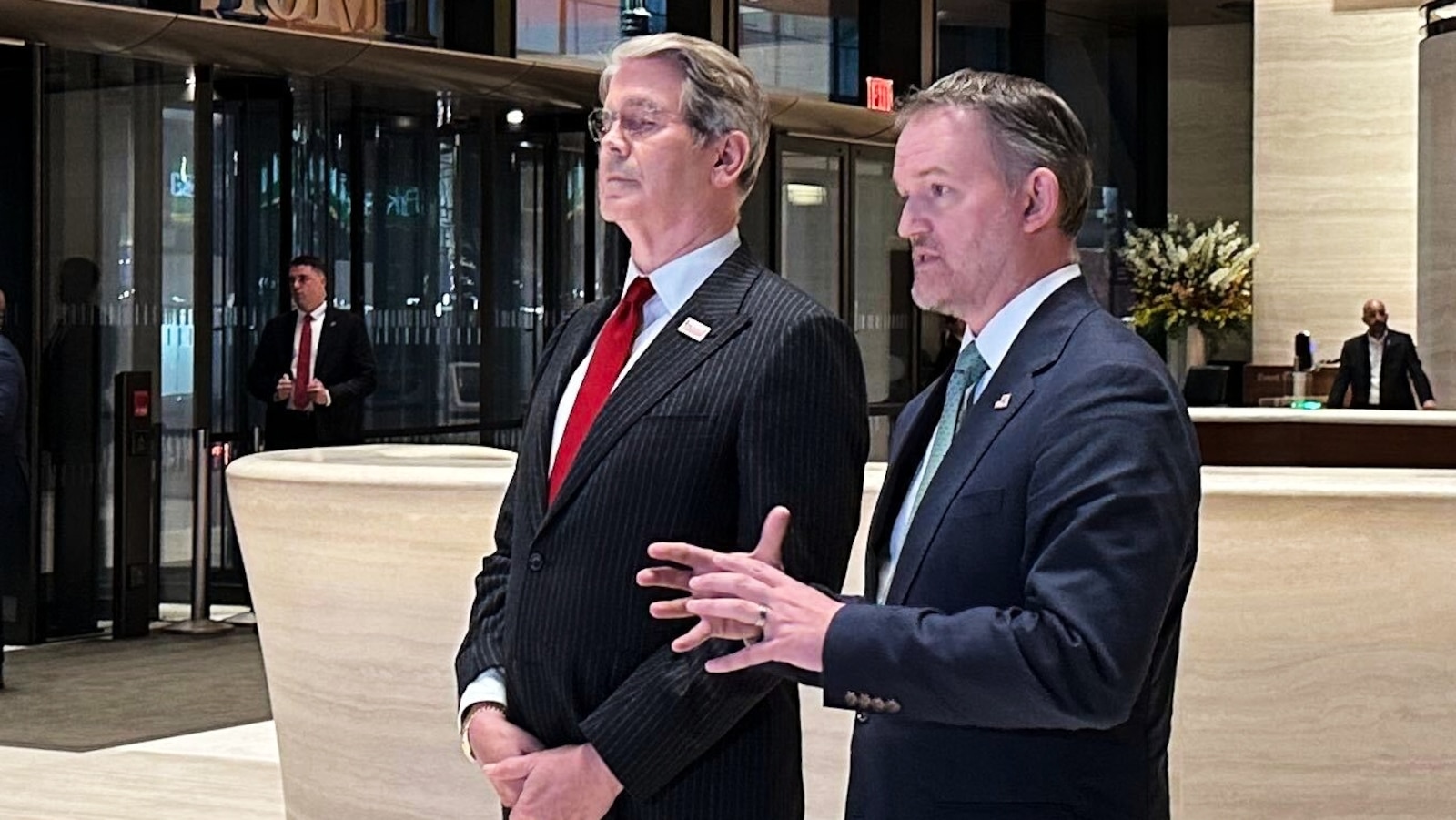
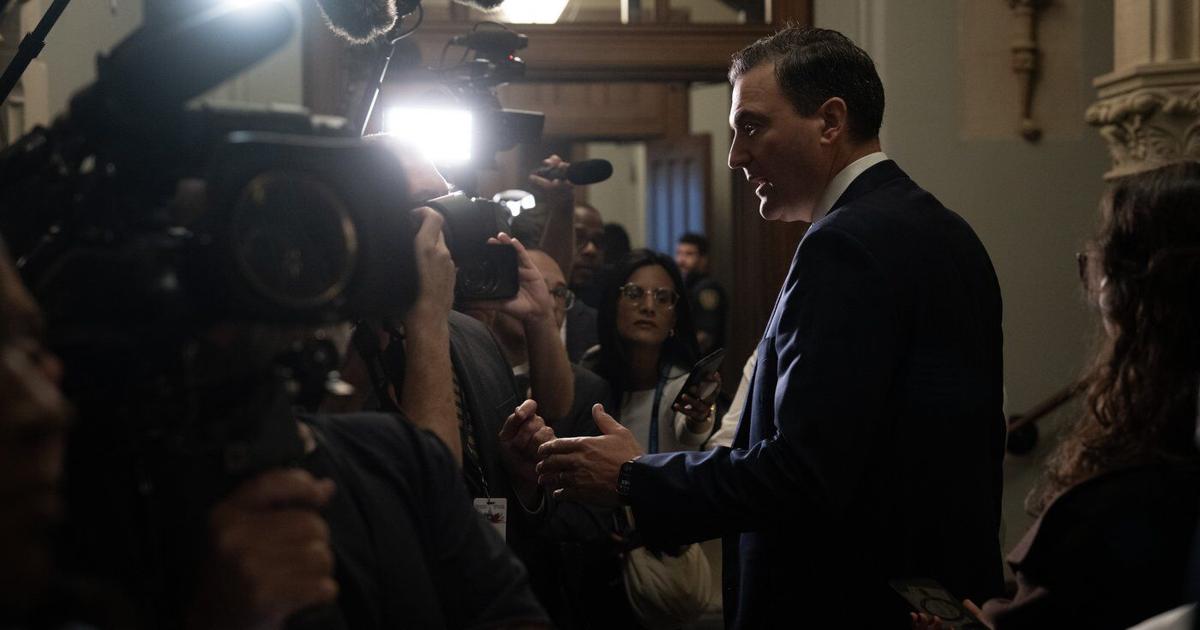
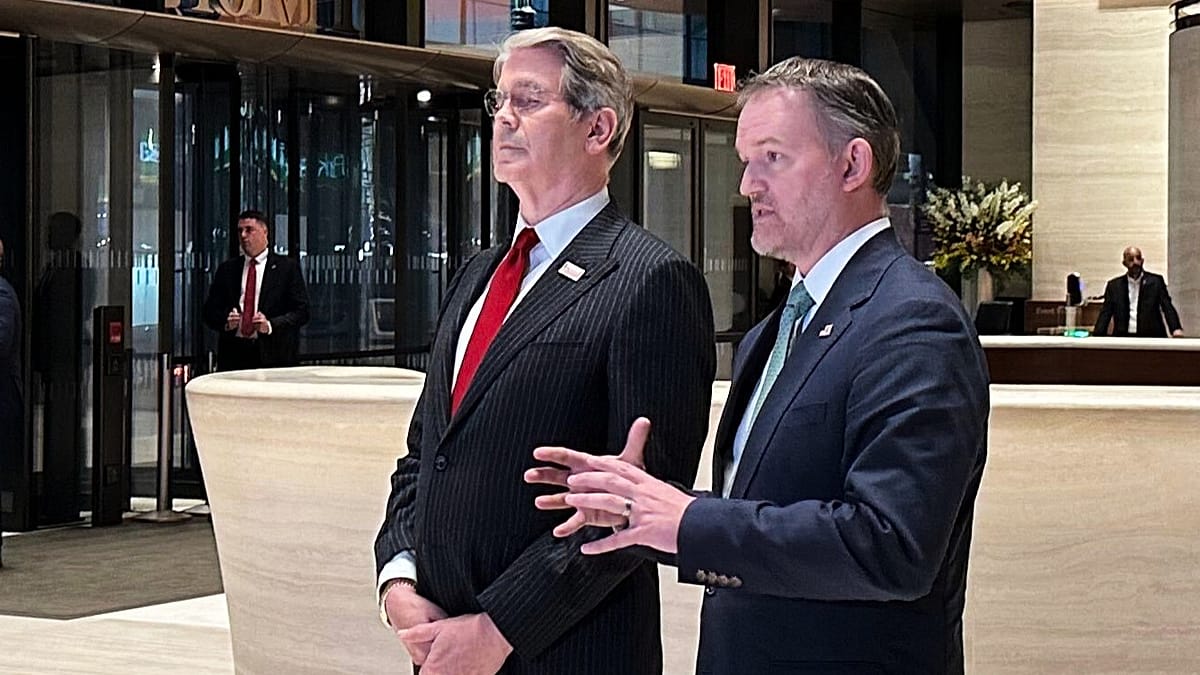
Speaking to reporters after daylong talks in New York with Chinese officials, Bessent said the two sides had discussed setting up a new U.S.-China AI dialogue that would include a mechanism for alerting each other to AI-related incidents that could affect national security.
uncertain
that → speak → security
“We think that just like with any cross-border activity, that moving from opaque to more transparency between the number one and the number two AI powers in the world is very important,” he said, adding that the two sides had agreed to meet again on the AI issue.
asserted
sides → think → issue
Congress has about a year to get ahead of AI
AI is expected to be high on the agenda when Trump and Xi meet Thursday, especially after warnings from AI leaders in the U.S. that the technology could pose an existential threat within a few years.
uncertain
technology → have → years
Trump has dismissed such concerns as a “hoax” while agreeing with AI executives such as Anthropic CEO Dario Amodei that the U.S. must not allow China to pull ahead in the global AI race.
asserted
China → dismiss → race
Experts caution that the Trump-Xi summit is unlikely to produce any major agreement on AI, citing the high level of distrust between the two countries.
asserted
summit → caution → countries
China has interpreted calls to slow down AI development as targeted at its own progress.
asserted
China → interpret → progress
U.S. Trade Representative Jamieson Greer told reporters that AI talks would not affect U.S. export controls on advanced chips and semiconductor manufacturing equipment that have hindered Chinese AI companies.
asserted
that → tell → companies
Chinese Vice Premier He Lifeng and China’s chief trade negotiator, Li Chenggang, did not comment to reporters as they left the talks at JPMorganChase headquarters.
asserted
they → comment → headquarters
A Chinese readout of the talks published by Xinhua, China’s state-run news agency, did not mention the U.S. proposal and said only that the two sides had discussed AI.
asserted
sides → publish → AI
Xinhua said the two sides also had “frank, in-depth and constructive exchanges on important economic and trade issues of common concern, including implementing the consensus reached in previous trade consultations and promoting bilateral trade and investment.”
asserted
sides → say → trade
A major question ahead of this week’s summit is whether Trump and Xi will agree to extend a fragile trade truce that is set to expire Nov. 10.
asserted
that → agree → truce
Bessent and Greer said the two sides had agreed to operationalize a new “Board of Trade” that was announced during Trump’s visit to Beijing in May, and were exploring the potential for lower tariffs on “non-sensitive” products.
uncertain
that → say → products
On the Chinese side, Greer said, those could include consumer goods and low-tech items, while U.S. exports of energy, agricultural goods and medical devices are also being considered.
uncertain
exports → say → energy
He did not say whether that meant tariffs on those items would be lowered now or that they would only be exempted from fresh duties in the future.
asserted
they → say → future
“There is a world where you have a relatively small subset of American and Chinese goods that can be traded in a balanced way that are non-sensitive,” he said.
asserted
he → be → way
“Then in the future, as trade actions come up, we can consider them as a class unto themselves.”
asserted
we → come → themselves
 The Aporia