Photo via Global News

Feds set to make major changes to Canada’s labour code

Read the original at Global News ↗
Cite

Previl, S. (2026, September 20). Feds set to make major changes to Canada’s labour code. Global News. https://globalnews.ca/news/12066182/canada-labour-code-changes-strikes-fall-sitting/

Dated when The Aporia collected the article, usually within hours of publication. Check the original for its exact date and byline.

Global News · collected 2026-09-20 · by Sean Previl

Quick Summary

The Liberal government plans to introduce amendments to Canada's Labour Code, focusing on altering the provisions that allow the government to intervene in strikes and lockouts. Minister Patty Hajdu emphasized the goal of facilitating collective agreements between unions and employers rather than preventing strikes. Unions like the Canadian Labour Congress oppose any changes that could weaken workers' right to strike, while business leaders advocate for measures to prevent significant disruptions. A joint media conference is scheduled for Monday where government ministers will discuss proposed legislation aimed at improving efficiency in federal project approvals and likely changes to labour regulations.
Written by AI on 2026-09-20, from this article's own text only (the story summary below draws on all the coverage).
See how they differ ↓

AI analysis

Story summary

Patty Hajdu, Canada’s Jobs Minister, stated that the federal government will not interfere with workers’ right to strike despite considering legal changes to improve labour relations. The minister emphasized that upcoming legislation aims to reduce the number of times the government has to intervene in strikes under Section 107 of the Canada Labour Code. This section allows Ottawa to refer disputes to the Canada Industrial Relations Board, a measure employers and unions have differing views on. While most employers advocate for greater federal power to intervene during labour disruptions that could harm national interests, unions argue against any measures that might compromise their right to strike. Hajdu added that government intervention is a last resort and encouraged parties to resolve issues themselves at the negotiating table. The proposed amendments include introducing a special mediator role who will document arguments in acrimonious negotiations and publish reports identifying sticking points.

Written for “Canada Labour Law Changes” on 2026-11-18, grounded in this article and the 23 other(s) covering the same event.

How they differ

5 outlets covered “Canada Labour Law Changes”.

What each outlet says

One AI summary per outlet of its latest article on this story, written from that article alone and checked against it. Open the article for the outlet's own words.

Global NewsThis outlet20 Sep

The Liberal government plans to introduce amendments to Canada's Labour Code, focusing on altering the provisions that allow the government to intervene in strikes and lockouts. Minister Patty Hajdu emphasized the goal of facilitating collective agreements between unions and employers rather than preventing strikes. Unions like the Canadian Labour Congress oppose any changes that could weaken workers' right to…

Feds set to make major changes to Canada’s labour code (this article)4 articles from Global News on this story
Toronto Star27 Sep

Prime Minister Mark Carney’s government has introduced Bill C-39, which includes changes to Section 107 of Canada’s labour code, allowing the minister to end strikes or lockouts without parliamentary approval. This move faces significant opposition from unions and legal challenges, putting Conservative leader Pierre Poilievre in a difficult position as he tries to balance his party's pro-labour stance with its…

Carney government's energy and labour bill puts Conservative leader in a 'pickle' →12 articles from Toronto Star on this story
The Globe and Mail23 Sep

Jobs Minister Patty Hajdu highlights a proposed change in the government's labour bill: introducing a special mediator who will publish reports on contentious issues during difficult negotiations. This measure aims to increase transparency and encourage resolution between parties involved in disputes.

Minister touts transparency measures in labour bill →4 articles from The Globe and Mail on this story
CBC28 Sep

Ottawa has introduced the Building Canada Strong Act, which aims to accelerate major project approvals. Prime Minister Mark Carney claims this is one of the most significant economic measures in a generation, targeting threats to Canada's economy from U.S. President Donald Trump. However, environmental experts like Gretchen Fitzgerald from Sierra Club Canada Foundation warn that the bill may undermine protections…

Speed over species? What experts are saying about Ottawa's new major projects bill →2 articles from CBC on this story
National Post28 Sep

Jamie Sarkonak critiques Mark Carney’s proposed revamp of Canada's federal infrastructure approvals process, outlined in Bill C-39. The bill aims to simplify and expedite project approval by consolidating multiple assessments into one year under the guise of “One project, one decision, one year.” However, Sarkonak argues that this streamlined approach may be more aspirational than practical due to potential…

Jamie Sarkonak: Mark Carney’s ‘one project, one year’ mirage →2 articles from National Post on this story

Where they agree and split

Framing

How the first headlines put it

Attributed to a source3
The headlines (3)

Ottawa will not interfere with workers’ right to strike, Hajdu says The Globe and Mail · attributed to a source

Liberals looking to give minister explicit authority to end strikes: sources CBC · attributed to a source

Bill will help reduce government interventions during strikes: Hajdu Toronto Star · attributed to a source

Words to watch (1)

Minister touts transparency measures in labour bill The Globe and Mail

The full story: what happened, how it changed, and all 24 articles →

Compared with similar articles

This article reads unscored and hedges 12% of its claims. Each row says how that neighbour differs.
Toronto Star
Centre Hedges 1 of 7 claims Outlet record 64/100
CBC News
Leans left Hedges 1 of 21 claims Outlet record 72/100
The Globe and Mail
Hedges 2 of 42 claims Outlet record 51/100
National Post
Leans left Hedges 7 of 65 claims Outlet record 60/100
National Post
Hedges 2 of 13 claims Outlet record 60/100
Global News
Hedges 2 of 14 claims Outlet record 63/100
“The articles discuss different aspects of labour relations in Canada; one focuses on proposed changes to the federal labour code, while the other reports on Ontario education unions planning strike votes.”
Global News
Hedges 0 of 12 claims Outlet record 63/100
Toronto Star
Leans right Hedges 6 of 40 claims Outlet record 64/100
The Globe and Mail
Leans left Hedges 1 of 21 claims Outlet record 51/100
“The articles discuss similar topics but describe different aspects - one focuses on Hajdu's statement about not interfering with workers' right to strike, while the other reports on expected changes to the Canada Labour Code by the Liberal government.”
Toronto Star
Leans right Hedges 0 of 5 claims Outlet record 64/100
“Article A describes the announcement and intentions behind proposed changes to Canada’s labour code, while Article B discusses FETCO's statement on the actual introduction of Bill C-39, indicating a different but related event.”

Story

Canada Labour Law Changes
Politics · 24 article(s) covering the same event. Compare every outlet's account →
How this article was measured signals, leaning charts, publisher record, byline, topics and claims

Signals How these are calculated →

Claims extracted
32
sentences that state something as happening or true
Uncertain
12%
4 of 32 hedged ("reportedly", "may", "according to")
Leaning
withheld
no quote in the article backed the model's score
Publisher signals
63/100
Global News's corrections and hedging, across everything collected from it. Not a measure of accuracy.
Outlets on this story
24
Politics
Same framing elsewhere
1
articles that frame the event the way this one does
Analyzed 2026-09-20 · how these are computed

How this is being covered How these are calculated →

Article leaning vs. publisher reliability
Source leaning vs. consistency

Publisher

Global News · 3433 article(s) · 12 correction(s) detected
Running correction rate · 12 correction(s)

Who wrote this

Sean Previl
79 article(s) here · 1 carrying a prediction
- What could more Chinese steel and aluminum mean for Canadians?
Prior to the website going down, an image of Russian players appeared alongside a message accusing the federation of banning a team its opponents couldn’t beat, according to the Associated Press. In a statement on X, the IIHF didn’t comment on the message that was briefly on its website but said it condemned the attack and was taking necessary steps. -
On Monday, Porter told Global News its operation was “back on track,” though added it could not provide more details.
Tiff Macklem, the governor of the Bank of Canada, says he will not be seeking a second term, setting up a search for the next person to lead the country’s central bank into the next decade.
Canadians’ phones, TVs and radios are set to sound off on Wednesday as the country’s national emergency alert system performs its second test of the year.
Sunday’s decision comes days after the Prime Minister’s Office reiterated Ottawa’s stance saying, “athletes from Russia and Belarus will not be able to compete for their countries in Canada so long as the unjustified war against Ukraine continues.”
After initially announcing an investigation into the allegations, Nvidia announced Thursday that Chief Financial Officer Colette Kress would take over as interim CEO as Nvidia looks for a permanent successor.
The province’s River Forecast Centre put the Sea-to-Sky corridor and Pemberton Valley under a flood warning on Thursday, but that was downgraded on Friday morning.
The meeting was weeks in the making, following a stand-off when Premier Paul St-Pierre Plamondon said he would only hold his first meeting with the prime minister in Quebec City.
Along with postwar security guarantees for both countries, other key hurdles are the fate of Russian-occupied Ukrainian territory and what role European countries will play in an eventual settlement.
Also by Sean Previl
Nothing else under this byline is closely related to this article, so these are simply their most recent.
All 79 articles by Sean Previl →

Topics

Canada House Liberal Parliament Hill the Canada Labour Code

Subjects

Canada GPE · 4× Carney PERSON · 4× Hajdu ORG · 2× House ORG · 2× MacKinnon PERSON · 2× Trump PERSON · 2× Jobs PERSON · 1× Liberal NORP · 1× Parliament Hill ORG · 1× Steven MacKinnon PERSON · 1×

Narrative

A bill that would regulate AI chatbots and restrict social media access for kids under 16 is also before the House. Carney is also expected to face more questions about failed trade talks with the U.S. after the prime minister called back his negotiators last month at the eleventh hour before 50 per cent tariffs by the Trump administration were set to take effect. Conservative Leader Pierre Poilievre has called on Carney to release details of the deal the government walked away from, which the prime minister said included touchpoints around the auto sector and French language that prompted the departure from the negotiating table. More recently, the Opposition has also urged Carney to hold a debate after the European Union and the prime minister announced a proposed alliance.
framing: assertive · carried by 1 article(s) · first seen 2026-09-20
The Liberal government is expected to propose major changes to Canada’s labour code as MPs return to Parliament Hill for the fall sitting this week.
2026-09-20 · Global News
Feds set to make major changes to Canada’s labour code · assertive framing

Claims (32 extracted, 4 hedged)

The Liberal government is expected to propose major changes to Canada’s labour code as MPs return to Parliament Hill for the fall sitting this week. asserted
MPs → expect → sitting
One of the first bills to be presented would change the Canada Labour Code to alter the government’s power to intervene in strikes and lockouts. asserted
One → present → strikes
Government House Leader Steven MacKinnon told reporters recently the focus is not on preventing the right to strike. asserted
focus → tell → right
“What we want to do is make achieving collective agreements easier,” he said. asserted
he → want → agreements
“We want to put federal resources at the disposition of those parties and, you know, really rare cases where we have chronic problems. asserted
we → want → problems
The change is expected to affect Section 107 of the labour code, a tool that in recent years has been used to stop or curb work stoppages in key industries. asserted
that → expect → industries
Last summer, Jobs Minister Patty Hajdu used the section to order binding arbitration hours after Air Canada flight attendants hit the picket line, referring the dispute to the Canadian Industrial Relations Board. asserted
attendants → use → Board
Flight attendants ignored the order and stayed on strike until a deal was reached days later. asserted
deal → ignore → strike
Hajdu said on Saturday no government wants to intervene in a strike and gave few details about plans to amend the code, adding the government already has the power to intervene. “The point is to reduce the times that the government is forced to solve the problem for employers and unions,” she said. asserted
she → say → employers
Unions and business leaders have spoken out about the section. asserted
Unions → speak → section
Bea Bruske, president of the Canadian Labour Congress, said the right to strike is in the national interest. asserted
right → say → interest
“Any new power to prevent or shut down a legal strike, including before it begins, would weaken that power. asserted
it → prevent → power
Canada needs workers with our elbows up, not our hands tied,” Bruske said in a statement. asserted
Bruske → need → statement
Get breaking National news Derrick Hynes, CEO of Federally Regulated Employers-Transportation and Communications, said changes must include tools that would help avoid what he called “catastrophic” labour disruptions. asserted
he → get → what
“The inclusion of a neutral, third-party special mediator who can provide a public report on bargaining and inform government actions would be a significant step forward,” he said. asserted
he → provide → actions
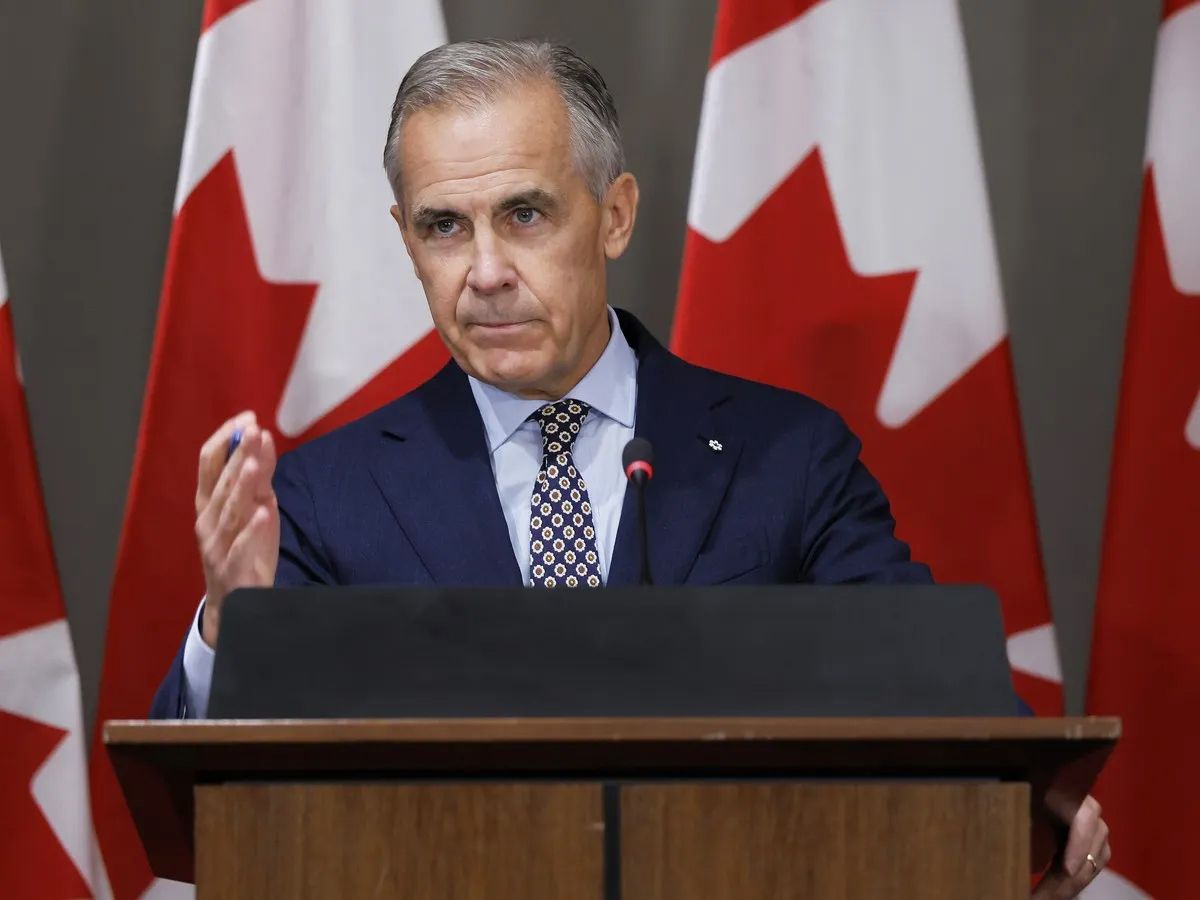
MacKinnon, Hajdu, and Dominic LeBlanc, the minister responsible for Canada-U.S. Relations, are expected to hold a joint media conference Monday. asserted
MacKinnon → expect → conference
According to a news release, the ministers will speak about legislation to be introduced “that will build Canada strong.” uncertain
Canada → accord → legislation
Prime Minister Mark Carney said on Friday that the “Building Canada Strong Act” will speed up approval of new federal projects. asserted
Act → say → projects
“One project, one review, one year,” Carney told reporters. asserted
Carney → tell → reporters
It was unclear if the changes to the labour code will be in the bill, though MacKinnon hinted “improvements” to the code were on the agenda. uncertain
improvements → hint → agenda
A busy fall It’s not only the labour code changes or speeding up federal projects on the agenda this fall. asserted
It → ’ → agenda
The Carney government’s second budget is expected within the next few months. asserted
budget → expect → months
Carney told investors during last week’s investment summit his government plans to balance the operating budget next year, 12 months ahead of schedule. asserted
government → tell → schedule
He provided few other details on what to expect. asserted
He → provide → what
- Christine Fréchette claims more Quebecers are warming up to fracking - Opposition ‘politicking’ on Weedmark private flights unless evidence exists, says policy expert - uncertain
expert → claim → flights
Canada took the trade war to Trump’s backyard. asserted
Canada → take → backyard
Americans didn’t care asserted
Americans → care → ?
- Judge temporarily halts Kelowna’s expropriation plans for Hotel Eldorado boardwalk Debate is expected to continue on legislation including Bill C-22, the lawful access bill, which remains before the Senate. asserted
which → halt → Senate
A bill that would regulate AI chatbots and restrict social media access for kids under 16 is also before the House. Carney is also expected to face more questions about failed trade talks with the U.S. after the prime minister called back his negotiators last month at the eleventh hour before 50 per cent tariffs by the Trump administration were set to take effect. Conservative Leader Pierre Poilievre has called on Carney to release details of the deal the government walked away from, which the prime minister said included touchpoints around the auto sector and French language that prompted the departure from the negotiating table. More recently, the Opposition has also urged Carney to hold a debate after the European Union and the prime minister announced a proposed alliance. asserted
Union → regulate → alliance
Carney said the deal will come to Parliament for a debate and vote, but Poilievre has insisted Canada should not import what Conservatives describe as bad European policies on issues such as immigration and taxes. asserted
Conservatives → say → immigration
While it won’t be until at least October, Canadians in multiple provinces could be heading to the polls again later this fall as six seats sit vacant. Saskatchewan MP Cathay Wagantall, Shaun Chen and Larry Brock in Ontario, and Steven Guilbeault, Alexandre Boulerice and Simon-Pierre Savard-Tremblay in Quebec all resigned from their seats in recent months. A byelection must be held within six months of a seat becoming vacant. uncertain
seat → head → months
The seats in Quebec were vacated between June and August, but due to the Oct. 5 provincial election, it’s unlikely those federal byelections will take place before Quebecers head to the polls. asserted
Quebecers → vacate → polls
Give feedback · no sign-in needed

No sign-in needed for now. Your note is sent without a name, so it cannot be answered.

History Support