That is 0 articles you have read today.
The Aporia is free and carries no advertising, so readers are the only
thing paying for it. If you are getting this much out of it, a small
donation is what keeps it independent.
Daily limit reached
You have read 0 articles today.
That is more than the 15 a day The Aporia gives away,
and well past what it can carry on nothing. Your allowance resets at
midnight.
There is no advertising here and nothing about you is sold, so readers
are the only thing paying for it. If the site is worth this much of
your day, it is worth a few dollars.
Everything else stays open: the
maps, the
directory and
search do
not count against this, and neither does re-opening something you have
already read today.
Prime Minister Giorgia Meloni announced plans to ban burqas and niqabs in schools and limit the number of foreign students per class. The measures aim to address integration issues amid high migration rates. While there is no current law banning full-face veils specifically, a 1975 law prohibits garments that make identification difficult without justification. Foreign students currently account for nearly 12% of school enrollments in Italy, with the number of foreign pupils capped at 30% of class sizes since 2010.
Written locally by qwen2.5:14b on 2026-09-20,
using this article's own text rather than the other coverage of the
same event (that is the story summary below).
Story summary
Giorgia Meloni, Prime Minister of Italy, announced on September 24 at a youth event organized by her right-wing Brothers of Italy party in Rome, plans to ban face coverings like burqas and niqabs in schools. She also proposed capping the number of foreign students per class, requiring parents of foreign students facing integration difficulties to learn Italian, and making it mandatory for students to attend school with their faces uncovered. Meloni emphasized that immigrants must learn Italian, understand Italian culture, and respect Italian rules if they want a future in Italy. This move is part of efforts to address the contentious issue of migrant integration amid high levels of immigration to Italy, due to its location in the central Mediterranean. The proposed measures need Cabinet approval before being presented to parliament for final passage within 60 days.
Written for “Italy School Ban Burqas Limit Foreign…” on 2026-10-05,
grounded in this article and the 19 other(s) covering the same event.
Italy will ban burqas and niqabs in schools and limit the number of foreign students per class, far-right Prime Minister Giorgia Meloni said Sunday.
asserted
Meloni → ban → class
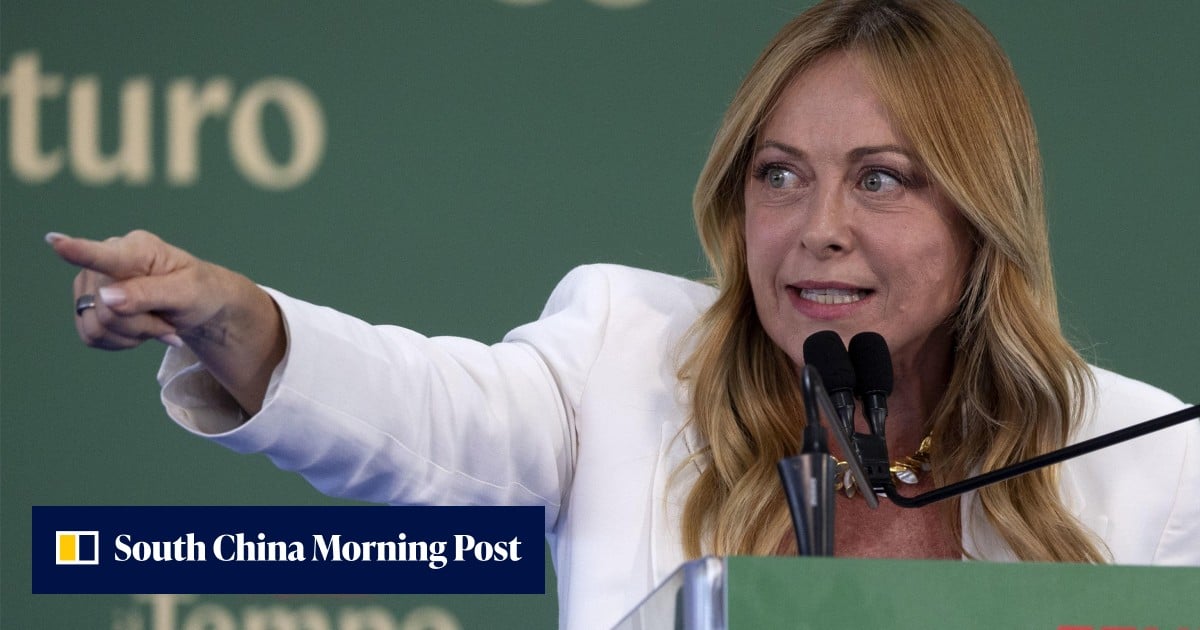
“A measure will soon be presented to a cabinet meeting to legally establish a maximum number of foreign students per class,” Meloni told a gathering of the youth wing of her Brothers of Italy (FdI) party.
asserted
Meloni → present → party
“It also requires parents of foreign students facing serious difficulties integrating into the school system to learn Italian, and bans burqas and niqabs in schools,” she said.
asserted
she → require → schools
A crackdown on the use of burqas in schools was called for in July by the National Future (FN) party.
asserted
crackdown → call → party
The FN, which is not part of the governing coalition, is further to the right than Meloni’s and has emerged as a major challenger, rising sharply in the polls since launching in February.
asserted
which → govern → February
While there is no law in Italy that expressly bans burqas, either in schools or in public places, a 1975 law prohibits the use of helmets or garments that make identification difficult without a justified reason.
asserted
identification → be → reason
In 2008, Italy’s highest administrative court clarified that full-face veils may be worn for religious or cultural reasons provided that the face is revealed when identity verification is required.
uncertain
verification → clarify → reasons
The anti-immigrant League party, which is part of Meloni’s coalition, submitted a bill to the Senate earlier this year that would ban helmets or garments except for in certain circumstances, such as sporting events or places of worship.
asserted
that → submit → worship
The limit on the number of foreign students per class already exists under Italian law, and Meloni did not spell out how that would change.
asserted
that → exist → law
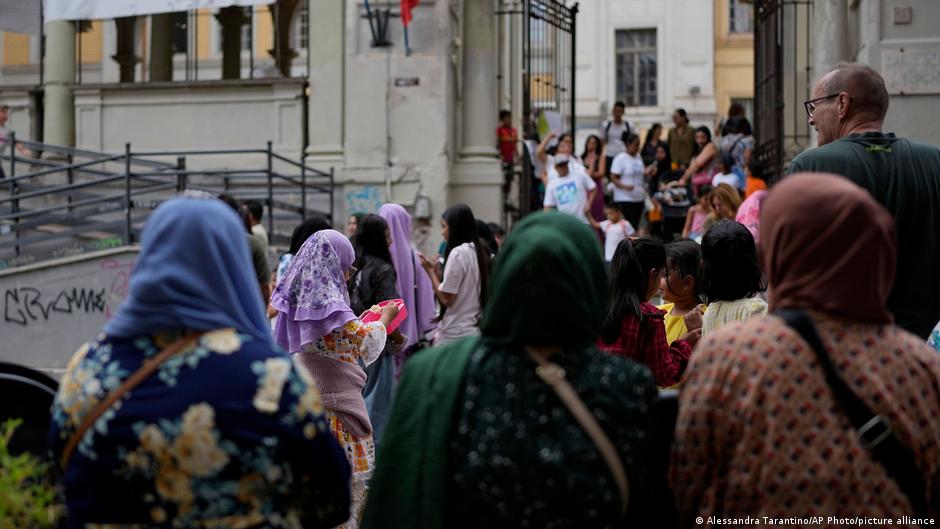
Foreign students account for just under 12 per cent of those enrolled in Italian schools, according to the National Statistics Institute (ISTAT).
uncertain
students → account → Institute
Since 2010, the number of foreign students has been limited to 30 per cent of a class and of a school’s enrolment.
asserted
number → limit → enrolment
The limit can be raised in cases involving foreign students with adequate language skills, such as foreign students born in Italy, or lowered when foreign students have a poor command of Italian.
asserted
students → raise → Italian
 The Aporia