That is 0 articles you have read today.
The Aporia is free and carries no advertising, so readers are the only
thing paying for it. If you are getting this much out of it, a small
donation is what keeps it independent.
Daily limit reached
You have read 0 articles today.
That is more than the 15 a day The Aporia gives away,
and well past what it can carry on nothing. Your allowance resets at
midnight.
There is no advertising here and nothing about you is sold, so readers
are the only thing paying for it. If the site is worth this much of
your day, it is worth a few dollars.
Everything else stays open: the
maps, the
directory and
search do
not count against this, and neither does re-opening something you have
already read today.
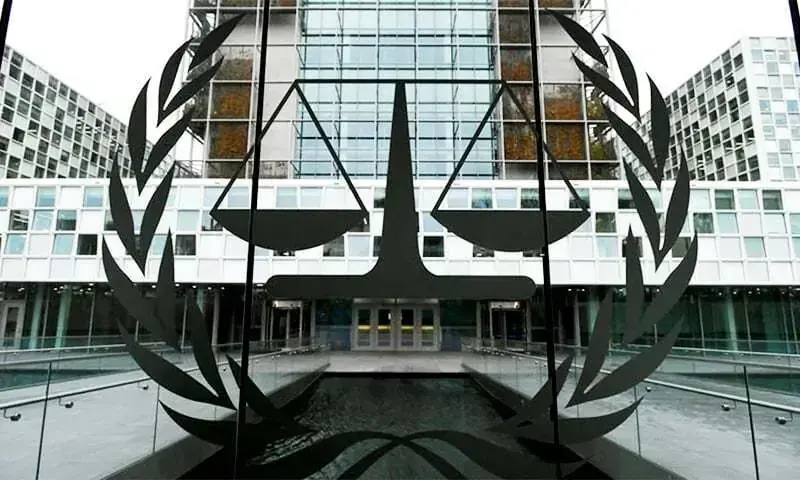
The International Criminal Court (ICC) unsealed arrest warrants on Monday for two Afghan Taliban ministers, Habibullah Agha and Neda Mohammad Nadeem, who were accused of gender-based persecution through education restrictions imposed in August 2021 when the Taliban returned to power. The warrants, issued in September 2025 but kept under seal until now, target the officials for their roles in barring girls from attending secondary school and excluding women from higher education, policies that have severely impacted Afghan women's participation in public life and access to healthcare services.
Written locally by qwen2.5:14b on 2026-10-05,
using this article's own text rather than the other coverage of the
same event (that is the story summary below).
Story summary
The International Criminal Court (ICC) announced on Monday that it will unseal arrest warrants against four senior Taliban leaders accused of committing gender persecution since the Taliban seized power in August 2021. The court issued these warrants in July and September 2025, targeting the supreme leader Hibatullah Akhundzada, Supreme Court President Abdul Hakim Haqqani, Education Minister Habibullah Agha, and Higher Education Minister Neda Mohammad Nadim. These officials are implicated for implementing policies that restrict girls' education beyond primary level and exclude women from higher education. The ICC's decision to unseal these warrants is expected to intensify international pressure on the Taliban regime.
Written for “ICC Warrants For Taliban Leaders” on 2026-10-05,
grounded in this article and the 1 other(s) covering the same event.
Why this leaning score
The model judged this article politically coded and scored it -0.35, but all 2 of its quote(s) are attributed speech - words the article quotes from someone, not the article's own narration, so the score is not published.
Written under an earlier scoring contract, which gave a paragraph
rather than checkable quotes. Re-analysing this article replaces it.
Leaning score withheld for article 58056: attributed speech only · logged 2026-10-05
The International Criminal Court on Monday unsealed arrest warrants for two Afghan Taliban education ministers accused of committing crimes against humanity through the Taliban government’s restrictions on women and girls.
asserted
Court → unseal → women
The warrants, for Habibullah Agha, minister of education, and Neda Mohammad Nadeem, minister of higher education, were issued in Sept 2025 but remained under seal until Monday.
asserted
warrants → issue → Monday
The two officials are accused of gender-based persecution linked to policies that have barred girls from attending school beyond primary level and excluded women from higher education following the Afghan Taliban’s return to power in Aug 2021.
asserted
that → accuse → Aug
The ICC warrants were likely to increase international pressure on the Afghan Taliban government.
asserted
warrants → increase → government
AFP has approached Afghan Taliban authorities for comment on the ICC’s unsealed warrants.
asserted
AFP → approach → warrants
The two warrants against the ministers were issued after the ICC, in July 2025, authorised warrants for Afghanistan’s Supreme Taliban Leader Haibatullah Akhundzada and Supreme Court President Abdul Hakim Haqqani, parts of which have been made public.
asserted
parts → issue → which
Both Agha and Nadeem were instrumental in imposing the supreme leader’s vision of Afghanistan.
asserted
Agha → impose → Afghanistan
“There are reasonable grounds to believe” the suspects committed “the crime against humanity of persecution on gender grounds”, the court said.
asserted
court → be → grounds
It said the persecution was directed against “women and girls, and other persons whose gender expression or identity was viewed as inconsistent with the Taliban’s policy on gender”.
asserted
expression → say → gender
Girls forced to stay home
The ICC’s Pre-Trial Chamber II said it decided to unseal all four warrants, with redactions, after concluding that doing so would not unduly affect ongoing investigations.
asserted
doing → force → investigations
Publication could also “promote cooperation by the international community, including State Parties, in relation to the situation in Afghanistan”, it said.
uncertain
it → promote → Afghanistan
Afghans across the country have told AFP journalists of severe mental health problems tied to the education ban, with teenage girls and women mostly staying at home.
asserted
girls → tell → home
Afghan universities are now men-only zones, where smartphones are banned and students can be chastised if their beards are not long enough.
asserted
beards → ban → ?
Some women and girls have tried to continue their education by studying online, but their efforts are hampered by internet and electricity problems across Afghanistan.
asserted
efforts → try → Afghanistan
Women are increasingly absent from public life and need to abide by a strict dress code when they leave home, covering everything but their eyes.
asserted
they → need → eyes
They are banned from most jobs and a host of public places, including parks, and must have a close male relative escort them on long journeys.
asserted
relative → ban → journeys
The higher education ban has led to staff shortages in hospitals, multiple healthcare workers have told AFP, as women are no longer allowed to qualify as doctors.
asserted
women → lead → doctors
 The Aporia