Photo via Al Jazeera

An unaffordable car market highlights Iran’s cost-of-living crisis

Read the original at Al Jazeera ↗
Cite

Motamedi, M. (2026, September 19). An unaffordable car market highlights Iran’s cost-of-living crisis. Al Jazeera. https://www.aljazeera.com/economy/2026/9/19/an-unaffordable-car-market-highlights-irans-cost-of-living-crisis?traffic_source=rss

Dated when The Aporia collected the article, usually within hours of publication. Check the original for its exact date and byline.

Al Jazeera · collected 2026-09-19 · by Maziar Motamedi

Quick Summary

Hossein, a Tehran-based marketing specialist earning about $390 per month, finds it nearly impossible to replace his old car due to skyrocketing prices exacerbated by economic sanctions and war. Domestic cars now cost up to 130 percent more than before the conflict; for instance, a new Peugeot 207 costs around $12,170, requiring over two years of his salary if he saves diligently without spending on other needs. The article highlights how rising living costs and stagnant wages are making basic goods unaffordable, with car parts also becoming increasingly expensive.
Written by AI on 2026-09-19, from this article's own text only (the story summary below draws on all the coverage).

AI analysis

Story summary

A 32-year-old marketing specialist in Tehran, Iran, named Hossein wants to replace his 13-year-old car but finds the market unaffordable. Despite earning nearly four times the minimum wage—about 900 million rials ($390) at current exchange rates—he cannot afford new cars due to economic hardship caused by a war launched against Iran by the United States and Israel on February 28 and subsequent sanctions. Hossein expresses doubt about ever purchasing a locally made car unless conditions improve, highlighting the broader cost-of-living crisis gripping the country.

Written for “Iran Cost Of Living Crisis” on 2026-11-18, grounded in this article and the 0 other(s) covering the same event.

Compared with similar articles

This article reads leans left and hedges 12% of its claims. Each row says how that neighbour differs.
The Independent
Leans left Hedges 1 of 40 claims Outlet record 59/100
“The articles discuss different aspects of Iran's economic crisis, with one focusing on car affordability and the other on petrol access and pricing.”
Al Jazeera
Hedges 8 of 30 claims Outlet record 60/100
“The articles discuss different aspects of Iran's economic situation and its relations with other countries, without describing the same specific incident.”
New York Post
Leans strongly right further right than this Hedges 3 of 14 claims Outlet record 66/100
“The articles discuss different aspects of Iran's economic situation and do not describe the same specific incident.”
New York Post
Leans strongly left further left than this Hedges 3 of 27 claims Outlet record 66/100
“The articles discuss different topics related to Iran and its economic situation but do not describe the same specific incident.”
Al Jazeera
Hedges 3 of 51 claims Outlet record 60/100
“The articles describe different economic situations in Yemen and Iran, focusing on petrol prices for a taxi driver and car affordability for a marketing specialist, respectively.”
South China Morning Post
Leans strongly left further left than this Hedges 1 of 6 claims Outlet record 62/100
“The articles discuss different aspects of Iran's economic crisis: medicine shortages due to war and sanctions, versus car market affordability. They do not describe the same specific incident.”
Daily Mail
Leans right further right than this Hedges 4 of 33 claims Outlet record 70/100
“The articles discuss different aspects of economic impacts resulting from the Iran war, but they are not reporting on the exact same incident.”

Story

Iran Cost Of Living Crisis
Economy/Business · 1 article(s) covering the same event.
How this article was measured signals, leaning charts, publisher record, byline, topics and claims

Signals How these are calculated →

Claims extracted
43
sentences that state something as happening or true
Uncertain
12%
5 of 43 hedged ("reportedly", "may", "according to")
Leaning
Leans left
of the writing, not the subject · beta estimate
Publisher signals
60/100
Al Jazeera's corrections and hedging, across everything collected from it. Not a measure of accuracy.
Outlets on this story
1
Economy/Business
Same framing elsewhere
1
articles that frame the event the way this one does
Analyzed 2026-09-19 · how these are computed

How this is being covered How these are calculated →

Article leaning vs. publisher reliability
Source leaning vs. consistency

Publisher

Al Jazeera · 6027 article(s) · 4 correction(s) detected
Running correction rate · 4 correction(s)

Who wrote this

Maziar Motamedi
29 article(s) here · 1 carrying a prediction
Iranians say they are concerned about United States media reports that civilian infrastructure could be hit if the US launches a new war on Iran.
Iran holds the second-largest proven natural gas reserves in the world, only behind Russia, but its government last week forecast a peak-demand deficit of about 430 million cubic metres per day for winter that could impact both households and industries.
Decision-makers in Iran are now considering the implications of Vice President JD Vance’s removal from the Iran file to focus on domestic issues, which analysts say could increase the chances of conflict between the two sides.
US Secretary of State Marco Rubio told his Group of Seven (G7) counterparts in Paris on Tuesday that a naval blockade, stringent sanctions and overland border disruptions could continue without a clear endpoint in sight, according to US media.
Recommended Stories list of 3 items- list 1 of 3‘Another round of war less likely’: Momentum builds for peace in Iran - list 2 of 3Hegseth impeachment: What is he accused of, and could he be removed? - list 3 of 3What is Shahid Kaveh, the Iran cyberunit tied to France’s fridge hacking?
The Iranian government has reported more strikes by the United States but insists this pressure will not impact its demands to end the war.
“If the US [government] betrays their public will to serve international paymasters and blackmailers, it will learn our NO comes with a Nightmare,” read a post on his X account on Wednesday.
Ministry of Foreign Affairs spokesman Esmaeil Baghaei said Rezaei, not Ghalibaf, would respond to the letter if he chooses.
Iran’s military is warning that if all-out war breaks out again with the United States and Israel, it will be longer and more costly than their rivals expect.
At the same time, they have doubled down on a willingness to expand attacks or even launch preemptive strikes if they deem war is inevitable.
Also by Maziar Motamedi
Nothing else under this byline is closely related to this article, so these are simply their most recent.
All 29 articles by Maziar Motamedi →

Topics

4Turkiye Iran Iranian Peugeot Tehran

Subjects

Iran GPE · 9× Tehran GPE · 3× Hossein PERSON · 2× Iranian NORP · 2× Israel GPE · 2× Peugeot ORG · 2× 4Iran ORG · 1× 4Turkiye ORG · 1× Bank Mellat ORG · 1× Istanbul GPE · 1×

Narrative

Recommended Stories list of 4 items- list 1 of 4Turkiye revokes operating licence of Iran’s Bank Mellat in Istanbul - list 2 of 4Iran stages show of force during mobilisation campaign in Tehran - list 3 of 4The cost of Iran’s regional leverage - list 4 of 4In Yemen, war at home and in the region drives up prices
framing: assertive · carried by 1 article(s) · first seen 2026-09-19
Even finding a locally made car might be out of his budget, with an economic crisis gripping the country since the United States and Israel launched a surprise war on Iran on February 28 and later enacted a crippling siege and sanctions on the country.
2026-09-19 · Al Jazeera
An unaffordable car market highlights Iran’s cost-of-living crisis · assertive framing

Claims (43 extracted, 5 hedged)

Hossein, a 32-year-old marketing specialist based in Tehran, has been thinking of replacing his 13-year-old Iranian-made car with a newer model. asserted
Hossein → base → model
Even though he earns about four-and-a-half times the minimum wage after a recent pay rise – his salary is now close to 900 million rials (about $390 at the current exchange rate) – imported vehicles are not even remotely affordable for him. asserted
vehicles → earn → him
Recommended Stories list of 4 items- list 1 of 4Turkiye revokes operating licence of Iran’s Bank Mellat in Istanbul - list 2 of 4Iran stages show of force during mobilisation campaign in Tehran - list 3 of 4The cost of Iran’s regional leverage - list 4 of 4In Yemen, war at home and in the region drives up prices asserted
war → revoke → prices
Even finding a locally made car might be out of his budget, with an economic crisis gripping the country since the United States and Israel launched a surprise war on Iran on February 28 and later enacted a crippling siege and sanctions on the country. uncertain
States → find → country
“I’m losing hope of ever being able to buy a new domestic production car too, unless the country opens up and becomes a bit more normal again,” Hossein, who asked to keep his full name confidential for security reasons, told Al Jazeera. asserted
who → lose → Jazeera
His old manual Peugeot 206 model, an originally French-made car but now produced domestically after foreign counterparts left Iran due to sanctions, can fetch up to 10 billion rials ($4,350) if he sells it towards making a new purchase. asserted
he → make → purchase
Upgrading to a slightly improved Peugeot 207 with an automatic gearbox could cost him 28 billion rials ($12,170) now. uncertain
Upgrading → upgrade → rials
This means that, after selling his car, he would need more than 20 months of his entire salary. asserted
he → mean → salary
A domestic sedan Shahin model costs more than 31 billion rials ($13,480), and a crossover Reera is priced at more than 43 billion rials ($18,700). asserted
Reera → cost → rials
With these options, he would need to save about 24 months and 37 months of his whole salary, respectively, and that is if prices remain stable and he does not spend a rial on anything else. asserted
he → need → anything
But the reality of the fast-rising living costs and lagging incomes in Iran means he can barely put aside any money, let alone afford a new car. asserted
he → rise → car
Domestic car prices have mostly risen 40 to 80 percent since the start of the war, while some vehicles sell for more than 130 percent of their September 2025 costs. asserted
vehicles → rise → costs
The costs of maintaining the vehicles are also rising much faster than people’s salaries. asserted
costs → maintain → salaries
Domestically produced tyres, motor oil, brake pads and clutch kits have at least doubled since last year, with some car parts having more than tripled in price. asserted
parts → produce → price
Domestic vehicles have generally low safety standards, meaning that they contribute to staggering road accident deaths. asserted
they → have → deaths
At least 1,609 Iranians have been killed so far on intercity roads in the current month of Shahrivar of the solar Hijri calendar, which ends on September 22. asserted
which → kill → September
More than 20,000 people lose their lives on the roads every year. asserted
people → lose → roads
In comparison, fewer people in the whole of the European Union, nearly five times Iran’s population, died on roads last year. asserted
people → die → roads
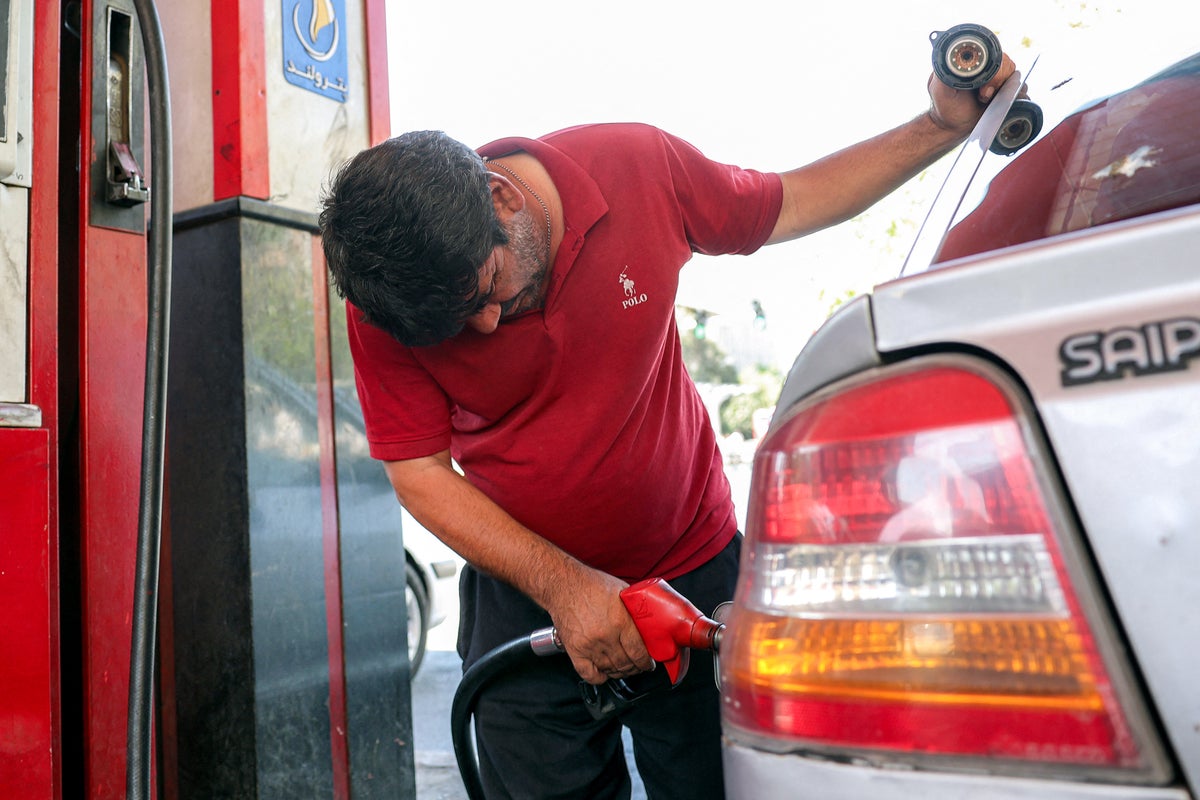
Iran’s fuel-guzzling cars also contribute to smoke-congested city streets, degrade vehicles faster and increase fuel costs, just as petrol prices have risen for users. asserted
prices → guzzle → users
How did we get here? asserted
we → get → ?
Experts say, due to a combination of protected state-linked businesses, privileged access, economic isolation and a curtailing of imports, Iranian households have no choice but to pay exorbitant prices – compared with their salaries – to buy low-quality cars. asserted
households → say → cars
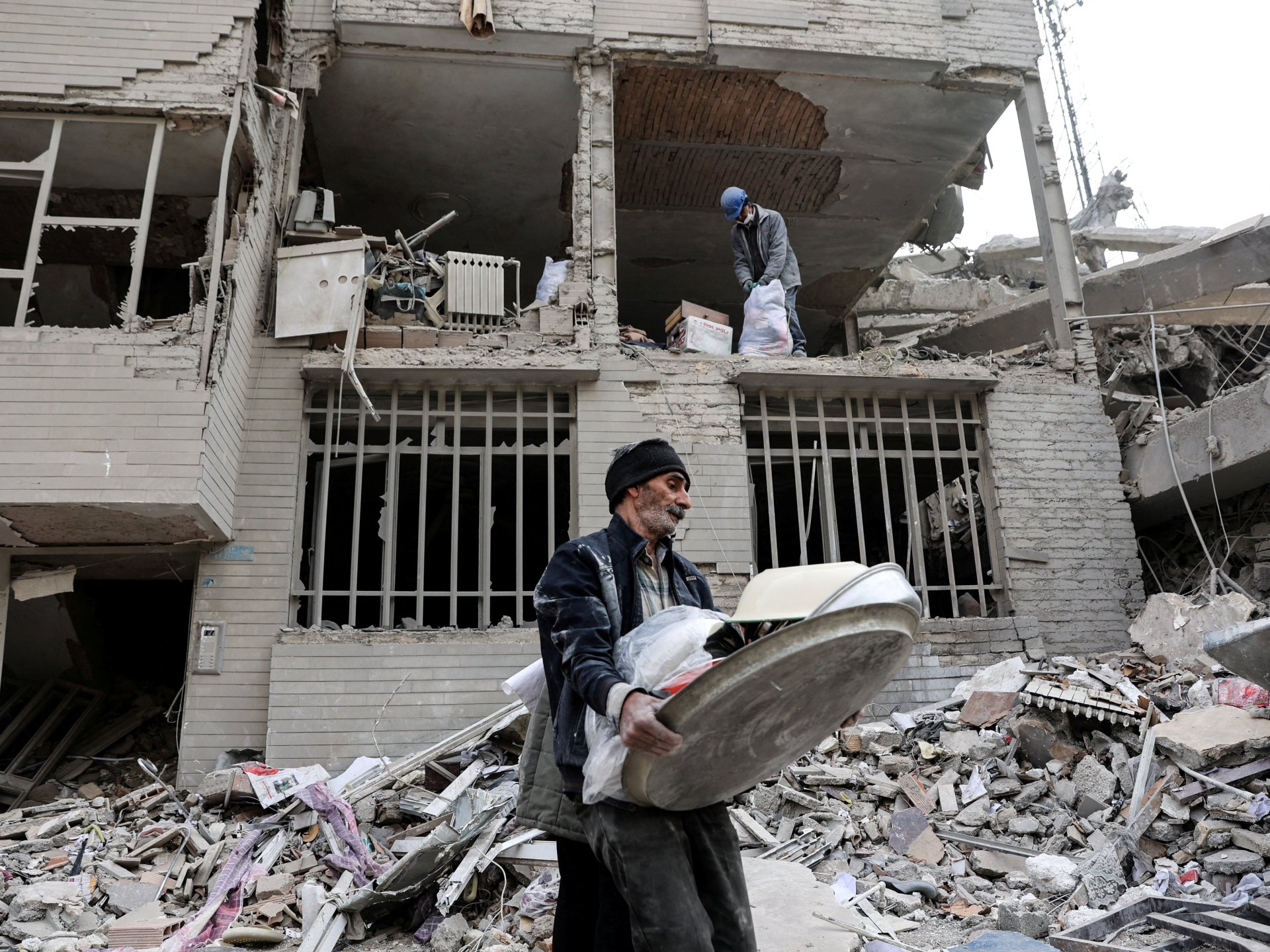
The damage from the war, including the extensive bombing of multiple steel giants by Israel and the US, has only added insult to injury. asserted
damage → include → injury
The naval blockade of Iran’s southern ports has prevented goods coming in from popular neighbouring markets like the United Arab Emirates. asserted
blockade → prevent → Emirates
Under such circumstances, domestic vehicle manufacturers have little incentive to improve. asserted
manufacturers → have → incentive
End customers are also beset by government charges, currency and financing costs, margins levied by murky intermediaries – and in numerous documented cases, industry corruption. asserted
customers → beset → cases
“People are forced to buy expensive low-quality cars whose real prices should be a quarter of global prices, and this is a direct harm done to them,” Mohammad Rashidi, a member of the presiding board of Iran’s parliament, told local media on Saturday. asserted
Rashidi → force → Saturday
His claims echo those of other officials and state-linked media, who have openly described the industry as resembling an organised crime operation. uncertain
who → echo → operation
According to the latest figures released by state media, about 233,000 cars were manufactured or assembled in Iran in the first five months of 2026, compared with 366,000 the year before. uncertain
cars → accord → 366,000
Only about 25,000 vehicles were imported in that period. asserted
vehicles → import → period
Only a handful of state-linked companies or intermediaries are allowed to import vehicles, with duties plus value-added tax increasing final prices up to 200 percent. asserted
handful → link → percent
The government and parliament have discussed lowering import tariffs this year, with no agreement announced so far. asserted
government → discuss → agreement
The premiums are more visible for high-end cars, with a 2026 Toyota Land Cruiser VXR going for approximately 660 billion rials ($287,000) in Iran at the moment, while the same model is available for about $86,000 in the UAE. asserted
model → go → UAE
The same story applies to most other models, at different rates depending on the rarity of the vehicle and the availability of parts. asserted
story → apply → parts
The price of a mid-range Chinese-designed SUV sold as Exeed VX in international markets is listed at about $32,000 in China, while it is priced at about $42,000 in the UAE. asserted
it → design → UAE
The same car, assembled from imported parts by a state-linked company in Iran under a different name, currently costs Iranian customers the equivalent of $53,000. asserted
car → assemble → 53,000
The bizarre situation was on full display during a three-day “international” car exhibition in Tehran last week that mostly featured Chinese-manufactured vehicles. asserted
that → feature → vehicles
These remain available in Iran despite the US sanctions, since Tehran exports almost all of its oil to China and barters this for goods, including cars. asserted
Tehran → remain → cars
Some domestic manufacturers and importers were absent, either because they had no products to offer or because they had angry customers who registered months ago to get vehicles they never received. asserted
they → have → vehicles
Spare parts for some of the vehicles on display are currently either not available in the Iranian market or cost several times their price in international markets. asserted
parts → cost → markets
Even the cheapest vehicles offered at the exhibition were completely unaffordable to the average Iranian. asserted
vehicles → offer → Iranian
…and 3 more, not listed.

Give feedback · no sign-in needed

No sign-in needed for now. Your note is sent without a name, so it cannot be answered.

History Support