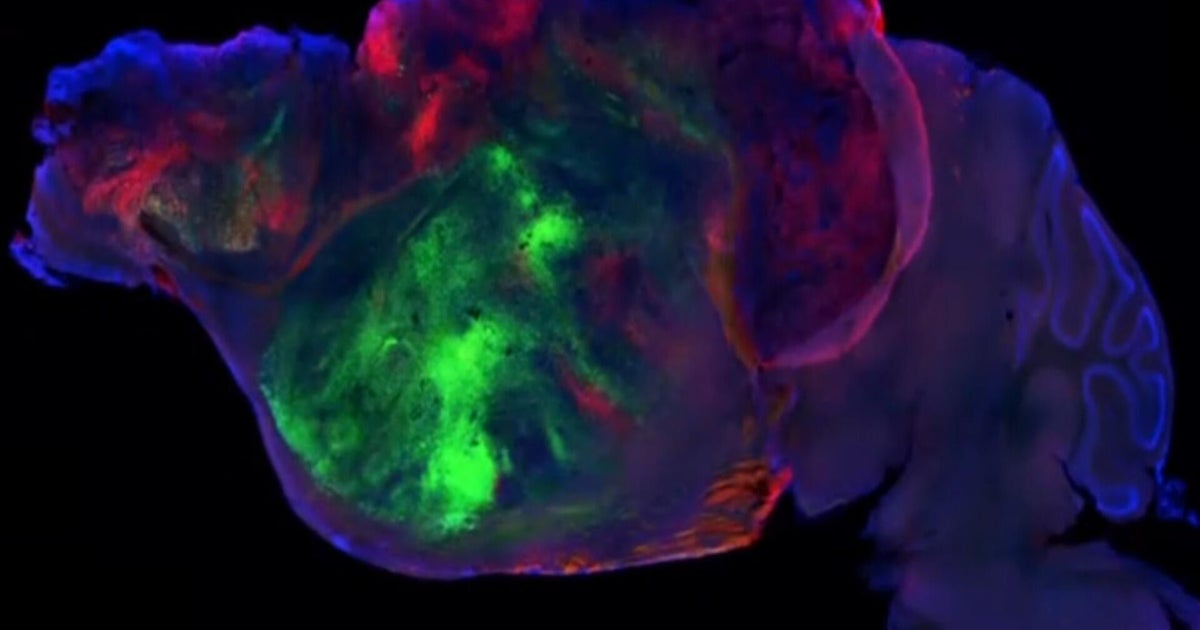
Neuroscientist explains how his team grew human brain tissue in mice and breaks down what they found

Read the original at CBS News ↗
Cite

Neuroscientist explains how his team grew human brain tissue in mice and breaks down what they found. (2026, September 19). CBS News. https://www.cbsnews.com/video/neuroscientist-team-grew-human-brain-tissue-mice/

Dated when The Aporia collected the article, usually within hours of publication. Check the original for its exact date and byline.

CBS News · collected 2026-09-19

Quick Summary

Dr. Sergiu Pasca from Stanford University discusses his team's research where they grew human brain tissue inside mice. This experiment aims to advance treatments for various brain disorders. On CBS News, Dr. Pasca explains the methodology and results of their study.
Written locally by qwen2.5:14b on 2026-09-19, using this article's own text rather than the other coverage of the same event (that is the story summary below).

AI analysis runs on qwen2.5:14b, locally

Story summary

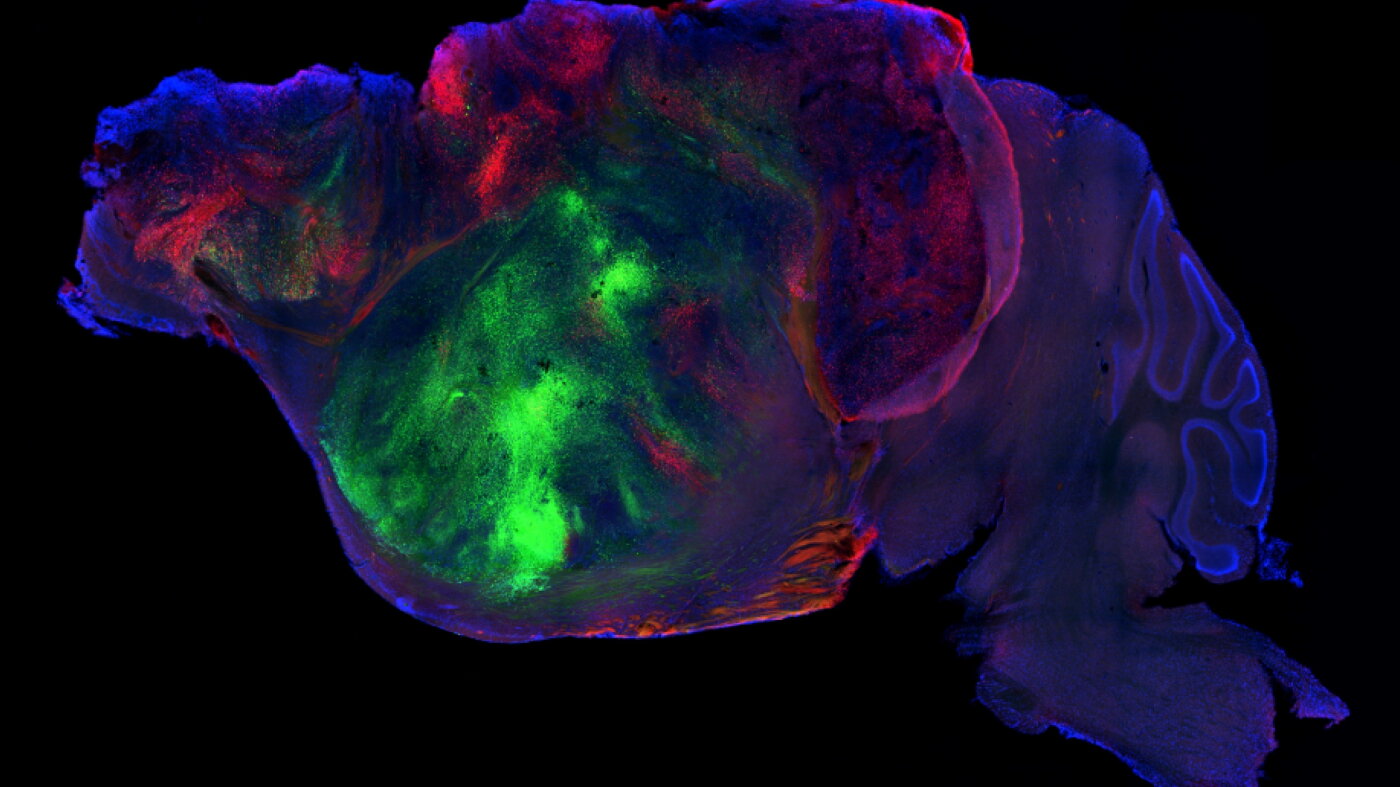
Researchers at Stanford University developed a method to install millions of lab-grown human brain cells into mice, creating animals with partially human cerebral cortexes. The study, published in the journal Nature, aims to better understand and develop treatments for neurodegenerative diseases that are hard to replicate in non-human models. Mice were genetically altered to lack most of their cerebral cortex tissue, then implanted with human cortical organoids—three-dimensional clusters of brain cells grown from reprogrammed skin cells. The transplanted human neurons survived and thrived, forming functional connections within the mice’s brains and spinal cords. Sergiu Pașca, a professor at Stanford University, emphasizes that this breakthrough offers new opportunities to study human-specific neurological conditions such as autism, epilepsy, schizophrenia, and cerebral palsy, but stresses these are not "mice with human-like thoughts." The research was conducted under strict ethical guidelines.
Written for “Human Brain Cells In Mice” on 2026-10-16, grounded in this article and the 4 other(s) covering the same event.

Story

📰 Human Brain Cells In Mice
Science · 5 article(s) covering the same event. Compare every outlet's account →

Compared with similar articles

This article reads unscored and hedges 0% of its claims. Each row says how that neighbour differs.
NPR
⚖️ leaning not scored 🔴 11% hedged 6 of 53 📰 publisher trust 60
“Both articles describe the same research conducted by Stanford University scientists involving mice with human brain cells, indicating it is a single specific scientific development.”
BBC News
⚖️ leaning not scored 🔴 12% hedged 4 of 33 📰 publisher trust 69
“Both articles describe the same breakthrough experiment conducted by neuroscientists at Stanford University involving the growth of human brain tissue in mice.”
New York Post
⚖️ leaning not scored 🔴 0% hedged 0 of 15 📰 publisher trust 67
“Both articles describe the same scientific breakthrough at Stanford University involving the transplantation of human brain tissue into mice.”
Times of India
⚖️ leaning not scored 🔴 18% hedged 7 of 39 📰 publisher trust 59
“Both articles describe the same specific scientific study conducted by Dr. Sergiu Pasca's team at Stanford University, involving the growth of human brain tissue in mice with a missing cortex.”
How this article was measured signals, leaning charts, publisher record, byline, topics and claims

Signals How these are calculated →

Claims extracted
2
sentences that state something as happening or true
Uncertain
0%
0 of 2 hedged ("reportedly", "may", "according to")
Leaning
not political
takes no side on a contested political question
Publisher signals
66/100
CBS News's corrections and hedging, across everything collected from it. Not a measure of accuracy.
Outlets on this story
5
Science
Same framing elsewhere
1
articles that frame the event the way this one does
Analyzed 2026-09-19 · how these are computed

How this is being covered How these are calculated →

Article leaning vs. publisher reliability
Source leaning vs. consistency

Publisher

CBS News · 3039 article(s) · 6 correction(s) detected
Running correction rate · 6 correction(s)

Who wrote this

No reporter is named on this article.

Topics

CBS News Stanford Medicine Stanford University

Subjects

CBS News ORG · 1× Sergiu Pasca PERSON · 1× Stanford Medicine ORG · 1× Stanford University ORG · 1×

Narrative

Neuroscientist explains how his team grew human brain tissue in mice and breaks down what they found Neuroscientists at Stanford University successfully grew human brain tissue inside mice in the hopes of further enabling the development of treatments for brain disorders.
framing: assertive · carried by 1 article(s) · first seen 2026-09-19

Claims (2 extracted, 0 hedged)

Neuroscientist explains how his team grew human brain tissue in mice and breaks down what they found Neuroscientists at Stanford University successfully grew human brain tissue inside mice in the hopes of further enabling the development of treatments for brain disorders. asserted
Neuroscientists → explain → disorders
Stanford Medicine professor of psychiatry and behavioral sciences Dr. Sergiu Pasca, who led the study, joins CBS News to break down the findings. asserted
who → lead → findings
💬Give feedback
🕘History 🎫Support