Stanford geniuses create lab rats with half-human brains

Read the original at New York Post ↗
Cite

Jerkovich, K. (2026, September 18). Stanford geniuses create lab rats with half-human brains. New York Post. https://nypost.com/2026/09/18/us-news/stanford-scientists-grow-human-brain-tissue-inside-lab-mice/

Dated when The Aporia collected the article, usually within hours of publication. Check the original for its exact date and byline.

New York Post · collected 2026-09-18 · by Katie Jerkovich

Quick Summary

Scientists at Stanford University have successfully transplanted lab-grown human cortical organoids into mice, which had been bred with most of their cerebral cortex missing. Published in Nature, this study involves transforming human skin cells into stem cells that form brain tissue resembling the cerebral cortex. The transplanted tissue not only survived but also integrated with and developed connections to the mouse’s nervous system, including the spinal cord. Researchers aim to use these “xenocortical” mice to study diseases like autism and schizophrenia by examining how human neural cell types develop and connect under disease conditions.
Written locally by qwen2.5:14b on 2026-09-19, using this article's own text rather than the other coverage of the same event (that is the story summary below).

AI analysis runs on qwen2.5:14b, locally

Story summary

Researchers at Stanford University developed a method to install millions of lab-grown human brain cells into mice, creating animals with partially human cerebral cortexes. The study, published in the journal Nature, aims to better understand and develop treatments for neurodegenerative diseases that are hard to replicate in non-human models. Mice were genetically altered to lack most of their cerebral cortex tissue, then implanted with human cortical organoids—three-dimensional clusters of brain cells grown from reprogrammed skin cells. The transplanted human neurons survived and thrived, forming functional connections within the mice’s brains and spinal cords. Sergiu Pașca, a professor at Stanford University, emphasizes that this breakthrough offers new opportunities to study human-specific neurological conditions such as autism, epilepsy, schizophrenia, and cerebral palsy, but stresses these are not "mice with human-like thoughts." The research was conducted under strict ethical guidelines.

Written for “Human Brain Cells In Mice” on 2026-10-16, grounded in this article and the 4 other(s) covering the same event.

Story

📰 Human Brain Cells In Mice
Science · 5 article(s) covering the same event. Compare every outlet's account →

Compared with similar articles

This article reads unscored and hedges 0% of its claims. Each row says how that neighbour differs.
NPR
⚖️ leaning not scored 🔴 11% hedged 6 of 53 📰 publisher trust 60
“Both articles describe the identical scientific achievement at Stanford University involving mice with transplanted human brain cells for studying neurodegenerative diseases.”
BBC News
⚖️ leaning not scored 🔴 12% hedged 4 of 33 📰 publisher trust 69
“Both articles describe the same scientific breakthrough at Stanford University involving the transplantation of lab-grown human brain tissue into mice to study psychiatric and neurodevelopmental diseases.”
CBS News
⚖️ leaning not scored 🔴 0% hedged 0 of 2 📰 publisher trust 66
“Both articles describe the same scientific breakthrough at Stanford University involving the transplantation of human brain tissue into mice.”
Times of India
⚖️ leaning not scored 🔴 18% hedged 7 of 39 📰 publisher trust 59
“Both articles describe the same scientific study published in Nature where Stanford researchers transplanted human brain tissue into mice engineered to lack most of their cerebral cortex.”
How this article was measured signals, leaning charts, publisher record, byline, topics and claims

Signals How these are calculated →

Claims extracted
15
sentences that state something as happening or true
Uncertain
0%
0 of 15 hedged ("reportedly", "may", "according to")
Leaning
not political
takes no side on a contested political question
Publisher signals
67/100
New York Post's corrections and hedging, across everything collected from it. Not a measure of accuracy.
Outlets on this story
5
Science
Same framing elsewhere
1
articles that frame the event the way this one does
Analyzed 2026-09-19 · how these are computed

How this is being covered How these are calculated →

Article leaning vs. publisher reliability
Source leaning vs. consistency

Publisher

New York Post · 10960 article(s) · 31 correction(s) detected
Running correction rate · 31 correction(s)

Who wrote this

Katie Jerkovich
46 article(s) here · 1 carrying a prediction
🔮 Guests who still prefer buying their tickets in person rather than online will have two remaining booths on the western side of the Esplanade.
2026-10-14 · assertive framing · Disneyland destroys 71-year-old piece of park history
🔮 Now it’s lawless, full of crime, with apathetic politicians who would rather virtue signal than solve the problems.
🔮 Since the staffing boost, crews have stopped numerous fires before they could spread, limiting damage and losses, officials said.
🔮 The National Weather Service issued a stark warning Saturday, cautioning that the storm could trigger widespread flooding, force evacuations and leave roads and bridges washed out.
🔮 Officials announced that parts of the park will reopen on October 16 again to visitors after more than 500 acres inside the park were burned in the blaze that has consumed more than 25,000 acres.
🔮 If the councilwoman disliked yesterday’s actions, she will be very displeased in the months ahead,” Essayli added.
🔮 A doctor at the festival performed CPR on Sanders for 20 minutes, but she could not be revived.
🔮 “We would have come in anywhere his ship was coming in,” Lisa Bisson, who traveled from Maine with her family to see son Joseph return, told the San Diego Tribune.
🔮 “I hope the horrible word will get removed very soon, perhaps it’s already gone, but its intended effect truly backfired.
🔮 Beckner said a wine that would cost $45-$85 can be found in store under their label for around $9.99.
Also by Katie Jerkovich
Nothing else under this byline is closely related to this article, so these are simply their most recent.
All 46 articles by Katie Jerkovich →

Topics

California Nature Stanford Medicine Stanford University the Daily Mail

Subjects

Pasca PERSON · 3× Stanford PERSON · 2× Alison Singer PERSON · 1× California GPE · 1× Nature ORG · 1× Sergiu Pasca PERSON · 1× Stanford Medicine ORG · 1× Stanford University ORG · 1× the Autism Science Foundation ORG · 1× the Daily Mail ORG · 1×

Narrative

Alison Singer, president of the Autism Science Foundation, called it a “critical step” in disease treatment and prevention. “The idea that you can make an organoid model with an individual’s unique genetic character and use that to learn what’s gone awry in that individual’s brain is a critical step toward precision medicine,” Singer said in the Stanford report.
framing: assertive · carried by 1 article(s) · first seen 2026-09-19
🔮 “They are not miniature brains and do not reproduce the full complexity of the human brain, but they allow us to study human neural cell types and developmental processes that would otherwise be extremely difficult to access.”
2026-09-19 · New York Post
Stanford geniuses create lab rats with half-human brains · assertive framing

Claims (15 extracted, 0 hedged)

Scientists at Stanford University successfully transplanted lab-grown human brain tissue into mice, opening up new research into brain disorders. asserted
Scientists → transplant → disorders
In the study published in Nature, researchers said lab-grown parts of the brain called cortical organoids were placed into specially grown bioengineered lab mice that had been bred with most of their cerebral cortex missing, Stanford Medicine reported. asserted
Medicine → publish → cortex
The cortical organoids are “three-dimensional laboratory cultures resembling specific regions of the brain.” created by transforming human skin cells into stem cells that can “differentiate into most of the body’s cell types.” asserted
that → resemble → types
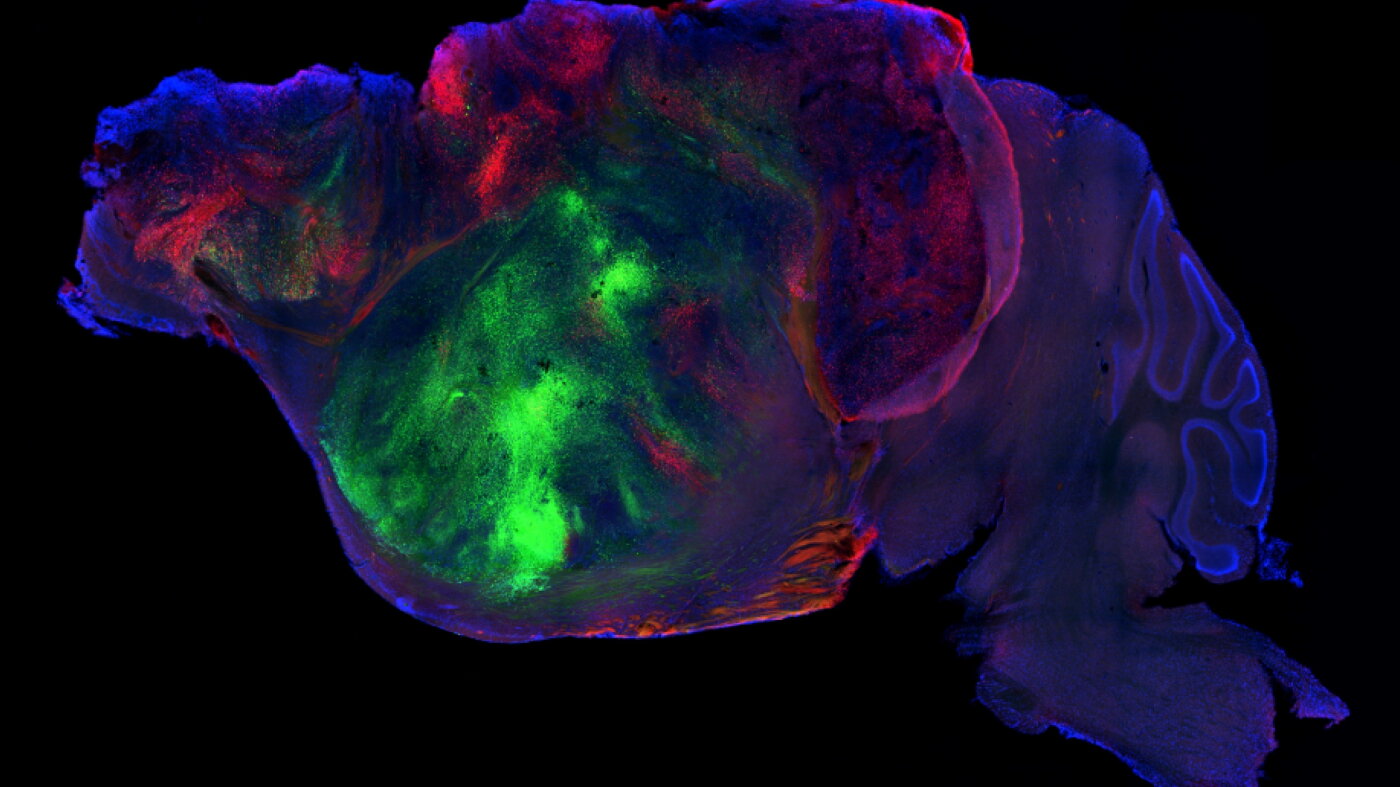
These cells eventually formed clusters of brain tissue that replicated the circuitry found in the cerebral cortex. asserted
that → form → cortex
Officials said the brain tissue not only survived in the mice but “thrived and grew,” developing “working connections to the mice’s brain and beyond to the spinal cord.” asserted
tissue → say → cord
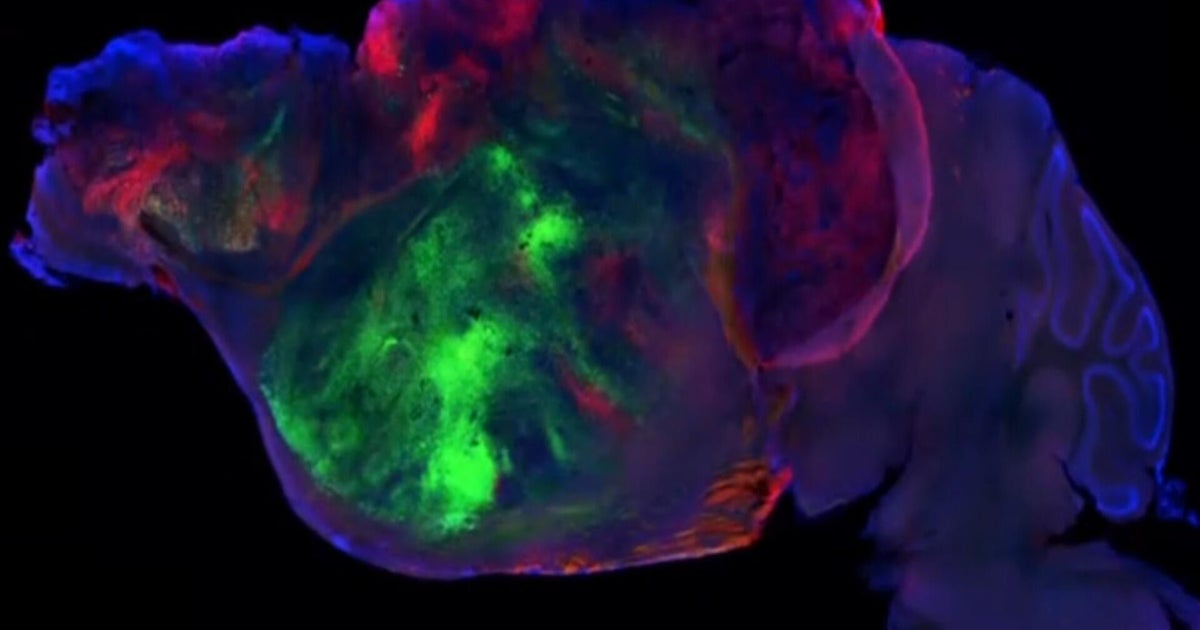
Images included in the report showed how the mice, which were bred with part of their cerebrum missing, had a full brain after the cortical organoid transplant. asserted
part → include → transplant
The senior author of the study, Professor Sergiu Pasca, celebrated the successful transplant, the Daily Mail reported. asserted
Mail → celebrate → transplant
“In these mice, the human grafts generated a broad diversity of cortical cell types and established functional connections throughout the mouse nervous system,” Pasca said of the “xenocortical” mice. asserted
Pasca → generate → mice
“These animals retain a mouse nervous system, but they contain a larger volume of human cortical tissue that develops, integrates and forms connections within it. asserted
that → retain → it
“They are not miniature brains and do not reproduce the full complexity of the human brain, but they allow us to study human neural cell types and developmental processes that would otherwise be extremely difficult to access.” asserted
that → reproduce → types
Researchers said this will give them the chance to study the growth of human cells when it comes to disorders like profound autism, schizophrenia, cerebral palsy and epilepsy. asserted
it → say → autism
“We can begin to ask how disease-associated human genetic changes alter neural development and circuitry and whether potential treatments can prevent or correct those changes,” Pasca said. asserted
Pasca → begin → changes
Alison Singer, president of the Autism Science Foundation, called it a “critical step” in disease treatment and prevention. “The idea that you can make an organoid model with an individual’s unique genetic character and use that to learn what’s gone awry in that individual’s brain is a critical step toward precision medicine,” Singer said in the Stanford report. asserted
Singer → call → report
Studying the brain has been difficult at “the molecular and cellular level,” not only because of how complex the brain is, but studying “living human brain tissue” is almost always impossible for ethical reasons. asserted
studying → study → reasons
“Neuroscientists will be able to learn much more about the causes and mechanisms of neurodevelopmental and pregnancy-incurred disorders and to test possible interventions to correct or prevent them,” Pasca said in the Stanford report. asserted
Pasca → learn → report

💬Give feedback
🕘History 🎫Support