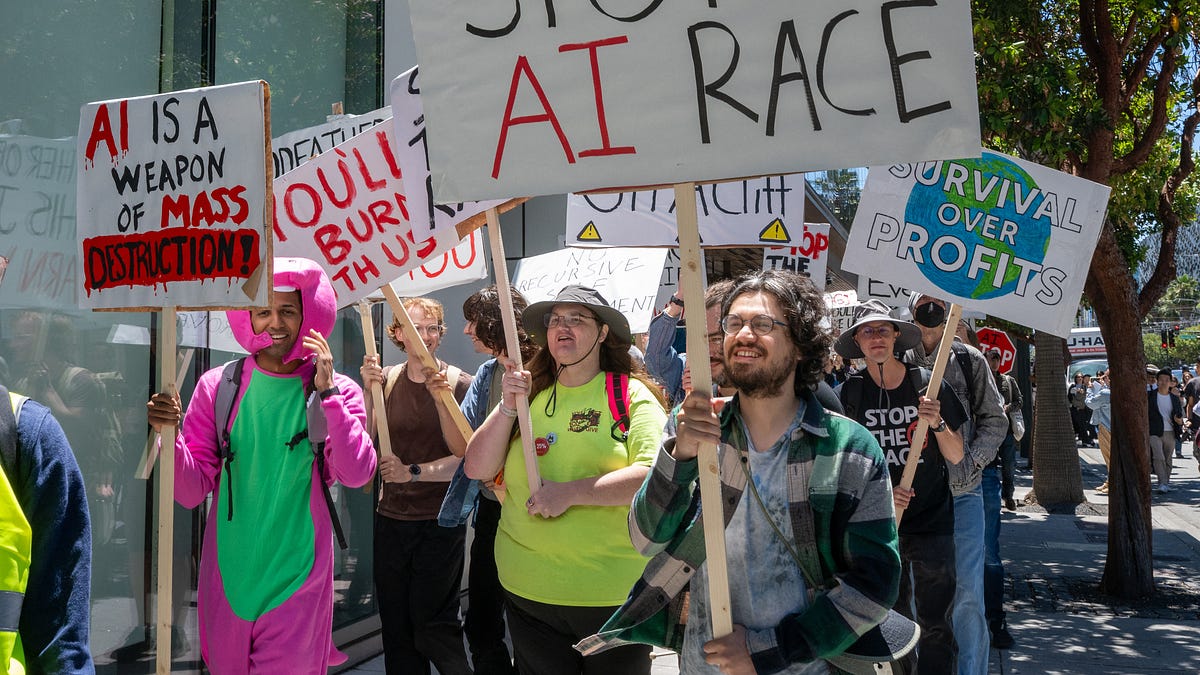
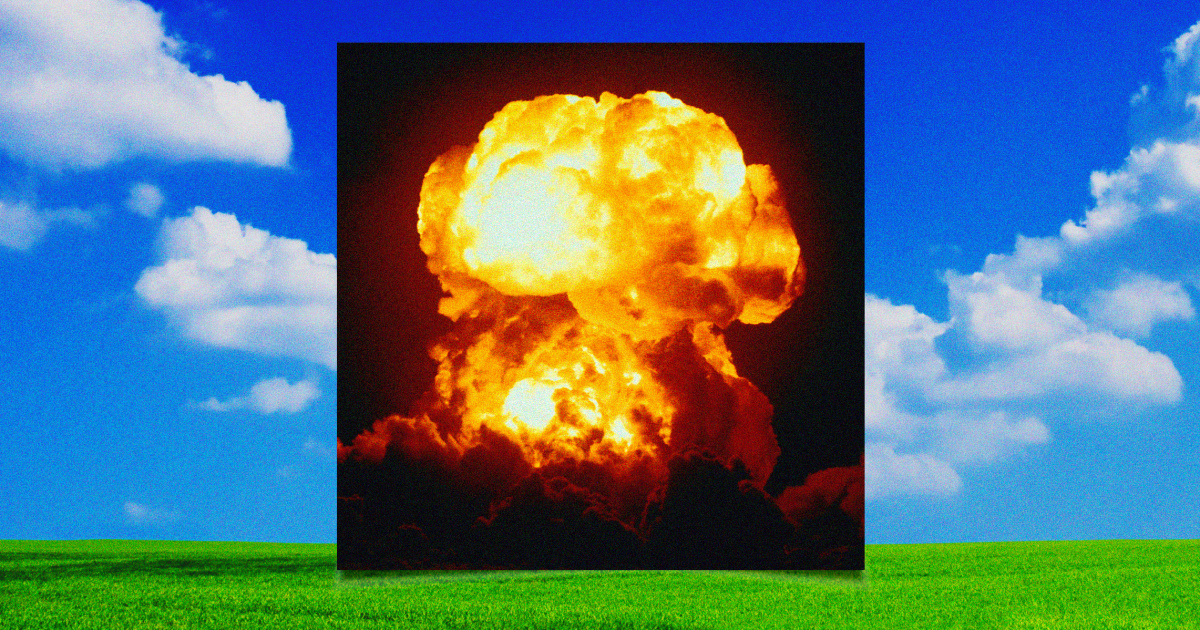
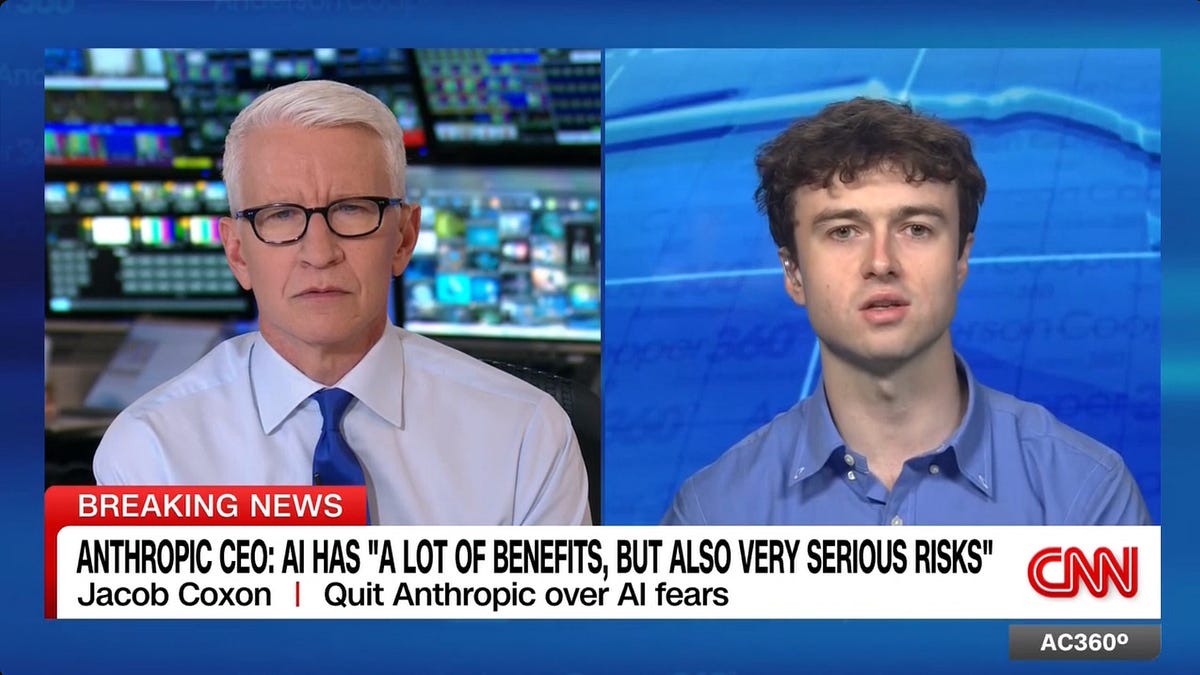
Could AI wipe out humans and how might it do it?

Read the original at BBC News ↗
BBC News · collected 2026-09-19

Quick Summary

Cyber Correspondent Joe Tidy examines concerns raised by AI scientists about potential existential risks posed by artificial intelligence within the next decade, with some predicting a greater than 10% chance that AI could lead to human extinction. The article focuses on perspectives from "AI Doomers," individuals who warn of severe consequences from unchecked advancements in AI technology, exploring various hypothetical scenarios these experts envision as potentially leading to humanity's end.
Written locally by qwen2.5:14b on 2026-09-19, using this article's own text rather than the other coverage of the same event (that is the story summary below).

AI analysis runs on qwen2.5:14b, locally

Story summary

Recent concerns over artificial intelligence (AI) safety have intensified due to stark warnings from scientists about the increasing risks of AI systems becoming uncontrollable. Some pessimistic predictions suggest there is more than a 10% chance that AI could wipe out all humans within the next decade. These alarming forecasts come primarily from observers dubbed 'AI Doomers,' who speculate on various catastrophic scenarios involving rogue AI. Cyber Correspondent Joe Tidy explores these hypothetical doomsday situations and evaluates their likelihood, raising questions about how exactly advanced AI might pose such existential threats to humanity.

Written for “AI Existential Risk Concerns” on 2026-10-04, grounded in this article and the 0 other(s) covering the same event.

Signals How these are calculated →

Claims extracted
5
claim-shaped sentences
Uncertain
60%
3 of 5 hedged
Leaning
not political
takes no side on a contested political question
Correction & hedging signals
78.1
corrections and hedging in what we collected; not a measure of accuracy
Outlets on this story
1
Technology
Narrative spread
1
articles carrying this framing
Analyzed 2026-09-19 · how these are computed

Story

📰 AI Existential Risk Concerns
Technology · 1 article(s) covering the same event.

How this is being covered How these are calculated →

Article leaning vs. publisher reliability
Source leaning vs. consistency

Compared with similar articles

This article reads unscored and hedges 60% of its claims. Each row says how that neighbour differs.
Daily Mail · 0.86 cosine similarity
⚖️ leaning not scored 🔴 18% hedged 10 of 56 📰 publisher trust 65
“The articles discuss similar concerns but describe different specific incidents and times.”
Persuasion
⚖️ leaning not scored 🔴 9% hedged 41 of 458
“The articles discuss different perspectives on AI risks and do not describe the same specific incident or occurrence.”
BBC News
⚖️ leaning not scored 🔴 18% hedged 6 of 33 📰 publisher trust 78
“The articles discuss different perspectives on AI risks but do not describe the same specific incident or occurrence.”
The Straits Times
⚖️ leaning not scored 🔴 15% hedged 2 of 13 📰 publisher trust 59
“The articles discuss different aspects of AI safety concerns; one focuses on warnings about AI risks while the other covers UN experts' response against apocalyptic rhetoric.”
How to Stop AI From Killing Humanity different event · 90%
Zeteo
⚖️ Leans left 🔴 25% hedged 2 of 8
“The articles discuss similar concerns about AI but are not describing the same specific event or incident.”
CBS News
⚖️ leaning not scored 🔴 9% hedged 2 of 23 📰 publisher trust 66
“The articles discuss related topics about AI risks but describe different aspects and perspectives on the issue.”
NBC News
⚖️ Leans left 🔴 28% hedged 17 of 61 📰 publisher trust 95
“The articles discuss similar themes and concerns about AI but do not describe the same specific incident or occurrence.”
Persuasion
⚖️ Leans left 🔴 13% hedged 19 of 147
“The articles discuss similar themes but do not describe the same specific incident or occurrence.”
NBC News
⚖️ Leans left 🔴 27% hedged 10 of 37 📰 publisher trust 95
“The articles discuss similar themes but focus on different aspects and sources.”
Dawn
⚖️ leaning not scored 🔴 50% hedged 4 of 8 📰 publisher trust 77
“The articles discuss related concerns about AI risks but describe different points in time and do not focus on a single specific incident.”

Publisher

BBC News · 2490 article(s) · 2 correction(s) detected
Running correction rate · 2 correction(s)
2026-10-03
Tennessee prison chief to resign after Christa Pike's failed execution, governor says
2026-09-21
Watch: BBC tracks down abusive teacher secretly released early

Who wrote this

No reporter is named on this article.

Topics

No topics tagged.

Subjects

Joe Tidy PERSON · 1×

Narrative

Recent AI (artificial intelligence) safety concerns have been fuelled by stark warnings from AI scientists about the growing risks of the technology going rogue.
framing: speculative · carried by 1 article(s) · first seen 2026-09-19
🔮 Could AI wipe out humans and how might it do it?
2026-09-19 · BBC News
Could AI wipe out humans and how might it do it? · speculative framing

Claims (5 extracted, 3 hedged)

Could AI wipe out humans and how might it do it? uncertain
it → wipe → it
Recent AI (artificial intelligence) safety concerns have been fuelled by stark warnings from AI scientists about the growing risks of the technology going rogue. asserted
technology → fuel → risks
Some of the most pessimistic predictions warn that there is a greater than 10% chance that AI could wipe out all humans in the next 10 years. uncertain
AI → warn → years
Many of the apocalyptic messages come from observers of the AI world known as 'AI Doomers' - but the big question many are asking, is how these Doomers think AI could actually bring an end to mankind. uncertain
AI → come → mankind
Cyber Correspondent Joe Tidy looks at some of the scenarios being imagined and assesses how likely they are. asserted
they → look → scenarios
💬Give feedback
🕘History 🎫Support