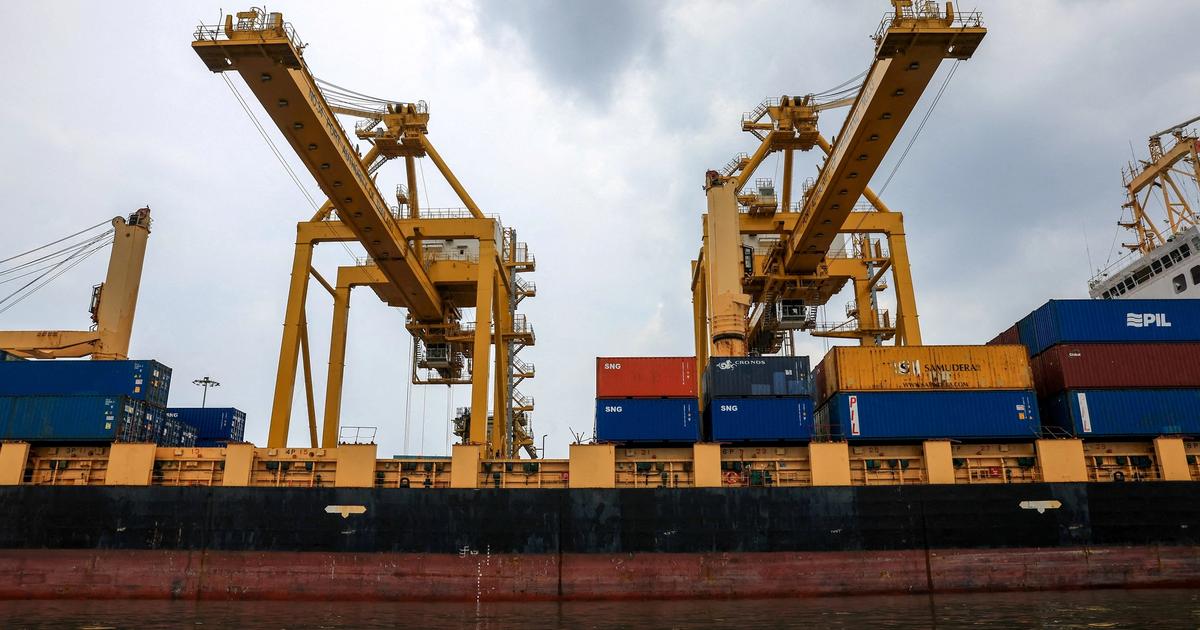
Photo via Semafor

US, Iran feel pain from energy disruptions

Read the original at Semafor ↗
Cite

Ruberry, B. (2026, September 15). US, Iran feel pain from energy disruptions. Semafor. https://www.semafor.com/article/09/07/2026/us-iran-feel-pain-from-energy-disruptions

Dated when The Aporia collected the article, usually within hours of publication. Check the original for its exact date and byline.

Semafor · collected 2026-09-15 · by Brendan Ruberry

Quick Summary

US gasoline prices reached record highs while Iran raised fuel costs for over-quota consumption. Tehran declared a new exclusion zone in the Strait of Hormuz as reports suggest US efforts to clear mines have increased maritime traffic but recent strikes caused it to drop again. Analysts note that Iran’s objectives remain unmet, raising concerns about potential escalation, and highlight the vulnerability of Gulf energy infrastructure shared by American companies.
Written by AI on 2026-09-15, from this article's own text only (the story summary below draws on all the coverage).

AI analysis

Story summary

US gasoline prices reached record highs as Iran announced a new "exclusion zone" in the Strait of Hormuz, amid reports suggesting its control over the strategic waterway is weakening. The US has been quietly working to clear mines from the strait for months, and maritime traffic had recently returned to pre-war levels before dropping sharply following recent strikes. According to analysts at the Institute for the Study of War (ISW), Iran believes it "has not yet achieved its key objectives in the conflict," increasing the risk of further escalation. Iran’s lead negotiator noted that the Gulf's energy infrastructure is "sprawling, accessible, and exposed," adding that both US oil and gas companies share this vulnerability.
Written for “Energy Disruptions US Iran” on 2026-11-02, grounded in this article and the 0 other(s) covering the same event.

Story

📰 Energy Disruptions US Iran
World · 1 article(s) covering the same event.

Compared with similar articles

This article reads unscored and hedges 0% of its claims. Each row says how that neighbour differs.
Semafor
⚖️ Leans left Hedges 1 of 4 claims Outlet record 59/100
“The articles describe different aspects and timeframes related to the Iran-US conflict; Article A discusses Trump's prediction about the war ending after elections, while Article B covers ongoing energy disruptions and economic impacts.”
Al Jazeera
Hedges 5 of 46 claims Outlet record 60/100
“The articles describe different aspects of the broader conflict between Iran and the US; Article A focuses on damage to a US military base in Bahrain, while Article B discusses energy disruptions affecting fuel prices in both countries.”
Dawn
Hedges 1 of 20 claims Outlet record 72/100
“Article A describes a specific drone attack on an oil pipeline in Saudi Arabia, while Article B discusses broader energy disruptions and geopolitical tensions between the US and Iran.”
NPR
Hedges 0 of 4 claims Outlet record 60/100
“The articles discuss related geopolitical tensions involving Iran and the Strait of Hormuz but describe different aspects: one focuses on postponed talks while the other discusses energy disruptions and strategic moves.”
The Independent
⚖️ Leans left Hedges 3 of 47 claims Outlet record 59/100
“The articles describe different aspects and impacts of broader conflicts involving Iran, Saudi Arabia, and Yemen, rather than a single specific incident.”
New York Post
⚖️ Leans strongly right Hedges 3 of 14 claims Outlet record 66/100
“The articles describe different aspects of the broader situation involving Iran's energy trade and conflicts with the US, but they do not focus on the exact same incident.”
New York Post
⚖️ Leans strongly left Hedges 3 of 27 claims Outlet record 66/100
“The articles discuss different aspects related to energy and geopolitical issues but do not describe the same specific incident or occurrence.”
The Hindu
Hedges 0 of 2 claims Outlet record 60/100
“The articles describe different events occurring in the Strait of Hormuz; one covers general energy disruptions and Iran's stance, while the other reports a specific attack on a Togo-flagged tanker.”
New York Post
Hedges 6 of 40 claims Outlet record 66/100
“The articles describe different events occurring at distinct times and locations related to Iran's energy policies versus its nuclear defenses.”
Semafor
Hedges 0 of 4 claims Outlet record 59/100
“The articles discuss related impacts of energy disruptions and conflicts in Iran but describe different aspects: one focuses on price and supply issues, while the other reports on increased tanker orders due to shifting trade routes.”
How this article was measured signals, leaning charts, publisher record, byline, topics and claims

Signals How these are calculated →

Claims extracted
4
sentences that state something as happening or true
Uncertain
0%
0 of 4 hedged ("reportedly", "may", "according to")
Leaning
withheld
no quote in the article backed the model's score
Publisher signals
59/100
Semafor's corrections and hedging, across everything collected from it. Not a measure of accuracy.
Outlets on this story
1
World
Same framing elsewhere
1
articles that frame the event the way this one does
Analyzed 2026-09-15 · how these are computed

How this is being covered How these are calculated →

Article leaning vs. publisher reliability
Source leaning vs. consistency

Publisher

Semafor · 1402 article(s) · 3 correction(s) detected
Running correction rate · 3 correction(s)

Who wrote this

Brendan Ruberry
147 article(s) here · 0 carrying a prediction
🔮 As many as 2,000 Salvadoran troops are deploying — a number that could double or triple, Axios reported.
🔮 Though oil prices retreated this week as Washington and Tehran pursued tentative diplomacy, refining capacity remains limited, and the White House has signaled it could resume strikes on Iran after midterms.
2026-10-29 · mixed framing · US economy grows faster than expected
🔮 Both Kyiv and Moscow praised US first lady Melania Trump for helping secure the truce in Oleshky, which some warned Russia would use for military resupply and propaganda efforts, as the conflict’s death toll mounts elsewhere.
🔮 Benjamin Netanyahu is now oddsmakers’ favorite to stay on as Israel’s prime minister in its next government, which could take weeks or months to form, as the broader region braced for a period of prolonged uncertainty.
🔮 “If it happens again around the US elections, the havoc would reach a whole new level.”
🔮 The projected results delivered a rebuke to Prime Minister Benjamin Netanyahu, whose coalition finished behind that of challenger Gadi Eisenkot, who has offered himself as a hawkish alternative to the scandal-dogged Netanyahu.
🔮 US gas prices are 40% higher than one year ago, driven by energy pressures resulting from the Iran war, which has spiked shipping costs and the price of many household items; the Federal Reserve is expected to hit pause on interest rates this week, but not for long, investors predicted.
2026-10-27 · assertive framing · US consumer confidence ticks up in October
🔮 Coming days before the Communist Party’s Fifth Plenum, the intervention may have helped “prop up the market,” a Chinese financial commentator said, but “it couldn’t prop up investors’ confidence.”
🔮 Bolsonaro’s loss comes as the Trump administration’s “Donroe Doctrine” to reassert hegemony over Latin America is being tested elsewhere: The US is charting a path toward Venezuelan elections, but the return of the country’s popular opposition leader could complicate that process, analysts noted, risking hardliner backlash.
🔮 France’s far-right presidential favorite Marine Le Pen said new Ukraine funding before April elections would be a “democratic scandal,” as Ukraine hunkers down for winter: Kyiv has attempted to harden its grid as Moscow intensifies strikes on energy infrastructure, but delayed regulatory reforms have put it on the back foot.
2026-10-27 · assertive framing · EU lobbies G7 nations to increase Ukraine funding
Also by Brendan Ruberry
Nothing else under this byline is closely related to this article, so these are simply their most recent.
All 147 articles by Brendan Ruberry →

Topics

American ISW Iran Tehran

Subjects

Iran GPE · 3× American NORP · 1× ISW ORG · 1× Tehran GPE · 1×

Narrative

Tehran announced a new “exclusion zone” in the Strait of Hormuz amid reports that its grip on the key waterway, and its negotiating leverage, is diminishing: The US has quietly worked to clear mines for months, and traffic last week approached pre-war levels, before sharply falling again after new strikes.
framing: assertive · carried by 1 article(s) · first seen 2026-09-15
2026-09-15 · Semafor
US, Iran feel pain from energy disruptions · assertive framing

Claims (4 extracted, 0 hedged)

US gas prices hit record highs and Iran doubled the price of fuel consumed over quota, as energy disruptions hit at the pump in both countries. asserted
disruptions → hit → countries
Tehran announced a new “exclusion zone” in the Strait of Hormuz amid reports that its grip on the key waterway, and its negotiating leverage, is diminishing: The US has quietly worked to clear mines for months, and traffic last week approached pre-war levels, before sharply falling again after new strikes. asserted
traffic → announce → strikes
Iran feels it has “not yet achieved its key objectives in the conflict,” ISW analysts wrote, increasing the likelihood of escalation. asserted
analysts → feel → escalation
The Gulf’s energy infrastructure is “sprawling, accessible, and exposed,” Iran’s lead negotiator wrote Monday, and “American oil and gas companies… share that exposure.” asserted
companies → sprawl → exposure
💬Give feedback
🕘History 🎫Support