Brett Kavanaugh gets Trump’s mail ballot rules right

Read the original at Washington Examiner ↗
Washington Examiner · collected 2026-09-18 · by Washington Examiner

Quick Summary

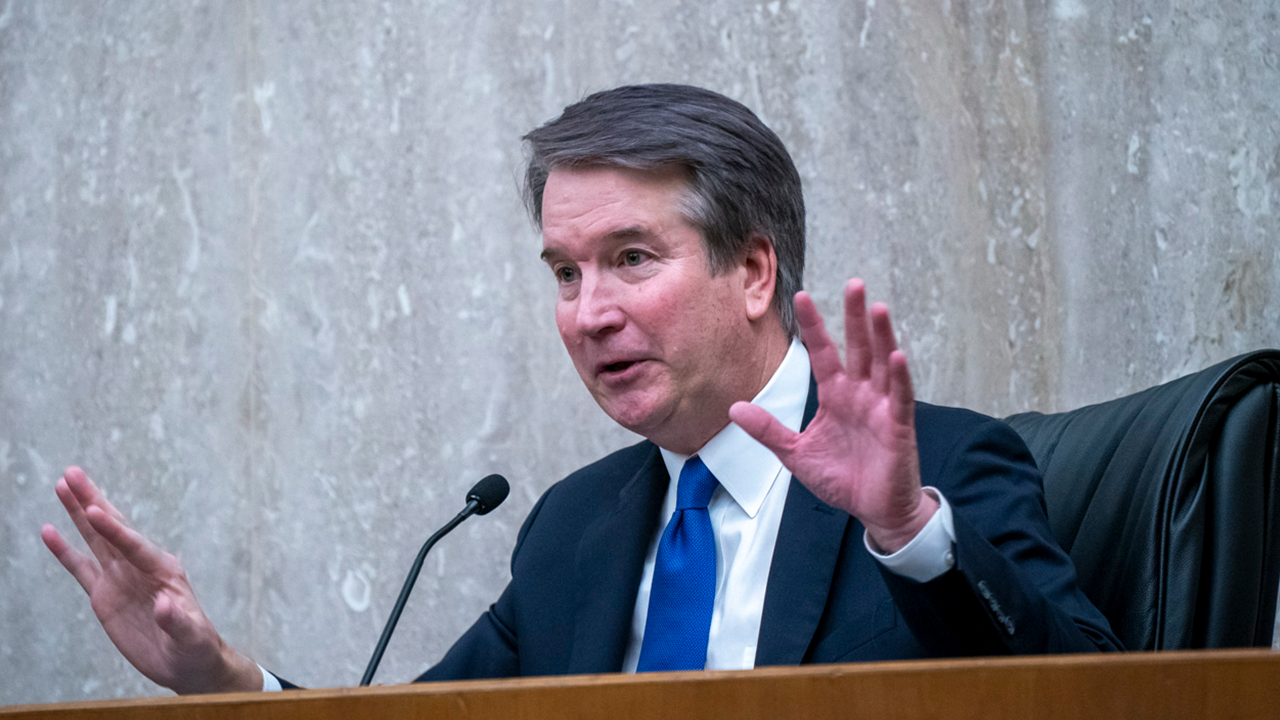
Justice Brett Kavanaugh wrote in concurrence that despite the Supreme Court’s decision not to lift an injunction blocking President Trump's new US Postal Service (USPS) election rules due to timing constraints, the regulations themselves could fall within USPS's statutory authority. The article discusses how Trump’s March 31 executive order aimed to enhance security measures for mail-in ballots by directing USPS to develop new safeguards against fraud and improve ballot tracking before the election. Democratic states challenged these rules in court, leading to their blockage ahead of the upcoming vote. Kavanaugh’s view suggests that while implementing the rules at this late stage would violate administrative procedure laws, USPS might legally regulate aspects of mail-in ballots under its existing powers over the postal system.
Written locally by qwen2.5:14b on 2026-09-20, using this article's own text rather than the other coverage of the same event (that is the story summary below).

AI analysis runs on qwen2.5:14b, locally

Story summary

Postmaster General David Steiner announced that the U.S. Postal Service has halted work on a controversial computer system developed under President Donald Trump's executive order, aimed at limiting voting by mail. This decision follows Supreme Court rulings striking down the executive order and issuing injunctions against implementing it. The suspension was confirmed in an interview with The Associated Press, where Steiner, who previously worked as CEO of Waste Management, emphasized his agency’s role as independent from political directives despite navigating financial hardships and political turbulence caused by Trump's policies. Unlike Trump, who criticized the court decisions, Steiner avoided commenting on the rulings' merits or implications for voter eligibility ahead of critical midterm elections in November.

Written for “Trump Mail Voting Restrictions” on 2026-10-14, grounded in this article and the 46 other(s) covering the same event.

Story

📰 Trump Mail Voting Restrictions
Politics · 47 article(s) covering the same event. Compare every outlet's account →

Compared with similar articles

This article reads leans right and hedges 16% of its claims. Each row says how that neighbour differs.
Fox News
⚖️ leaning not scored 🔴 18% hedged 7 of 38 📰 publisher trust 70
“Both articles discuss the same Supreme Court ruling and concurring opinion by Justice Brett Kavanaugh regarding President Donald Trump's mail ballot rules, published within a day of each other.”
The Dispatch
⚖️ Centre further left than this 🔴 0% hedged 0 of 2 📰 publisher trust 61
“The articles discuss different aspects of election procedures in North Carolina, with Article A focusing on new guidance from the State Board of Elections and Article B discussing a Supreme Court ruling related to mail-in ballot regulations.”
Washington Examiner
⚖️ Leans left further left than this 🔴 18% hedged 7 of 39 📰 publisher trust 68
“The articles discuss different aspects of the legal challenges and rulings regarding President Trump's mail-in voting executive order, with Article A focusing on the deadline pressures and judicial blocks, while Article B centers on Justice Kavanaugh's concurrence in a Supreme Court ruling.”
Euronews
⚖️ Leans strongly left further left than this 🔴 21% hedged 5 of 24 📰 publisher trust 60
“While both articles discuss a Supreme Court decision related to Trump's mail ballot rules, Article A focuses on the overall ruling and its impact, whereas Article B emphasizes Justice Kavanaugh's concurrence and legal authority details.”
CBS News
⚖️ Leans left further left than this 🔴 13% hedged 5 of 38 📰 publisher trust 66
“Article A reports on the Supreme Court's decision to block new Postal Service rules for mail ballots, while Article B discusses Justice Brett Kavanaugh's concurrence in relation to the authority of the U.S. Postal Service over mail-in ballot regulations.”
NBC News
⚖️ Leans left further left than this 🔴 7% hedged 2 of 30 📰 publisher trust 95
“Article A describes the Supreme Court's rejection of an emergency application by the Trump administration, while Article B focuses on Justice Brett Kavanaugh's concurrence regarding the legal authority behind the decision.”
The Hindu
⚖️ Leans left further left than this 🔴 7% hedged 1 of 15 📰 publisher trust 60
“Article A describes a federal judge's decision to freeze Trump's mail ballot order, while Article B discusses Justice Brett Kavanaugh's concurrence regarding the authority of the U.S. Postal Service in regulating mail-in ballots.”
Al Jazeera
⚖️ leaning not scored 🔴 0% hedged 0 of 17 📰 publisher trust 60
“Article A discusses Attorney General Blanche's response to the Supreme Court ruling on mail ballot restrictions, while Article B focuses on Justice Brett Kavanaugh’s concurrence and addresses a different aspect of the legal issue.”
New York Post
⚖️ Leans right 🔴 19% hedged 7 of 37 📰 publisher trust 67
“Both articles discuss the same Supreme Court case and concurring opinion by Justice Brett Kavanaugh regarding mail ballot rules, published around the same time.”
Washington Examiner
⚖️ Leans left further left than this 🔴 10% hedged 1 of 10 📰 publisher trust 68
“The articles discuss different aspects related to President Trump's executive order on mail-in ballots; Article A focuses on the U.S. Postal Service stopping work due to a court injunction, while Article B discusses Justice Brett Kavanaugh’s concurrence on the legal authority of the USPS.”

Cite this article

Examiner, W. (2026, September 18). Brett Kavanaugh gets Trump’s mail ballot rules right. Washington Examiner. https://www.washingtonexaminer.com/opinion/editorials/4729980/brett-kavanaugh-trump-mail-ballot-rules-supreme-court/

Dated when The Aporia collected the article, usually within hours of publication. Check the original for its exact date and byline.

How this article was measured signals, leaning charts, publisher record, byline, topics and claims

Signals How these are calculated →

Claims extracted
45
sentences that state something as happening or true
Uncertain
16%
7 of 45 hedged ("reportedly", "may", "according to")
Leaning
Leans right
of the writing, not the subject · beta estimate
Publisher signals
68/100
Washington Examiner's corrections and hedging, across everything collected from it. Not a measure of accuracy.
Outlets on this story
47
Politics
Same framing elsewhere
1
articles that frame the event the way this one does
Analyzed 2026-09-20 · how these are computed

How this is being covered How these are calculated →

Article leaning vs. publisher reliability
Source leaning vs. consistency

Publisher

Washington Examiner · 2671 article(s) · 5 correction(s) detected
Running correction rate · 5 correction(s)

Who wrote this

Washington Examiner
25 article(s) here · 1 carrying a prediction
🔮 Rising gas and diesel prices are a major reason Republicans risk losing the House and possibly the Senate in November, but President Donald Trump’s energy deal with Russia will not fix that.
2026-10-13 · assertive framing · Trump’s worse-than-useless Russian diesel deal
🔮 The report attributes the limited enforcement to a Sept. 30, 2021, memorandum written by Homeland Security Secretary Alejandro Mayorkas that directed ICE to focus its resources on threats to “national security, public safety, and border security.”
🔮 But when President Donald Trump said what is obviously true and blamed the mayhem on mass migration, France’s leaders reacted by pretending that this latest display of unassimilated alien violence was about spending cuts.
2026-10-11 · assertive framing · A red-green warning from France
🔮 Restored energy flows may somewhat shield Republican candidates from public anger over high energy costs and inflation in the run-up to the midterm elections.
🔮 The final result won’t be known until later this month, but if the first round of Brazil’s election is any indication, it will soon become the latest Latin American country to turn back to conservatism after socialism led to crime, inflation, and stagnant economic growth.
2026-10-09 · assertive framing · Latin America turns right as Democrats turn left
🔮 Vice President JD Vance recently announced that the Trump administration would end subsidy payments for 760,000 fraudulent health insurance enrollments made through the federally administered Affordable Care Act exchanges, saving taxpayers $2.2 billion a year.
2026-10-08 · assertive framing · Our healthcare system shouldn’t depend on fraud
🔮 It was an orgy of violence and nihilism that would ultimately cause not only the reordering of the entire Middle East but also the transformation of one of America’s political parties.
2026-10-07 · assertive framing · The two legacies of Oct. 7
🔮 But her existing energy policies are poised to make electricity more expensive for ratepayers next year, and the full energy plan she released last week would make energy more expensive for decades to come.
2026-10-06 · assertive framing · Spanberger is already making Virginia unaffordable
🔮 But none of this science or logic would matter in a courtroom run by a far-left Democratic judge before far-left Democratic jurors.
2026-10-05 · assertive framing · Climate policy belongs to Congress, not Colorado
🔮 It is unfortunate for Republicans that it won’t pass until after the November elections, but the bipartisan permitting reform deal announced hours before the Senate adjourned this week could be the most historic and consequential legislative accomplishment of Donald Trump’s presidency.
2026-10-04 · mixed framing · A bipartisan deal to get America building again
Also by Washington Examiner
Trump’s worse-than-useless Russian diesel deal
2026-10-13 · Washington Examiner
A red-green warning from France
2026-10-11 · Washington Examiner
Nothing else under this byline is closely related to this article, so these are simply their most recent.
All 25 articles by Washington Examiner →

Topics

Congress North Carolina USPS the Supreme Court the U.S. Postal Service

Subjects

USPS ORG · 10× Congress ORG · 4× Trump PERSON · 2× the Supreme Court ORG · 2× Brett Kavanaugh PERSON · 1× Democratic NORP · 1× Kavanaugh PERSON · 1× North Carolina GPE · 1× the U.S. Postal Service ORG · 1×

Narrative

Additionally, before each batch is presented to USPS, an authorized election official must also upload each voter’s name and mailing address to a federal portal, together with the barcodes assigned to that voter’s outgoing and return envelopes.
framing: assertive · carried by 1 article(s) · first seen 2026-09-20
🔮 USPS would then use that information to verify the outgoing ballot mail before accepting it.
2026-09-20 · Washington Examiner
Brett Kavanaugh gets Trump’s mail ballot rules right · assertive framing

Claims (45 extracted, 7 hedged)

North Carolina began mailing ballots to voters two weeks ago, and the deadline for states to transmit requested ballots to overseas military voters is tomorrow. asserted
states → begin → voters
So the Supreme Court had ample reason to conclude that there is not enough time for states to comply with President Donald Trump’s new mail-in ballot regulations this year. asserted
states → have → regulations
But the timing question is separate from the underlying legal one: Does the U.S. Postal Service have authority to regulate the marking, preparation, and tracking of mail-in ballots? asserted
Service → regulate → ballots
Justice Brett Kavanaugh’s concurrence shows he believes that it does. asserted
it → show → ?
Trump issued his election-integrity executive order on March 31, directing USPS to develop new safeguards intended to prevent fraud, improve ballot tracking, and protect the integrity of mail-in voting in federal elections. asserted
Trump → issue → elections
Democratic state attorneys general and voting groups sued, delaying implementation while the order was litigated. asserted
order → vote → implementation
USPS finally published its rule on Aug. 26. asserted
USPS → publish → Aug.
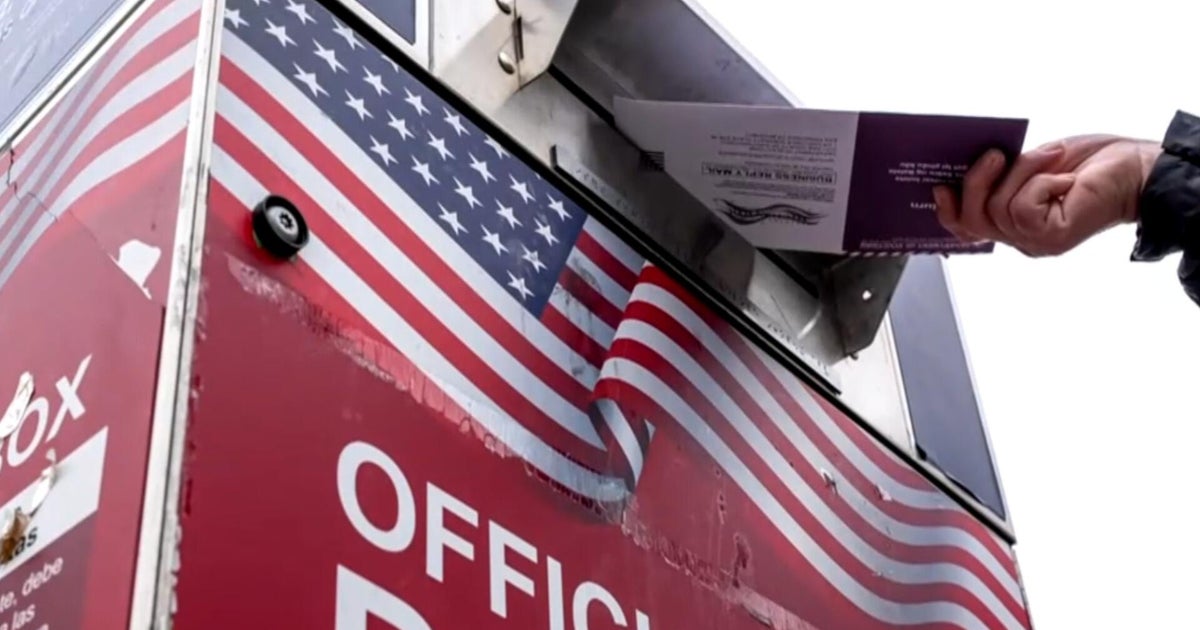
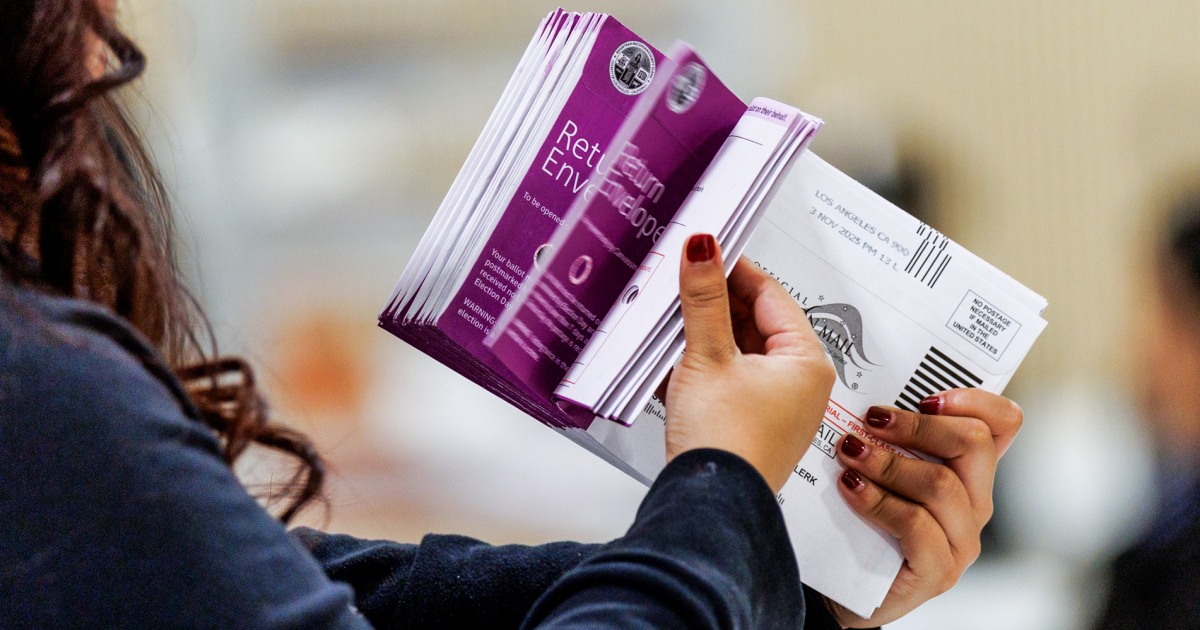
It requires state and local election officials who mail federal ballots to use prescribed Election Mail markings, automation-compatible envelopes, and unique barcodes on outgoing and return envelopes. asserted
who → require → envelopes
Additionally, before each batch is presented to USPS, an authorized election official must also upload each voter’s name and mailing address to a federal portal, together with the barcodes assigned to that voter’s outgoing and return envelopes. asserted
official → present → envelopes
USPS would then use that information to verify the outgoing ballot mail before accepting it. asserted
USPS → use → it
The rule expressly leaves voter eligibility to the states. asserted
rule → leave → states
USPS will not decide who may vote by mail, maintain voter rolls, open ballots, count votes, or know how anyone voted. uncertain
anyone → decide → votes
Democratic states sued again, and a lower court blocked the rule for this election. asserted
court → sue → election
On Monday, the Supreme Court declined to lift that injunction. asserted
Court → decline → injunction
In his concurrence, Kavanaugh agreed that imposing the requirements this late would violate the Administrative Procedure Act because election officials lacked sufficient time to implement them. asserted
officials → agree → them
But he separately wrote that the regulation may fall within USPS’s statutory authority. uncertain
regulation → write → authority
The Constitution gives states significant authority over elections. asserted
Constitution → give → elections
Article I’s elections clause says that state legislatures prescribe the “times, places and manner” of congressional elections. asserted
legislatures → say → elections
But it also provides that Congress may “at any time by law make or alter such regulations.” uncertain
Congress → provide → regulations
States thus have the initial authority to administer congressional elections, but Congress may supersede their rules. uncertain
Congress → have → rules
Congress has exercised that power repeatedly, including by setting a uniform Election Day and, for example, enacting the National Voter Registration Act. asserted
Congress → exercise → Act
Congress has also given USPS broad authority over the mail. asserted
Congress → give → mail
Under 39 U.S.C. § 401, the agency may adopt regulations necessary to carry out its functions. uncertain
agency → adopt → functions
Section 404 authorizes it to regulate the “collection, handling, transportation, delivery, forwarding, returning, and holding of mail.” asserted
it → authorize → mail
USPS already uses those powers to guard against fraud and identity theft. asserted
USPS → use → fraud
People submitting change-of-address requests may be required to verify their identity. uncertain
People → submit → identity
Private mailbox services must collect identifying information and comply with USPS recordkeeping requirements. asserted
services → collect → requirements
Service may be refused or terminated when the required information is false or missing. uncertain
information → refuse → ?
That makes the ballot regulations less novel than critics suggest. asserted
critics → make → ?
Requiring users of the federal mail system to provide information, use specified markings, or employ tracking technology is already part of postal regulation. asserted
Requiring → require → regulation
The ballot rules follow the same basic model. asserted
rules → follow → model
States still decide who can vote and who receives a ballot. asserted
who → decide → ballot
USPS requires ballots entering its system to use standardized envelopes and individualized tracking information so election mail can be identified and followed. asserted
mail → require → envelopes
Those requirements have straightforward purposes. asserted
requirements → have → purposes
Automation-compatible envelopes reduce handling errors. asserted
envelopes → reduce → errors
Election mail markings identify sensitive election mail. asserted
markings → identify → mail
Unique barcodes make individual ballot mailpieces trackable. asserted
mailpieces → make → ?
Electronic records allow election officials and USPS to determine whether a particular ballot mail entered and moved through the system. asserted
mail → allow → system
None of those requirements determines voter eligibility or whether a ballot counts. asserted
ballot → determine → eligibility
They regulate how a particular category of mail enters and moves through the federal postal system. asserted
category → regulate → system
…and 5 more, not listed.

💬Give feedback
🕘History 🎫Support