EU's offer to Canada is proof that Europe is ready to stand up to Trump, says lawmaker
Rene Repasi, German member of the European Parliament, calls EU-Canada alliance plans 'bold'
asserted
Repasi → stand → plans
The European Union's overtures to Canada are a signal that Europe is ready to take off the boxing gloves when it comes to dealing with U.S. President Donald Trump, says a German member of the European Parliament.
asserted
member → take → Parliament
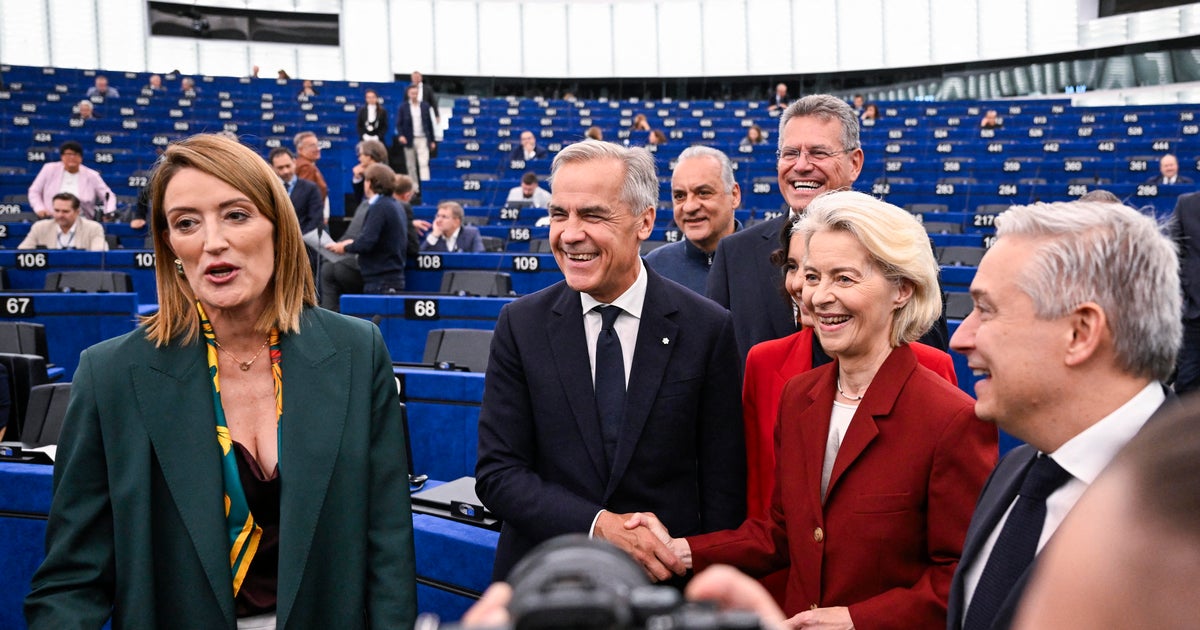
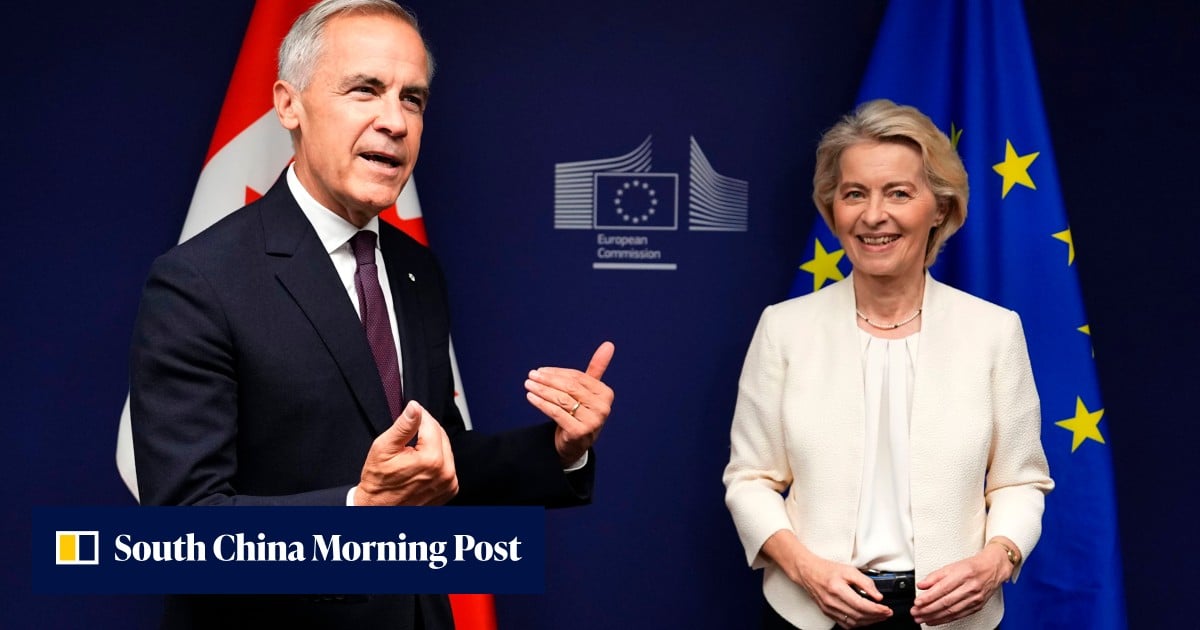
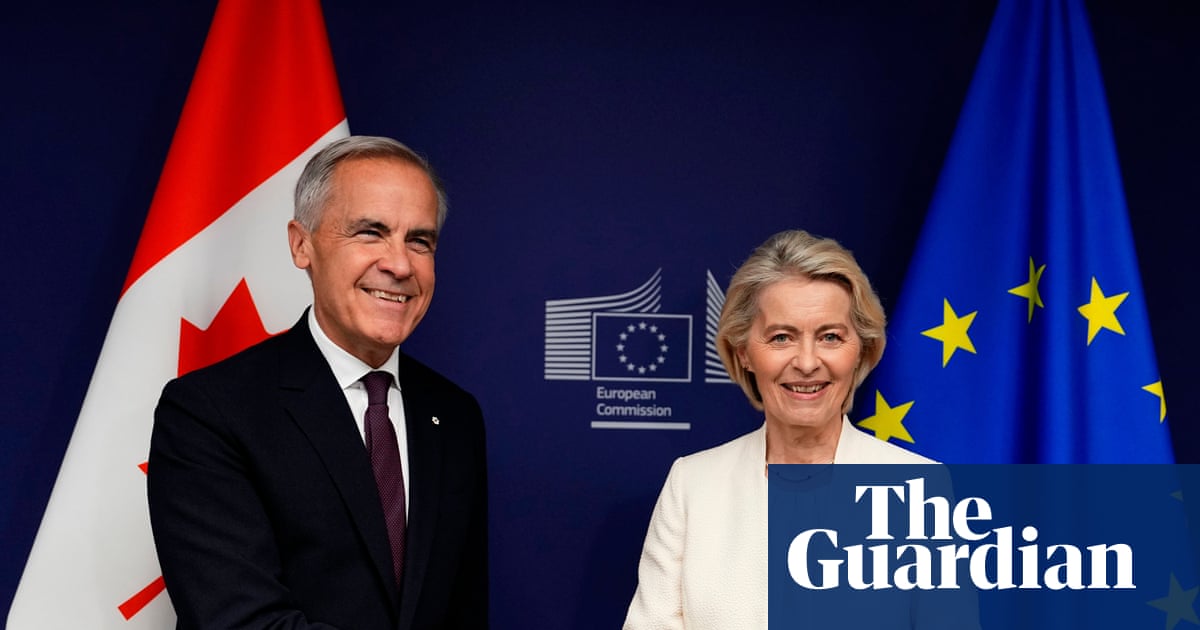
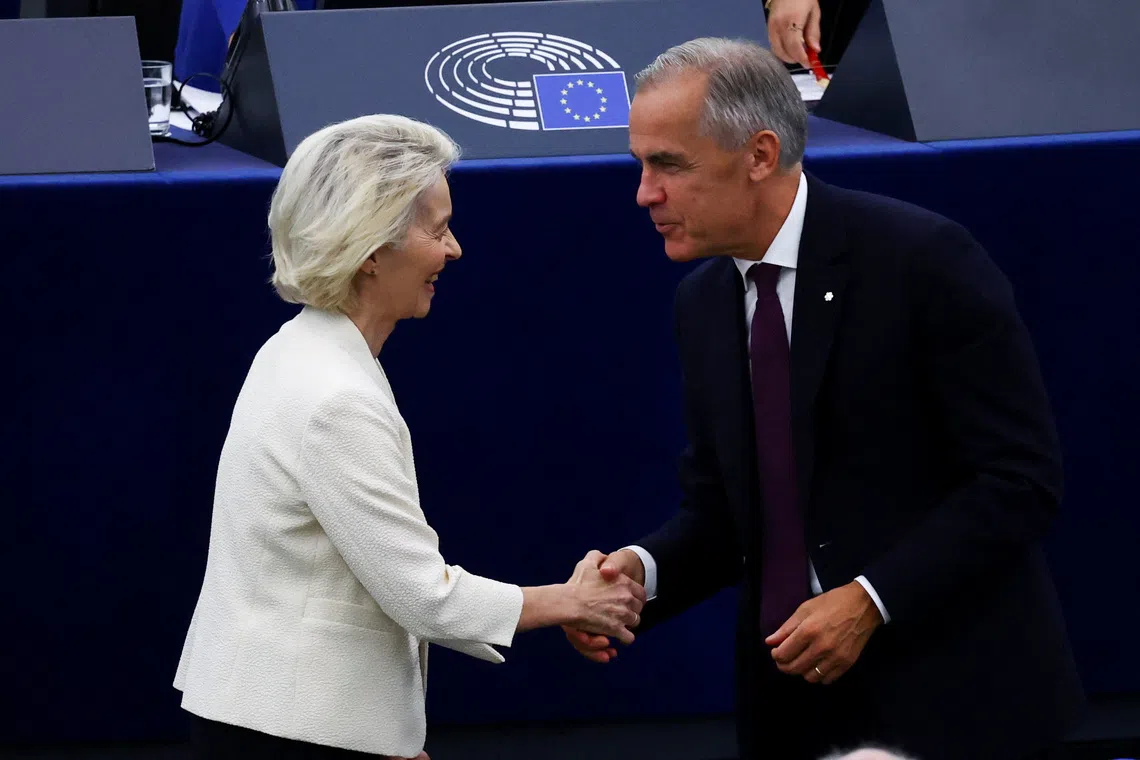
European Commission President Ursula von der Leyen said Europe wants to open the door for Canada to become an "associate member" of the EU — a designation that doesn't formally exist — during a speech before the European Parliament in Strasbourg, France, on Wednesday.
asserted
that → say → Wednesday
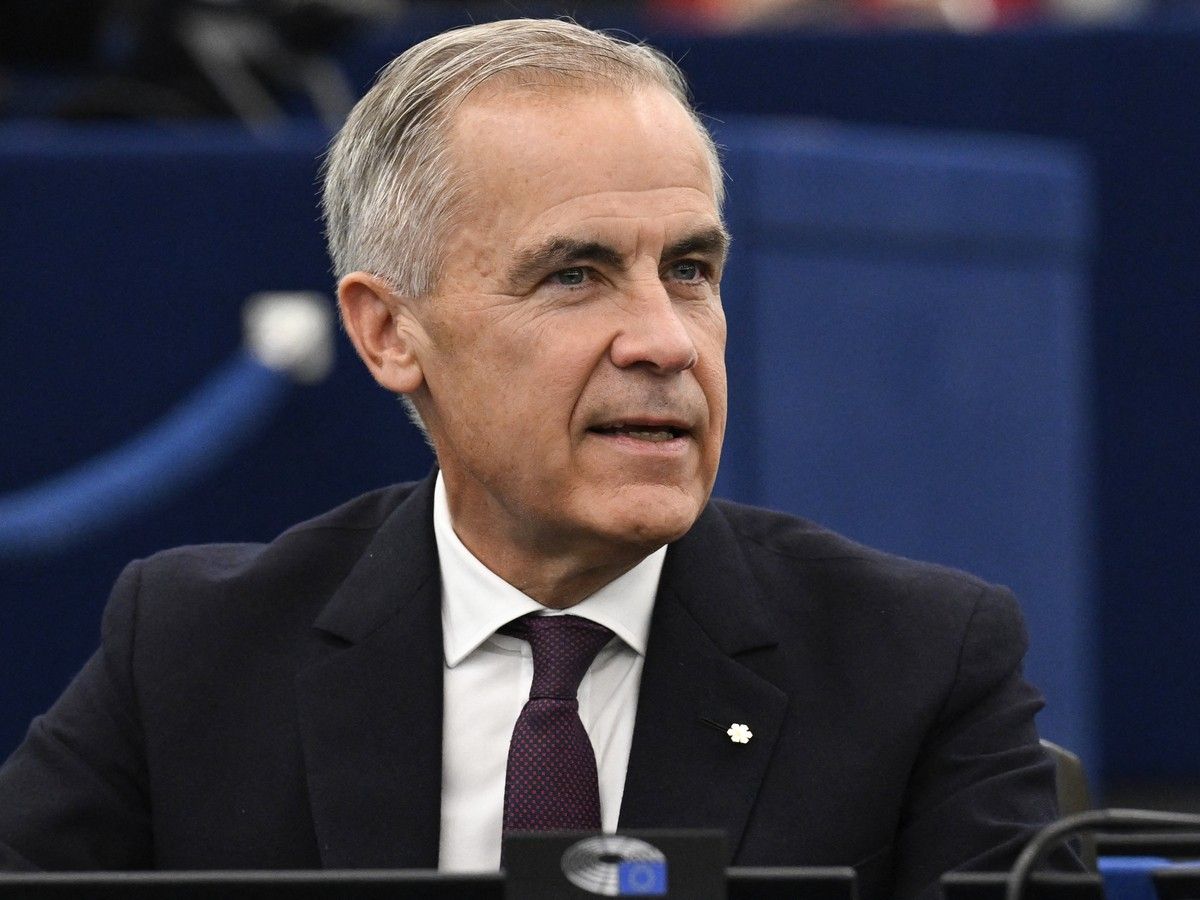
During his own speech on Thursday, Prime Minister Mark Carney said he "welcomes this ambition," and called for an "alliance of the future" between Canada and the 27 countries that make up the EU.
asserted
that → say → EU
Carney is trying to move Canada closer to Europe as he navigates a trade war with the U.S.
asserted
he → try → U.S.
Trump, meanwhile, has called the prospect of an EU-Canada alliance as "laughable," and threatened to enact “heavy tariffs” on the EU if he perceives the deal as “hostile.”
asserted
he → call → deal
He says he welcomes a closer relationship between the EU and Canada, but says striking a formal alliance is easier said than done, and would require the negotiation of a comprehensive new treaty.
asserted
striking → say → treaty
Here is part of his conversation with As It Happens host Nil Kӧksal.
asserted
It → happen → Kӧksal
You were listening to what the Prime Minister said, including those words, welcoming that ambition.
asserted
Minister → listen → ambition
How did those words sit with you?
asserted
words → sit → you
I was very glad, very happy that the prime minister mentioned these words.
asserted
minister → mention → words
It was quite a daring move by Commission President von der Leyen to offer the so-called associate membership, which formally doesn't exist, but which we can consider as another word for extremely close ties between Canada and the European Union.
asserted
we → offer → Canada
And we were, therefore, glad to hear that the prime minister then, one day later, accepted this invitation to this close relationship.
asserted
minister → hear → relationship
Whatever it ends up being called, what do you see this kind of relationship looking like?
asserted
kind → end → relationship
In a couple of years we might look back at this moment and consider it historic.
uncertain
it → look → moment
Because it was basically the first step of realizing what the prime minister called in Davos the "alliance " of "the middle powers" in order to have something against the bullies of the world.
asserted
minister → realize → world
It's true that because we're entering uncharted territory, it's difficult to give it a very concrete shape.
asserted
it → enter → shape
But politically, I believe the message is pretty clear that Canada and the European Union are now creating something very sustainable, very close, building up on this vision of Mark Carney, of this alliance of the middle powers.
asserted
Canada → believe → powers
And he also consciously uses the term of an "alliance" in his own speech.
asserted
he → use → speech
Politico was reporting, you may have seen, that European Parliament sources were telling them that Ursula von der Leyen's proposal mentioning associate membership in her remarks, caught EU members off guard.
uncertain
proposal → report → guard
You're happy about it, it sounds like.
asserted
it → sound → it
We discussed the category of associate membership.
asserted
We → discuss → membership
But formally speaking or legally speaking, it actually doesn't exist.
asserted
it → speak → ?
It took, indeed, the member states by surprise, took MEPs by surprise.
asserted
It → take → surprise
It took also me by surprise.
asserted
It → take → surprise
And, in that sense, it shows that it was a pretty bold move by the Commission president.
asserted
it → show → president
Words are one thing, action is another, as you well know.
asserted
you → know → ?
What would even be needed to establish that, if we're going to be the first?
asserted
we → need → that
This would require a treaty between the European Union and Canada.
asserted
This → require → Union
We already have a quite comprehensive trade agreement, CETA, between us.
asserted
We → have → us
But what is here proposes much more.
asserted
is → propose → more
The thing that we currently have, which is the closest to an associate membership, is the European Economic Area, in which they are together with Iceland, Norway and Liechtenstein, which has full integration in the internal markets, which has participation in EU legislative products, which is joining also the case law of the European Court of Justice.
asserted
which → have → Justice
What basically Carney and von der Leyen want is something even more political than that, and that is something new.
asserted
that → want → that
So it would require a very comprehensive new international treaty.
asserted
it → require → treaty
The prime minister has also been clear, and certainly those who are not, you know, fully jumping on this bandwagon have said Canadian sovereignty has to remain intact.
asserted
sovereignty → know → bandwagon
This would require the support of European member states.
asserted
This → require → states
Do you think that support is there?
asserted
support → think → ?
I do believe so.
asserted
I → believe → ?
I can see why there's criticism on the term of membership.
asserted
I → see → membership
Normally, membership … in the European Union is something that other countries ask, and then we decide on the terms of the membership.
asserted
we → ask → membership
…and 12 more, not listed.
 The Aporia