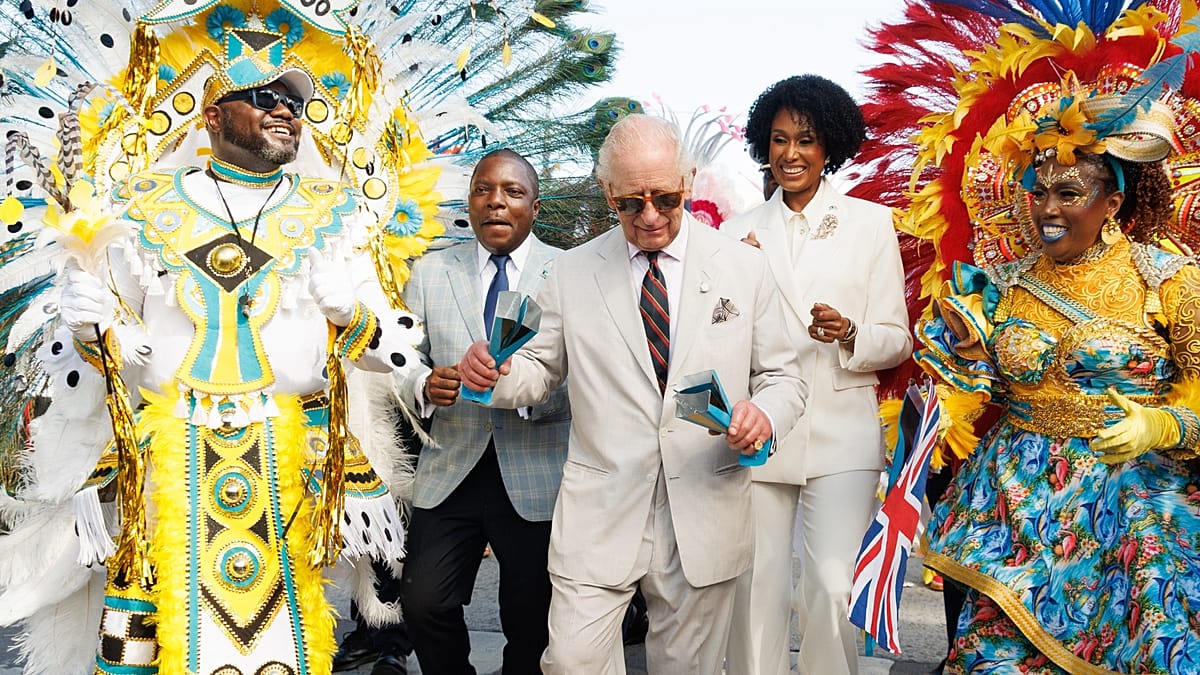
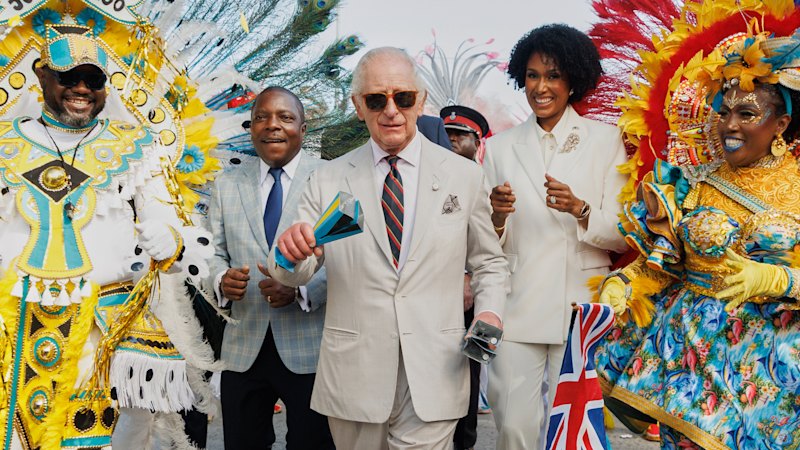
King Charles acknowledges 'injustices' of slavery on Caribbean tour.
asserted
Charles → acknowledge → tour
But these residents want action
'
asserted
residents → want → action
We need accountability.
asserted
We → need → accountability
We don't just need statements of regret,' says Bahamas reparations committee chair
King Charles acknowledged the devastating impacts of slavery during the first stop of his Caribbean tour on Tuesday, but stopped short of apologizing or offering reparations.
Speaking in the Bahamas, Charles said it was "only right" to acknowledge "the great suffering and injustices of the past in these islands and beyond."
Niambi Hall Campbell-Dean, chair of the Bahamas National Reparations Committee, says the King didn't go far enough.
asserted
King → need → Committee
"Acknowledgement is like when somebody hits your car and says, 'Oh, I'm sorry.'
asserted
I → hit → car
But the apology when they hit your car, and say, 'I am sorry, and here's my insurance.'
asserted
insurance → hit → car
It's the difference between recognizing that something bad has happened, and holding yourself accountable for it," she told As It Happens host Nil Köksal.
asserted
It → recognize → Köksal
"We need accountability.
asserted
We → need → accountability
We don't just need statements of regret.
asserted
We → need → regret
Because we know that slavery was a bad thing.
asserted
slavery → know → ?
Everybody knows that slavery is a bad thing."
asserted
slavery → know → ?
From the 15th to the 19th century, at least 12.5 million Africans were abducted and sold into slavery by European traders, with Britain transporting an estimated 3.2 million people across the Atlantic, making it one of the biggest slave-trading nations.
Campbell-Dean isn't alone in her demand for reparations.
CARICOM, a regional and economic union of Caribbean countries, has long called on the U.K. and other enslaving nations to apologize and offer financial compensation to the descendants of enslaved peoples.
asserted
CARICOM → abduct → peoples
When Charles meets with the Commonwealth Heads of Government in Antigua and Barbuda next week, that demand will be on the agenda.
asserted
demand → meet → agenda
"The Caribbean has consistently asserted that reparations is fundamentally about justice," Carla Barnett, secretary general of the regional bloc CARICOM, said last month.
asserted
Barnett → assert → bloc
A protester holds a placard that reads 'Reparations now!' during a demonstration in Nassau.
asserted
that → hold → Nassau
Campbell-Dean says the move for slavery reparations has gained momentum around the world in recent years, and it's time for the U.K. to catch up.
asserted
U.K. → say → years
In March, the United Nations General Assembly approved a resolution calling for reparatory justice, including a full apology and compensation both for the period of enslavement and for continuing harms.
asserted
Assembly → approve → harms
Both the U.K. and Canada abstained from the vote.
asserted
U.K. → abstain → vote
"We want our King to really be able to cement his legacy as the King that moved reparations forward," Campbell-Dean said.
asserted
Dean → want → reparations
"Not the one that simply passed it on to the next generation.
asserted
that → pass → generation
Not just an issue of the past, say advocates
Buckingham Palace said the King would address slavery during the tour, but not offer a formal apology.
asserted
King → say → apology
A palace spokesperson said the visit would focus mainly on "modern partnerships and opportunities for the future" and that Charles would engage with and educate about "the most shameful aspects of our past."
asserted
Charles → say → past
Craig Prescott, an expert on constitutional law and the monarchy at Royal Holloway, University of London, says the King is limited by the policy of the elected British government.
asserted
King → say → government
"It's not a matter for the King, in that sense," he said.
asserted
he → say → sense
"And it is the longstanding policy of the government to, yes, note that slavery happened and that it is a stain on British history, but that reparations are not payable."
asserted
reparations → note → history
Protesters from the Bahamas National Reparations Committee demonstrate in Nassau on Wednesday.
asserted
Protesters → demonstrate → Wednesday
But placing the issue squarely in the past does a disservice to those still living with its consequences, says Campbell-Dean.
asserted
Dean → place → consequences
"These are legacies that continue to affect the way that we move and grow and build as a country," she said.
asserted
she → continue → country
Brooke Newman, a professor of history at Virginia Commonwealth University, says the British Crown has reaped tremendous benefits from the slave trade.
asserted
Crown → say → trade
In her book, The Crown's Silence, she argues British monarchs did more than just preside over an empire where enslaved Africans were shipped across the Atlantic Ocean to labour in the sugar, tobacco and cotton fields of the New World.
asserted
Africans → argue → World
They were also major investors in slaving companies and also granted exclusive trading rights to slavers in exchange for profit shares.
asserted
They → slave → shares
She called Charles's speech on Tuesday "hollow."
asserted
She → call → Tuesday
(Submitted by Niambi Hall Campbell-Dean)
Campbell-Dean says she's skeptical of arguments that Charles doesn't have the power to address slavery.
She noted the Dutch king apologized for his country's role in the slave trade in 2023.
asserted
king → submit → 2023
"The King is our head of state, so really he has nothing to be afraid of," she said.
asserted
she → have → nothing
"He has the power and the status and the position to make the apology."
asserted
He → have → apology
 The Aporia