The Senate failed a procedural vote on the Digital Asset Market Clarity Act, which aimed to provide regulatory clarity for the crypto industry but faced opposition due to concerns over potential conflicts of interest involving former President Donald Trump's significant cryptocurrency earnings, totaling $1.4 billion according to recent financial disclosures. Democrats were particularly concerned that the bill’s ethics provisions did not adequately prevent Trump and other politicians from profiting from digital assets, given Trump's substantial holdings in companies like World Liberty Financial and his meme coin business CIC Digital. The proposed legislation would have set disclosure requirements and anti-fraud protections but also granted federal agencies broad regulatory powers, raising concerns about bureaucratic overreach.
Written locally by qwen2.5:14b on 2026-09-18,
using this article's own text rather than the other coverage of the
same event (that is the story summary below).
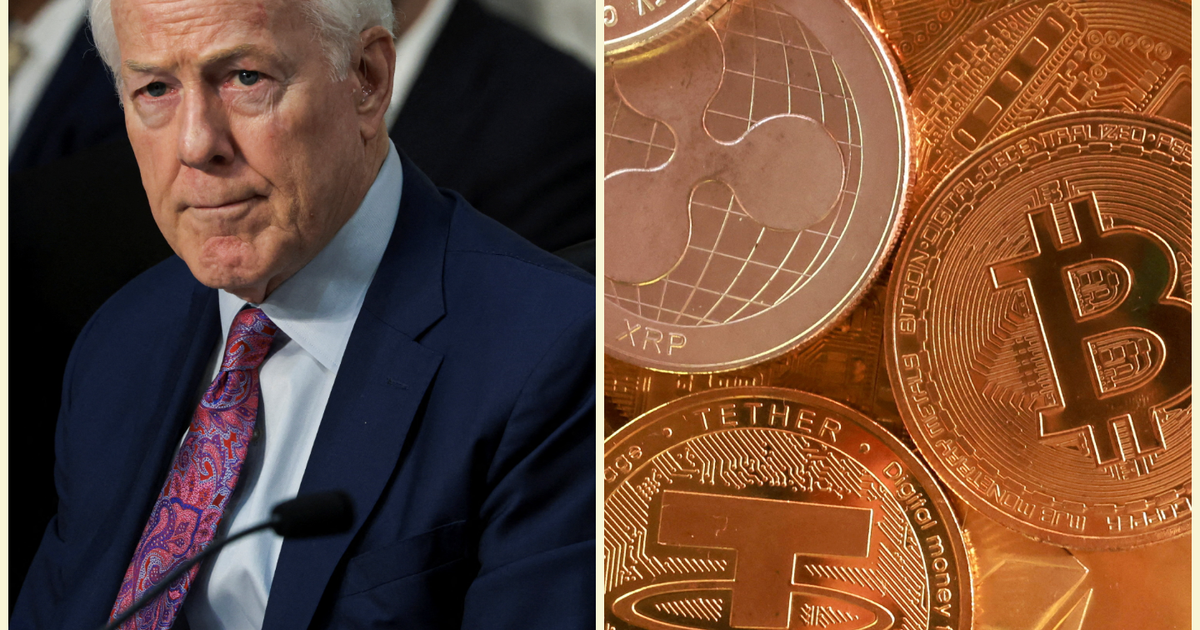
A failed Senate procedural vote on the Digital Asset Market Clarity Act on Tuesday may have saved crypto consumers from a questionable regulatory bill backed by industry insiders.
uncertain
vote → fail → insiders
The bill—a first-of-its-kind regulatory framework for the crypto industry—would have drawn clear jurisdictional lines between the Securities and Exchange Commission (SEC) and the Commodity Futures Trading Commission (CFTC) on regulating the offer and sale of digital commodities.
asserted
bill → draw → commodities
Instead of the SEC regulating crypto through individual enforcement—which it currently does—the bill would give Americans holding digital assets a pathway to legal certainty by establishing disclosure requirements, preserving both agencies' anti-fraud authorities and creating risk-management, cybersecurity, and compliance standards for decentralized finance.
Still, the bill also gives federal agencies far too much discretion, authorizing them to set new regulations and exemptions and coordinate with international regulators if it is "in the public interest or for the protection of investors," an invitation for career bureaucrats to decide what's best for Americans.
asserted
what → regulate → Americans
After a year of bipartisan negotiations, The Wall Street Journal reports the bill failed to pass a procedural vote—which would have allowed it to be fully voted on by the Senate—because Democrats weren't sold on the bill's ethics provisions as strong enough to prevent President Donald Trump "from continuing to profit off digital assets."
asserted
Democrats → report → assets
It's a statement that seems to ring true, considering an ABC News report that Trump's June financial disclosure reports showed crypto earnings of more than $1.4 billion.
asserted
reports → seem → billion
This includes more than $591 million from World Liberty Financial (WLF), $636 million from his meme coin business CIC Digital, and more than $196 million from the equity sale of a holding company linked to WLF.
asserted
This → include → WLF
Last year, the president announced that he would hold an "intimate private dinner" for the top 220 holders of his $TRUMP meme coin.
asserted
he → announce → coin
In the days after the announcement, the coin's value surged by 50 percent.
asserted
value → surge → percent
The bill would bar the president, vice president, members of Congress, senior federal officials, and their spouses from profiting from crypto tokens, promoting tokens, or owning a meaningful stake ($15,000 or more) in a crypto venture such as WLF.
asserted
bill → bar → WLF
Anyone who currently owns a stake would have to sell it or place it in a blind trust—or face fines of at least $500,000 and the potential loss of any profits.
asserted
who → own → profits
These provisions are a step in the right direction, but they're largely milquetoast and do little to address the air of corruption surrounding the president's crypto dealings.
asserted
they → do → dealings
With a blind trust, the president could still profit from WLF, and any new tokens the company launches would be grandfathered in under the bill.
uncertain
company → profit → bill
The ethics provisions also fail to account for children and other relatives.
asserted
provisions → fail → children
That would seemingly insulate WLF, which was launched by Trump's sons and the sons of U.S. peace envoy Steve Witkoff.
asserted
which → insulate → Witkoff
The bill tasks the Department of Justice (DOJ) with enforcing penalties against violators.
asserted
bill → task → violators
Given what we've seen from the department under Trump, it's fair to wonder whether the attorney general would remain impartial.
asserted
general → give → Trump
The bill's enforcement mechanism gives state attorneys general the power to sue the Justice Department for any harm to a state or its residents.
asserted
mechanism → give → state
However, it does not allow them to sue federal officials.
asserted
them → allow → officials
State AGs are also empowered to hold trading platforms that run afoul of state laws accountable.
asserted
that → empower → laws
Despite the disagreements, the bill is still on the Senate calendar and could resurface.
uncertain
bill → resurface → calendar
On Tuesday, Sen. Thom Tillis (R–N.C.) said this is "not the end" for the bill.
asserted
this → say → bill
It might be wishful thinking from Tillis; Forbes reports that it's "unlikely Senate Majority Leader John Thune will allocate calendar time without certainty that they have enough Republican and Democratic commitments.
uncertain
they → report → commitments
Lawmakers' back-and-forth hasn't stopped the push to regulate the crypto industry.
asserted
back → stop → industry
On Thursday, in the absence of congressional leadership, the SEC issued an order—part of the agency's Project Crypto initiative to make America the center of the crypto industry—allowing certain trading platforms to issue digital tokens that represent publicly traded U.S. stocks.
asserted
that → issue → stocks
The order grants a five-year Innovation Exemption to platforms that facilitate tokenized stock trading and further integrates digital assets with traditional markets like Nasdaq and the New York Stock Exchange.
asserted
that → grant → Nasdaq
In a statement on X, CFTC Chairman Mike Selig called the failed vote on the bill "unfortunate," adding that the CFTC is "locked in and ready to ship its rules for the new frontier of finance."
asserted
CFTC → call → finance
 The Aporia