That is 0 articles you have read today.
The Aporia is free and carries no advertising, so readers are the only
thing paying for it. If you are getting this much out of it, a small
donation is what keeps it independent.
Daily limit reached
You have read 0 articles today.
That is more than the 15 a day The Aporia gives away,
and well past what it can carry on nothing. Your allowance resets at
midnight.
There is no advertising here and nothing about you is sold, so readers
are the only thing paying for it. If the site is worth this much of
your day, it is worth a few dollars.
Everything else stays open: the
maps, the
directory and
search do
not count against this, and neither does re-opening something you have
already read today.
The New York Times is criticized for a series of reporting errors that consistently favor an anti-Israel perspective during coverage of Israel and Gaza conflicts. An example given includes a sentence implying Israelis question their status as victims after the October 7 attacks, which saw Palestinian terrorists kill over 1,200 civilians. The article argues these mistakes are part of a broader pattern where the Times has inaccurately reported on issues such as hospital bombings by Israel and unsupported claims about prisoner abuse, all while overlooking context that would support Israel's position.
Written locally by qwen2.5:14b on 2026-09-17,
using this article's own text rather than the other coverage of the
same event (that is the story summary below).
Story summary
The Washington Examiner reported on The New York Times making multiple "errors" in its coverage of the Israeli-Palestinian conflict, particularly concerning the October 7, 2023 attack by Palestinian militants that resulted in the deaths of over 1,200 civilians, including women, children, and the elderly. Correspondent Isabel Kershner's article incorrectly suggested that Israelis viewed themselves as victims of their own military response rather than the initial terrorist attacks. The newspaper issued a correction to clarify this misunderstanding but was criticized for not addressing the underlying issue of bias in its reporting.
Written for “Anti Jewish Media Bias” on 2026-09-18,
grounded in this article and the 0 other(s) covering the same event.
Why this leaning score
The article's own words the score was based on. Each is quoted
verbatim and was checked against the article text before being
stored, so you can find it in the original.
-
The New York Times can’t stop making “errors” in its coverage of Israel and Gaza, and all of those errors just so happen to go in the same antisemitic direction.
right accuses the NYT of biased reporting against Israel
-
The New York Times has a litany of “errors” on this topic, and they all just so happen to cut against Israel.
right claims consistent bias in favor of Palestinians over Israelis
-
The outlet famously parroted Hamas propaganda when it “reported” that Israel bombed a hospital in Gaza and killed 500 civilians.
right criticizes the NYT for alleged pro-Palestinian bias
-
The New York Times also ran a story about child starvation in Gaza using a photo of an emaciated boy to incite another round of condemnations of Israel.
right accuses the NYT of using imagery to unfairly criticize Israel
-
The New York Times has, since Oct. 7, propagandized on behalf of Palestinian terrorists and tried to dismiss or downplay the legitimacy of Israel’s military response.
right asserts that the NYT supports Palestinians over Israelis
Leaning score +0.85 for article 16699 (high confidence, 5 verified quotes) · logged 2026-09-17
The New York Times can’t stop making “errors” in its coverage of Israel and Gaza, and all of those errors just so happen to go in the same antisemitic direction.
asserted
all → stop → direction
In an ostensible news piece published earlier this week about a pro-Palestinian “documentary,” correspondent Isabel Kershner included the following line: “But Israelis still largely view themselves as the victims of Oct. 7.”
asserted
Israelis → publish → Oct.
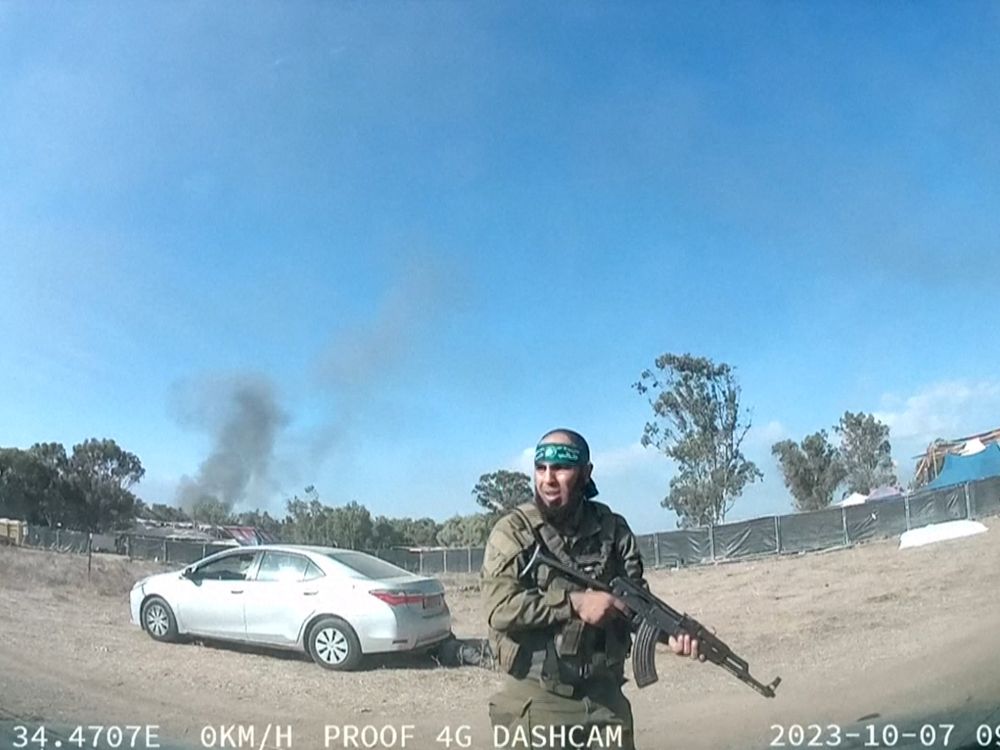
It is an absurd, outrageous sentence to send to print, given that Israelis were the victims of Oct. 7, when Palestinian terrorists invaded the country, slaughtered 1,200 civilians (including women, children, and the elderly), and took hundreds of hostages.
asserted
terrorists → send → hostages
This sentence would be the equivalent of “New Yorkers still largely view themselves as the victims of 9/11.”
asserted
Yorkers → view → 9/11
The New York Times went into damage control, issuing the following editor’s note: “Because of an editing error, an earlier version of this article included a statement that was intended to convey Israelis’ perception of the government’s military response to the Oct. 7 terror attack in relation to the attacks, but inadvertently suggested that Israelis’ experience as terror victims was a matter of perception.
uncertain
experience → go → perception
It has been removed from the article.”
asserted
It → remove → article
The New York Times, which presents itself as a gold standard of journalistic and editorial integrity, wants you to believe this “error” just so happened to slip through the cracks.
asserted
error → present → cracks
However, the New York Times has a litany of “errors” on this topic, and they all just so happen to cut against Israel.
asserted
they → have → Israel
The outlet famously parroted Hamas propaganda when it “reported” that Israel bombed a hospital in Gaza and killed 500 civilians.
asserted
Israel → parrot → civilians
In reality, a missile had hit a parking lot near a hospital, a few dozen people were killed, and the missile had been launched by Palestinian terrorists.
asserted
missile → hit → terrorists
The New York Times also ran a story about child starvation in Gaza using a photo of an emaciated boy to incite another round of condemnations of Israel.
asserted
Times → run → Israel
Unmentioned was that the boy had cerebral palsy, and that the outlet couldn’t actually find a single photo of a child in Gaza who was wasting away because of mass starvation.
asserted
who → have → starvation
The New York Times also published the deranged conspiratorial rantings of Nicholas Kristof, who asserted, with no evidence and in defiance of basic biology, that Israel was using dogs to rape Palestinian prisoners.
asserted
Israel → publish → prisoners
The New York Times has, since Oct. 7, propagandized on behalf of Palestinian terrorists and tried to dismiss or downplay the legitimacy of Israel’s military response.
asserted
Times → propagandize → response
The outlet publishing constant anti-Israel disinformation and spreading dog rape conspiracy theories doesn’t get the benefit of the doubt in cases like this, especially when every “error” only happens to go in one antisemitic direction.
asserted
error → publish → direction
 The Aporia