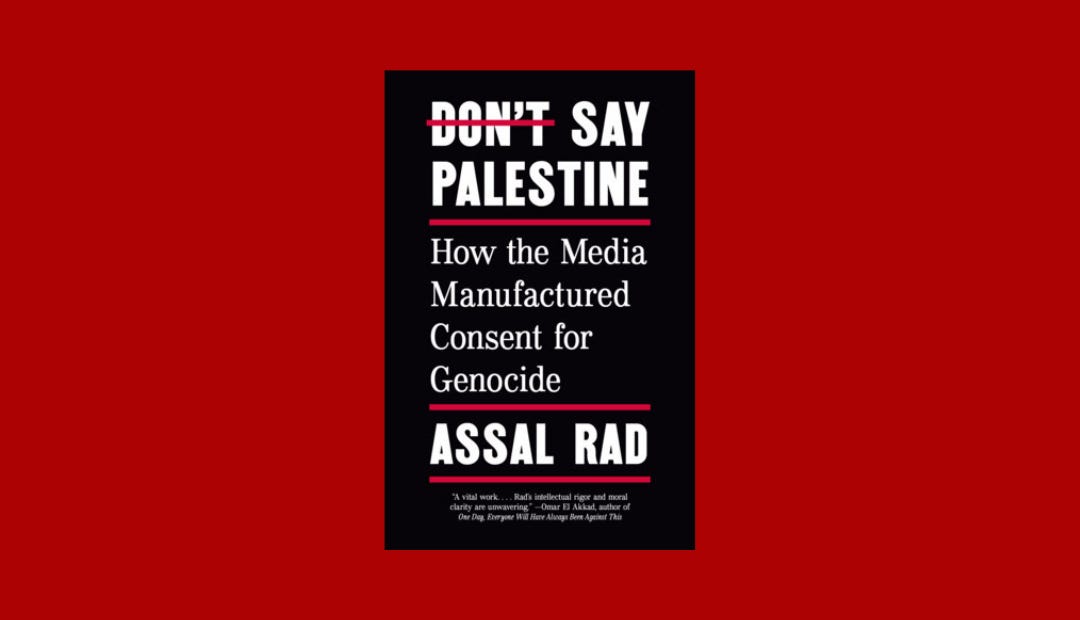
In May 2021, I was reading the news on my phone when a headline stopped me, not because it shocked me, but because it carried the familiar tone that Western media outlets have perfected in constructing their narrative of Palestine.
uncertain
outlets → read → Palestine
The article was about Palestinians being forced out of their homes in East Jerusalem.
asserted
Palestinians → force → Jerusalem
I remember pausing, then rereading the headline and subhead to take in the careful linguistic choices and the essential information that was missing.
asserted
that → remember → choices
As a historian of the region, I was not surprised to see the way the media reflected the official account of their country’s foreign policy positions.
asserted
media → see → positions
The headline used the word “evictions,” which suggested paperwork, municipal procedure, and real estate disputes.
uncertain
which → use → paperwork
It did not say that East Jerusalem is recognized under international law as occupied Palestinian territory and that these expulsions were just another episode in a long history of forced displacement and land theft.
asserted
expulsions → say → displacement
This history was not denied outright, but it was laundered to erase Israeli violence and Palestinian victimhood.
asserted
it → deny → violence
The language was softened enough to dull its meaning, referring to “contested neighborhoods” instead of “occupation,” saying “to remove” rather than “to ethnically cleanse.”
asserted
language → soften → occupation
I found myself mentally rewriting it, inserting the missing context, restoring the agency and violation that had been carefully edited out.
asserted
that → find → agency
What would happen, I wondered, if the headline actually said what was happening?
asserted
what → happen → ?
If it distinguished the occupier and the occupied?
asserted
it → distinguish → occupier
So, I decided to make those changes.
asserted
I → decide → changes
I took a screenshot, crossed out the problematic language, made my edits in red, and posted it.
asserted
I → take → it
I did not expect a strong reaction.
asserted
I → expect → reaction
But as the post gained traction and the image spread, I realized it could do more than correct headlines.
uncertain
it → gain → headlines
It offered a way to expose how reality itself had been slanted to fit our political ecosystem.
asserted
reality → offer → ecosystem
This work only became more pertinent as the genocide in Gaza unfolded starting in October 2023.
asserted
genocide → become → October
Previous studies have examined how so-called papers of record like the New York Times have long distorted stories about the Palestinian struggle to serve the policy objectives of the U.S. and Israeli governments.
asserted
papers → examine → governments
However, because the Gaza Genocide was live-streamed to our devices, the gap between reality and its media representation became undeniable.
asserted
gap → stream → reality
The same euphemisms and omissions I had once corrected with some public engagement were now visible to anyone comparing what they were watching in real time with what they were reading in the news.
asserted
they → correct → news
The scale of Israel’s violence in Gaza laid bare the hypocrisies of the Western world and the anti-Palestinian bias that drives public discourse in a manner that was undeniable.
asserted
that → lay → manner
For years, mainstream media have helped to normalize Israeli occupation and cruelty against Palestinians, with carefully chosen language to construct a narrative that suited Israeli talking points and the Western governments that repeated them.
asserted
that → help → them
By adopting frameworks that obscure Israel’s decades-long military occupation, its blockade of Gaza, and its apartheid policies, Western media normalized war crimes and helped maintain the illusion of Israel’s perpetual victimhood.
asserted
media → adopt → victimhood
Worse still, they used euphemistic language and misleading narratives to dilute public understanding of international law and immunize Israel from accountability in order to justify the worst crime against humanity: genocide.
asserted
they → use → humanity
I spent more than two years tracking, documenting, and analyzing Western media’s coverage of the genocide in Gaza.
asserted
I → spend → Gaza
My goal was not to nitpick headlines or play semantic games.
asserted
goal → nitpick → games
It is to show how language is used as a weapon to obscure and sanitize.
asserted
language → show → weapon
When indiscriminate bombing is called “targeted strikes,” a policy of starvation is described as a “humanitarian challenge,” and genocide is reframed as “self-defense,” these linguistic choices are not accidental.
asserted
choices → call → defense
They are political decisions that determine whose lives count and whose deaths are permissible.
asserted
deaths → determine → ?
Headlines matter because people often do not read beyond them.
asserted
people → matter → them
People regularly consume headlines, social media posts, push notifications, and news sound bites passively while scrolling on their phones or seeing a news ticker in the background of their daily lives.
asserted
People → consume → lives
This everyday intake then becomes the language entrenched in the public mind.
asserted
intake → become → mind
Most people do not follow specific events closely or have expertise, and articles are often behind a paywall.
asserted
articles → follow → paywall
Thus, what is passively consumed from the news media, combined with popular culture and political discourse, is crucial in influencing public opinion.
asserted
consumed → consume → opinion
The words chosen in those headlines – especially in outlets seen as objective or authoritative – affect how the public understands global events.
asserted
public → choose → events
That polling among Americans often shows a gap between the reality on the ground and their knowledge of the facts speaks to the way information is presented to them.
asserted
information → show → them
If the truth were plainly stated – that a U.S.-backed ally is carrying out mass atrocities against a besieged civilian population – it might provoke outrage, demands for accountability, and a crisis of legitimacy for U.S. foreign policy.
uncertain
it → state → policy
But if the story is blurred – if Israel is abstracted, Palestinians are dehumanized, and a war crime like starvation is rendered as an unfortunate emergency of “malnutrition” – then the machinery of consent can continue to function.
asserted
machinery → blur → consent
Of course, not all coverage was bad, and this is not a case against individual journalists, many of whom did excellent and essential reporting.
asserted
many → do → reporting
Instead, the central point of my book, Don’t Say Palestine, is to look at the overall narrative construction and an institutional media ecosystem that whitewashed Israel’s genocide against Palestinians.
asserted
that → say → Palestinians
…and 44 more, not listed.