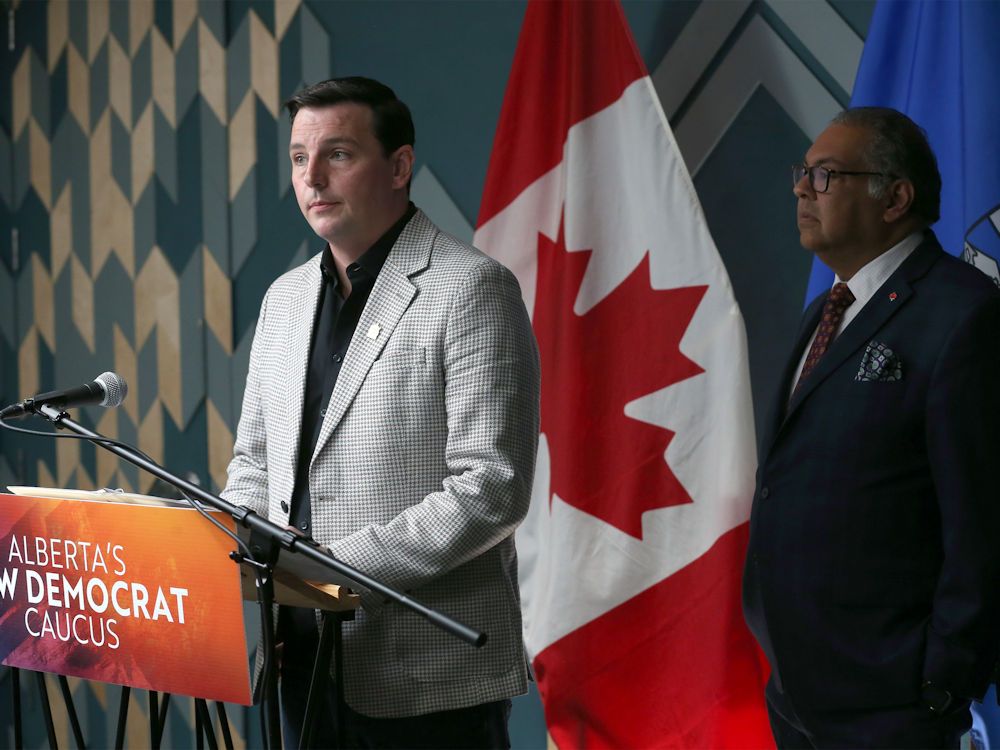
Ever since its creation in 1986, the suburban riding of Calgary-Shaw has voted for conservatives.
asserted
riding → vote → conservatives
In the year of the provincial riding’s creation, the conservative candidate won by 61.5 per cent.
asserted
candidate → win → cent
Nearly 40 years later, in the last general election, the conservative candidate won by a comparable 56.3 per cent.
asserted
candidate → win → cent
Even the teenagers in Calgary-Shaw vote conservative.
asserted
teenagers → vote → Shaw
On occasions when the riding’s two high schools have participated in straw polls during provincial elections, the results have always been blowout Progressive Conservative victories.
asserted
results → participate → elections
Until this week, the only time Calgary-Shaw hasn’t gone for a conservative was due to a wild anomaly in 2015.
asserted
Shaw → go → 2015
That election, 30.7 per cent of the riding voted for the Progressive Conservatives and 30.4 per cent voted for the Wildrose Party, thus allowing NDP candidate Graham Sucha to slip into power with a vote share of just 31.27 per cent (he’d lose the riding by 40 points after just one term).
But with the Alberta NDP on Monday clinching a decisive byelection victory that nobody saw coming, it may represent the first material sign of a conservative bloc that is being fractured by the question of Alberta independence.
“The NDP has won Calgary Shaw, one of the most conservative big city ridings in this country.
uncertain
NDP → vote → country
Early results show that NDP candidate Kyle Campbell won the riding by 46 per cent, the party’s best result in Calgary-Shaw.
asserted
Campbell → show → Shaw
NDP Leader Naheed Nenshi called it a “political earthquake,” and described Campbell’s headquarters as being filled with incredulous cries of “oh my God we won!”
asserted
we → call → oh
In the 2023 Alberta general election, the UCP won Calgary-Shaw with a comfortable 56.3 per cent of the vote.
asserted
UCP → win → vote
This time around, just 43 per cent of Calgary-Shaw voters showed up for the UCP candidate.
asserted
cent → show → candidate
According to former Alberta premier Jason Kenney, UCP voters were being turned off by the Alberta independence cause.
uncertain
voters → accord → cause
“Folks planning to vote ‘to send a message’ by starting the separation process: please take note of the NDP’s win tonight in the most conservative part of urban Canada,” Kenney wrote in a social media post reacting to Monday’s upset.
asserted
Kenney → plan → upset
On Oct. 19, Albertans are set to vote in a preliminary referendum on the issue of Alberta independence.
asserted
Albertans → set → independence
“Should Alberta remain a province of Canada, or should the Government of Alberta commence the legal process required under the Canadian Constitution to hold a binding provincial referendum on whether or not Alberta should separate from Canada
asserted
Alberta → remain → Canada
?” reads the draft ballot question.
asserted
question → read → ?
Kenney has long been one of Alberta’s most vocal anti-independence voices, and he wrote on Tuesday that the separatist campaign was causing “patriotic conservative voters to support the Liberals and NDP.”
asserted
voters → write → Liberals
“A vote to separate is a vote to help the NDP win the next provincial election,” he said.
asserted
he → separate → election
But he blamed the result on Premier Smith’s strategy of approving the Oct. 19 referendum while actively campaigning for a federalist victory.
asserted
he → blame → victory
The result being, he said, that a not-insignificant cohort of pro-independence UCP supporters are now souring on the party.
asserted
cohort → say → party
But he also cautioned fellow separatists against the notion that Smith should endorse independence outright.
asserted
Smith → caution → independence
“This byelection showed that would be political suicide,” he said.
asserted
he → show → ?
“There isn’t enough bloody support for a party to do that yet.”
asserted
party → be → that
Although Smith’s office didn’t directly credit the independence issue for the Calgary-Shaw loss, a spokesperson did make reference to a “split” in conservative sentiments.
asserted
spokesperson → credit → sentiments
“A split of the conservative vote along with a low overall turnout were the primary reason for the byelection result,” Sam Blackett, a spokesperson for the premier, said in a statement.
asserted
Blackett → say → statement
Although the Alberta independence cause has enjoyed a notable renaissance since Prime Minister Mark Carney won the 2025 federal election, polls have consistently shown that outright independence remains broadly unpopular among voters.
asserted
independence → enjoy → voters
An Abacus Data poll published this week found that 64 per cent of Alberta voters intended to vote against the “proceed” option in the Oct. 19 referendum.
asserted
cent → publish → referendum
And even among those who plan to endorse a second vote on independence, just two-thirds said they were committed to voting yes.
asserted
they → plan → independence
“That puts the separatist vote at 18 per cent of Albertans,” read an accompanying analysis.
asserted
analysis → put → Albertans
But the separatist/federalist split is almost entirely reserved to Albertans who vote conservative.
asserted
who → reserve → Albertans
Last month, an Angus Reid Institute poll found just 33 per cent of Albertans endorsing a “binding” referendum on separation, with 61 per cent favouring the “Alberta should remain a province of Canada” option.
asserted
Alberta → find → option
One of the most telling indicators from the Calgary-Shaw results is the 978 voters who marked a ballot for the “Progressive Tories,” an upstart political party that has framed itself as an explicitly anti-independence conservative option.
asserted
that → mark → option
Had all those 978 voted UCP instead, it would have been enough to deny the NDP the riding.
asserted
it → vote → riding
IN OTHER NEWS
Canadian federal politics has been dominated this week by a “will they/won’t they” drama playing out between Ottawa and the European Union.
asserted
they → dominate → Ottawa
Bloomberg News and the Wall Street Journal reported over the weekend that Prime Minister Mark Carney was seeking to make Canada an “associate member” of the EU.
asserted
Canada → report → EU
This caused Carney to publicly deny the report, saying he’s actually seeking a “unique alliance” with the European body, rather than associate membership.
asserted
he → cause → body
Then, on Wednesday morning, EU President Ursula von der Leyen publicly invited Canada to be an “associate member.”
asserted
Leyen → invite → Canada
Only for this to garner backlash from EU member states, who complained it’s not von der Leyen’s call to decide which non-EU countries are allowed special attention.
asserted
countries → garner → attention
“First and foremost the member states should be the ones to express what kind of relationship the EU wants to have with any third country,” one Eurocrat told the Daily Mail.
asserted
Eurocrat → express → Mail
Conversely, the same argument could be made for Carney; his courtship of the EU being one of several international entanglements he is seeking without any kind of Parliamentary approval.
uncertain
he → make → approval
…and 6 more, not listed.
 The Aporia