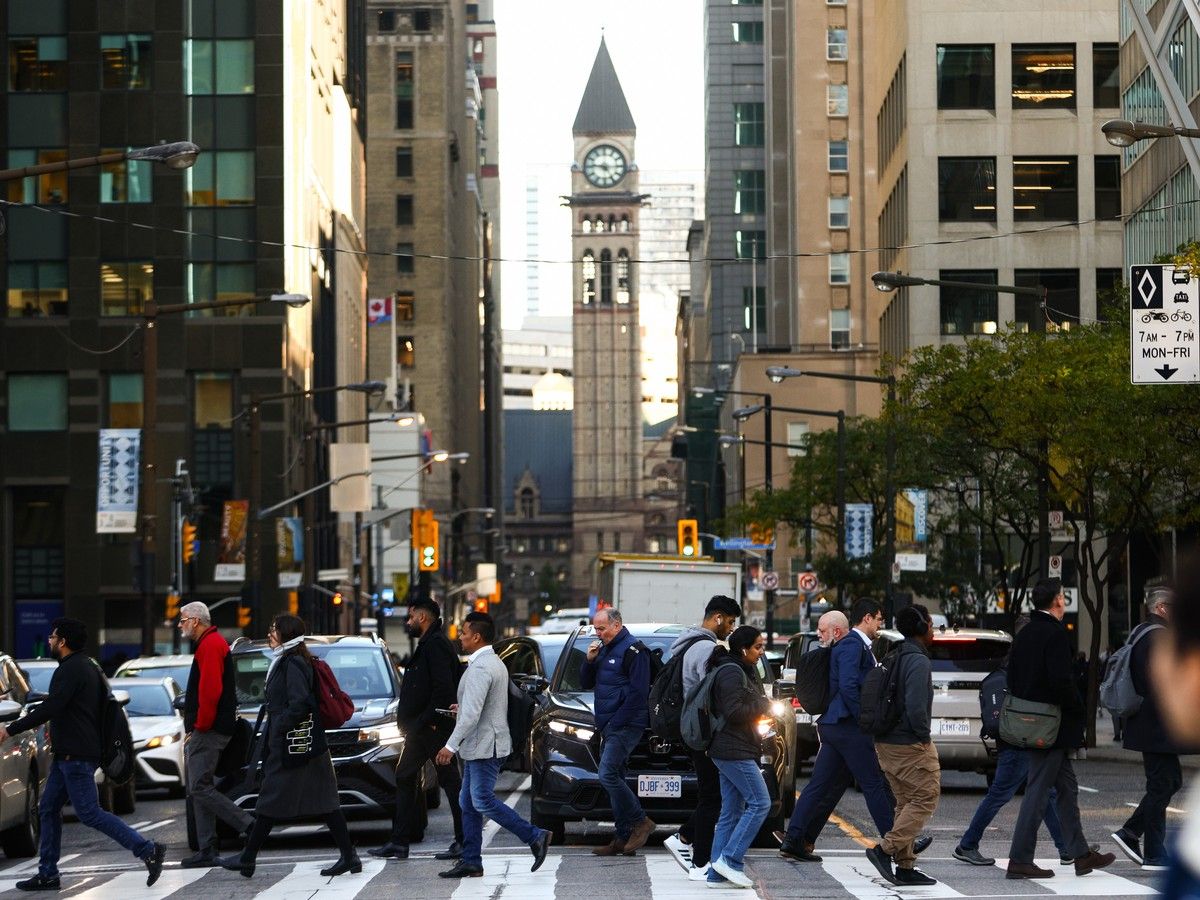
The number of foreign students entering the country is down 71 per cent.
asserted
number → enter → country
“We are restoring balance to the system and reducing immigration levels to stabilize population growth and take pressure off essential services and infrastructure,” declares an accompanying webpage.
asserted
webpage → restore → services
The only problem is, the cited reductions are all pegged against the single most anomalous immigration surge in Canadian history.
asserted
reductions → cite → history
In the immediate post-COVID era, every Canadian immigration stream was blown to all-time highs.
asserted
stream → blow → highs
In just the two years between 2022 and 2024, the population soared by an estimated 2.2 million.
asserted
population → soar → million
It was the equivalent of adding 90,000 new people per month for 24 consecutive months.
asserted
It → add → months
So when Prime Minister Mark Carney and his immigration department claim that immigration has been brought “under control,” they’re often weighing the government’s performance against some of the most out-of-control immigration numbers ever charted in Canada.
uncertain
they → claim → Canada
When viewed more holistically, Canada’s immigration numbers remain at all-time highs almost everywhere.
asserted
numbers → view → highs
The number of foreign workers has never been higher
On a federal government website entitled Key Numbers on Immigration, IRCC notes that the raw number of foreign workers entering the country is trending downwards.
asserted
number → entitle → country
As recently as March 2024, 64,000 non-resident migrants entered the country on work permits in a single month.
asserted
migrants → enter → month
This is “a clear sign that the measures we’ve put in place are working,” it states.
asserted
it → put → place
However, many of the foreign workers who entered Canada during the post-COVID surge are still here, and even a reduced number of new arrivals is simply adding to a population of non-resident workers that has never been higher.
asserted
that → enter → workers
As of August 2026, IRCC data show that there are 1,550,215 people in the country “who only hold a work permit.”
asserted
who → show → permit
At the close of 2024, the “work permit only” population stood at 1,465,185.
asserted
population → stand → 1,465,185
This is part of the reason why, despite Ottawa’s efforts to reduce temporary migration, the number of “non-permanent residents” in Canada is still incredibly high.
asserted
number → reduce → Canada
In 2021, Statistics Canada recorded a “non-permanent resident” population of 1,326,000.
asserted
Canada → record → 1,326,000
As of July, even after more than a year of Carney government efforts to rein in immigration, the number of “non-permanent residents” in the country stood at about 2.8 million.
asserted
number → rein → million
Intake of permanent immigrants is still at 100-year highs
Canada is slated to accept 380,000 permanent residents in 2026, about 1,000 per day.
asserted
Canada → slat → day
But even this reduced number will end up charting as one of the highest annual intakes of permanent residents over the last century.
asserted
number → end → century
For context, the nine years of the government of Stephen Harper featured the highest levels of immigration since the First World War.
asserted
years → feature → War
In 2014, the last full year of Harper’s premiership, Statistics Canada noted that the immigration intake was at “one of the highest levels in more than 100 years.”
asserted
intake → note → years
The “reduced” figure of 380,000 is more than 70 per cent higher.
asserted
figure → reduce → 380,000
Student permits remain nearly double their pre-2015 level
In 2024, the number of foreign students in Canada topped out at more than one million.
asserted
number → remain → million
The all-time peak, charted in June 2024, was 1,032,950.
asserted
peak → chart → June
This means that, for a few months, Canada had as many international students as it had Nova Scotians.
asserted
it → mean → Scotians
Bringing this number down has indeed been one of the most conspicuous successes of the Liberals’ “sustainable” immigration plan.
asserted
Bringing → bring → plan
As of the most recent figures from August 2026, the number of international permit-holders in the country has dropped to 602,115 — a drop of more than 400,000.
asserted
number → drop → 400,000
Not all of those 400,000 have left the country.
asserted
all → leave → country
Ottawa has been open about its plans to shrink the foreign student population by earmarking some for permanent residency.
asserted
Ottawa → shrink → residency
And, in some cases, foreign students facing the expiry of their visa have simply claimed to be refugees.
asserted
students → face → visa
But Canada is still bringing in foreign students at rates that would have been considered eye-watering in the pre-Liberal era.
asserted
that → bring → era
In 2015, the number of international students in Canada stood at 457,828 — about 25 per cent lower than the country’s current student population.
asserted
number → stand → population
As recently as 2010, it stood at 328,402 — nearly half of the current figures.
asserted
it → stand → figures
The asylum seeker backlog has never been worse
Here again, IRCC is claiming success in bringing down the raw number of asylum claimants entering the country each month.
asserted
IRCC → claim → country
Throughout 2024, every month was yielding at least 10,000 foreign nationals claiming to be refugees.
asserted
month → yield → nationals
In October 2023 alone, the federal government charted 16,315 new asylum claimants — an average of one new asylum claimant every three minutes.
asserted
government → chart → claimant
“The number of asylum claims from people crossing between ports of entry has since dropped from an average of 165 claims a day in March 2023 to 13 claims a day,” reads an IRCC website.
uncertain
website → cross → claims
However, even if the intake is down, it’s still being added to a record-high mountain of pending claims.
uncertain
it → add → claims
At the close of 2021, Canada had about 160,000 asylum claimants in the country — which itself was a record high driven by several years of illegal border-crossers entering Canada from the United States.
asserted
which → have → States
As of July, it’s 530,000.
asserted
it → ’ → July
…and 14 more, not listed.
 The Aporia