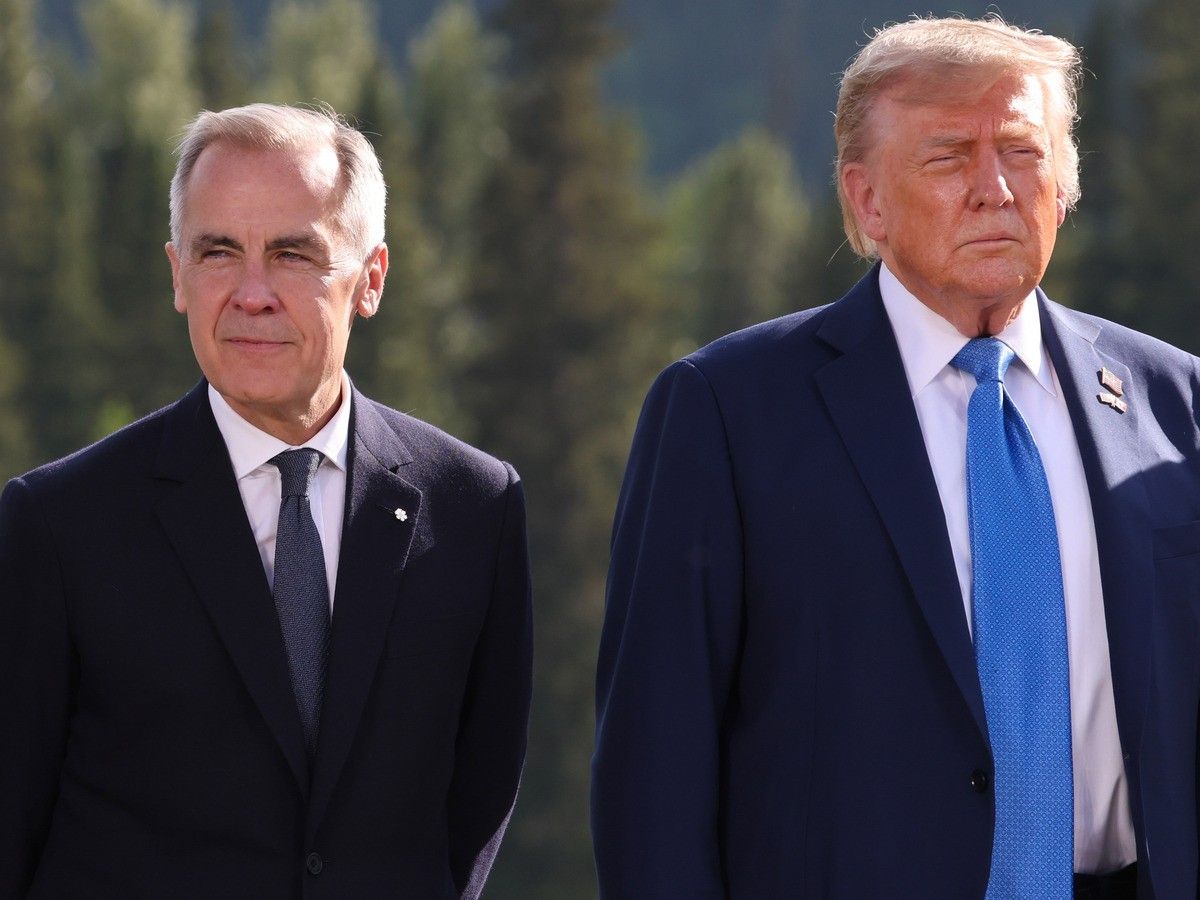
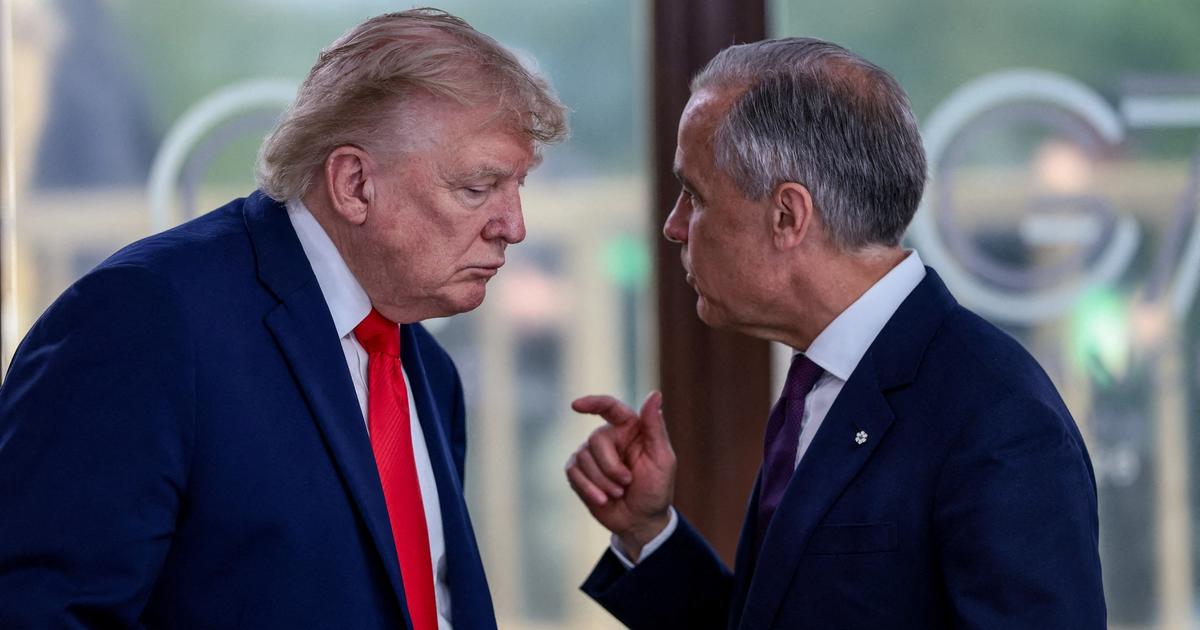
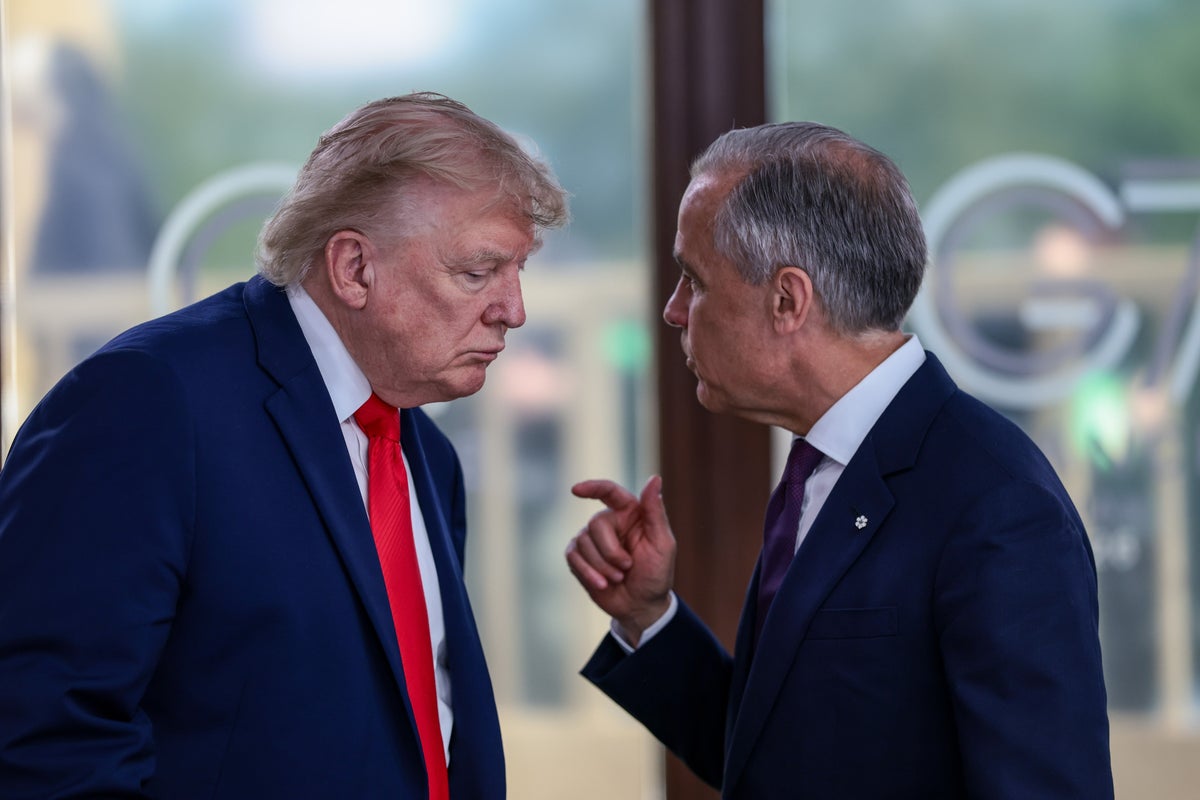
The basic premise of U.S. President Donald Trump’s trade war on Canada was simple: The massive U.S. economy could dictate favourable terms to a smaller and more dependent neighbour.
uncertain
economy → dictate → neighbour
Instead, the Canadian economy proved more resilient to U.S. tariffs than almost anyone expected.
asserted
anyone → prove → tariffs
The Canadian electorate went all-in on a strategy of retaliation.
asserted
electorate → go → retaliation
And now, with tariffs threatening several key Senate races in U.S. border states, it’s the Trump White House that is now backing down on some of its Canadian trade barriers.
asserted
that → threaten → barriers
Add it all together and, according to an analysis published Wednesday by the U.S.-based Council on Foreign Relations, Canada is where Trump’s “hardball” approach to trade has gone sideways the most.
uncertain
approach → add → trade
Trump’s White House confused “economic size with bargaining leverage,” it says.
asserted
it → confuse → leverage
As a result, the U.S. is now “mired in a losing trade war with its economically much smaller and militarily much weaker neighbor to the north.
asserted
U.S. → mire → north
The analysis cites the 1977 book Power and Interdependence, which devotes an entire chapter on how, despite its small size, Canada held a curiously large amount of leverage in its past dealings with Washington.
asserted
Canada → cite → Washington
The authors examined 50 years of international disputes between the two countries – ranging from liquor taxes to lumber duties to fishing rights – and were surprised to find that Canada usually came out on top.
asserted
Canada → examine → top
While the U.S. could obviously impose great pain on the Canadian economy, Canada’s enmeshment with the U.S. gave it a unique ability to do the same in return.
uncertain
enmeshment → impose → return
“And she (Canada) was often willing to do that because of asymmetrical salience: The relationship was more important to Canada than to the United States,” reads the book, written by the American political scientists Robert Keohane and Joseph Nye.
asserted
book → do → scientists
Power and Interdependence also pointed out that Canada has a political enmeshment with the U.S. unlike any other country.
asserted
Canada → point → country
It cited Canadian data from 1968 tracking 6,500 cross-border visits by government officials from both countries, the vast majority of whom were low-level federal and provincial bureaucrats, rather than diplomats.
asserted
majority → cite → whom
“The classical image of governments interacting through their foreign offices is clearly inappropriate in the Canadian-American case,” it read.
asserted
it → interact → case
Wednesday’s Council on Foreign Relations article noted that Canadian exports to the U.S. are also disproportionately comprised of raw materials that are critical to the U.S. economy, such as oil and potash.
asserted
that → note → oil
“Given such complex relationships, there are sharp limits to how far any U.S. administration can push Canada around,” it reads.
asserted
it → give → Canada
While Canada has been one of the most conspicuous targets of U.S. tariffs, it has been a general tactic of the Trump administration to threaten punitive tariffs against all its trade partners in exchange for new terms more favourable to the U.S.
And for the most part, such hardball trade tactics have generally worked.
asserted
tactics → threaten → part
An August paper out of the University of Calgary’s School of Public Policy noted that the Trump administration has signed 21 new trade deals since its 2025 inauguration, almost all of which offer asymmetric terms.
asserted
all → note → terms
Japan, for instance, offered US$550 billion in U.S. investment commitments in exchange for Washington dropping its threatened tariff rate from 25 per cent to 15 per cent.
asserted
Washington → offer → cent
Similarly, South Korea put up US$350 billion in promised investments and accepted a 15 per cent tariff rate on goods that had previously been duty free.
asserted
that → put → goods
“The U.S. won major concessions across many of its new agreements — including investment commitments, procurement obligations and strategic policy alignment — without making like concessions itself,” wrote the University of Calgary authors, adding “the burden of adjustment has fallen overwhelmingly on U.S. partners and not on the U.S.”
asserted
burden → win → U.S.
Canada is the only country other than the People’s Republic of China to have responded to a Trump trade war with counter-tariffs.
asserted
Canada → respond → tariffs
And in walking away from trade negotiations last August, Ottawa has broken with many of its peer countries in refusing to accept a package of higher U.S. tariffs in exchange for a return to normalized trade relations.
asserted
Ottawa → walk → relations
“Canada stands alone in resisting U.S. demands,” read the Council on Foreign Relations analysis.
asserted
analysis → stand → Relations
Instead, the first cracks seem to be emerging from the U.S. side.
asserted
cracks → seem → side
Just this week, Maine Senator Susan Collins claimed credit for a sudden round of White House tariff exemptions on Canadian imports that were having an outsized effect on the state’s fruit and potato growers.
asserted
that → claim → growers
(Washington replaced them by introducing tariffs on other Canadian exports with less effect on Maine.)
asserted
Washington → replace → Maine
The tariffs have proved to be a singular factor threatening Collins’ re-election in the Nov. 3 midterms, and in a statement she pledged to “continue working directly with Administration officials to seek additional relief from tariffs and encourage a broader trade agreement with Canada, our neighbor, ally, and largest trading partner.”
asserted
she → prove → Canada
It’s been a similar story in the tariff-afflicted border state of Michigan, where Republican Senate candidate Mike Roger came out hard against the trade war in his campaign’s final stretch.
asserted
Roger → afflict → stretch
“Here in Michigan we know that Canada is not our enemy.
asserted
Canada → know → Michigan
We need to end this tariff war now,” he said in a campaign ad.
asserted
he → need → ad
And even Trump has admitted that his tariffs on Canadian aluminum have mostly just raised prices on a critical import with no ready alternatives.
asserted
tariffs → admit → alternatives
“This country desperately needs aluminum,” Trump said during an August telephone rally for Mike Mazzei, a Republican candidate for governor in Oklahoma.
asserted
Trump → need → Oklahoma
“We don’t have it.
asserted
We → have → it
We get it all from Canada for the most part, and we need it badly.”
asserted
we → get → it
Perhaps most notably, just last week White House economic adviser Kevin Hassett volunteered in an interview that the U.S. is “very close” to a deal with Canada and that the White House “has been talking to … Canadian counterparts all week.”
asserted
House → volunteer → counterparts
At a Michigan rally, Trump similarly promised “we’ll have that settled pretty soon” on the question of a Canadian trade agreement.
asserted
that → promise → agreement
To which Prime Minister Mark Carney replied this week that Canada is not “at that position right now.”
asserted
Canada → reply → position
IN OTHER NEWS
It was only after the B.C. election had concluded that observers noted the extremely convenient timing of an Oct. 24 election day: It fell just hours after several departing members of the NDP caucus became eligible for a legislative pension.
asserted
members → conclude → pension
Once it does, it’s one of the most gold-plated pensions in the country.
asserted
it → ’ → country
…and 14 more, not listed.
 The Aporia