This article is an analysis of Sweden's recent parliamentary election where the far-right anti-immigrant Sweden Democrats experienced a significant decline in support. After their record win with one-fifth of the vote in 2022, they lost about 3 percentage points this year, which was crucial for the centre-left opposition to narrowly win by around 42,500 votes and two seats. The analysis suggests that tougher policies from the Sweden Democrats, such as a proposed ban on Islamic headscarves, may have mobilized voters against them, particularly in multicultural urban areas where turnout increased significantly compared to previous elections.
Written by the local model on 2026-09-17,
using this article's own text rather than the other coverage of the
same event.
ANALYSIS-The night Sweden's far-right stopped winning
asserted
right → stop → ?
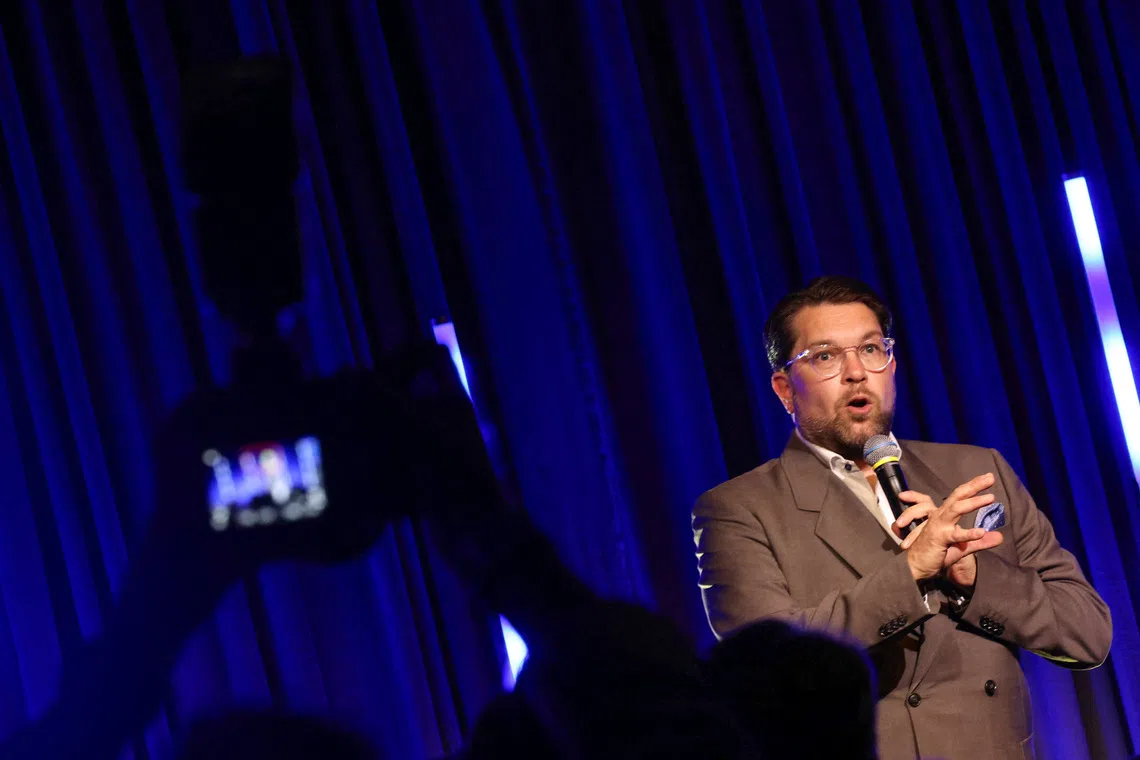
When the far-right anti-immigrant Sweden Democrats won a record one-fifth of the vote in a 2022 election, Viking rock player and party leader Jimmie Akesson led supporters in an impromptu celebratory conga.
asserted
Akesson → win → conga
Instead, party veterans at their hotel HQ near Stockholm's city centre sombrely absorbed something they had never seen before: a decline in support at a parliamentary vote.
asserted
they → absorb → vote
"We knew there was always a chance that we would be punished after these four years of (government) cooperation, but I didn't think the drop would be this big
asserted
drop → know → cooperation
," party veteran Richard Jomshof, 57, who has just written a book on Islam called "Kafir" or infidel in Arabic, told Reuters as a DJ pumped music in vain.
asserted
DJ → write → vain
The usually buoyant Akesson departed quietly after a six-minute speech to supporters without talking to reporters, having seen his party shed about 3 percentage points, more than any other party.
asserted
party → depart → party
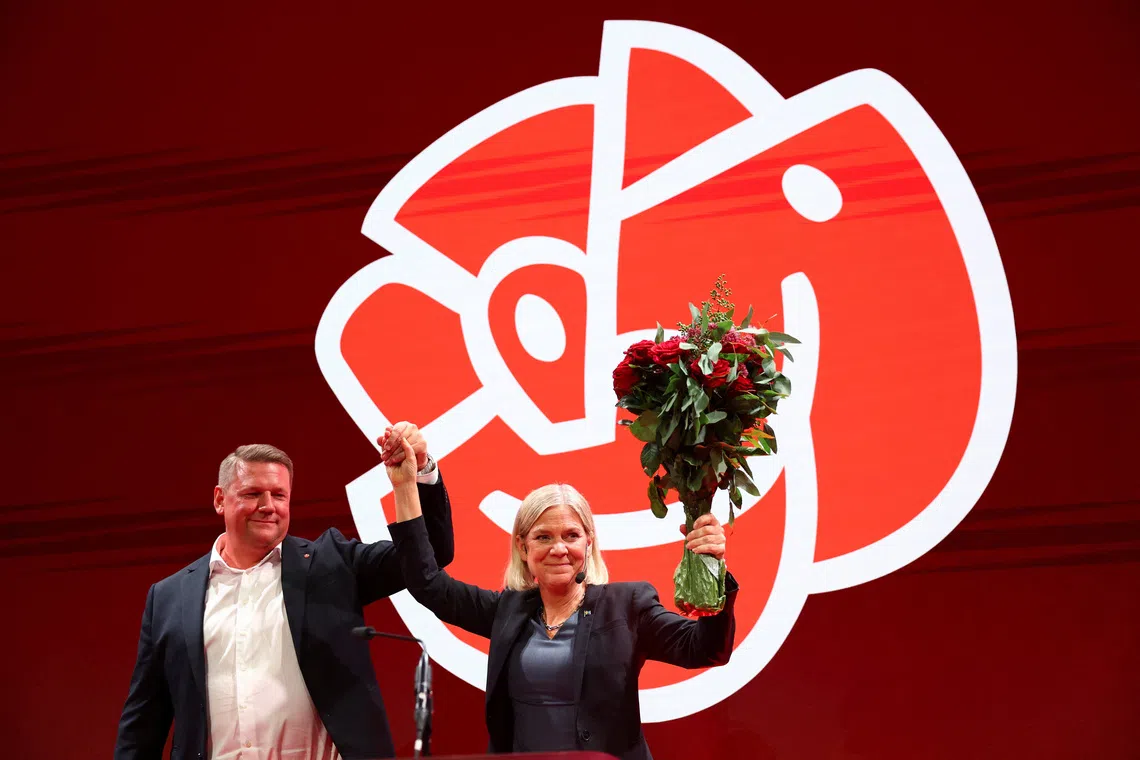
The SD's vote fall was the decisive factor in giving the centre-left opposition a projected tight victory – by about 42,500 votes and two seats - over the right-wing governing bloc of Prime Minister Ulf Kristersson.
asserted
fall → give → Kristersson
Akesson, 47, joined the party in 1995 and spent two decades leading the SD from irrelevance and occasional notoriety into the mainstream, after it had received a mere 0.25% of votes in a parliamentary election the year before.
But in the latest vote in the Nordic nation of nearly 11 million people, their toughest policies appear to have cost them, especially in increasingly multicultural cities where turnout rose and the centre-left advanced.
asserted
left → join → cities
SD leaders acknowledged policies such as a proposed ban on Islamic headscarves may have driven opponents to the polls.
uncertain
policies → acknowledge → polls
That leaves Sweden swimming against a European tide of right-wing gains even after the SD had successfully pulled Swedish politics sharply to the right on migration.
asserted
SD → leave → migration
A breakdown by AI analysis firm Vera Policy for Reuters showed that in the 786 districts where at least 50% of inhabitants were either born abroad or their parents were both born abroad, the centre-left picked up 73,000 more votes than in the previous election - a sizable swing in such a tight race.
"This election has in part been about voter mobilisation, which is unusual in Sweden," said Vera Policy founder Gustav Karreskog Rehbinder.
asserted
Rehbinder → show → Sweden
Turnout rose about 3 percentage points to 67.5% in these almost exclusively urban districts.
asserted
Turnout → rise → districts
An exit poll also showed 67% of voters with a non-European background — around 13% of eligible voters — cast their vote for the centre-left.
asserted
% → show → left
"The Sweden Democrats have been very successful in driving a tougher migration policy," said Jenny Madestam, political scientist at Sodertorn University.
asserted
Madestam → drive → University
"But when you get to the next stage, the assimilation policy that SD wants to roll out, I think many immigrant groups have grown concerned.
asserted
groups → get → that
With full preliminary results due on Thursday, the Sweden Democrats looked set to decline in 285 of Sweden's 290 municipalities compared to the last election, according to the Election Authority.
uncertain
Democrats → look → Authority
"We have held a certain position as an outsider, and that has served to mobilize voters who are critical of the system," said Joakim Larsson, SD chairman in Tierp, a small working-class municipality north of Stockholm.
asserted
Larsson → hold → Stockholm
"But if we instead choose a path where we're just a slightly better version of (Prime Minister Ulf Kristersson's) the Moderate Party, then I don't think we'll attract those system-critical voters."
asserted
we → choose → voters
The party apologised last year for past neo-Nazi links and antisemitism, part of efforts to present a more moderate image while remaining the loudest voice on immigration.
asserted
party → apologise → immigration
Party Secretary Mattias Backstrom Johansson said parties in power were often punished by voters but added that the proposed ban on traditional Islamic headscarves for women and grants to repatriate immigrants might have galvanized opponents.
"It's a problem for democracy when one alternative gets 97% in certain areas," he told Reuters, saying there had been scaremongering by opponents in some urban areas.
uncertain
he → say → areas
Here around 94% voted for the centre-left and turnout rose around 10 percentage points compared to the last election.
asserted
turnout → vote → election
Aisha Hassan Abdi, 37, daughter of Somali immigrants and with her hair covered in a hijab, said she supported the centre-left and that the proposed ban on headscarves had upset her.
"They claim this is a free country, yet they interfere in other people's cultures and choices," she told Reuters at the main square of the suburb where Akesson had cast his vote complaining it did not look like Sweden.
"It is a deeply personal issue for me."
uncertain
It → cover → me
 The Aporia