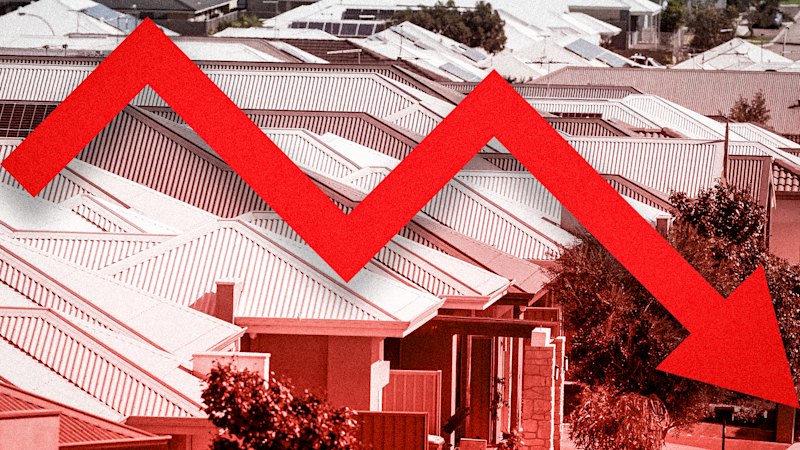
The federal government’s budget overhaul of negative gearing and capital gains tax has been blamed for the biggest fall in home loans taken out by investors on record, with warnings the property market will struggle well into next year.
asserted
market → blame → year
Figures from the Australian Bureau of Statistics released this morning showed loans to investors dropped by 30.6 per cent in the three months to September.
asserted
loans → release → September
The drop, however, is concentrated among investors who purchase existing homes.
asserted
who → concentrate → homes
In NSW, investor loans for new builds fell by 18.4 per cent through the September quarter but for existing dwellings they collapsed by almost 50 per cent.
asserted
they → fall → cent
Loans by investors for existing homes fell by 27 per cent in Victoria, by 40 per cent in Queensland and by 38.1 per cent in Western Australia.
asserted
Loans → exist → Australia
Nationally, the ratio of investors buying existing homes to building new properties fell to its lowest level on record.
asserted
ratio → buy → record
The sharp falls occurred after the May budget in which Treasurer Jim Chalmers revealed plans to limit negative gearing - the ability to offset losses on a rental property against a person’s total income - to new builds from July 1 next year.
uncertain
Chalmers → occur → July
The 50 per cent capital gains tax concession, blamed by critics for the step-up in property prices and investor activity after it was introduced by the Howard government, will return to an inflation-adjusted basis on July 1 next year.
asserted
it → blame → July
The changes were announced after the Reserve Bank began lifting interest rates and the start of a fall in national property prices now in its seventh consecutive month.
asserted
Bank → announce → month
Overall new home loans fell by 15.5 per cent through the quarter to be 21.4 per cent down over the past year.
asserted
loans → fall → year
This included first home buyers with loans to new entrants to the property market falling 8.6 per cent in the quarter and 12.3 per cent over the year.
asserted
loans → include → year
Housing Minister Clare O’Neil said the figures showed a clear shift away from investors towards people wanting to buy their own home and that investors had moved towards constructing new houses.
asserted
investors → say → houses
“We’ve had a housing market geared towards investors for a generation, and where did it get us?
asserted
it → have → us
,” she told this masthead.
asserted
she → tell → masthead
“These numbers show the balance is shifting back towards Australians who are buying a home to live in, and especially to our first home buyers.”
asserted
who → show → buyers
Liberal housing spokesman Andrew Bragg said the figures showed the government’s tax policies were hurting the property market and homeowners.
asserted
policies → say → market
“No one wins from the new taxes, not first homeowners, not owners, not renters and not investors.
asserted
one → win → taxes
Time for them to be repealed,” he said.
asserted
he → repeal → Time
JP Morgan economist Tom Ryan noted that the drop in lending to owner-occupiers was in line with other falls during periods when the Reserve Bank was tightening monetary policy.
But the drop in investor lending was being exacerbated by the tax changes in this year’s budget, with Ryan warning that they are “likely to remain a structural drag” for some time.
asserted
they → note → time
HIA senior economist Maurice Tapang said the lift in business construction may mean that builders are constructing spec housing to protect their sub-contractors.
uncertain
builders → say → contractors
He said the property sector had yet to feel the full brunt of the RBA’s five rate hikes and the blow to confidence dealt by the government’s tax changes.
asserted
sector → say → changes
“Investors are crucial to addressing the housing under-supply and moderating downward cycles in the market.
asserted
Investors → address → market
They add to rental supply and net dwelling stock, while adding nothing to housing demand,” Tapang said.
asserted
Tapang → add → demand
“Policies that increase the cost or risk of investing in housing do not resolve that shortage but rather make it worse.
asserted
it → increase → shortage
But the numbers also showed businesses are borrowing record amounts to construct apartment blocks and data centres.
asserted
businesses → show → blocks
Building loans by businesses soared in value by 27.6 per cent in the quarter to be 51.8 per cent up over the past 12 months.
asserted
loans → soar → months
Loans for dwellings, predominantly units and apartment blocks, climbed 56 per cent over the year to a record $8.4 billion while loans for other buildings, including data centres, soared 84 per cent on an annual basis to more than $5 billion.
asserted
loans → climb → billion
The nation’s biggest home lender, the Commonwealth Bank, noted in its quarterly market update released on Wednesday that cost-of-living pressures and the impact of higher interest rates are starting to affect its borrowers.
asserted
pressures → note → borrowers
Bank CEO Matt Comyn said that while the economic growth was slowing, the overall economy remained resilient due to low unemployment and strong public and private infrastructure spending.
asserted
economy → say → unemployment
“Higher inflation and interest rates continue to place uneven pressure on household incomes and business activity,” he said.
asserted
he → continue → incomes
Subscribers can sign up to our weekly Inside Politics newsletter.
asserted
Subscribers → sign → newsletter
 The Aporia