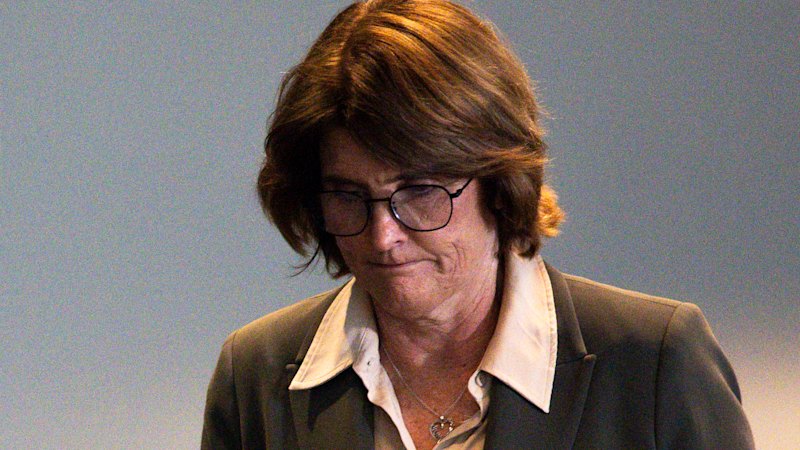
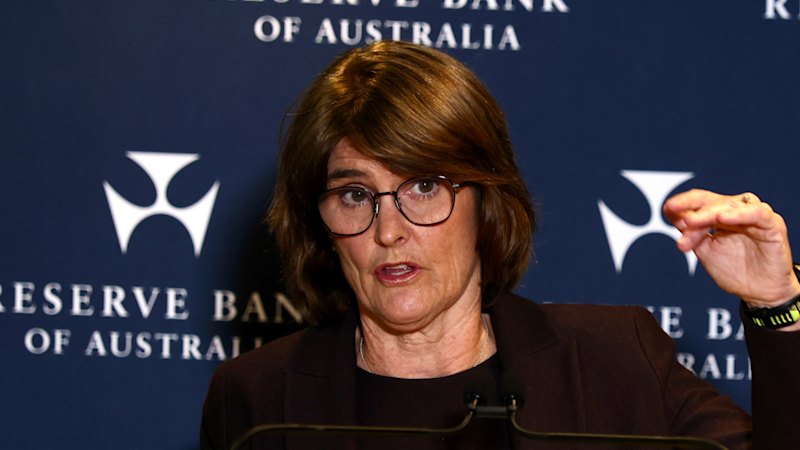
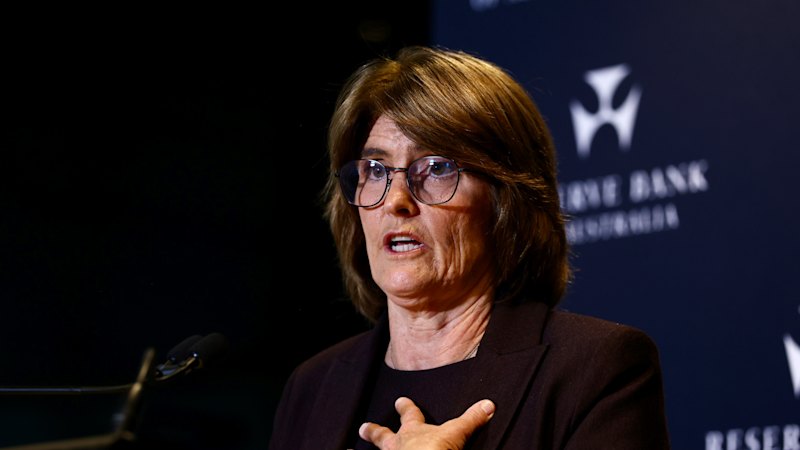
As Michele Bullock explained why the Reserve Bank had lifted interest rates for a fifth time this year on Tuesday afternoon, Australians hit Google.
asserted
Australians → explain → Google
Something the RBA governor said in response to reporters’ questions caught their ears and got them wondering.
asserted
them → say → ears
“We are not looking to tip the economy into a recession if we can avoid it,” she said.
asserted
she → look → it
It was that word – recession – that caught Australians’ attention.
asserted
that → catch → attention
Google Trends’ measure of searches for the word “recession” reached its highest level since 2020, when the nation went into an actual recession, and its third-highest on record.
asserted
nation → reach → record
There were also spikes in searches for answers to questions such as “what happens if Australia goes into recession”, “when was the last recession in Australia” and “what to do in a recession”.
asserted
recession → be → recession
All of this activity begs the question – what is a recession?
asserted
recession → beg → question
The two ways to tell you’re in a recession
There are two generally agreed upon definitions.
The most common in this country is two consecutive quarters of negative economic growth.
asserted
you → tell → growth
Most famously, then treasurer Paul Keating declared “this is the recession that Australia had to have” in November 1990 after the just released September quarter national accounts showed the economy had contracted by 1.6 per cent following a 0.9 per cent drop in the June quarter.
asserted
economy → declare → quarter
Two negative quarters equalled a recession.
asserted
quarters → equal → recession
But that negative quarter of growth in June has been erased over time as the bureau of statistics collected more information.
asserted
bureau → erase → information
Keating never had to make his famous declaration.
asserted
Keating → have → declaration
A small recession in 1977 only appeared after revisions by the bureau.
asserted
recession → appear → bureau
At one point, a recession in 2000 was just a few million dollars away from appearing in the official statistical measure before later revisions confirmed the economy had avoided the global dotcom bust.
asserted
economy → appear → bust
The two negative quarter growth definition obscures how not all recessions are equal.
asserted
recessions → obscure → ?
Australia’s most recent recession – at the start of the pandemic in 2020 – was missed by most people as governments thrust hundreds of billions of dollars into the nation’s collective wallets while the Reserve Bank printed hundreds of billions more and sliced official interest rates to 0.1 per cent.
asserted
Bank → miss → cent
This recession was effectively government policy as Scott Morrison and Josh Frydenberg shut the economy to prevent mass deaths at the hands of COVID.
asserted
Morrison → shut → COVID
Through the first six months of 2020, the economy contracted by 7 per cent.
asserted
economy → contract → cent
But it wasn’t accompanied by a surge in unemployment which would peak at 7.4 per cent.
asserted
which → accompany → cent
People weren’t sacked en masse or saw their businesses collapse like a “normal” recession.
asserted
businesses → sack → recession
Most Australians ended up in a stronger financial position due to all those handouts and record low mortgage rates.
asserted
Australians → end → handouts
The 2020 recession is why some economists prefer using the jobless rate as an indicator of economic bad times.
asserted
economists → prefer → times
It’s best illustrated by the “Sahm rule”, a rule-of-thumb created by American economist Claudia Sahm.
asserted
It → illustrate → Sahm
Under her definition, a country is on its way to recession if the jobless rate over a three-month period is half a percentage point higher than any other three-month period recorded during the preceding year.
asserted
rate → record → year
In Australia, the jobless rate averaged 4.63 per cent between July and September.
asserted
rate → average → July
Between December and February, it averaged 4.17 per cent.
asserted
it → average → cent
That’s a rise of 0.46 percentage points, just short of the Sahm rule.
asserted
That → ’ → rule
HSBC Australia chief economist Paul Bloxham noted this week the Sahm rule was a clear warning of the economy’s weakness.
asserted
rule → note → weakness
He said that given the Reserve Bank’s effort to bring down inflation, “the risks are rising that Australia’s economy will have a harder landing – or even a recession”.
asserted
economy → say → landing
In a country with enormous mortgages, the loss of a regular paypacket for a sizeable proportion of the population would create a spiral of economic troubles starting with the nation’s big four banks that stand or fall with the Australian property market.
asserted
that → create → market
The 1890s depression was centred on runaway property speculation in Melbourne.
asserted
depression → centre → Melbourne
Of the 64 banks and credit union-like institutions that were operating in 1891, 54 had closed by mid-1893 (with 34 of them closed permanently).
asserted
34 → operate → them
One-in-10 homes nationally, with a much higher ratio in Melbourne, were repossessed.
asserted
homes → repossess → Melbourne
But, as Bullock noted this week, an economic slowdown or a blast of inflation has real-world consequences.
asserted
slowdown → note → consequences
“The fact that we’ve had this massive shock has meant that we’re poorer, and that’s what people are feeling,” she noted.
asserted
she → mean → what
It’s not just people feeling poorer.
asserted
It → ’ → ?
A yet-to-be released survey by MYOB of 370 mid-sized businesses found their costs, including fuel and energy and insurance, had climbed by $6700 a month over the past year.
asserted
costs → release → year
More than a quarter said their costs had lifted by at least $10,000 a month, with firms employing between 200 and 500 staff particularly hurting.
asserted
firms → say → staff
Just one per cent said their costs had not increased at all.
asserted
costs → say → ?
MYOB executive general manager (mid-market), Paul Voges, said almost half of surveyed firms had sunk money into efficiency measures or renegotiated with suppliers in a bid to put a lid on their higher costs.
asserted
half → say → costs
…and 39 more, not listed.
 The Aporia