FOR DECADES, THE SECURITY architecture of the Persian Gulf rested on an assumption: When the gravest regional threats emerged, the United States would be the power around which its partners organized.
asserted
partners → rest → which
Saudi Arabia, the United Arab Emirates, Qatar, Bahrain, Kuwait, Jordan, and others might disagree with Washington—often strongly—but American military, diplomatic, and economic power remained the foundation of the regional security system.
uncertain
power → disagree → system
The Iran war is testing that assumption.
asserted
war → test → assumption
The Gulf states did not ask the United States to begin this war, and officials from several governments complained in its early weeks that Washington had not adequately warned them before military action began.
asserted
action → ask → them
They subsequently watched Iranian missiles and drones attack their territory and threaten the infrastructure on which their economies depend.
asserted
economies → watch → which
Months later, the conflict continues, the Strait of Hormuz remains unstable, Arab energy infrastructure is still under attack, the Houthis are advancing in Yemen, and America’s partners are increasingly uncertain about what Washington will—and will not—defend.
asserted
Washington → continue → what
Let’s summarize what has happened in the last few days.
asserted
what → summarize → days
First, early last week, U.S. forces destroyed five Iranian oil tankers after Iranian attempts to attack an American warship, while Iranian ballistic missiles struck an air base in Jordan used by American forces.
asserted
missiles → destroy → forces
The Strait of Hormuz remained dangerous, oil prices spiked, and there was no obvious political solution.
asserted
prices → remain → Hormuz
Then things became more perilous.
asserted
things → become → ?
Iran’s Houthi allies in Yemen launched a stunning offensive along the Red Sea coast.
asserted
allies → launch → coast
Government forces retreated rapidly, abandoning military equipment in Mokha, some of it reportedly supplied through Saudi Arabia and including equipment of American origin.
uncertain
forces → retreat → origin
The Houthis captured Mokha, the internationally recognized Yemeni government’s principal Red Sea port, pushed south toward Dhubab, and reached positions around Perim Island, which sits directly in the Bab al-Mandab Strait.
asserted
which → capture → Strait
The Strait of Hormuz sits on one side of the Arabian Peninsula.
asserted
Strait → sit → Peninsula
The Bab al-Mandab Strait sits on the other.
asserted
Strait → sit → other
When Iran disrupted the Strait of Hormuz, Saudi Arabia had an alternative: Its roughly 745-mile East-West pipeline could carry at least some of the oil outbound from the Persian Gulf across the kingdom to Red Sea ports, bypassing Hormuz entirely.
uncertain
pipeline → disrupt → Hormuz
But that route still depended on access to the Red Sea and, for much of that traffic, subsequent passage through the Bab al-Mandab Strait.
asserted
route → depend → Strait
Saudi Crown Prince Mohammad bin Salman reportedly called President Trump twice last Thursday as the Houthi offensive accelerated.
uncertain
offensive → call → Trump
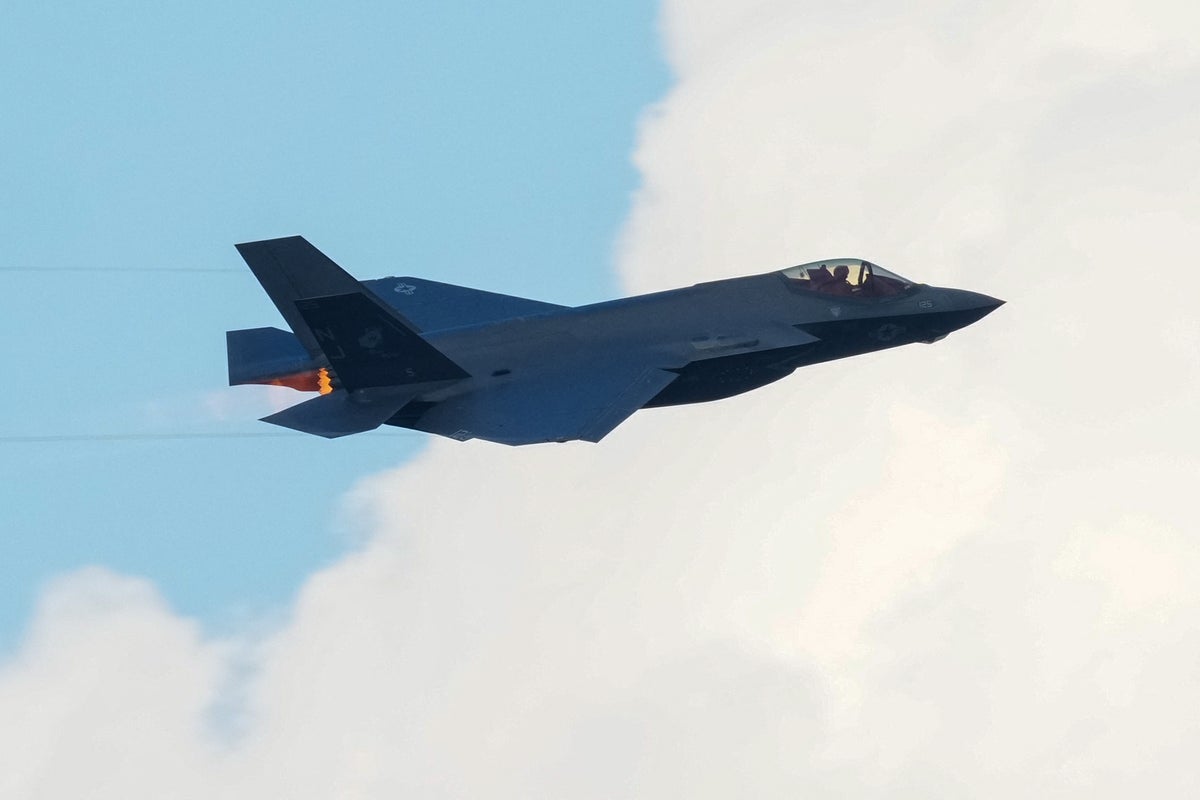
He sought direct U.S. military action against the Houthis, even though Saudi Arabia, with its air force of more than 400 advanced American fighter jets, had previously indicated that it could deal with the Houthi threat without American intervention.
uncertain
it → seek → intervention
Trump declined to authorize direct strikes.
asserted
Trump → decline → strikes
The United States instead agreed to provide intelligence and targeting support, while Adm. Brad Cooper, commander of Central Command, traveled to Saudi Arabia for consultations.
asserted
Cooper → agree → consultations
Administration officials made clear that Trump’s direction was to keep American forces focused on Iran and Hormuz rather than open another front against the Houthis.
asserted
was → make → Houthis
Drones then struck Saudi Arabia’s East-West pipeline and pumping infrastructure, forcing Riyadh to shut the line down.
asserted
Drones → strike → line
While President Trump suggested, without proof, that Iran had conducted these attacks, Saudi Arabia said the drones had been launched from Iraqi territory.
uncertain
drones → suggest → territory
Baghdad responded by dismissing senior security officials, closing border crossings with Iran, and beginning an investigation.
asserted
Baghdad → respond → investigation
Iran-backed Iraqi militias denied responsibility, while Saudi Arabia refrained from immediate retaliation at the request of Iraq’s prime minister, giving Baghdad an opportunity to determine who had launched the attack.
asserted
who → back → attack
On Monday morning, the Associated Press reported that the Saudi East-West pipeline will be “mostly out of service” for three to five weeks, with additional damage at a major pumping facility and an anticipated reduction in oil exports to Asian customers.
asserted
pipeline → report → customers
At the same time, the Houthis were consolidating positions overlooking the route Saudi Arabia needs to move its oil in preparation for when the pipeline might be fixed.
uncertain
pipeline → consolidate → preparation
President Trump’s decision not to provide direct support to Saudi Arabia has a legitimate military argument behind it.
asserted
decision → provide → it
American forces are already stretched across a widening regional war, and opening another front in Yemen while increasing military support to Saudi Arabia would bring additional requirements, risks, and almost certainly additional escalation.
asserted
opening → stretch → requirements
But America’s allies and partners do not judge the reliability of the United States by the demands on American force structure.
asserted
allies → judge → structure
They judge it by what happens when they believe they are under attack and ask Washington for help.
asserted
they → judge → help
Saudi Arabia asked Washington for direct military action against the Houthis and was told no, so Riyadh continued developing additional security relationships with Pakistan and Turkey.
asserted
Riyadh → ask → Pakistan
And Gulf governments prepared to meet with Iran to discuss possible arrangements involving Hormuz, but that meeting fell apart after the attack on Saudi Arabia.
asserted
meeting → prepare → Arabia
Just yesterday, Saudi Arabia told Europe it was suspending oil shipments due to the attacks on its energy infrastructure.
asserted
it → tell → infrastructure
With all this happening, President Trump continues to insist that Iran is begging for a deal.
asserted
Iran → happen → deal
EACH OF THE EVENTS of the last ten days produced another calculation, and each calculation changed a nation’s perception and behavior.
asserted
calculation → produce → perception
This is the speed of war: Events generate consequences faster than political leaders can comfortably control them.
asserted
leaders → generate → them
Wars do not remain confined to the objectives announced when they begin.
asserted
they → remain → objectives
Wars expand geographically, economically, politically, and diplomatically.
asserted
Wars → expand → ?
…and 16 more, not listed.
 The Aporia