ANYONE WHO HAS EVER BEEN A BOSS or had a boss knows that the influence of a superior extends far beyond explicit instructions.
asserted
influence → have → instructions
Commanders are responsible not only for the orders they give but for their “command climate.”
asserted
they → give → climate
When that climate becomes religiously tinged, it creates a dangerous situation—for our military, for our country, and for the Constitution.
asserted
it → become → Constitution
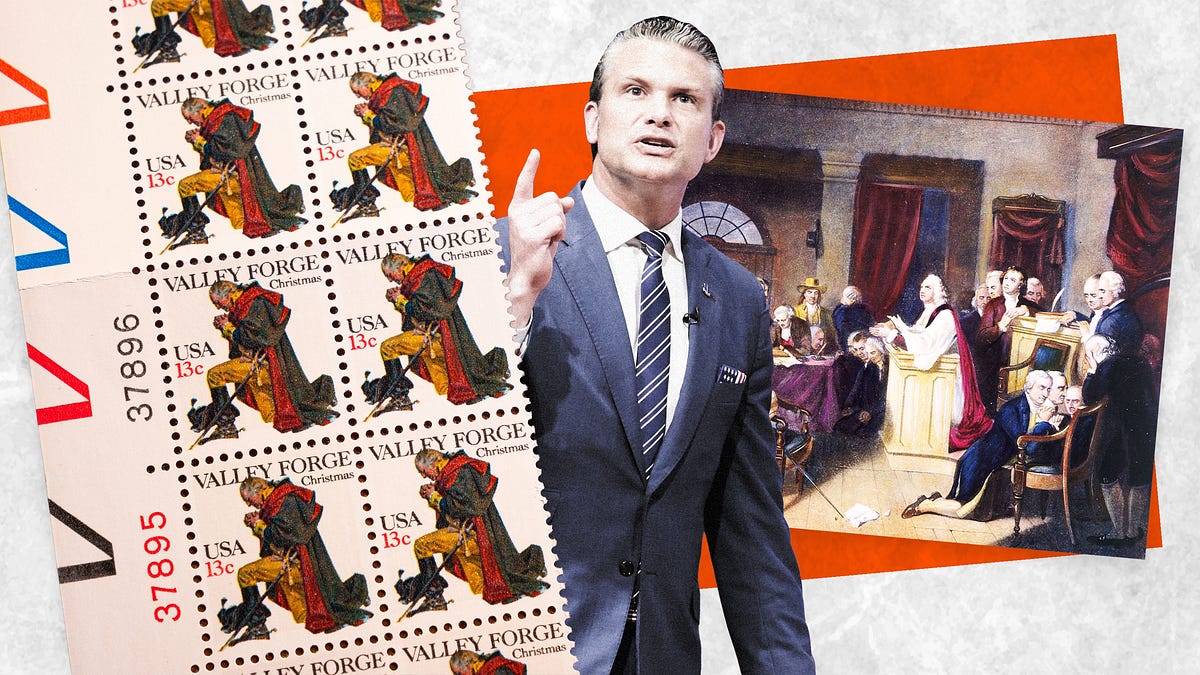
This is why I find Secretary of Defense Pete Hegseth’s increasingly overt use of evangelical Christian language and symbolism in his official role so troubling.
asserted
use → find → role
Military service has a way of stripping life down to its essentials.
asserted
service → have → essentials
During deployments, especially in combat, soldiers confront fear, grief, exhaustion, and uncertainty in ways that are difficult to explain to those who have not experienced them.
asserted
who → confront → them
Faith can become an extraordinary source of strength; it can provide comfort to a frightened young soldier, give meaning to a grieving family, and offer hope to a unit struggling after battlefield losses.
asserted
it → become → losses
I’ve witnessed those moments, and I’ve seen chaplains help soldiers and assuage their families’ grief through some of the most difficult experiences imaginable.
asserted
chaplains → witness → experiences
Hegseth has every right to his personal religious convictions, as does every service member.
asserted
member → have → convictions
There is nothing inherently inappropriate about a secretary of defense attending worship services, seeking spiritual guidance, or discussing the importance of faith in his own life.
asserted
secretary → be → life
These are goals I wholeheartedly support.
asserted
I → support → ?
But Hegseth has gone further.
asserted
Hegseth → go → ?
He invited his personal spiritual adviser to lead a worship service at the Pentagon.
asserted
He → invite → Pentagon
He has repeatedly used explicitly Christian language in official communications.
asserted
He → use → communications
Just recently, he described his department as putting on the “armor of God,” because “while we wage physical war, we all know the real battle is spiritual.”
asserted
battle → describe → war
His rhetoric and actions raise legitimate questions about whether the department is strengthening religious freedom for everyone or elevating a particular interpretation of Christianity within the chain of command.
asserted
department → raise → command
FAITH HAS AN IMPORTANT ROLE in the military—but it isn’t missionary work or evangelism.
asserted
it → have → military
When we lost soldiers in Iraq, chaplains were among the most important members of the unit.
asserted
chaplains → lose → unit
They offered something orders, operational plans, and military briefings could never provide: compassion in the face of unbearable loss.
uncertain
orders → offer → loss
Chaplains are representatives of their own faith traditions, but they are also commissioned officers serving a diverse military community.
asserted
they → commission → community
Chaplains of every denomination will sit quietly with an atheist struggling with grief, without attempting to convert that person or suggesting that the absence of religious belief makes the grief less meaningful.
asserted
grief → sit → belief
Every chaplain is deeply committed to their religious convictions while recognizing that the soldiers they serve are entitled to their own.
asserted
they → recognize → own
They also understand the distinction between providing religious ministry and imposing religious belief.
asserted
They → understand → belief
Over nearly forty years in uniform, I commanded soldiers from different religions, backgrounds, cultures, and communities—some deeply religious, others irreligious.
asserted
others → command → religions
What mattered to me was their character, competence, and commitment to one another.
asserted
mattered → matter → one
In combat, the soldier beside you does not become more trustworthy because of the way they pray.
asserted
they → become → way
Trust comes from knowing that person will do their duty, protect their teammates, and uphold the nation’s and the profession’s values.
asserted
person → come → values
Commanders and all leaders in the military have an equally important obligation.
asserted
Commanders → have → obligation
They are responsible for creating an environment where every soldier can practice a faith, change a faith, or profess no faith without fearing that those choices will affect their standing in the unit.
asserted
choices → create → unit
When a commander speaks, subordinates listen.
asserted
subordinates → speak → ?
In a hierarchical organization where assignments, evaluations, promotions, and careers depend on leaders’ judgments, the distinction between encouragement and pressure can become dangerously blurred.
asserted
distinction → depend → encouragement
That’s why leaders at any rank or position must be particularly thoughtful when discussing their personal religious convictions.
asserted
leaders → ’ → convictions
While they need never be ashamed of their faith, they also should not use their rank, authority, or influence to suggest their beliefs are preferred.
asserted
beliefs → use → rank
The Constitution to which every soldier, sailor, airman, marine, and guardian swears an oath protects religious liberty by prohibiting government establishment of religion and guaranteeing free exercise.
asserted
soldier → swear → exercise
It also prohibits religious tests for public office.
asserted
It → prohibit → office
FREEDOM FROM RELIGIOUS PRESSURE isn’t just a right guaranteed by the Constitution and a requirement for a multi-confessional force drawn from a country that has always been divided by religion.
asserted
that → guarantee → religion
It’s also an important part of the heritage of the American military from its earliest days, bequeathed to us by George Washington.
asserted
It → ’ → Washington
He did not require members of either the Continental Army or the United States Army to subscribe to a particular religion.
asserted
members → require → religion
(Interestingly, he also didn’t have specific religious requirements for the people he enslaved.)
asserted
he → have → people
As president, he attended services of various faiths, including Catholic, Protestant, and Quaker services.
asserted
he → attend → services
…and 34 more, not listed.
 The Aporia